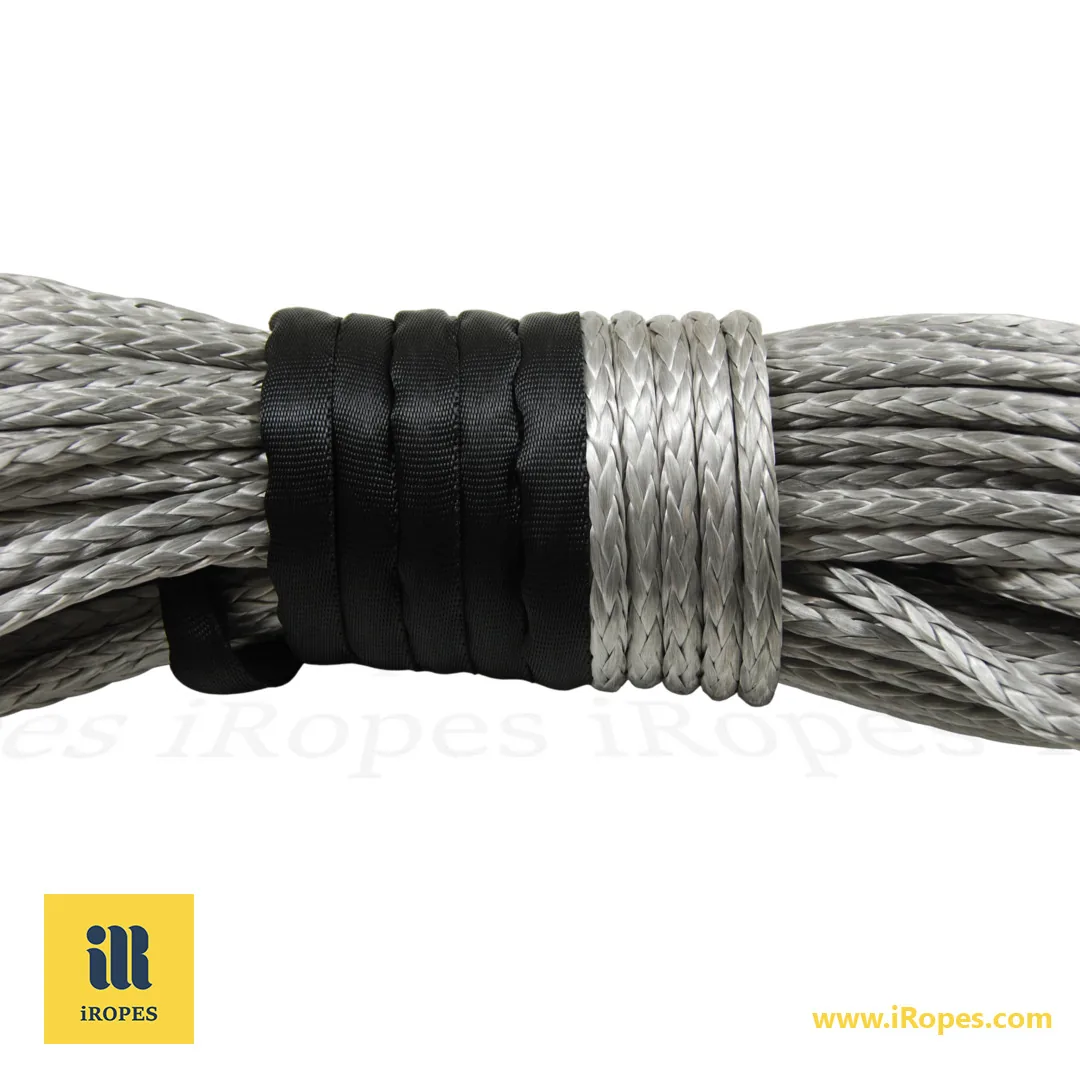
Get a clear, practical guide to the plastic rope manufacturing machine, the nylon rope manufacturing process, and current price ranges—so you can plan production with confidence.
≈7‑min read – What you’ll gain
- ✓ Reduce material waste through precise strand‑count tuning.
- ✓ Increase cycle speed with optimised extruder‑temperature profiling.
- ✓ Minimise equipment downtime using a PLC‑alert workflow.
- ✓ Unlock custom branding options that support client retention.
Whether you’re researching a plastic rope manufacturing machine or mapping the nylon rope manufacturing process, it helps to look beyond the melt stage. A well‑tuned line synchronises extrusion, stranding, twisting and winding. With the right settings, you can improve tensile consistency and throughput without major capital upgrades. Below, we share the practical adjustments—and the cost benchmarks—iRopes has refined over 15 years.
Understanding the plastic rope manufacturing machine
When you walk onto a production line, the humming of gears and the steady feed of polymer pellets signal a transformation in progress. A plastic rope manufacturing machine melts raw polymer, draws it into continuous strands and then twists those strands into the rope you’ll later unwind on a spooling drum. Knowing each stage clarifies why capacity, material compatibility and control precision matter for your final product.

- Extruder – a heated barrel where polymer pellets become a uniform melt, ready for filament formation.
- Twisting unit – rollers that gather one or more filaments and impart the desired strand count and lay‑length.
- Winding system – a motor‑driven drum that coils the freshly twisted rope onto spools or bobbins.
- Control panel – a PLC (programmable logic controller)‑based touch‑screen that lets operators set temperature, speed and tension parameters.
In operation, the machine draws pellets from a hopper, pushes them through the extruder, and forces the melt through a die that defines the filament diameter. The emerging filament is immediately cooled, then fed into the twisting unit where three to four strands interlace, creating a balanced structure with controlled elongation. Finally, the winding system packages the rope at a steady metre‑per‑minute rate, while sensors record tension and diameter for quality assurance. Typical twisting heads run at 600‑1 200 rpm, and final winding speeds are commonly 20‑30 m/min.
iRopes applies this know‑how through full OEM and ODM rope manufacturing services. Whether you prefer polypropylene (PP), polyethylene (PE) or polyamide (PA), our engineers adjust screw geometry and temperature zones to optimise melt flow for each polymer. We also tailor strand count, core type and colour‑coding to match brand specifications, and can embed reflective or glow‑in‑the‑dark elements when visibility is critical. Your designs are protected with dedicated IP safeguards, and we offer non‑branded or customer‑branded packaging.
“Choosing the right extrusion profile and twist tension is the secret to a rope that maintains its strength over thousands of cycles. Our custom‑tuned process parameters and precision equipment give clients that edge without sacrificing production speed.” – Dr Li Wei, Materials Engineer, iRopes R&D
With the hardware basics clarified, you can now appreciate how those same strands feed into the nylon rope manufacturing process that follows in the next section, where fibre‑spinning and braiding add another layer of performance.
Step‑by‑step nylon rope manufacturing process
Having seen how a plastic rope machine turns pellets into twisted strands, you can now picture the parallel journey that creates high‑strength nylon rope. The nylon rope manufacturing process begins with careful material selection and ends with a rope documented under ISO 9001 quality management and made with CE‑compliant equipment.
Raw material selection and polymer melt‑spinning
For nylon rope the preferred feedstock is PA‑6 (Nylon‑6) or PA‑66 (Nylon‑66) granules, chosen for their balance of elasticity and abrasion resistance. The granules are dried to remove moisture, then fed into a single‑screw extruder where temperatures can reach up to 260 °C, producing a uniform melt ready for fibre formation.
Fibre creation, yarn spinning, and strand formation
The molten polymer is forced through a spinneret with tiny holes, forming continuous monofilament fibres that solidify in a cooling bath. These fibres are then drawn to improve tensile strength before being gathered into yarns on a spinning carriage. Multiple yarns are bundled to create the strands that will later be twisted together.
Stranding, twisting/braiding, and optional coating applications
Stranding units align the yarn bundles and feed them into a twisting head where a controlled rotation interlaces the strands into the final rope configuration—typically three or four‑strand constructions for industrial use. At this stage a polyurethane or UV‑resistant coating can be applied to enhance durability and colour‑coding, with a typical thickness of 30‑50 µm.
Finishing, quality testing, and compliance checks
After twisting, the rope passes through a calibrating guide that ensures consistent diameter, then onto a tension‑testing line where samples are stretched to verify that the rope meets the required breaking load. Every batch is logged in the PLC system and produced under our ISO 9001 quality management system; equipment is CE‑compliant and materials can be specified to meet REACH requirements.

How is nylon rope made? – concise 7‑step answer
- Raw polymer pellets are dried and melted in an extruder.
- Molten polymer is melt‑spun through a spinneret to form monofilament fibres.
- Fibres are drawn, then spun into yarns that are grouped into strands.
- Strands are aligned and twisted in a twisting head to create the rope core.
- Optional coating (polyurethane, UV‑resistant) is applied for added protection.
- Rope passes through a calibrator to achieve uniform diameter.
- Final rope is tension‑tested and documented under ISO 9001; equipment is CE‑compliant and materials can be REACH‑ready as required.
Each of these stages can be customised: you might choose a higher‑speed extruder for larger batches, or specify a bright‑orange coating for visibility in low‑light environments. Typical twisting speeds of 600‑1 200 rpm and winding at 20‑30 m/min help balance throughput and quality. iRopes’ engineers work with you to set the strand count, core type and colour‑coding that match your brand’s performance criteria.
Understanding these steps makes it clear why the same raw polymer can yield a rope for marine rigging, climbing safety or industrial lifting—different tweaks along the line produce distinct performance characteristics. For a deeper look at how brown polypropylene and nylon ropes compare, see our Essential Guide to Brown Polypropylene and Nylon Ropes.
Now that the technical flow is mapped, the next topic will explore how the capabilities we’ve just described translate into the pricing structure of a plastic rope making machine.
Assessing plastic rope making machine price and value
Having seen how the strands are formed, the next logical question is—what will it cost to turn those strands into a commercial‑scale production line? Below you’ll find the price bands you can expect, the variables that push those numbers up or down, and a quick look at how the investment can pay for itself.

Price by Capacity
Typical cost tiers
200‑400
$6 000‑$12 000 for basic models, manual control, 3‑5 kW motor.
400‑800
$12 000‑$25 000 includes PLC touch‑screen, dual‑spool, 5‑8 kW.
800‑1200
$25 000‑$45 000 adds full automation, 8‑12 kW, integrated QC sensors.
1200+
$45 000‑$80 000+ for premium, fully robotic lines, 12‑20 kW, data logging.
Cost Drivers
What influences price
Automation
PLC‑controlled vs manual; more sensors raise the price but boost consistency.
Power
Higher‑kW motors handle larger capacities, increasing equipment cost.
Accessories
Optional cutters, coating units and custom dies add to the total spend.
When you calculate return on investment, consider the machine’s hourly output, utilisation rate, the price differential between manual and fully‑automatic models, and any financing options that spread the upfront cost over the expected production life.
Cost Summary
| Capacity (kg/h) | Price (USD) | Key Specs |
|---|---|---|
| 200‑400 | $6 000‑$12 000 | Manual, 3‑5 kW |
| 400‑800 | $12 000‑$25 000 | PLC touch‑screen, 5‑8 kW |
| 800‑1200 | $25 000‑$45 000 | Full auto, 8‑12 kW, QC sensors |
| 1200+ | $45 000‑$80 000+ | Robotic, 12‑20 kW, data logging |
By matching the capacity you need with the right level of automation, you can balance capital cost with output and quality. Exploring different rope materials can further inform your selection. See our Mastering Rope Making: Exploring Different Rope Materials for a broader perspective.
Payback periods vary by utilisation and labour rates; high‑volume operations often achieve rapid ROI. If you’re curious about a configuration that fits your exact production forecast, the next step is to request a custom quote—we’ll map the numbers to your business case.
Need a personalised rope solution?
By walking through the plastic rope manufacturing machine, detailing the nylon rope manufacturing process, and breaking down the plastic rope making machine price tiers, you now have a clear roadmap for selecting equipment that matches your production goals. With 15 years of experience making ropes in China, iRopes offers a wide range of 2,348 cordages for marine, racing sports, industrial and safety uses. We manufacture with strong synthetic fibres such as UHMWPE, Technora™, Kevlar™, Vectran™, polyamide and polyester, and provide OEM/ODM services, colour‑coding and specialised coatings—all backed by ISO 9001 quality management, dedicated IP protection, and punctual, worldwide delivery with non‑branded or customer‑branded packaging.
If you’d like personalised guidance on the optimal machine configuration, rope design or a custom quote, simply complete the form above. Our specialists will help you realise a high‑quality, “Made in China” solution tailored to your brand and application. For more on our marine offerings, explore our marine rope solutions.