⚡ Install a Ranger winch rope the right way and maximise pull efficiency with iRopes’ custom eyelet solution.
What you’ll gain (≈ 4 min read)
- ✓ Save time with a streamlined, step‑by‑step process.
- ✓ Preserve effective pull capacity with a 90° straight‑line setup.
- ✓ Achieve a service life of up to five years with proper care and correct hardware.
- ✓ Secure OEM‑grade customisation – colour, branding, and ISO 9001 quality assurance.
Many installers tighten the eyelet bolt by feel and wind the rope without tension, which undermines performance. Instead, torque the eyelet to the manufacturer’s specification, route the rope through a suitable fairlead, and lay 8‑10 even wraps under light tension. These simple adjustments help the winch deliver reliable pulling power and protect your rig for the long haul.
Understanding the Winch Rope Eyelet
A winch rope eyelet is the metal or polymer loop that secures the synthetic line to the winch drum. It transfers the pulling load from the rope to the drum while shielding the rope from heat and abrasion. When you bolt the eyelet onto the drum, the load is distributed across the reinforced sleeve, preventing stress concentrations that could otherwise damage the rope.
To attach the rope to a winch drum, position the eyelet at the drum’s anchor point, align the bolt holes, and tighten the bolts to the manufacturer‑specified torque. This straightforward process creates a solid, slip‑free connection so the winch can work to its rated capacity.

- Steel – offers maximum strength and wear resistance but adds weight.
- Aluminium – lightweight and corrosion‑resistant, ideal for marine environments.
- Reinforced polymer – UV‑stable and non‑conductive, gentle on synthetic fibres.
Our custom eyelet service lets you choose size, colour and branding, ensuring the rope fits your winch and your brand identity perfectly.
Choosing the right eyelet material and finish improves durability, especially in the harsh climates of Australia, Europe or the Middle East. iRopes can tailor the eyelet’s diameter, colour, and even emboss your logo, turning a functional component into a subtle brand statement. With the eyelet fundamentals clear, the next step is to match the correct Ranger winch rope specifications to your vehicle.
Ranger Winch Rope Specifications and Selection
Now that the eyelet basics are clear, the next decision is the rope that will actually do the pulling. Choosing the right ranger winch rope means matching size, strength and durability to the conditions you face on‑road or off‑road.

The industry‑standard length for a Polaris Ranger is 3/16" × 50 ft, delivering a minimum breaking strength of 7,000 lb. This rating provides a comfortable safety margin for the typical 4,000 lb rated winch, while the synthetic core keeps the line roughly 60 % lighter than a steel cable of comparable strength.
Material & Protection
Strength meets durability
UHMWPE
Ultra‑high‑molecular‑weight polyethylene delivers high tensile strength with low stretch.
UV‑Coating
A UV‑stabilised layer resists sun‑fade for up to three years in harsh sunlight.
Marine Grade
Moisture‑resistant formulation helps prevent degradation in offshore environments.
Colour & Visibility
Safety at a glance
Custom Colours
Choose from OEM palettes or match your vehicle branding.
Reflective Trim
High‑visibility strips improve night‑time recovery safety.
Regional Hues
Australian orange, European grey, Middle‑East sand‑tone options available.
When you wonder whether the rope should run over or under the winch, the answer is simple: aim for a straight‑line, 90° pull. This geometry reduces side‑load stress and helps you maintain effective strength — a common takeaway in “Should winch rope go over or under?” queries.
Quick Tip
For optimal pull, run the rope in a 90° straight‑line from the winch drum; this avoids side‑load stress and is the standard answer to whether the rope should go over or under.
Choosing the correct colour and reflective trim improves night‑time visibility and speeds up team communication in low light. iRopes can manufacture a ranger winch rope in any of the listed hues, add branding to the eyelet, and ship the finished package directly to your workshop worldwide, ready for the next winch rope install job.
Step-by-Step Winch Rope Install Guide
With the right Ranger rope selected, the next phase is getting your winch ready for a clean winch rope install. A well‑planned preparation saves time and prevents costly mistakes once you start spooling the line.

The installation breaks down into two logical blocks: a quick pre‑install check, then the seven actions that lock the ranger winch rope onto the drum.
- Gather tools – socket set, torque wrench, clean rags.
- Wear PPE – gloves, safety glasses, steel‑toe boots.
- Inspect drum – look for corrosion, dents, or worn splines.
- Position eyelet – locate the eyelet at the drum’s anchor point and align bolt holes.
- Tighten bolts – apply the manufacturer‑specified torque.
- Thread rope – feed the line through the fairlead so the pull line is a straight 90° angle.
- Even spooling – wind 8‑10 wraps, keeping each layer snug against the previous one.
- Apply tension – pull the rope to about 10 % of its 7 000 lb rating to set the layers.
- Secure end – attach the hook to the eyelet and secure the rope end.
Addressing a common query, “Should winch rope go over or under?” the short answer is a 90° straight‑line pull. Running the line over the drum creates side‑load that reduces effective strength, while routing from the underside aligns the load with the drum’s centreline.
During tensioning and testing, keep loads low (around 10 % of rating). In operation, never exceed 80 % of the rope’s rated strength.
Once the rope sits snugly and the tension feels firm, a brief pull test confirms that the eyelet holds and the line tracks without friction. With the install complete, the next section will walk you through post‑install tension checks, routine maintenance, and how iRopes can customise your rope for any market.
Maintenance, Safety Checks, and Customisation Options
Now that your winch rope install is complete, the next priority is confirming that the line is correctly tensioned and that every component passes a quick safety check before you head back off‑road.
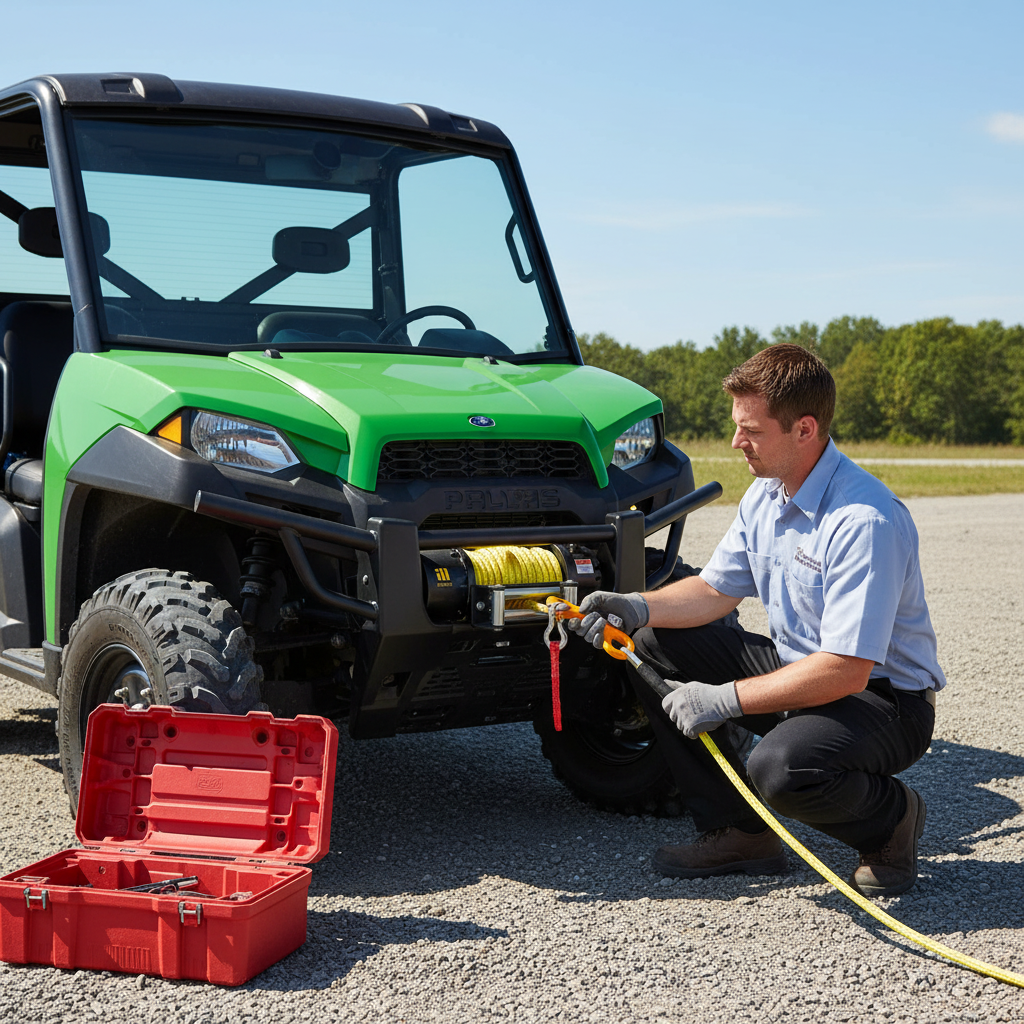
To verify proper tension, pull the line until the gauge reads roughly 10 % of the rope’s 7,000 lb breaking strength. Then lock the drum and watch the rope settle — a firm, steady read means the line is ready for recovery work.
Set Tension
Pull the line to about 10 % of its 7,000 lb rating and secure the drum; this pre‑loads the rope for a consistent pull.
Straight‑Line Verify
Confirm the rope follows a 90° path from drum to anchor; any deviation reduces effective strength.
Inspect Wear
Check monthly for frayed sheath, exposed fibres, or cracked eyelet; replace at the first sign of failure.
Scheduled Care
Clean with mild soap, store in a UV‑protected bag, and re‑tension after heavy recoveries.
Many owners ask whether a different fairlead is needed for synthetic lines. Use a smooth, radiused fairlead: an aluminium hawse is widely recommended for synthetic rope, and a well‑maintained roller fairlead can also work. Always inspect for burrs and sharp edges.
Custom OEM/ODM Solutions
Choose material, colour, branding and packaging to match any market – from Australian orange to European grey – all backed by ISO 9001 quality control. iRopes winch ropes are popular in Australia, Europe, the Middle East and beyond, and can be customised by strength, colour, specification and accessories to suit your fleet.
Looking for a Tailored Winch Rope Solution?
You've learned how the right winch rope eyelet, material choice and colour options keep a ranger winch rope performing safely, and how a disciplined winch rope install — from pre‑check to tension testing — ensures reliable recovery every time. iRopes’ ISO 9001‑certified OEM/ODM services let you customise diameter, branding, reflective trim and packaging for Australian, European and Middle‑East markets, delivering the perfect fit for your fleet.
For personalised guidance on selecting or designing your next winch system, simply complete the form above and our specialists will help you optimise performance and protect your investment. Need extra tips for off‑road recovery? Check out our 4x4 winch rope tips for additional insights.
