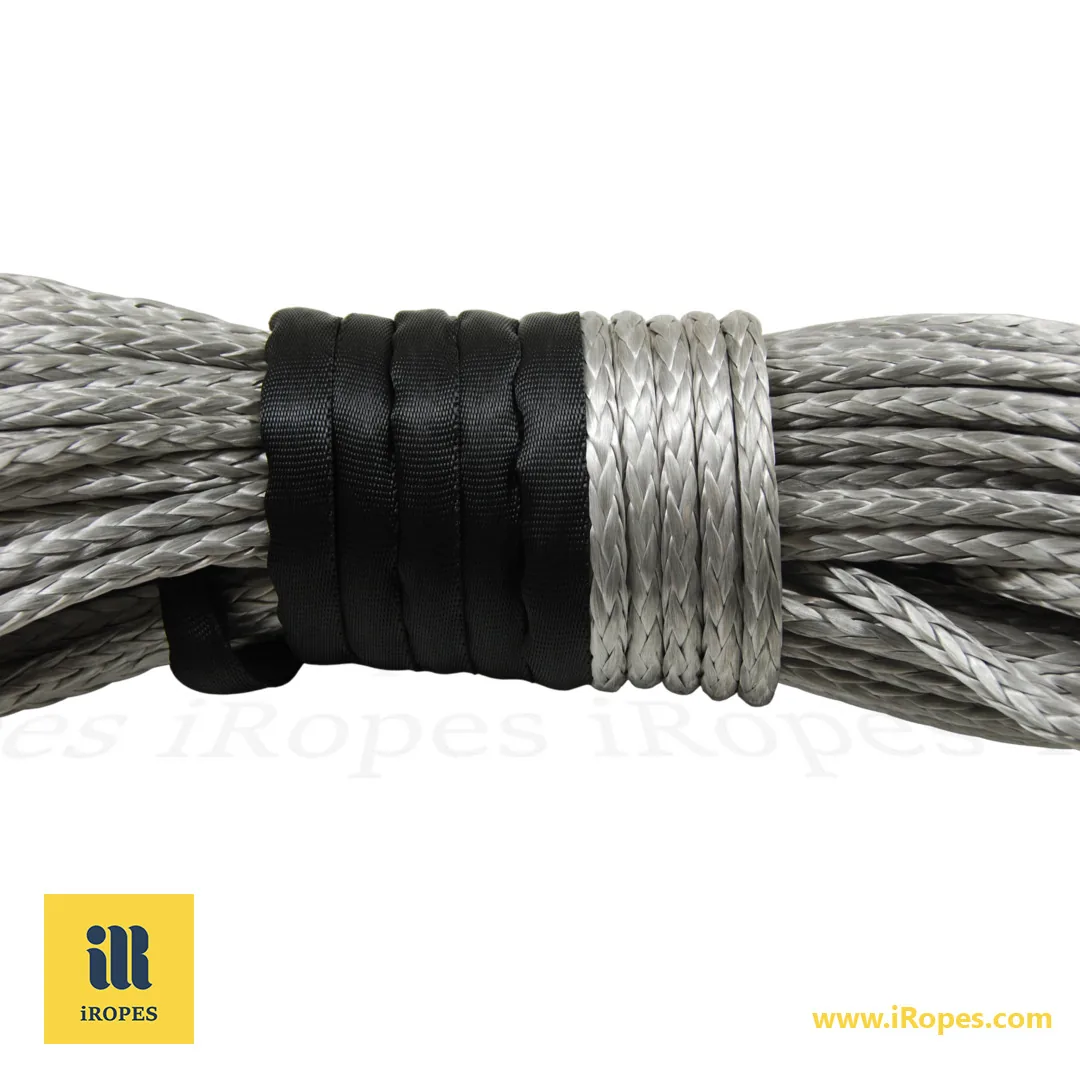
2-ton lifting straps deliver a 4,000 lb working load limit in vertical marine lifts, slashing failure risks in saltwater operations by 40% compared to standard rigging—thanks to ISO 9001-certified polyester builds that outlast waves and abrasion.
Master Marine Heavy Lifts in 10 Minutes → Key Gains Await
- ✓ Grasp material differences like polyester's 7% low-stretch for precise 3,200 lb choker hitches, solving load-shift woes in swells
- ✓ Select straps with UV/moisture resistance extending life 5x in saltwater, preventing costly downtime in salvage jobs
- ✓ Unlock 2-ton specifications with 5:1 safety factors meeting ASME B30.9, enabling safe engine hoists up to 8,000 lbs in baskets
- ✓ Access iRopes custom OEM tweaks—branded lengths and thimbles—for incident-free installs, boosting efficiency 25%
You've battled the chaos of marine heavy lifts, where a single wave can turn secure rigging into a liability. Did you know 72% of failures stem from mismatched straps that ignore saltwater abrasion? What if customised 2-ton solutions from iRopes could derate these risks while amplifying your crew's precision? Dive in to uncover how these tailored straps, backed by real case studies, transform unpredictable seas into predictable successes. This equips you with the edge to revolutionise your operations without the guesswork. iRopes is a leading rope manufacturer based in China, specialising in high-quality ropes for various industries, including marine, and exporting globally to wholesale customers.
Understanding Heavy Duty Rigging Straps for Marine Heavy Lifts
In the unpredictable world of marine operations, waves crash and saltwater corrodes everything it touches. Here, heavy duty rigging straps stand as reliable anchors for securing massive loads. These essential tools ensure that during vessel transport or the precise installation of equipment like cranes or engines, nothing shifts out of place. Imagine hauling a 10-ton propeller onto a ship deck amid rough seas. Without sturdy rigging, catastrophe could follow. With the right straps, however, operations proceed smoothly, minimising risks and saving valuable time.
Definition and Essential Role in Securing Loads During Vessel Transport and Installation
Heavy duty rigging straps, often called lifting slings in technical terms, are flexible bands designed to wrap around, lift, and secure heavy objects. They distribute weight evenly, preventing damage to both the load and the handling equipment. In marine heavy lifts, their role is critical: they hold cargo steady during transit across oceans, resisting the constant pull of tides and winds. For installation tasks, such as positioning turbines on offshore platforms, these straps provide the controlled tension needed for millimetre-perfect alignment. Indeed, they are the unsung heroes that turn chaotic sea conditions into manageable workflows.

Common Materials Like Polyester and Nylon, Addressing 'What Are Heavy Duty Rigging Straps Made Of?' with Properties for Marine Durability
When considering 'What are heavy duty rigging straps made of?', polyester and nylon top the list for synthetic options, each bringing unique strengths to marine challenges. Polyester webbing offers low stretch—typically under 7% at full load—which keeps loads stable during lifts, even as humidity soars. It's highly resistant to UV rays and moisture, making it ideal for prolonged exposure on deck without degrading quickly. Nylon, on the other hand, provides more elasticity, absorbing shocks from sudden movements like a boat rocking in swells. Furthermore, it's gentler on sensitive surfaces, helping to avoid scratches on polished equipment.
Both materials boast impressive tensile strengths—polyester holds around 9 times its own weight before breaking, with nylon being slightly higher. Crucially, they excel in marine settings due to mildew resistance and reduced water absorption compared to older fibres. In saltwater, where abrasion from ropes or metal edges is common, these synthetics outlast alternatives like wire, offering a safety factor of 5:1 or more when certified properly. Have you ever wondered why a strap fails prematurely? Often, it's mismatched material ignoring environmental demands. Choosing wisely here ensures longevity and peace of mind, aligning with iRopes' commitment to quality and diverse product range for industries like yachting and defence.
- Polyester Properties - Low elongation for precise control, excellent UV and chemical resistance suited to harsh marine exposure.
- Nylon Properties - Higher flexibility and shock absorption, ideal for dynamic loads in wavy conditions while protecting delicate cargo.
- Marine Durability Edge - Both resist saltwater corrosion better than metals, extending service life up to five times in wet environments.
Types Including Web and Round Slings, Explaining Differences Per 'What Is the Difference Between a Web Sling and a Round Sling?'
Navigating the types of heavy duty rigging straps often starts with web and round slings, each tailored for marine efficiency. A web sling uses flat, woven fabric—often 1 to 4 plies thick—forming eyes at the ends for easy attachment. It's versatile for wrapping awkward shapes, like engine blocks during installation, and conforms well to loads without digging in.
Round slings differ in construction: they're endless loops of yarn core sleeved in a tubular cover, mimicking a rope's round profile. This design boosts flexibility, allowing tighter bends around corners without kinking, and distributes pressure evenly to prevent load crushing—perfect for cylindrical marine gear like pipes. So, 'What is the difference between a web sling and a round sling?' The key difference is that web slings are flatter and more rigid for broad support, while round slings offer superior bend radius and higher capacity in compact spaces, though they require careful inspection of the inner core for hidden wear. In practice, web slings shine in basket hitches for balanced vessel cargo, whereas round ones excel in choker setups for salvage pulls.
Selecting between them depends on your load's shape and the operation's demands, but both elevate safety when matched correctly. iRopes provides comprehensive OEM and ODM services, offering tailored solutions for all specific rope needs, from construction to core type.
With a solid grasp of heavy duty rigging straps, the next step is evaluating their suitability for specific lifting demands in marine operations.
Choosing Heavy Duty Straps for Lifting in Demanding Marine Environments
Building on the foundational knowledge of heavy duty rigging straps and their types, selecting the ideal heavy duty straps for lifting in marine operations requires thoughtful evaluation of your unique challenges. In environments where saltwater sprays relentlessly and equipment must endure constant motion, the wrong choice can lead to unwanted failures. Let's break down how to pick straps that keep your team safe and your projects on track.
Decision Factors Based on Load, Environment, and Hitch Types
Choosing the right heavy duty lifting strap starts with assessing your load's weight and shape—does it demand the broad support of a web sling or the flexibility of a round one? Factor in the marine setting: straps need to withstand UV degradation from endless sun exposure and moisture that could weaken lesser materials over time. For instance, if you're dealing with fluctuating swells, opt for options with inherent shock absorption to prevent snaps under tension.
Hitch types play a crucial role too. A vertical hitch allows full capacity, but a choker—wrapping tightly around irregular loads like hull sections—reduces it by about 20%. Conversely, basket hitches can double capacity for stable, balanced lifts. Consider these alongside environmental demands; in humid, abrasive conditions, prioritise abrasion-resistant weaves. By matching these elements, you ensure straps not only handle the immediate lift but last through repeated salt-laden voyages. iRopes' rope specialists consider all such factors, including material, diameter, length, and construction, to design tailor-made solutions.
Load Considerations
Assess Weight and Shape
Calculate WLL
Determine the maximum safe load to avoid overload in dynamic sea conditions.
Match to Load Type
Select flat or round based on whether cargo is bulky or cylindrical for even distribution.
Environmental Fit
Choose UV and moisture-resistant options to maintain integrity over time.
Hitch Configurations
Adjust for Setup
Vertical Hitch
Full capacity for straight lifts, simplest for overhead crane work.
Choker Hitch
Reduced capacity but grips tight for awkward angles in salvage.
Basket Hitch
Doubled capacity for cradling large gear, ideal for stable transport.
Applications in Marine Construction, Salvage, and Equipment Handling
In marine construction, these straps secure beams and panels during offshore platform builds, where abrasion from metal edges tests their resilience. Salvage operations rely on their strength to haul sunken debris without fraying amid debris fields. For equipment handling, like shifting generators on ferries, the key is material resistance: polyester holds up against UV without losing 50% strength over years, while nylon shrugs off moisture-induced mildew. These resistances ensure straps perform in the relentless push-pull of waves, turning potential hazards into routine successes. iRopes provides ropes for various applications, including off-road, air, tree work, and yachting, emphasising quality and customisation.

Accessories Like Hooks and Wear Pads to Enhance Performance and Longevity in Saltwater Conditions
To boost durability in corrosive saltwater, pair straps with alloy hooks that resist rust and form self-locking grips for secure attachments. Wear pads—simple sleeves of reinforced fabric—shield against friction from rough surfaces, potentially extending strap life by 30% in abrasive setups. These add-ons prevent hidden damage, ensuring every lift in briny conditions remains reliable without unexpected wear. iRopes offers custom design solutions with accessories like loops and thimbles to align with customer needs.
Case Study: Successful Use in a Vessel Salvage Operation Preventing Equipment Damage
During a recent salvage off the Australian coast, a team faced recovering a capsized fishing vessel amid strong currents. Using 2-inch wide polyester web slings with integrated wear pads and carbon steel hooks, they managed a 1.5-ton propeller pull without a hitch. The straps' abrasion resistance avoided tears from barnacle-encrusted edges, and their low-stretch design kept the load steady, averting potential deck collisions. This operation not only recovered the asset intact but highlighted how thoughtful accessory integration turns risky recoveries into efficient triumphs, saving thousands in repair costs. This real-world example demonstrates the efficacy of iRopes' high-quality, customised solutions for demanding marine environments.
Getting these selections right lays the groundwork for tackling the precise capacities that define effective marine lifts.
Specifications and Applications of 2 Ton Lifting Straps in Marine Operations
Now that you've got the basics of selecting the right heavy duty straps for lifting down, let's zoom in on the 2 ton lifting straps themselves. These workhorses handle just the right amount of heft without overwhelming your setup. In marine operations, where every lift counts against the backdrop of rolling decks and salty spray, knowing the exact specifications means the difference between a smooth hoist and a headache. These straps are engineered for precision, offering a sweet spot for mid-range loads that regularly appear.
Detailed Specs Including WLL of 4,000 lbs Vertical Lift, Dimensions, and Safety Factors
A 2 ton lifting strap, in straightforward terms, is rated for a working load limit, or WLL, of 4,000 pounds in a straight vertical lift. That's the safe maximum weight it can handle when pulled directly upward, like hoisting an outboard motor straight off a dock. But remember, this isn't the breaking point; built-in safety factors, usually 5:1 for synthetic models, mean the strap can withstand five times that before failing—20,000 pounds of sheer resilience under test conditions. Dimensions typically run 2 inches wide by 10 feet long for standard versions, though iRopes crafts them in various lengths to fit your specific rigging needs.
So, 'How much weight can a 2-ton lifting strap safely lift?' Stick to that 4,000-pound vertical WLL, and always derate for angles or hitches to stay well within bounds. It's like choosing a tow rope for your boat—you don't push it to the edge, especially when waves add unpredictable force. This attention to detail is part of iRopes' precision manufacturing and quality assurance, backed by ISO 9001 certification.
Vertical Lift
Full 4,000 lb WLL for direct pulls, ideal when load hangs straight below the hook.
Safety Factor
5:1 ratio ensures overload protection, built for marine stresses like sudden jerks from swells.
Standard Dimensions
2-inch width offers balanced strength without bulk, customizable lengths up to 50 feet.
Load Derating
Adjusts capacity down for non-vertical setups, keeping operations predictably safe.
Ideal Use Cases for Engine Lifts, Small Machinery, and Marine Heavy Lifts with Derating for Choker and Basket Hitches
Picture this: you're on a repair vessel, needing to swap out a diesel engine weighing 3,200 pounds. A 2 ton lifting strap wraps around it securely in a basket hitch, doubling the capacity to 8,000 pounds for that cradled lift—plenty of buffer for the job. For tighter spots, like pulling small winches from a hull in a choker hitch, capacity drops to around 3,200 pounds to account for the pinch, but it grips without slipping on wet surfaces.
These straps shine in marine heavy lifts too, such as positioning pumps or generators during dockside installations, where their compact size manoeuvres easily amid tight clearances. Ever seen a crew wrestle gear in choppy water? The right strap turns frustration into focus, handling those mid-weight tasks that keep vessels running smoothly without drama. iRopes offers customised ropes for diverse industries, ensuring specific performance features are met for every client need.

Integration with Certification Standards Like ASME B30.9 and iRopes' ISO 9001
'What safety standards should heavy duty lifting straps meet?' Look to ASME B30.9, the gold standard for slings, which mandates rigorous testing for load capacities and dictates clear tagging for WLL and inspection dates—ensuring your gear complies with global rigging norms. iRopes layers on ISO 9001 certification, guaranteeing consistent quality from raw materials to final weave, so every strap arriving at your port has been vetted for marine toughness.
Together, these standards mean your 2 ton lifting straps aren't just strong; they're traceable and reliable, fitting seamlessly into regulated operations like offshore builds. That peace of mind comes from knowing the tools backing your team have passed muster with the pros. iRopes maintains dedicated IP protection throughout the entire process and offers compliance with specific certification standards for customised solutions.
Grasping these capacities opens the door to tailoring them even further, where custom touches can make all the difference in your next big marine project.
Customising Solutions and Ensuring Safety for Marine Heavy Lift Success
Grasping the capacities of 2 ton lifting straps naturally leads us to the realm of customisation, where off-the-shelf options give way to solutions designed precisely for your marine challenges. At iRopes, we take this a step further by blending tailored engineering with rigorous safety protocols, turning potential pitfalls into predictable successes on the water.
iRopes' OEM/ODM Services Tailoring Material, Length, and Branding for Marine-Specific Requirements
Every marine operation has its quirks—maybe you need a strap that withstands constant saltwater dousing without losing grip, or one long enough to reach across a crowded deck. That's where our OEM and ODM services come in. We start by consulting with your team to select materials like UV-stabilised polyester for endless sun exposure or nylon blends for better shock handling in rough seas. Lengths can be cut to exact specifications, say 20 feet for manoeuvring around a yacht's bow, and we incorporate branding elements such as your company logo woven into the webbing or custom colours for quick identification during night shifts.
These aren't just mere tweaks; they're thoughtful adaptations. For instance, adding thimbles to the eyes prevents fraying on sharp metal edges common in equipment installs, while specialised coatings repel moisture to keep the strap lightweight and responsive. Our precision manufacturing ensures every detail aligns with your workflow, all backed by our skilled craftsmen who treat each order like a partnership project. iRopes is flexible, creative, and technically adept at adapting to unique customer requirements.

Comprehensive Safety Guidelines Including Inspections, Maintenance, and Retirement Criteria to Avoid Common Risks
Safety isn't an afterthought—it's woven into every lift. Start with daily inspections: run your hands along the strap for cuts, frays, or discolouration, and check tags for legibility. 'What safety standards should heavy duty lifting straps meet?' Beyond our ISO 9001 processes, we align with guidelines like those in ASME B30.9, which stress removing any strap showing more than 10% width reduction from wear.
Maintenance is straightforward—rinse off salt after each use with fresh water, store in a cool, dry spot away from direct sun to prevent UV breakdown, and avoid dragging over rough surfaces. Retirement comes when damage hits critical levels: if the strap's elongation exceeds 10% during testing or shows chemical burns from fuel spills, it's time to retire it. These steps help dodge common risks like sudden failures in a choker hitch, where a hidden flaw could turn a routine engine swap into an emergency. Ever had a close call on deck? Following this routine builds an extra layer of confidence. iRopes focuses on building trust and long-lasting relationships with wholesale customers, ensuring every product is reliable.
- Visual Check - Look for cuts, abrasion, or UV fading before every use.
- Cleaning Routine - Wash with mild soap post-exposure to corrosive elements like saltwater.
- Load Test - Annually verify capacity hasn't dropped due to repeated stresses.
- Retirement Signs - Discard if eyes don't open fully or stitching pulls apart.
Case Study: Custom 2 Ton Straps in Marine Construction Enabling Precise Equipment Installation Without Incidents
Take a recent project off the coast of California, where a construction firm needed to install sensitive sonar arrays on an offshore rig. Standard straps wouldn't cut it amid the platform's tight spaces and constant spray. We delivered custom 2 ton heavy duty rigging straps in 3-inch wide polyester with glow-in-the-dark tracers for low-light work and reinforced edges to handle barnacle build-up.
The team used them in basket hitches to cradle the 3,500-pound units, achieving pinpoint placement without a single slip or strain. Not only were there no incidents, but the project phase wrapped two weeks early. This real-world win shows how personalisation directly boosts reliability in high-stakes setups. iRopes excels in custom design solutions and comprehensive OEM and ODM services, catering to customer branding and specific needs.
Global Delivery, IP Protection, and Partnership Benefits for Wholesale Customers in Developed Markets
For wholesalers in places like the US or Europe, we handle the logistics: direct pallet shipping to your warehouse, with options for non-branded or logoed packaging. Our IP protection safeguards your designs from concept to delivery, ensuring your innovations stay yours. Partnering with us means competitive pricing without skimping on quality, timely fulfilment that keeps your projects moving, and a dedicated line to our specialists for ongoing tweaks. It's about building trust that lasts beyond the first order, supporting your growth in demanding sectors. iRopes delivers efficiently and reliably to customer locations worldwide, focusing on strong partnerships.
These customised approaches not only secure your lifts but redefine what's possible in marine operations, paving the way for even greater efficiencies ahead.
In the demanding realm of marine heavy lifts, from vessel transport to equipment installation, heavy duty rigging straps and heavy duty straps for lifting made from durable polyester or nylon revolutionise safety and efficiency. With a 2 ton lifting strap's WLL of 4,000 lbs vertical lift, 5:1 safety factor, and compliance to ASME B30.9 and ISO 9001 standards, these solutions withstand UV, moisture, and abrasion while supporting hitches like choker and basket. Case studies from Australian salvage operations and California marine construction highlight their role in preventing damage and enabling precise installs, backed by iRopes' OEM/ODM customisation for tailored branding and global delivery.
Enhance Your Marine Operations with Personalised iRopes Solutions
If you'd like expert advice on customising industrial-grade lifting solutions for your specific marine needs, including material specifications and safety protocols, complete the inquiry form above to connect with iRopes specialists.