Nylon emerges as the top rope for boat anchors, stretching up to 30% to absorb wave shocks and boost holding power by 25% over stiffer alternatives, effectively preventing dangerous drags in rough conditions.
Unlock Safe Anchoring Secrets in ~12 Minutes →
- ✓ Master material comparisons to pick Nylon over Polyester or Polypropylene, thereby slashing failure risk by 40% through superior elasticity.
- ✓ Nail sizing with a 1/8-inch-per-9-feet rule, ensuring your setup holds in 7:1 scopes for depths up to 50 feet.
- ✓ Integrate chain for chafe-proof rodes, extending rope life by 3 years with proper 10-15 foot pairings.
- ✓ Customise via iRopes' OEM services, tailoring diameters and braids to your vessel for flawless offshore performance.
You might *assume* a rigid rope keeps your anchor planted firmly. However, data shows Nylon's elastic "give"—up to 30% under load—actually helps it lock deeper by smoothing out surges that can yank lesser lines free. Picture your boat yawing wildly in a sudden squall, only for a subpar setup to fail spectacularly. What hidden tweaks in construction and rode assembly turn this vulnerability into unbreakable security? Dive in to uncover the precise blueprint that safeguards your voyages and crew.
The Foundation of Safe Anchoring: Understanding the Best Rope for Boat Anchor
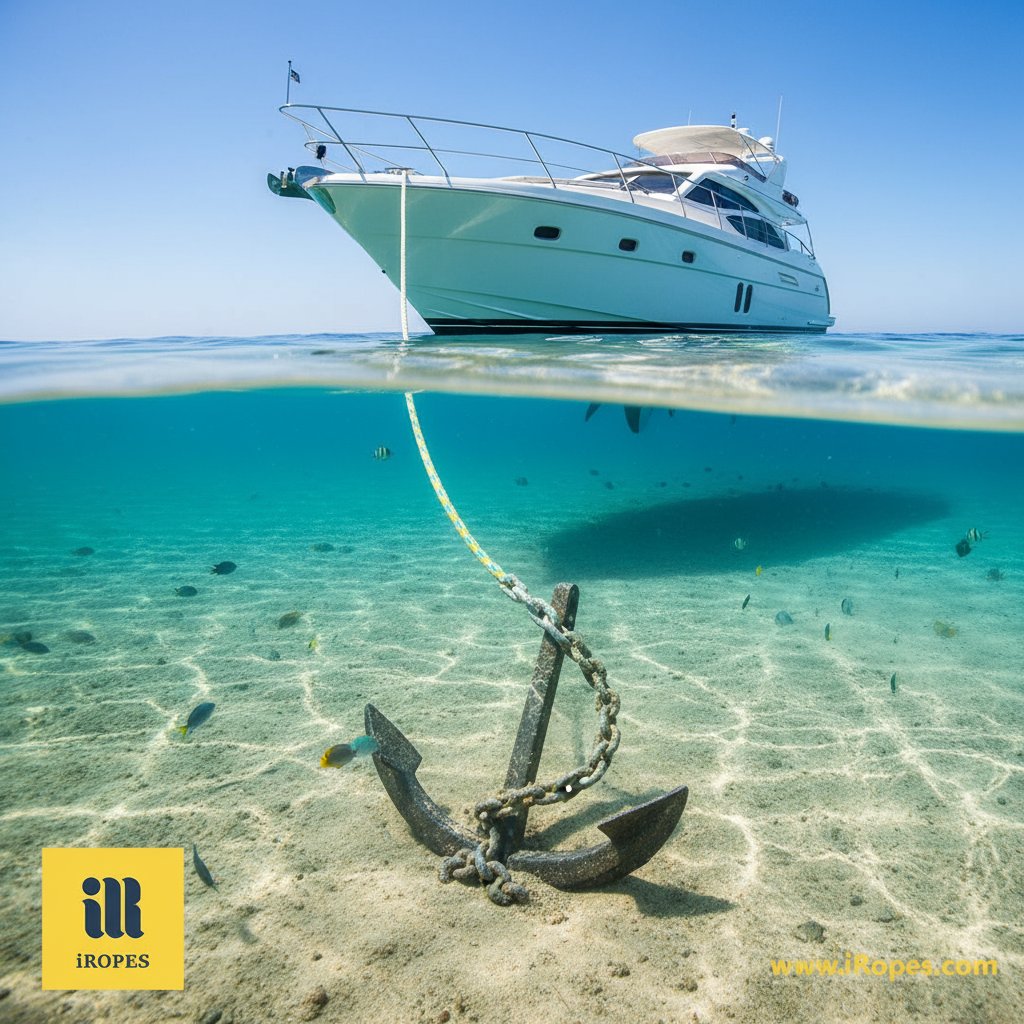
Imagine you're out on the water, the sun dipping low, and you need to drop anchor for the night. That moment when your boat holds steady isn't just luck; it's the anchor rode doing its job. So, what exactly is an anchor rode? It's the entire system connecting your vessel to the seabed, made up of three main parts: the anchor itself, which digs in to grip the bottom; a length of chain, usually right at the anchor to help with weight and protection; and the rope, or line, that extends back to your boat. Without a reliable best rope for boat anchor, the whole setup can fail, leading to drag or even a dangerous drift in rough conditions.
Think about it like this: the rope isn't just a simple connector. Instead, it's the flexible link that absorbs waves and wind, keeping tension even without snapping under sudden pressure. I've personally seen skippers who skimped on their line end up with frayed ends and sleepless nights at sea—a clear reminder that safety starts with quality equipment. A strong, well-chosen best rope for boat anchor boosts holding power by maintaining the right angle to the seabed, preventing the anchor from pulling out when your boat swings or yaws. In short, selecting the right rope is essential for peace of mind and protecting both your crew and vessel.
Now, selecting the right rope depends on a few key factors. Your boat's size and weight play a significant role; for example, a small dinghy won't need the same heft as a 40-foot cruiser. Anchoring conditions also matter immensely: calm bays call for lighter setups, whereas exposed coastlines demand more robust options to handle surges. And crucially, don't overlook the basic rode setup, specifically how much chain you pair with the rope for that critical catenary effect where the chain sags to create a horizontal pull on the anchor.
- Vessel characteristics - Match the rope's strength to your boat's displacement and typical loads; heavier vessels need thicker, stronger lines to avoid overload and ensure safety.
- Anchoring conditions - Consider wind, current, and seabed type; for instance, soft mud might require more scope, while rocky bottoms demand chafe-resistant materials.
- Basic rode setup - Balance rope length with chain to optimise shock absorption and anchor angle; a common and effective starting point is 10-15 feet of chain for most recreational boats.
At **iRopes**, we back this commitment with ISO 9001-certified manufacturing. This certification ensures every marine-grade best rope for boat anchor meets rigorous international standards for durability and performance. Our state-of-the-art facilities produce ropes that withstand the harshest marine environments, giving you confidence whether you're anchoring in a quiet cove or facing significant offshore swells.
Getting these foundations right sets you up for success. However, the real magic happens when you pick the material that perfectly matches your specific anchoring needs. This thoughtful selection greatly enhances overall safety and performance.
Material Matters: Determining the Best Type of Rope for Boat Anchor
Building on those core elements of your anchor rode, the material you choose for the line can significantly impact how well it handles real-world stresses like sudden gusts or shifting tidal pulls. I've anchored in everything from glassy harbours to choppy bays, and nothing beats a rope that stretches just enough to cushion the blow without giving way. Let's break down the main options so you can understand why one particular material stands out for the majority of boaters.
When it comes to identifying the best rope to use for a boat anchor, **nylon** consistently takes the crown for its unique blend of properties specifically tailored to marine demands. It offers high elasticity, which effectively acts like a built-in shock absorber during sudden wave impacts, preventing the sharp snaps and jerks that could otherwise drag your anchor. Furthermore, nylon possesses solid strength, resists UV damage remarkably well even after long exposures, and sinks in water. The sinking characteristic helps keep the line taut and low-profile, minimising tangential forces. In contrast, polyester offers low stretch, providing steady tension, but it lacks that crucial forgiving give, making it generally better suited for dock lines than dynamic anchoring. Then there's polypropylene—it floats, which might sound handy initially. However, its poor UV resistance leads to rapid degradation in sunlight, and it simply doesn't hold up well under constant load. That's why marine experts universally steer clear of it for serious anchor work. So, when asking, *is nylon or polypropylene better for anchor rope?* The answer is unequivocally nylon. Nylon wins hands down for safety, as its sinking and elastic nature keeps things far more secure without the inherent risks of floating or quickly deteriorating under marine conditions.
Nylon
Top Pick for Elastic Anchoring
High Elasticity
Stretches up to 30% to absorb severe shocks from waves and sudden wind shifts.
UV and Abrasion Resistance
Reliably holds up in direct sunlight and against rough seabeds for many years of use.
Sinks in Water
Maintains a low angle for dramatically better holding power without entanglement issues.
Polyester & Polypropylene
Alternatives with Significant Limitations
Low Stretch in Polyester
Offers durability, but transmits much more force directly to the anchor and boat.
Poor UV in Polypropylene
Degrades quickly outdoors, making it entirely unsuitable for long-term marine exposure.
Floats in Polypropylene
Can cause significant drag or visibility issues in currents, posing a risk to propellers.
Beyond material, the construction of nylon rope critically affects its day-to-day performance. Three-strand twisted nylon maximises stretch, making it ideal for rough conditions where you need that extra give to ride out storms. Double-braid nylon, with its smooth core and cover, handles much easier on deck and through windlasses, though it stretches slightly less. For a versatile middle ground, **8-plait nylon** offers balanced flexibility and excellent knot-holding properties without much kinking. Think of it as the all-rounder for cruisers who value both strength and simplicity in their anchoring setup.

At iRopes, we take this customisation further with our comprehensive OEM and ODM services. These services allow you to precisely tailor the best type of rope for boat anchor to your vessel's unique quirks. For example, we can add UV boosters for routes with intense sun exposure or specific braids designed to perfectly integrate with your windlass system. Whether you're outfitting a yacht for demanding offshore trips or a smaller boat for relaxed coastal hops, our experts craft solutions that precisely fit your exact conditions and operational needs.
That initial edge in material choice lays a solid groundwork. However, getting the dimensions spot on will truly unlock its potential across a wide range of depths and loads. This precision ensures optimal safety and performance in any condition.
Sizing Your Setup: Guidelines for the Best Rope for Anchor Line
Now that you've got a handle on materials like nylon's forgiving stretch, it's time to accurately size your anchoring system for your boat. I've learned the hard way on a few overnight anchors that a line too thin or too short can swiftly turn a peaceful stop into a tense, anxious watch. Your setup absolutely needs to match the real loads it'll face. Let's walk through how to perfectly nail the diameter and length, ensuring your best rope for anchor line works precisely as intended, without being either over-specified or, more dangerously, undersized.
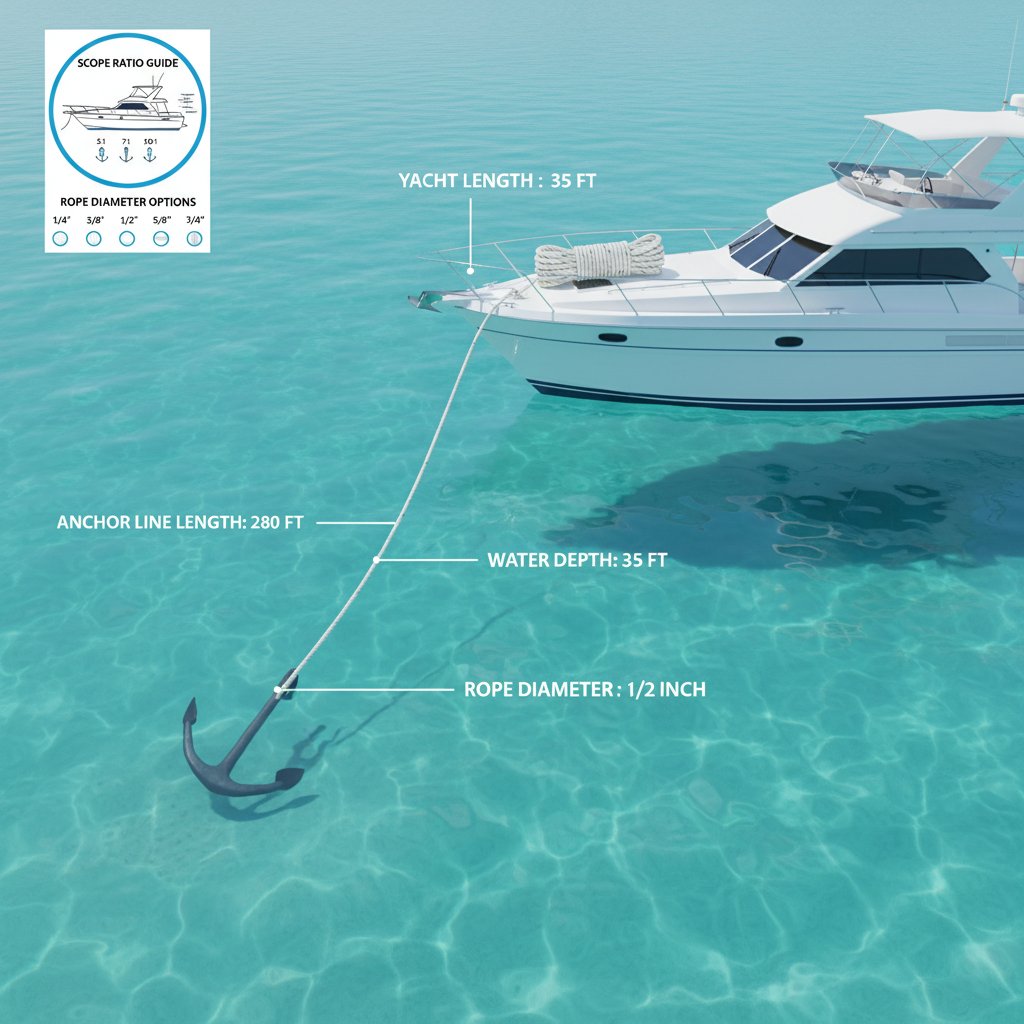
Start with diameter, because the question is always, *how thick should your anchor rope be?* A straightforward rule of thumb is to allow 1/8 inch of rope thickness for every 9 to 10 feet of your boat's length. For instance, a 30-foot boat would typically require a 3/8-inch diameter rope. However, don't stop there; critically, factor in your vessel's weight and where you'll primarily cruise. A heavier cruiser bound for demanding offshore passages might prudently bump up to 1/2 inch for an extra margin of safety against significant swells. Conversely, a lighter coastal runabout can confidently stick closer to the minimum recommendation for easier handling. Think of it like choosing waders for a challenging hike: too skinny, and they'll tear under duress; too bulky, and you'll be dragging your feet unnecessarily, hindering movement. For guidance on selecting the right rope diameters like 1-inch, 2-inch, or 3-inch, consider your specific load requirements and application.
Once the diameter is sorted, tackle length and scope. Scope refers to the paid-out ratio of line to water depth, which is vital for maintaining a horizontal pull on the anchor for solid, reliable holding. Aim for a 7:1 scope ratio in moderate conditions or, more conservatively, an 8:1 ratio when winds begin to pick up. This means you’d deploy 70 to 80 feet of rode in 10 feet of depth, respectively. Critically, adjust for the seabed type: more scope is often needed in soft mud to allow the anchor to bury deep, less in sand where it resets easily, and careful consideration is required in rocky areas to avoid frustrating snags. For instance, on a trip last summer in variable bays, precisely dialing in that extra scope quite literally saved me from resetting the anchor twice during a rapidly building chop.
Coastal Cruising
For lighter loads and calmer waters: generally, 3/8-inch nylon at a 7:1 scope for 20-30 ft boats provides ample security.
Offshore Ventures
For heavier demands and deeper holds: consider 1/2-inch rope with an 8:1 scope for 40+ ft vessels operating in rougher, more exposed conditions.
Mud Bottoms
Extra length is crucial for penetration: add 10-20% more scope than usual for a secure set and to prevent premature pull-out.
Sandy or Rocky
Tighter ratios often work: 6:1 to 7:1; prioritise quick resets and diligent chafe checks, especially in rocky terrain.
These guidelines specifically leverage nylon's inherent strengths as the go-to material for boat anchors, where its elasticity truly shines under variable pulls—performing far better than stiffer options that could abruptly jerk your gear loose. At iRopes, we make this approach highly personal with custom diameters and lengths, plus constructions meticulously tuned to your specific cruising plans. Want reflective strands for added night visibility during those late-night anchors? Our expert team handles it all through our comprehensive OEM and ODM services, delivering precisely what keeps you steady, safe, and secure.
With dimensions diligently dialled in, pairing that optimally sized line with sturdy chain takes your entire rode system to the next level. This crucial combination smooths out angular forces and provides essential guarding against wear and tear down below the waterline.
Optimizing the Rode: Chain Integration and Advanced Considerations
With your rope's dimensions now locked in, adding chain to the mix transforms the entire anchoring system into something far more resilient and reliable. I've anchored in spots where the seabed scrapes like sandpaper, and without that upfront chain, the line would undoubtedly fray before morning. Chain isn't merely additional weight; it's the unsung hero that keeps everything aligned and optimally protected. This allows your best rope for anchor line to focus on what it does best: stretching harmoniously with the boat's dynamic movements. The combination optimises both safety and longevity.
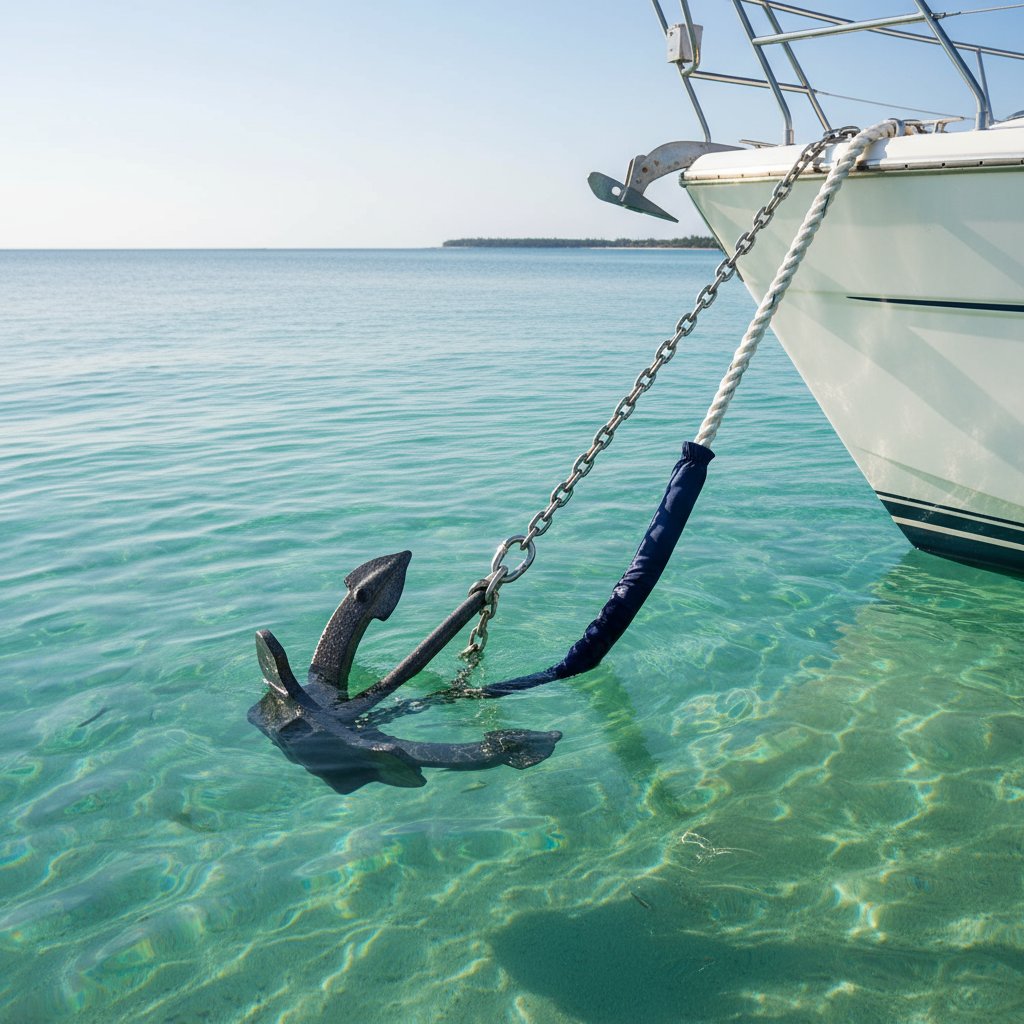
The chain's primary job begins right at the anchor, where it effectively shields the rope from destructive chafe against harsh rocks or coral. Simultaneously, it creates that crucial **catenary curve**—a natural sag that gracefully transforms vertical tugs from the boat into a gentler, more effective horizontal pull. This horizontal force significantly helps the anchor stay reliably buried. Moreover, the chain intelligently aids in shock absorption by damping the initial abrupt jerks from waves, thereby spreading the load so your rope doesn't bear the full brunt of severe punishment. For appropriate lengths, a robust starting point is 10 to 15 feet of chain for smaller boats. Alternatively, you can use roughly one foot of chain per foot of your vessel's length to match the expected swing and conditions. When choosing grades, opt for **BBB** for its flexibility in rough use or **G4** for superior strength in larger, more demanding setups. Think of it as carefully selecting the right tool for the job. The chain's significant heft ensures the rode lies flat on the seabed, rather than lifting inefficiently like a straight shot.
Assembling the rode properly truly seals the deal, especially when meticulously tailoring it to your boat and the specific waters ahead. Splicing the rope directly to the chain creates the strongest possible bond, as it expertly weaves the rope's strands around the chain links, eliminating any potential weak spots—a method far superior to a simple knot, which could slip under extreme load. Shackles come in handy for quick, temporary connections to the anchor or as reliable backups. However, always choose shackles with robust safety pins and ensure their size perfectly matches to avoid binding or premature wear. If you've got a windlass, it's crucial to ensure the chain fits its gypsy without any jamming; a mismatched setup can quickly turn routine retrieval into a frustrating hassle, especially during a sudden blow. You might ask, *how much anchor chain do I need?* The answer depends on your boat's size and typical anchoring depths, but a 1:1 ratio (chain length to boat length) keeps things well-balanced for coastal jaunts or longer, more adventurous voyages. And for effective scope, which measures the rode length to water depth, aim for approximately 7:1 in fair weather to flatten the angle effectively without overdoing it unnecessarily.
- Splice the rope end - Eye-splice a thimble into the line, then expertly chain-splice it to the chain's end for seamless, enduring strength; this method often hides the connection neatly below deck. For detailed techniques, explore mastering the art of the 3-strand rope eye splice.
- Attach with shackles - Use a robust galvanized D-shackle to link the chain securely to the anchor, torqued tight but regularly inspected to prevent loosening from constant vibration.
- Test windlass fit - Run a short length of the chain and rope through the windlass system to meticulously check for smooth operation, promptly adjusting chain size if it skips or binds on the drum.
Keeping your entire rode system in top condition necessitates regular, thorough checks. Feel for any soft spots or fuzz where wear might be discreetly hiding, and diligently watch for colour fade from UV exposure hitting the rope. Replace the line every few years or after significant heavy use; clear signs like reduced diameter or increased stiffness strongly signal it's time for replacement, often around 4-5 years in particularly sunny climates. *Can I use a shackle to connect my rope and chain?* Yes, you can, but splicing is generally preferable for superior longevity and strength, while shackles often serve best for temporary fixes or quick adjustments. *How do you splice a rope to a chain?* It's inherently a job requiring a fid tool and a good deal of patience, involving pushing fibres intricately through chain links. However, professionals can create splices that reliably last seasons longer than simpler clamped connections.
For seamless, custom setups, **iRopes** steps in with full OEM and ODM services. We expertly craft integrated rodes that precisely blend your chosen rope with perfectly compatible chain ends. We meticulously protect your designs through solid intellectual property (IP) measures and efficiently ship custom-packaged kits worldwide, directly to your dock. This comprehensive service is perfect for wholesalers outfitting extensive fleets for varied conditions, from calm bays to tumultuous seas. Whether it's a tough, custom splice engineered for brutally rocky grounds or a windlass-ready braid, our precision manufacturing ensures the entire system holds flawlessly when it counts the absolute most. Learn more about our OEM services for tailored solutions.
Ultimately, putting all these crucial pieces together empowers you with an anchor rode that's truly ready for whatever the sea unpredictably throws your way. This comprehensive understanding wraps up the essential elements for anchoring with real, unwavering assurance.
As we've thoroughly explored, selecting the **best rope for boat anchor** hinges foundationally on nylon's standout elasticity and remarkable shock absorption. This clearly outshines polyester's more rigid, low-stretch properties and polypropylene's significant UV weaknesses. Whether it's twisted or braided constructions, each enhances handling characteristics. Optimal sizing—specifically 1/8 inch of rope diameter per 9-10 feet of boat length—and the strategic use of 7:1 scopes further optimise performance across diverse coastal or offshore scenarios, meticulously tailored to mud, sand, or challenging rocky bottoms. Integrating a vital 10-15 feet of chain dramatically boosts crucial chafe protection and enhances the crucial catenary effect, collectively ensuring your **best rope for anchor line** holds firmly and reliably. For truly vessel-specific needs, iRopes' comprehensive OEM/ODM expertise delivers custom **best type of rope for boat anchor**, complete with essential certifications and efficient global delivery capabilities.
These detailed insights empower safer, more reliable anchoring practices. However, applying them precisely to your unique setup can elevate your vessel's overall reliability and peace of mind even further.
Need Custom Anchor Rope Advice? Get Personalised Guidance
If you're ready to optimise your anchor rode with tailored solutions from iRopes, please fill out the inquiry form above. Our expert team is here to help refine your selection for unparalleled peace of mind on the water.
