You can pull up to 42,000 lb with a 1-inch HMPE pulling rope—that's 3× the strength of standard polyester lines.
Read in 45 seconds
- ✓ Reduce rope weight by up to 30% versus steel cable, easing handling.
- ✓ Extend service life 2–5 times with UV-resistant, low-stretch construction.
- ✓ Cut inspection time by 50% thanks to torque-free double-braid design.
- ✓ Benefit from ISO 9001-certified quality and traceable batch testing.
Most crews still haul with heavy steel cable, assuming it is the only way to manage a 10,000 lb pull. However, what if you could halve the load weight while significantly boosting safety by 25% using a synthetic winch line? Continue reading to discover the counter-intuitive switch that elite operators rely on and how iRopes can customise it for your exact workflow.
Understanding Pulling Rope: Types and Core Features
Having introduced the broad categories, let us now delve into the specific characteristics of each pulling rope and why these differences are crucial for your projects.
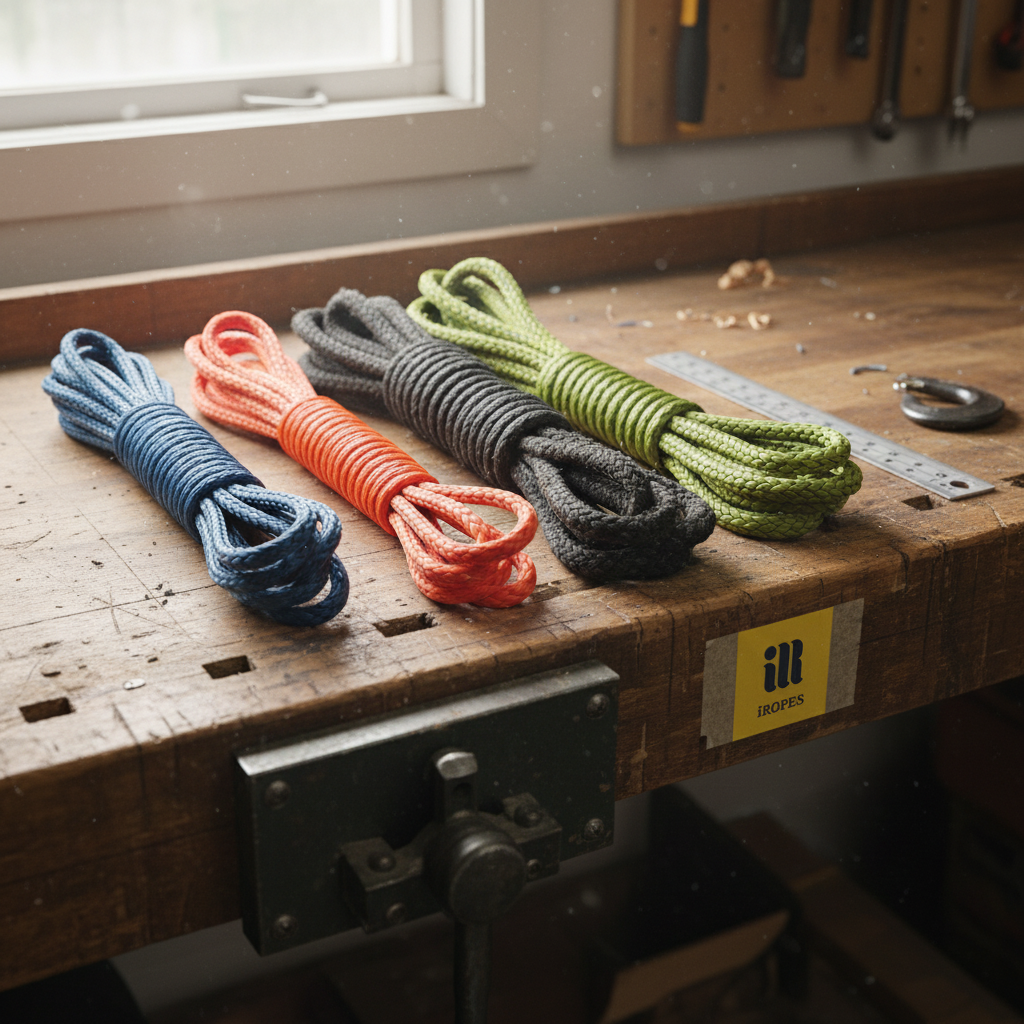
- Synthetic winch lines are specifically designed for winch drums, offering torque-free spooling and minimal stretch.
- Cable-pulling ropes are ideal for feeding electrical or communication cables through conduits.
- Heavy-duty industrial ropes are engineered for lifting, rigging, and general utility where high load capacity is essential.
- Arborist bull ropes are specialised for tree work, combining strength with flexibility for safe rigging.
Material Choices
What the fibre brings
Polyester
Polyester offers low stretch, excellent UV resistance, and reliable abrasion protection, making it ideal for outdoor tasks.
Nylon
Its high elasticity provides significant shock absorption, making it suitable for dynamic loads and impact. Nylon is often used as a core for strength and stretch.
HMPE/Dyneema
Known for an ultra-high strength-to-weight ratio, minimal stretch, and outstanding abrasion resistance, HMPE/Dyneema often replaces steel wire rope.
Construction Types
How the strands are arranged
Double Braid
This construction is torque-free, easy to spool, and features a protective outer jacket over a strong core. It is common for pulling ropes.
12-Strand
Offering high tensile capacity and simple splicing, the 12-strand design is often used with HMPE fibres.
Kernmantle
In this construction, a core is protected by a sheath, delivering superior durability and resistance to abrasion.
Understanding these categories, materials, and constructions provides the essential knowledge to compare any pulling rope on the market. When you progress to selecting a rope for a specific winch or load, you will confidently know which combination delivers the optimal performance for a safe rope pulling winch operation.
Choosing the Right Pulling Rope for Your Application
Now that you grasp the main types and their characteristics, the next crucial step is to correctly size the rope for your load.
- Identify the rope's breaking strength, typically listed in pounds (lbs).
- Apply an appropriate safety factor. Most industries use a 1:5 to 1:10 ratio to derive the Working Load Limit (WLL).
- Select a diameter whose rated breaking strength comfortably exceeds the calculated WLL.
For example, if a 3/16-inch synthetic line has a rated breaking strength of 12,000 lb, applying a 1:5 safety factor yields a WLL of 2,400 lb. Choosing a rope with a higher breaking strength than this WLL ensures you remain comfortably within safe operational limits.
Environmental conditions present the next set of critical considerations. UV-intensive environments favour polyester-jacketed ropes because their fibres resist colour fading and strength degradation. Tasks involving high abrasion, such as pulling cables through conduits, benefit immensely from a hardened outer sheath. In contrast, chemical plants often require specialised coatings that effectively repel solvents. Temperature extremes are also significant: nylon softens above 180°F, so in hot climates, a Dyneema (HMPE) core retains optimal stiffness and strength.
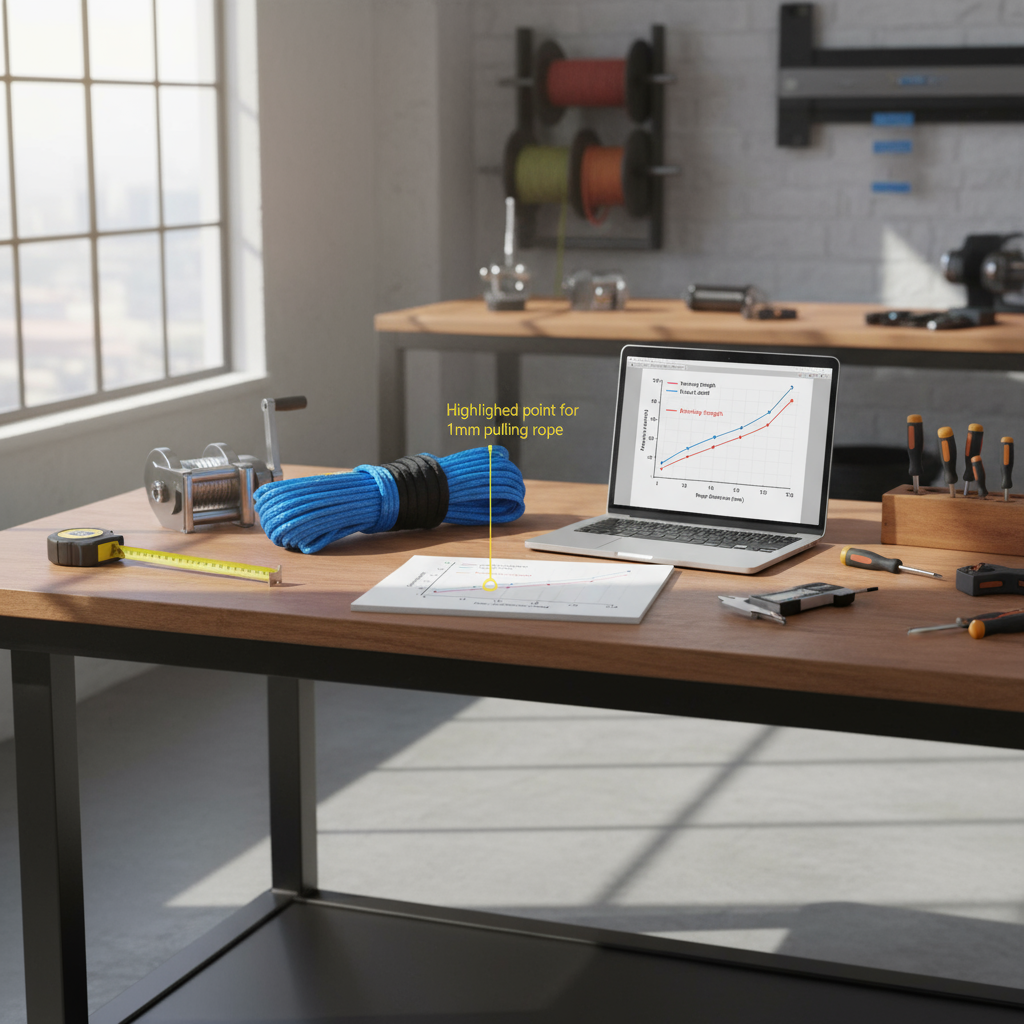
Choosing a rope that matches the winch's drum profile and the load's dynamics is more than a convenience—it's a safety requirement. A rope pulling winch designed for low-stretch Dyneema will behave very differently from one using a stretchy nylon line.
Finally, it is vital to understand the subtle distinction between a generic pulling rope and a dedicated winch rope. Pulling ropes are versatile and excel at transmitting force over distance, but they may not spool cleanly on a drum. Winch ropes, in contrast, are specifically engineered for torque-free spooling, minimal bite, and consistent lay-length. This design reduces wear on both the rope and the winch itself. Therefore, selecting the correct type not only protects your equipment but also extends its service life significantly.
With the appropriate diameter, the right material for the intended environment, and the correct classification for your winch, you are well-prepared to fine‑tune the performance and safety of your rope pulling winch lines.
Optimising Rope Pulling Winch Lines: Performance and Safety
Now that you have correctly sized your pulling rope, the next challenge involves extracting maximum reliable performance from each winch line while keeping safety paramount.
Performance Metrics
Breaking strength defines the ultimate load a line can sustain, while the Working Load Limit (WLL) sets the safe operating ceiling—typically 1/5 to 1/10 of that figure. Low-stretch fibres like HMPE maintain elongation under 3% even at peak load, and a double-braid construction guarantees torque-free spooling on a winch drum.
For more detailed guidance on selecting the ideal synthetic winch rope, see our article Boost Your Winch with a Durable Replacement Synthetic Rope.

Safety First
Knots can reduce a line’s strength by up to 30%, making a professionally spliced eye the safest termination. Inspect the sheath for cuts, abrasions, or UV-induced fraying before each use, and replace any rope showing more than 5% wear. Employing a safety factor of 1:8 protects both the winch and the operator effectively.
Durability
Choosing a double-braid core-protected construction significantly reduces abrasion on drum edges. Furthermore, a hardened outer jacket repels chemicals and resists cuts, enhancing longevity. Regularly lubricating the winch drum prevents bite and maintains the torque-free characteristic that prolongs rope life.
Inspection Routine
Adopt a three-step check for your pulling ropes: a thorough visual surface scan, a tension test at 50% of the rated breaking strength, and a quick flex test to detect hidden fibre damage within the core.
Material Choice
For the most demanding winching tasks, a 1/2-inch HMPE line delivers roughly 40,000 lb breaking strength, significantly outpacing a similarly sized nylon line which typically peaks near 22,000 lb. This superior strength-to-weight ratio also results in less drum inertia and smoother operation.
To address a common inquiry, the breaking strength of a 5/16-inch Dyneema winch rope is typically around 30,000 lb. This makes it an ideal candidate for heavy-duty rope pulling winch jobs where both low stretch and high load capacity are essential requirements.
iRopes Custom Solutions & Bulk Benefits for Wholesale Buyers
Having identified the optimal winch line for your needs, the next logical step is to explore how iRopes can transform a standard pulling rope into a product that seamlessly integrates with your exact workflow and branding requirements.
OEM/ODM Process – From Material to Final Accessories
Our engineers begin by meticulously selecting the fibre that best suits your specific load profile. Whether you require the ultra-high strength of HMPE for a demanding rope pulling winch application or the reliable low-stretch performance of polyester for extended cable pulls, we tailor the material choice to your needs. Once the material is confirmed, you specify the precise diameter and length; we are equipped to produce anything from individual metres to full-pallet rolls. Our extensive colour and pattern options allow you to seamlessly embed your corporate identity directly onto the rope sheath. Furthermore, optional eye splices, thimbles, or hardened end fittings arrive pre-installed, effectively eliminating potential field-termination errors and enhancing safety.
Explore our range of 1‑inch and 2‑inch braided ropes for detailed specifications and custom‑branding options in the article Explore iRopes 1 Inch and 2 Inch Braided Rope Options.
Quality Assurance – Certified Consistency and IP Protection
Every batch of our pulling rope is meticulously inspected against stringent ISO 9001 standards. Independent tensile tests are consistently conducted to confirm that the breaking strength precisely matches the data sheet specifications. Additionally, we rigorously safeguard your proprietary designs through strict intellectual property protocols, ensuring that the custom features you commission remain exclusively for your brand.
All iRopes products carry ISO 9001 certification, and every batch undergoes independent tensile testing to guarantee performance.
Wholesale Advantages – Price, Logistics, and Support
Because we operate at scale, our wholesale orders benefit from tiered pricing structures that maintain competitive unit costs without ever compromising on material quality. Finished pallets are efficiently shipped directly from our Chinese facilities to ports across the globe. Our dedicated logistics team expertly coordinates all customs paperwork to minimise delays and ensure smooth delivery. Following delivery, a dedicated account manager remains on-call to promptly address any technical queries or replacement needs, thereby ensuring your pulling rope supply chain remains consistently uninterrupted.
Read our comparison Synthetic Winch Rope vs Steel Cord Which is Safer to understand why a synthetic solution typically outperforms traditional steel cords in safety and longevity.

Wholesale Edge
Competitive pricing, global pallet delivery, and dedicated after-sales support empower your business.
Whether you are ordering a pulling rope for a high-capacity winch or a bulk roll for extensive cable-pulling projects, iRopes' end-to-end service transforms a generic specification into a tailored solution that scales precisely with your demand.
Ready for a Custom Pulling-Rope Solution?
This guide has provided a comprehensive overview of the main pulling rope families, explored key material choices such as polyester, nylon, and HMPE, and detailed how to calculate the correct diameter and working load limit. You have also learned why a specialised rope pulling winch line, featuring low stretch and proper splicing, significantly outperforms generic alternatives. Furthermore, we have outlined how iRopes can customise a pulling rope to precisely match your brand, performance, and safety requirements. Our offerings include high-performance winch ropes and durable nylon ropes, carefully designed to surpass standard market alternatives.
Are you ready to translate these insights into a specific solution that perfectly fits your exact workflow? Simply fill out the form above, and our dedicated rope specialists will assist you in selecting the ideal rope for your project.
