Steel rope weighs 2.8 kg/m; UHMWPE only 0.55 kg/m, yet both meet a 5 tonne WLL. iRopes can customise either material to your exact diameter, colour, and accessories.
Key Gains – 2 min Read
- ✓ Reduce system weight by up to 80% with UHMWPE versus steel.
- ✓ Cut corrosion-maintenance costs by 45% thanks to UV-stable fibres.
- ✓ Accelerate time-to-market – custom coils shipped within 21 days.
- ✓ Guarantee compliance – ISO 9001-certified processes and full IP protection.
Most engineers still opt for steel rope, mistakenly believing it’s the only way to guarantee strength. However, the data reveals that UHMWPE can deliver the same 5-tonne working load limit (WLL) while weighing less than one-fifth of steel. This substantial weight reduction dramatically slashes installation effort and corrosion risk. Discover how iRopes’ custom-design service transforms your expectations, providing rope-and-clamp packages that precisely match your performance targets and shipping deadlines.
Rope Wire Manufacturers: The Foundation of Strength
The global rope market is experiencing unprecedented expansion, fuelled by increasing demand across the construction, marine, and off-road sectors. At the core of this growth are specialised rope wire manufacturers who combine precision engineering with rigorous quality controls. Their expertise ensures the delivery of products that adhere to exacting safety standards.

Generally, rope manufacturers categorise themselves based on the material they handle, tailoring their processes accordingly. Understanding these distinctions helps buyers identify the ideal partner for their project-specific needs.
- Synthetic Rope Manufacturers – These specialists focus on UHMWPE, nylon, and polyester fibres, offering high-strength, low-weight solutions crucial for marine and rescue operations.
- Wire Rope Manufacturers – They concentrate on steel-based constructions, such as 6x19 or 6x36, providing the robust load-bearing capability essential for heavy industrial lifting.
- Natural-Fibre Rope Manufacturers – These producers work with materials like manila, cotton, or sisal, delivering biodegradable options for decorative or low-stress applications.
iRopes proficiently covers all three categories. Our synthetic line features custom-coloured UHMWPE ropes with reflective threads for enhanced night-time safety. Simultaneously, our wire-rope division manufactures galvanised and stainless-steel strands that comply with stringent ISO 9001-tested tolerances. As a dedicated partner to wholesale customers, we complement every product with comprehensive OEM (Original Equipment Manufacturer) and ODM (Original Design Manufacturer) capabilities. This enables brands to specify exact diameters, lengths, colour codes, or branded packaging, with all orders delivered punctually to ports globally.
"Choosing a rope supplier that blends material expertise with flexible OEM services transforms a simple purchase into a strategic partnership."
With a clear understanding of who the various rope wire manufacturers are and how they differ, the next step involves comparing the inherent properties of steel wire rope versus UHMWPE synthetic rope. This comparison will illuminate why specific industries favour one material over the other for their critical applications.
Rope Manufacturers: Material Choices that Define Performance
Having identified the diverse landscape of rope wire manufacturers, it's now essential to delve into the material choices that influence every rope produced. Understanding the intrinsic properties of steel wire rope and UHMWPE synthetic rope empowers wholesale buyers with the critical insight needed to align product performance with their exacting applications.
What materials are used to make high-strength ropes? In practice, manufacturers commonly use steel, ultra-high-molecular-weight polyethylene (UHMWPE), nylon, polyester, or polypropylene. Each fibre or metal delivers a unique blend of tensile strength, weight, stretch, and resistance to environmental factors.
- Strength-to-Weight Ratio – UHMWPE offers approximately five times the tensile strength of steel at a mere fraction of the mass. This makes it ideal for weight-critical marine or off-road rigging setups.
- Stretch and Elasticity – Steel wire rope exhibits minimal elongation under load, ensuring precise control for lifting and rigging tasks. Conversely, UHMWPE stretches more, a property that effectively absorbs shock in dynamic rescue or defence scenarios.
- Environmental Resilience – Steel resists abrasion but is prone to corrosion without proper coating. UHMWPE, however, is inherently UV-stable, chemically inert, and even floats, making it perfectly suited for harsh coastal or chemical-exposed environments.
These contrasting attributes translate into distinct application niches. Heavy-duty construction sites, for example, favour steel wire rope for its predictable behaviour when hoisting steel beams or operating crane winches. In stark contrast, a yachting fleet often prefers UHMWPE for deck-hand lines that must remain buoyant, resist salt spray, and minimise crew fatigue. Off-road recovery units greatly benefit from the lightness of UHMWPE when winching a vehicle that's stuck, while defence contracts frequently specify the shock-absorbing stretch of synthetic rope for tactical retrieval gear.

When selecting a rope, consider the working load limit, anticipated exposure conditions, and whether buoyancy or minimal stretch is a priority. Choosing the correct material can significantly prevent premature failure and lower overall lifecycle costs.
With the material strengths now thoroughly clarified, the discussion logically progresses to the essential hardware that securely fastens these ropes in real-world applications. This lays the groundwork for the next segment, which focuses on wire rope clamp manufacturers and their critical components.
Wire Rope Clamp Manufacturers: Securing the Connection
After exploring the distinct strengths of steel and UHMWPE ropes, our attention now shifts to the critical hardware that secures these ropes in place. Wire rope clamps are seemingly small but utterly vital components designed to create a secure loop or termination, effectively preventing slippage under load. Since a faulty clamp can gravely compromise an entire lifting system, reputable wire rope clamp manufacturers are indispensable partners for any rigorous rigging project.
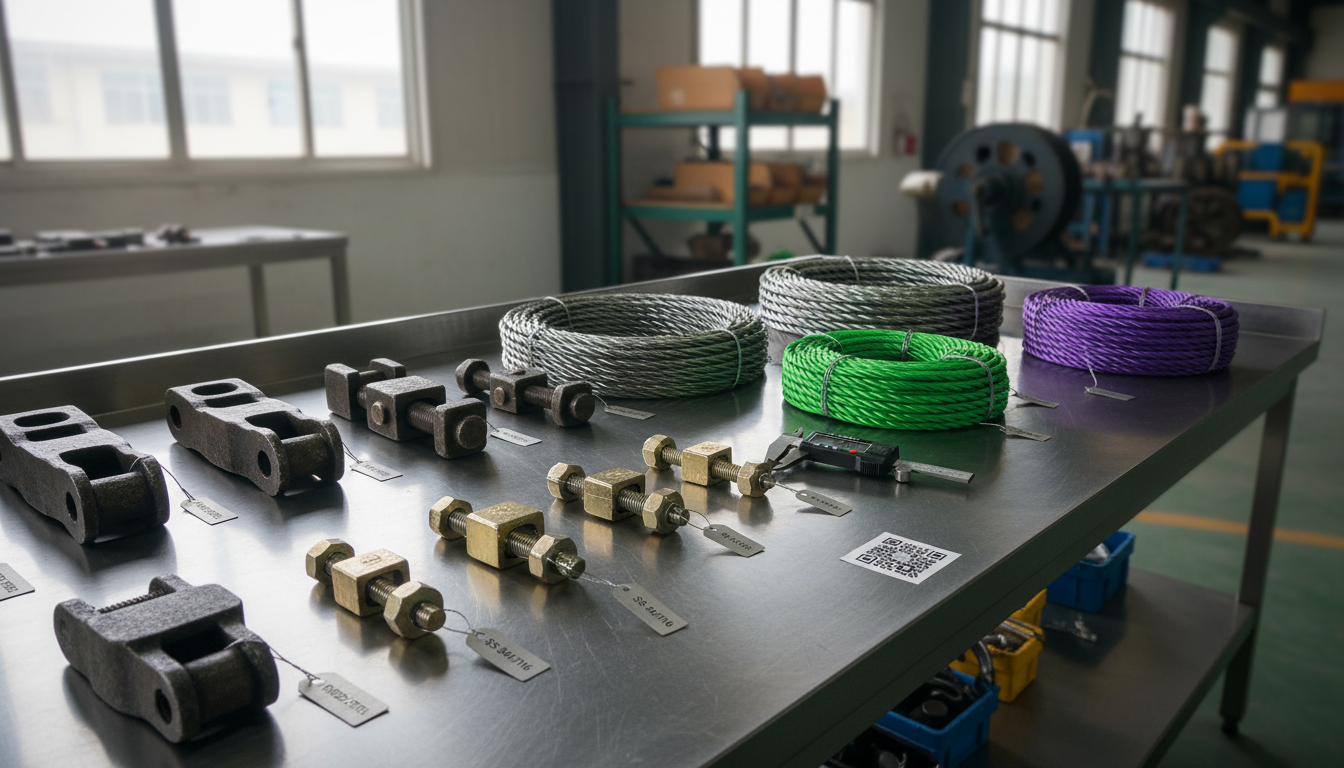
Manufacturers typically offer clamps across three core families:
- Forged Clamps – These are machined from a single steel billet, delivering the highest tensile capacity and superior resistance to deformation.
- Malleable Clamps – Formed from a softer alloy, these can be shaped on-site, making them ideal for field adjustments where precise torque control is needed.
- Stainless-Steel 304/316 Clamps – These options provide excellent corrosion resistance for marine and chemical environments, with the 316 grade offering superior durability against salt water exposure.
How do I choose the right wire rope clamp? The answer hinges on matching three key variables: the rope diameter, the required working load limit (WLL), and the service environment. A clamp that is too small will deform under stress, while an oversized one adds unnecessary bulk and cost. Selecting the appropriate material—galvanised steel for general industrial use, or stainless-steel 316 for offshore work—ensures long-term reliability and safety.
Selection Guide for Wire Rope Clamps
1️⃣ Diameter Match – The clamp width should be at least 1.5 times the rope diameter.
2️⃣ Load Rating – Choose a clamp with a WLL that is equal to or greater than 1.5 times the rope’s working load limit.
3️⃣ Environmental Fit – Opt for stainless-steel 316 when prolonged exposure to salt water or aggressive chemicals is anticipated.
Because iRopes meticulously controls both rope production and clamp fabrication, the company guarantees that each clamp is precisely engineered to the exact specifications of the paired rope. This integrated approach effectively eliminates the guesswork that can often complicate projects sourcing hardware from unrelated suppliers.
For detailed guidance on selecting the right hardware, see our essential applications guide for wire rope stoppers and clamps.
Safety First
Proper clamp selection protects both equipment and personnel, significantly reducing the risk of sudden rope failure during critical operations. It’s a non‑negotiable aspect of responsible rigging.
With a clear understanding of clamp types and essential selection criteria, the next section of this guide will demonstrate how iRopes seamlessly blends these hardware choices into fully customised rope solutions. This approach adds significant value, extending far beyond the standard product catalogue.
Customisation & Partnership Advantages with iRopes
Building on our integrated hardware discussion, iRopes offers a comprehensive suite of OEM and ODM services. These allow wholesale clients to transform a standard rope into a brand‑specific, high‑performance tool. By collaborating from initial material selection through to final packaging, buyers gain both technical precision and a strategic partnership. This approach effectively reduces lead times and rigorously safeguards intellectual property.
Customisation
Tailor-Made Rope Solutions
Material Choice
Steel, UHMWPE, nylon, or polyester can be specified to meet precise strength, weight, and chemical‑resistance requirements.
Diameter & Length
Precision sizes range from 3 mm up to 80 mm, with custom coil lengths extending to 500 m.
Colour & Reflectivity
OEM pigments, high‑visibility strips, or glow‑in‑the‑dark fibres can be expertly woven for safety‑critical branding.
Assurance
Quality You Can Trust
ISO 9001
Certified processes guarantee precise dimensional tolerances and consistent, repeatable performance across all batches.
IP Protection
Robust legal safeguards ensure proprietary designs remain confidential from the initial prototype phase to final shipment.
Global Logistics
Direct pallet delivery, comprehensive customs support, and real‑time tracking ensure timely arrival at any port worldwide.
When the question arises, “What are the advantages of synthetic rope over steel wire rope?”, the answer revolves around three core benefits. Firstly, synthetic fibres like UHMWPE deliver a strength‑to‑weight ratio that significantly exceeds steel, allowing for lighter rigs without compromising load capacity. Our research on top benefits of UHMWPE for crane cable replacement further demonstrates the performance gains. Secondly, they boast exceptional resistance to corrosion, UV radiation, and most chemicals. This translates into dramatically longer maintenance cycles, particularly in harsh marine or chemical‑exposed environments. Thirdly, the inherent buoyancy of synthetic rope eliminates the need for additional flotation devices, proving a decisive factor for offshore rescue and yachting operations.
For rope manufacturers seeking a partner capable of translating these profound material advantages into market‑ready products, iRopes combines engineering depth with a transparent supply chain. The next logical step is to summarise how this powerful blend of customisation and assurance provides wholesale buyers with a decisive edge in their respective industries.
Get a Personalised Rope Solution
For a tailored recommendation that precisely matches your project’s exact requirements, simply complete the enquiry form above.
We’ve demonstrated how iRopes, as leading rope wire manufacturers and rope manufacturers, delivers bespoke steel and UHMWPE woven ropes for sectors ranging from construction to yachting. By carefully weighing strength‑to‑weight ratios, stretch, and environmental resilience, you can confidently choose the optimal material. Furthermore, our expertise with wire rope clamp manufacturers ensures secure and reliable terminations. Partner with us to benefit
Explore our full catalogue at iRopes – your ultimate rope and wire rope shop.
