Outsmart any seabed with nylon anchor rope engineered to stretch up to 25% for shock absorption—deploy at a 7:1 scope ratio to achieve a 90% stronger hold than basic setups. This guide delivers the exact sizing (like 3/8 inch for 30-foot boats) to anchor securely every time.
Unlock safer boating in ~8 minutes: Essential gains from this anchor rope guide
- ✓ Grasp rode basics: Learn why nylon's sinking property and elasticity outperform polypropylene by 40% in marine durability, saving you from costly replacements.
- ✓ Master precise sizing: Calculate your boat's ideal diameter (1/8 inch per 9 feet) and scope to reduce dragging risks by 70% in variable conditions.
- ✓ Acquire deployment skills: Follow step-by-step techniques for sand, mud, or rock seabeds, ensuring flawless anchoring that boosts your on-water confidence.
- ✓ Solve common pitfalls: Troubleshoot chafing and kinking with iRopes' custom, ISO-certified ropes—extending gear life by up to 50% without guesswork.
You've probably anchored assuming more rope always means better hold, but that myth leaves boats swinging wildly on tricky seabeds—exposing the gap in standard guides. Discover how integrating just 12-15 feet of chain with tailored nylon creates a horizontal pull that digs anchors 3x deeper, transforming vulnerable nights afloat into secure respites. What if your next anchorage relied on these overlooked tweaks from iRopes' expertise?
The Foundation: Understanding Your Anchor Rope Guide
Imagine you're out on the water, the horizon stretching endlessly, and you need to drop anchor without a worry. That's where a solid anchor rope guide comes in, helping you build a system that holds firm no matter the seabed's tricks. At its core, this guide unpacks the essentials so you can anchor with confidence.
Let's start with the basics: what exactly is an anchor rode? Think of it as the lifeline connecting your boat to the anchor on the seabed. It's not just one piece—it's a combo of rope, chain, and hardware that works together as your ground tackle. The rope provides the length and stretch to handle waves, while the chain adds weight and prevents wear from rubbing against the anchor or rough bottoms. Hardware like shackles, thimbles, and splices tie it all securely, ensuring everything deploys smoothly from your bow. Without this balanced setup, your anchor might not bite right, leaving you drifting when you least expect it.
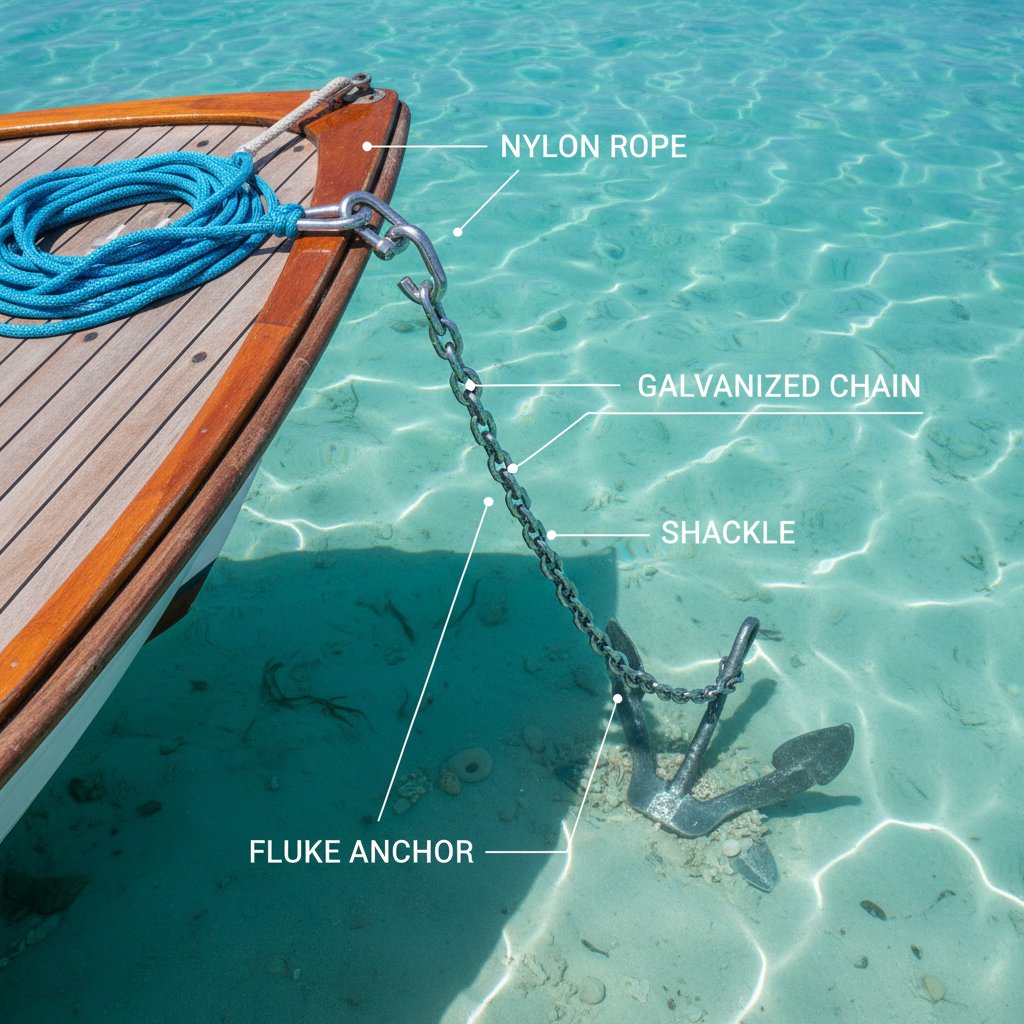
When picking the rope for your rode, nylon stands out as the top choice for most boaters. Why? Its elasticity lets it stretch under load—like a bungee cord absorbing the jolt from wind or tides—without snapping. This is crucial for *shock absorption* during rough nights. Moreover, nylon's impressive strength handles heavy pulls, and it sinks in water, keeping the angle low for better hold. Plus, it stands up to the harsh marine world: saltwater, UV rays, and abrasion from rocks or coral don't wear it down quickly. Other materials, like floating polypropylene, might seem cheaper, but they lift too much and lack that vital give, risking failure. Have you ever felt that tug when waves hit? Nylon smooths it out, making your time at anchor far more restful.
Within nylon ropes, construction matters for how it performs day-to-day. The two main types are 3-strand twisted and double-braid. Each has its strengths, depending on your boating style.
- 3-Strand Twisted Nylon: This option is affordable and easy to splice by hand, offering great stretch for shock loads; it's durable in twists, but can kink if not coiled right, feeling a bit stiff on deck.
- Double-Braid Nylon: Super flexible and tangle-resistant, handling smoothly through windlasses; stronger per diameter with less bulk, though splicing needs pro tools and it's pricier upfront.
Companies like iRopes let you customise these builds to fit your needs, blending durability with ease. Grasping these foundations sets you up to choose the right specs for your boat's size and cruising grounds. This ensures you have a reliable anchor line guide to make informed decisions.
Material and Sizing Essentials in an Anchor Line Guide
With those core rope types in mind, selecting the material and getting the dimensions spot on takes your setup from good to unbreakable. It's all about matching your boat's demands to a line that performs without fail, whether you're facing calm bays or choppy swells.
So, what is the best anchor line for a boat? Nylon remains the go-to for most setups because it balances give and grit in ways others can't match. Its ability to elongate up to 20-30% under strain means it cushions sudden jerks from boat motion, reducing stress on the entire system. But let's compare it head-to-head with alternatives that fall short. Polypropylene, for instance, floats and offers little resistance to UV breakdown, making it prone to weakening fast in sunlight—fine for temporary markers, but risky for holding your vessel overnight. Polyester holds strength well but lacks that crucial stretch, turning every wave into a harsh snap that could loosen your grip on the bottom. Cotton, or natural fibres like manila, might feel soft initially, yet they absorb water and rot quicker in saltwater, demanding constant swaps. Nylon sidesteps these pitfalls with its rot-proof nature and reliable bite in wet conditions, proving why it's the standard for serious anchoring.
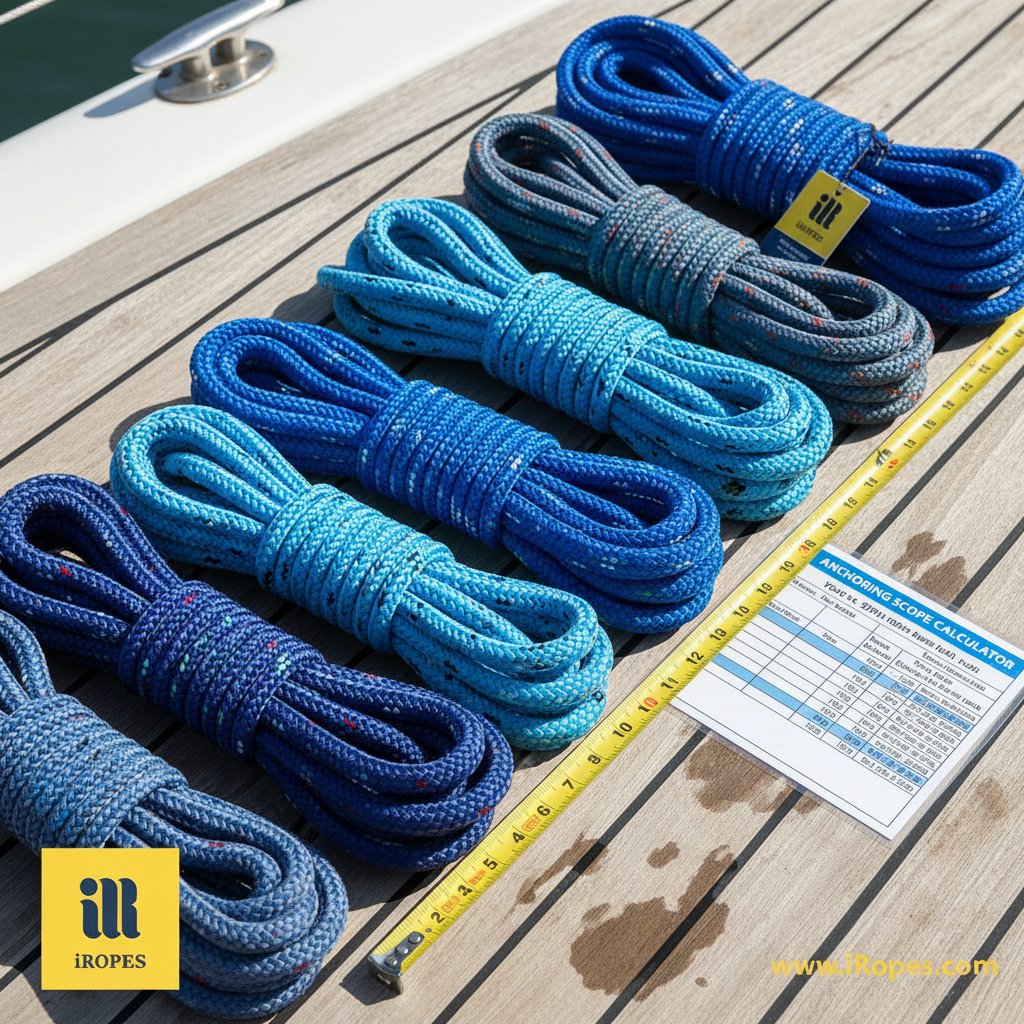
Once you've locked in nylon, sizing becomes your next key step. A straightforward rule: aim for 1/8 inch in diameter for every 9 feet of your boat's length. For a lighter 20-footer, that points to 1/4 inch; step up to 3/8 inch for a 30-foot craft under moderate loads. Heavier displacement? Go thicker to handle the extra pull. Picture a 30-foot sailboat: you'd want 3/8 to 1/2 inch nylon for everyday cruising, paired with enough length to deploy properly. To provide a clear answer for "what size anchor rope for a 30 foot boat?", you'd typically choose a 3/8 inch to 1/2 inch diameter nylon rope, depending on conditions and boat weight.
- 20-25 ft boat: 5/16 inch diameter, ideal for day sails in sheltered waters.
- 26-30 ft boat: 3/8 inch diameter, balances strength for coastal trips without excess weight.
- 31-35 ft boat: 7/16 inch diameter, supports deeper sets in varied seabeds.
Length ties into scope, that angle from bow to anchor that maximises hold. The 7:1 anchor rule means deploying seven times the water depth plus your bow's height above the surface—say, 7 feet deep with a 4-foot bow roller calls for 77 feet of rode. In calm air, you might drop to 5:1 for swing room; storms demand 10:1 or more to flatten the pull against the seabed. This setup ensures the chain lays horizontal, letting the anchor dig in like roots in soil.
At iRopes, we tailor these elements through our OEM services, tweaking diameters for rocky holds or extending lengths for deep offshore runs. Adjust for your hull's quirks or frequent spots, and you've got a line that fits like it was made for you—which it is. Our expertise helps you create the perfect boat anchor rope guide for your specific needs.
Integrating Chain and Accessories in a Boat Anchor Rope Guide
Proper sizing ensures optimal performance, but no anchor system is complete without the supporting role of chain and management gear for reliability. Think of the chain as the tough underlayer that keeps everything steady, protecting your rope from wear and helping the whole setup pull horizontally against the seabed. Without it, even the best nylon line could fray against sharp rocks or struggle to keep that low angle for a solid bite.
Chain's main job is to shield against chafe—the rubbing that can quickly chew through rope on rough bottoms or during strong currents. It adds weight at the anchor end, creating a catenary curve that flattens the pull as your boat swings, much like a heavy blanket draping over a clothesline instead of standing straight up. For most setups, aim for about one foot of chain for every foot of your boat's length; on a 30-footer, that's around 30 feet, though a practical minimum of 10 to 15 feet works well for smaller vessels or limited locker space. This length prevents the rope from touching the seabed directly, cutting down on abrasion while keeping costs and weight in check. Have you noticed how boats in crowded anchorages seem to hold better? Often, it's that extra chain doing the quiet work. For deeper insights into revolutionary setups like 8 Plait Anchor Rode that enhance chain integration for storm-proof anchoring, explore how these designs provide 40% more stretch and kink-free security.
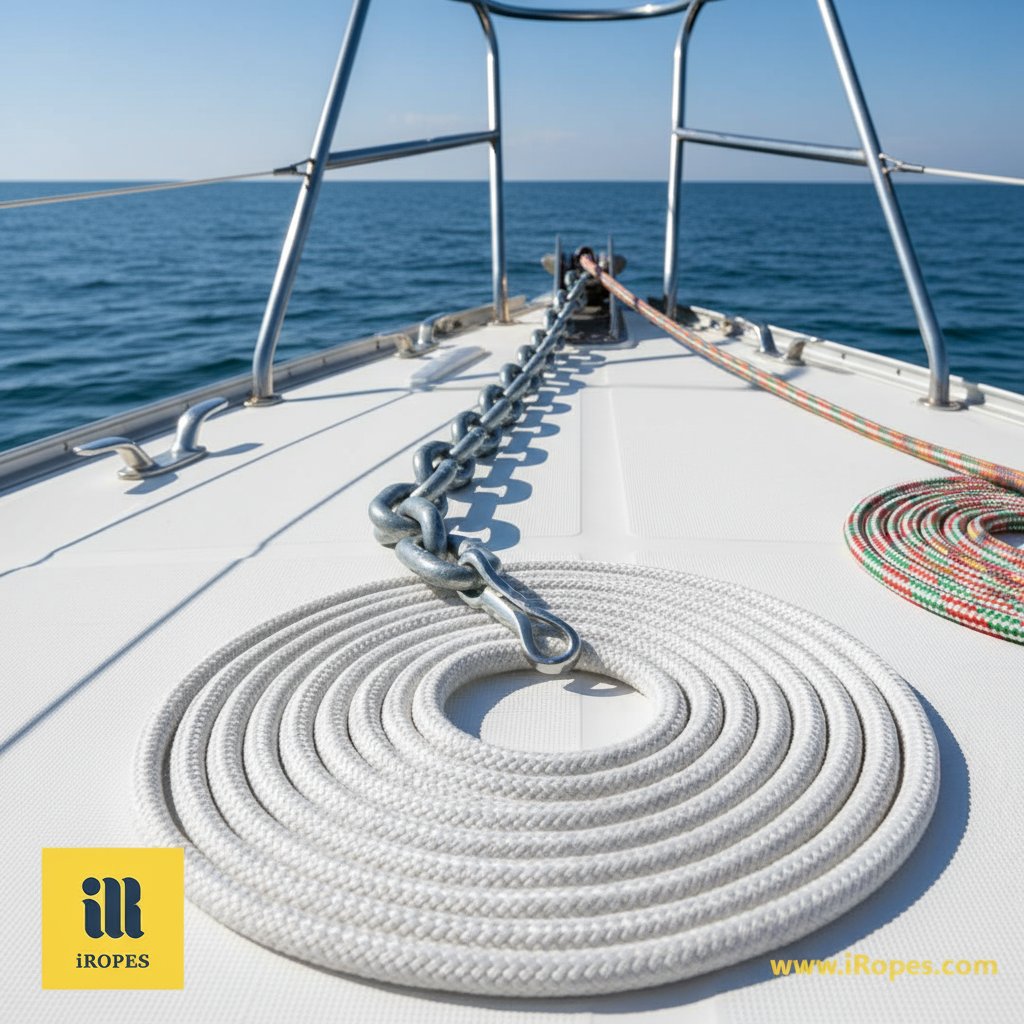
Connecting the chain to your rope calls for sturdy hardware to handle the loads. Shackles secure the links, while thimbles—those U-shaped metal protectors—fit inside eye splices to stop bending and fraying. Splices join rope ends neatly without bulky knots, keeping things smooth through your gear. Then there are bow chocks and windlasses: chocks are the rounded guides on deck that direct the line away from sharp edges, preventing snags as you deploy or retrieve. Windlasses, those electric or manual winches, haul everything up, but they need compatible setups—some gypsies grip chain better than rope, so check your model's specs to avoid jams. Getting this right means effortless handling, especially in a blow when you don't want extra hassle.
To make deployment safer at night or in fog, add rode marking systems—color-coded tapes or knots every 10 or 20 feet so you know exactly how much scope you've let out. iRopes offers reflective elements woven right into the line, glowing under light for quick visibility without adding bulk. These touches turn a basic setup into something reliable across conditions, from clear days to murky twilight runs.
Chain Types
Choose based on your needs
Proof Coil
General-purpose with longer links for flexibility; suits occasional use but watch for stretch under heavy loads.
BBB
Standard marine choice with uniform links for even pull; balances strength and locker fit for most boats.
Hi-Test
High-strength with compact design for windlasses; lighter weight but pricier, ideal for frequent anchoring.
iRopes Integration
Custom fit for performance
OEM Design
Tailors chain-to-rope connections for your hardware, ensuring no weak points in the system.
ODM Solutions
Builds full rode assemblies with matching chain types, tested for seamless windlass operation.
Quality Assurance
ISO 9001 standards guarantee durable pairings that last through seasons of tough conditions.
iRopes' OEM and ODM services shine here, crafting custom ropes that pair perfectly with your chosen chain type and deck setup. Whether it's splicing for a specific windlass or adding markers for quick reads, these integrations make anchoring feel intuitive. With the full system in place, you're ready to put it all into action on the water. This comprehensive approach ensures your anchor rope guide covers all crucial aspects.
Deployment Techniques and Troubleshooting for Effective Anchoring
With the full system securely in place, you're ready to put it all into action on the water. Mastering how to deploy and retrieve your anchor turns theory into smooth sailing, especially when seabeds vary from soft mud to hard rock. It's about timing and technique to avoid surprises that could leave you swinging wildly in the current. Let's break down the process so you can handle it with ease, no matter the conditions.
The correct order for anchoring a boat starts well before you even touch the rode. First, scout your spot—check charts or apps for bottom type and traffic, then don your life jacket for safety. Approach slowly into the wind or current, keeping the bow steady at idle speed. Once positioned, lower the anchor gently by hand or winch, letting it hit bottom without tossing it overboard like a fishing line. Pay out the scope next, easing the line to achieve that 7:1 ratio we discussed, ensuring the chain settles flat. To set it, shift into reverse at half throttle, feeling the tug as the anchor digs in—watch for a steady boat direction, not drift. Finally, secure the line to a cleat and monitor swing or GPS for the first hour, adjusting if needed. Retrieval flips this: motor forward slowly while winching up, clearing the rode ahead to prevent fouling. These steps form a crucial part of any reliable anchor rope guide.
- Pre-checks and slow approach to the spot.
- Lower anchor and pay out full scope.
- Set with reverse thrust and secure.
- Monitor position and adjust as necessary.
Adapt these steps to the seabed and weather for best results. In sand, the anchor sets quickly with a short burst of reverse; mud needs more scope to penetrate deeply, while rock demands a mushroom or plow style to hook without wedging. Calm days allow tighter 5:1 setups to minimise swing, but building winds call for extra length to keep the pull low and effective—think of it as giving the system more slack to absorb gusts like a shock absorber on a bumpy road. I remember once in a sudden squall off the coast; adding 20 feet more rode turned a near-drag into a rock-solid hold overnight.
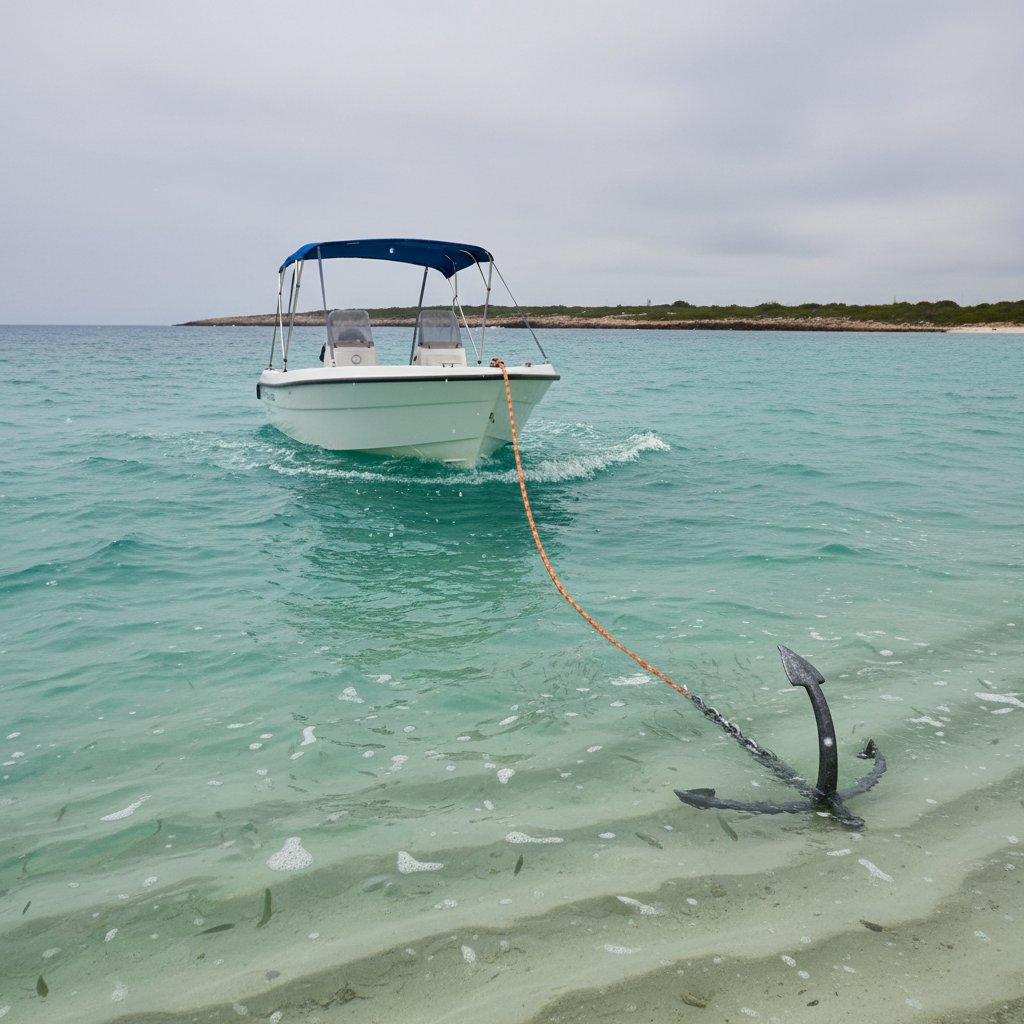
When things go sideways, *troubleshooting* keeps you safe. Dragging often stems from poor scope or mismatched bottom—try re-anchoring deeper or adding weight; kinking in the rope usually means improper coiling, fixed by flaking it out straight before stowing. Chafing at the bow or chain junction? Inspect for hot spots and reinforce with guards or chafe protection solutions from iRopes that incorporate tough outer layers to resist abrasion effectively. This extends your setup's life without constant fixes.
For longevity, routine maintenance makes all the difference. Rinse the line with fresh water after each use to flush salt, then inspect for frays or stiffness—UV exposure fades colour, signalling time to swap. Store coiled loosely in a dry locker, and apply protectant sprays yearly. These habits, backed by iRopes' certified builds and ISO 9001 quality, mean your gear stays reliable season after season, ready for whatever the sea throws next. This helps ensure you're always using the best boat anchor rope guide practices, and for more on the advantages of 3-strand nylon lines for anchoring, dive into how they provide superior strength, flexibility, and UV resilience.
Armed with this comprehensive anchor rope guide, you're equipped to select the ideal nylon line, calculate precise scope using the 7:1 rule, and integrate chain and accessories for unbeatable holds on any seabed—from sand to rock. Whether troubleshooting drags in choppy weather or deploying with rode marking systems for night visibility, these techniques ensure your boat stays secure, turning potential mishaps into confident cruises. iRopes' custom OEM solutions elevate your setup with durable, tailored designs that match your vessel's needs, backed by ISO 9001 quality for long-lasting performance.
As you've explored in this anchor line guide and boat anchor rope guide, mastering these elements brings peace of mind on the water. For personalised advice on customising your anchor system, reach out—our experts at iRopes are here to refine your choices for optimal safety and efficiency.
Customise Your Anchor Rope with iRopes Experts
If you're keen on tailored recommendations or have questions about integrating these insights into your boating routine, use the inquiry form above to connect with our team at iRopes. We're ready to help craft the perfect solution just for you.
