Prototype custom nylon rope can be turned around in as little as 7–14 days, with regional fulfilment reducing transit time for faster delivery.
≈ 3 min read – Your quick‑win benefits
- ✓ Reduce shipping costs through regional fulfilment and consolidated pallet delivery.
- ✓ Customise diameter, colour and branding in a single checklist to streamline design cycles.
- ✓ ISO 9001‑backed quality assurance supports consistent, traceable quality across every batch.
- ✓ Secure your design with an IP‑protected OEM/ODM workflow from concept through packaging.
You might assume that a quick Google search will land you a generic rope supplier, yet most listings lack the custom engineering and ISO 9001 assurances behind high‑performance braided solutions. As a nylon rope factory and braided‑rope specialist, iRopes pairs global manufacturing with regional logistics support, so you can move from concept to prototype efficiently. The next sections reveal exactly how that works.
Explore Local Solutions at a Rope Factory Near Me
After discovering how iRopes serves customers worldwide, the next question many ask is whether a reliable partner is close enough to speed up a project. The good news is that a rope factory near me can be more than a search‑box result – it’s a network that brings customised rope straight to your doorstep through regional distribution and direct pallet shipping.
A rope factory is traditionally called a ropewalk, a long, linear facility where fibres are drawn, twisted, braided and finished into rope. Modern ropewalks combine automated braiding lines with skilled technicians, ensuring each strand meets the exact specifications you request.

Use the map below to type your city or postcode – the nearest contact pops up with a phone number, email address and opening hours. This instant visibility cuts the back‑and‑forth that usually drags on when you’re dealing with a distant supplier.
- Material – choose from POLYESTER, NYLON, KEVLAR, TECHNORA or VECTRAN to match strength, elongation and environment.
- Diameter & Length – input the exact size and run‑out length so the rope arrives ready for installation.
- Colour & Branding – apply corporate colours or logos on the sheath, bag or carton for a professional finish.
- Accessories – add loops, thimbles or specialised terminations directly from the checklist.
Because stock yarns and tooling are ready, prototype lead times typically run 7–14 days, while full production is usually 30–45 days. Shipping costs also drop when products dispatch from a nearby region rather than travelling across continents, which is a crucial advantage for wholesale customers managing tight margins.
“Having an iRopes regional shipping point meant our off‑road rope was on the workshop bench inside a week, saving us both time and freight.” – Procurement manager, Australian mining firm
In short, a nearby ropewalk translates technical flexibility into tangible business benefits: faster prototypes, lower shipping fees, and the peace of mind that comes from dealing with a supplier who understands your industry. When you next search for a rope factory near me, remember that iRopes’ OEM/ODM capability is designed to turn a simple query into a finished, customised rope ready for your next project.
Why Choose a Wire Rope Factory for Heavy‑Duty Applications
Having seen how regional fulfilment can shave days off delivery, the next step is to understand why a specialised wire rope factory underpins many heavy‑duty operations. Whether you are lifting steel beams on a construction site or rigging loads on an offshore platform, construction details determine safety, lifespan and total cost.
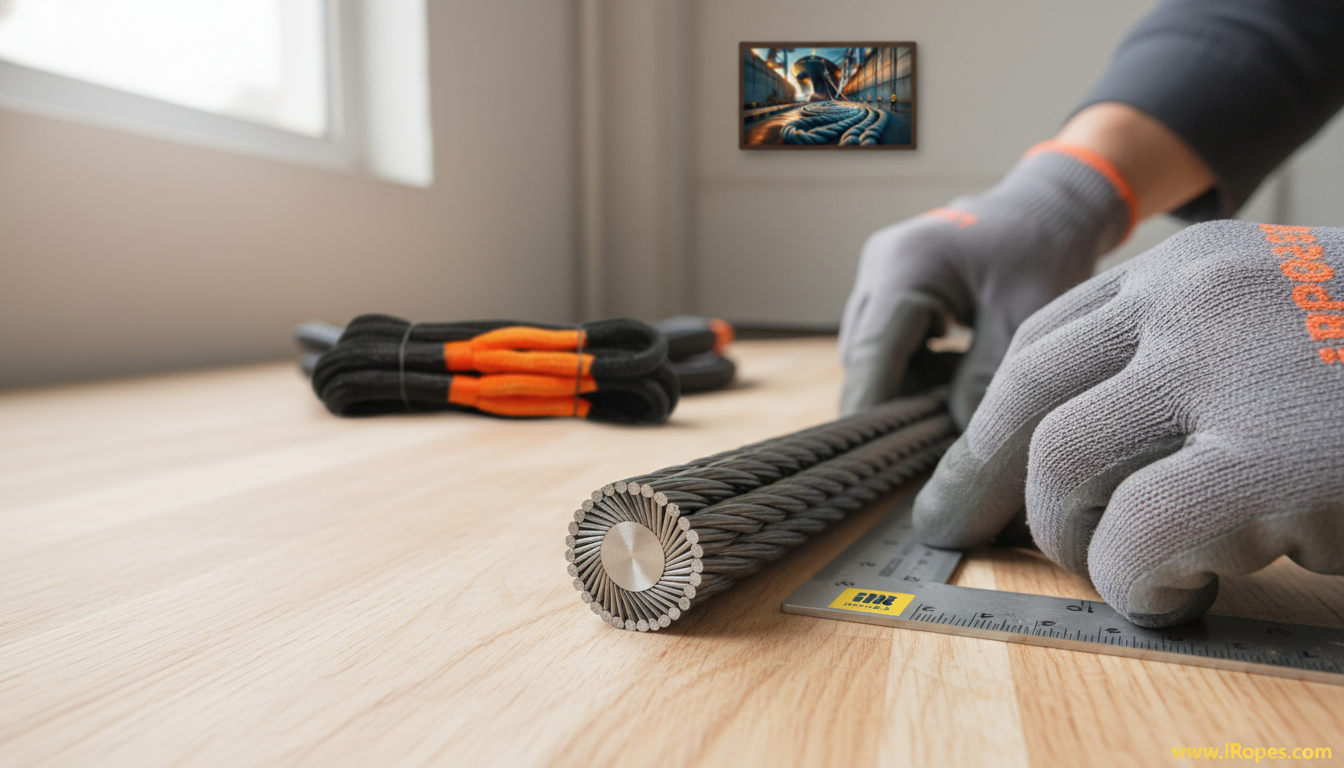
Typical wire rope starts with a central core that carries load and controls crush resistance. Around this core, multiple strands are laid – common configurations include 6×19 and 6×37. The 6×19 families balance abrasion resistance and strength, while 6×37 variants increase flexibility and fatigue performance. The “lay” (right‑hand or left‑hand) also influences torque and handling, helping you match rope behaviour to your equipment.
- No more than three broken wires in a single strand – OSHA 29 CFR 1926.1413.
- No more than six broken wires across all strands of the rope.
- When either limit is reached, the rope must be removed from service and replaced.
Following the 3‑6 rule for crane and lifting operations isn’t box‑ticking; it’s a proven protocol that helps prevent catastrophic failures. By keeping a strict inspection schedule, you protect both personnel and equipment.
Certifications
A reputable wire rope supplier will hold ISO 9001 for quality management, reference ASTM standards such as A1023 for steel wire rope, and comply with relevant MIL‑SPEC requirements for defence‑grade use. These credentials demonstrate that each batch meets tensile‑strength tolerances, fatigue‑life criteria and corrosion‑resistance requirements.
When the rope meets these standards, it finds a home in a range of heavy‑duty sectors. Construction cranes rely on compacted, high‑performance wire rope to hoist concrete slabs. Mining operations use flexible 6×37 configurations to cope with shock loads. Offshore applications often specify galvanised or stainless‑steel variants to resist salt‑water corrosion while handling winch and mooring duties safely.
| Diameter (mm) | Breaking Load (kN) | Typical Use |
|---|---|---|
| 12 | ≈ 80–120 (construction‑dependent) | Construction crane hoist |
| 18 | ≈ 160–260 (construction‑dependent) | Mining dragline cable |
| 24 | ≈ 280–450 (construction‑dependent) | Offshore winch line |
Values are indicative only. Actual breaking loads vary by grade, core type, lay, and standards compliance. Consult specifications for exact data. With the fundamentals covered, we now shift focus to the advantages of nylon production for diverse industries.
Benefits of Partnering with a Nylon Rope Factory for Custom Braided Ropes
After exploring how a specialised wire rope factory delivers strength for heavy‑duty lifts, it’s natural to ask how those principles translate to high‑performance synthetics. Nylon’s blend of elasticity and abrasion tolerance makes it a stand‑out for applications that demand shock absorption without sacrificing durability, especially when UV stabilisers are specified for outdoor use.
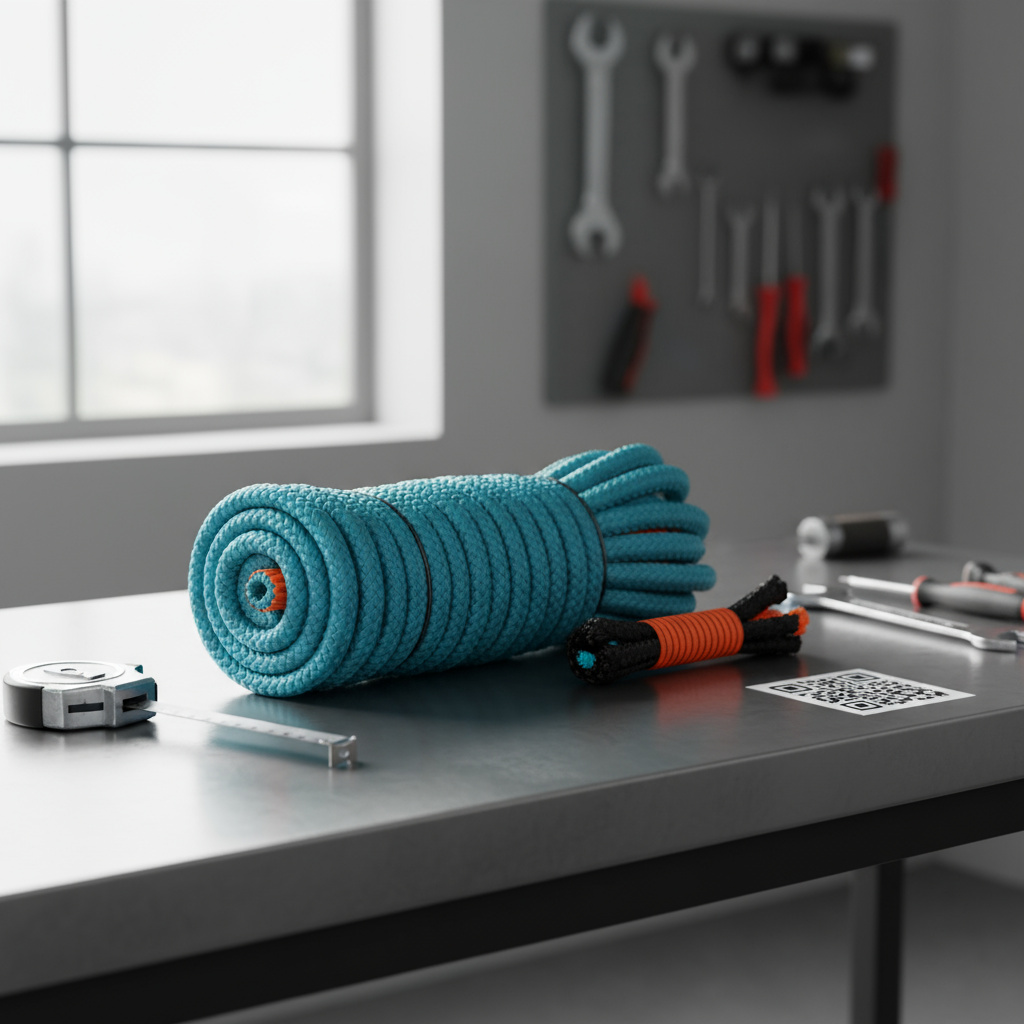
Compare nylon with polyester, Kevlar or Vectran and three contrasts stand out. Polyester offers excellent UV stability and lower stretch. Kevlar provides exceptional tensile strength but can be less tolerant of repeated flexing. Vectran delivers strong abrasion resistance at a higher cost. Nylon, by contrast, offers approximately 30 % higher elongation than polyester, dissipating energy and protecting downstream components – a key reason it’s chosen for mooring, anchoring and shock‑absorbing lines.
| Diameter (mm) | Breaking Load (kN) | Typical Use |
|---|---|---|
| 10 | ≈ 20–35 (construction‑dependent) | Off‑road recovery line |
| 12 | ≈ 28–45 (construction‑dependent) | Marine anchor rode |
| 16 | ≈ 50–80 (construction‑dependent) | Industrial rigging assist |
Values are indicative only. Actual performance depends on braid type, core construction, strand count and finishing. Beyond the base material, iRopes lets you fine‑tune every aspect of a custom rope: choose core type for stiffness, set the strand count for the required flexibility, and add reflective or glow‑in‑the‑dark elements for visibility. For a deeper dive into the benefits and uses of nylon rope material, explore our dedicated guide.
Our OEM/ODM process includes strict confidentiality and IP protection at every stage, from initial design through to customer‑branded packaging.
One recent off‑road recovery project illustrates the payoff. The client asked for a rope that could reduce system weight while maintaining the required breaking strength. By moving to a custom‑braided nylon construction, we achieved a 25 % reduction in overall mass while meeting every strength specification. The lighter rope improved handling and reduced transport effort during field operations.
Flexibility
Nylon stretches under load, absorbing shocks and reducing wear on equipment.
UV Guard
Specify UV stabilisers for outdoor applications to help maintain strength over time.
Stiffness
Wire rope offers low stretch for precise lifting, though it can transmit shock.
Weight
Synthetic ropes are lighter, easing handling and reducing transport effort.
These benefits show why partnering with a specialised nylon rope factory can turn a generic specification into a high‑value, application‑specific solution. For a quick reference to the most compelling advantages, see our Top Benefits of Nylon Braid and Double Braid Nylon Rope. As you consider the full suite of options—from local availability to wire‑rope strength and nylon performance—iRopes is ready to guide you towards the ideal custom rope for any challenge.
Get a Personalised Rope Quote Today
By tapping into iRopes’ regional shipping network, the search for a rope factory near me becomes a fast‑track to customised, on‑time delivery, with options to specify material, diameter, colour and branding. This article also highlighted how a specialised wire rope factory delivers the construction detail, certifications and safety compliance needed for heavy‑duty lifts, while a dedicated nylon rope factory offers lightweight elasticity and abrasion performance for off‑road and marine applications.
If you’d like personalised guidance on selecting the right fibre—be it POLYESTER, NYLON, KEVLAR, TECHNORA, VECTRAN or others—and tailoring your rope to your project’s exact needs, please complete the form above and one of our rope experts will be in touch.
For a broader overview of industrial wire rope options, explore our Top Industrial Wire Rope Supply for Your Needs article.
