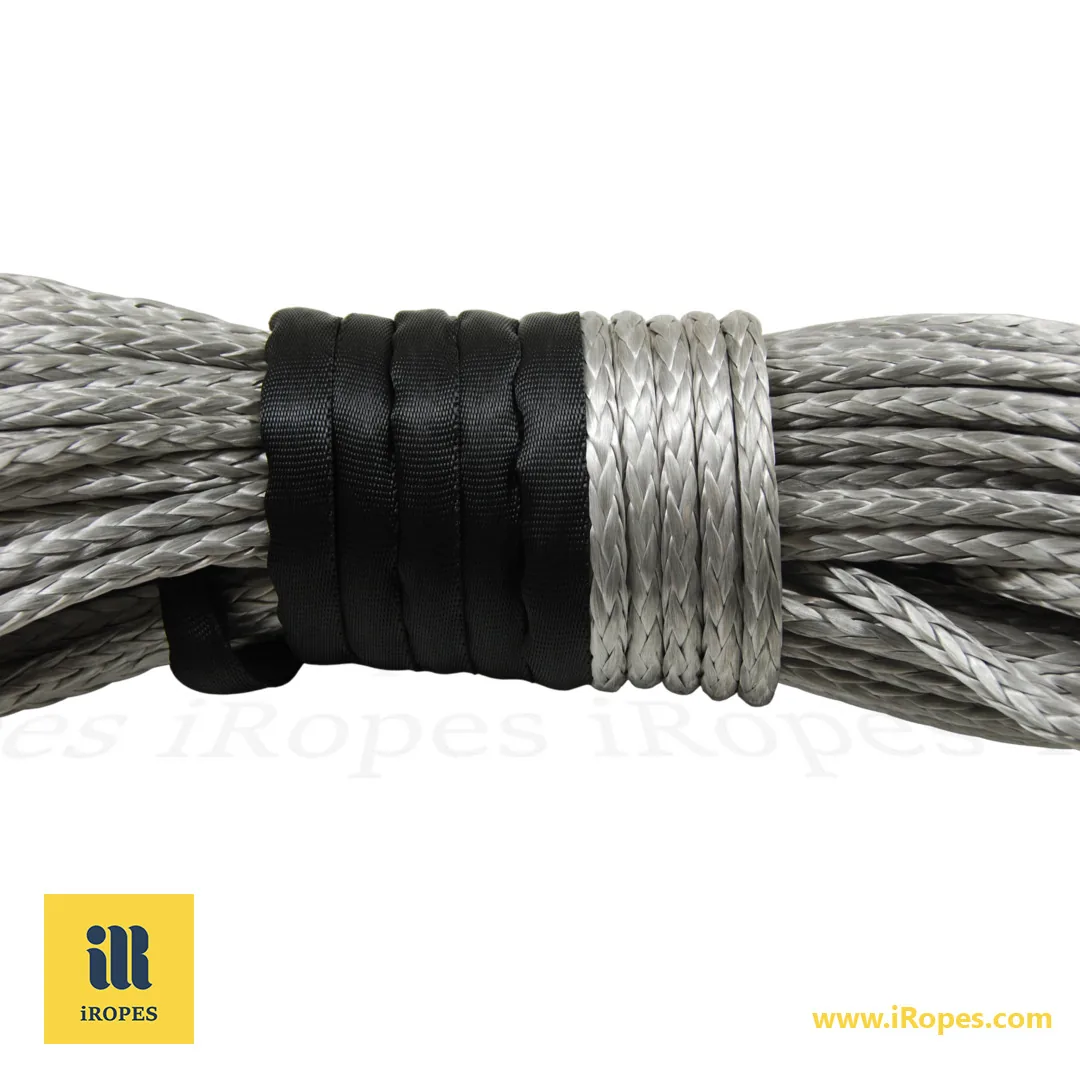
8 mm double‑braid polyester rope offers a verified breaking strength of ≈ 2 560 kg (5 643 lb) while stretching under 2 % – a dependable choice for kayaks and small boats. It sits within the popular 6–8 mm polyester braided rope range used across kayak decks, small sail‑boats, and outdoor gear.
What you’ll gain – 2 min read
- ✓ 2 560 kg break strength → handle demanding marine loads with confidence.
- ✓ Under 2 % elongation → maintain sheet tension and reduce re‑tightening.
- ✓ UV‑stabilised polymer retains over 90 % strength after 1 000 hours of sun exposure.
- ✓ Practical handling weight → about 4.8 kg per 100 m in the 8 mm size.
Many paddlers assume the largest diameter automatically means the strongest line. In reality, the 6 mm double‑braid often delivers a better strength‑to‑weight balance for kayak decks and lightweight rigs. By selecting the right diameter and construction, you can reduce carry weight while still exceeding 1 390 kg break strength. In the sections below, we outline the key numbers and the advantages of each size so you can choose with clarity.

8mm double braid polyester rope – specifications and performance
Having introduced the broader double‑braid family, it’s time to zoom in on the 8 mm size that many kayakers and small‑boat owners rely on. This rope combines a heat‑set braided core with a tightly braided polyester cover, delivering strength, durability and minimal stretch that feels solid in the hand yet forgiving under load.
Core construction and treatment
This double‑braid configuration places a braided core inside a protective braided sheath. Both use high‑tenacity polyester fibres, and the rope undergoes heat‑set treatment to stabilise the construction and reduce elongation to under 2 %. UV‑stable materials help the rope retain performance during prolonged sunlight exposure.
Key performance figures
- Breaking strength – average 2 560 kg (5 643 lb), minimum around 2 360 kg (5 200 lb).
- Weight per 100 m – 4.8 kg, delivering a light‑yet‑robust feel on deck.
- Elongation – under 2 % at working load, helped by the heat‑set core.
- UV resistance – UV‑stabilised polyester retains over 90 % of strength after 1 000 hours of sun exposure.
Answering a common query: What is the breaking strength of an 8 mm double‑braid polyester rope? It averages roughly 2 560 kg (5 643 lb), with a typical minimum near 2 360 kg (5 200 lb). That capacity comfortably covers the rigging loads of most small sail‑boats and kayak decks.
Typical applications
Because the rope balances high load capacity with manageable weight, it shines in several niches:
- Kayak deck lines – the 8 mm diameter offers a comfortable grip while supporting heavy gear.
- Small‑boat sheets and halyards – low stretch keeps sail trim precise.
- Outdoor camping tie‑downs – UV stability helps resist degradation after sunny weekends.
- Arborist utility lines – suitable for light hauling and tag lines where compact, strong cordage is preferred.
If you’re considering a slimmer option, the 6 mm double braid rope delivers about 1 390 kg (3 064 lb) breaking strength. However, the 8 mm version adds a comfortable safety margin for heavier or more demanding loads.
Tip: On 420‑class dinghies, 8 mm double‑braid offers crisp handling for sheets and resists colour fade with its UV‑stabilised sheath.
In practice, the rope’s low elongation means you won’t need to constantly readjust sheets, and its balanced weight prevents your rigging from feeling cumbersome. Whether you’re splicing a new eye or attaching a quick‑release snap, the braid holds its shape, making installation straightforward.
Next, we’ll compare the 6 mm variant’s strength‑to‑weight metrics so you can decide which diameter fits your specific project.
6mm double braid rope – lightweight solution for marine and outdoor use
Continuing the strength‑to‑weight discussion, the 6 mm double braid rope hits a sweet spot between durability and light, nimble handling. It’s a favourite among paddlers and campers who count every gram.
With an average breaking strength of roughly 1 390 kg (3 064 lb) and a mass of just 2.84 kg per 100 m, this line feels almost invisible on a kayak deck yet holds firm under sudden pulls. Which rope diameter should I use for a kayak deck? For most recreational kayaks, the 6 mm size provides ample safety margin while keeping rigging slim enough to slip through deck fittings without fuss.

When you line the 6 mm against its bigger sibling, the numbers tell a clear story about efficiency.
- Break‑per‑weight – the 6 mm provides about 490 kg of break strength per kilogram of rope, while the 8 mm sits near 533 kg/kg.
- Flexibility – the thinner core bends more readily, which helps when threading through tight sail‑boat blocks or lightweight rigging loops.
- Storage impact – a 100 m coil of 6 mm weighs about 40 % less than an 8 mm coil, freeing up valuable pack space.
Those points translate directly into everyday scenarios. If you’re setting up a kayak rig, the reduced bulk means you can tuck the line into a snug stash pocket without adding noticeable weight. On a camping trip, the lighter coil slips into a small dry sack, leaving room for food or a sleeping pad. Even in a lightweight sailing rig, the 6 mm’s flexibility lets you fine‑tune sheet tension with less effort.
Remember to calculate the Working Load Limit (WLL) using a safety factor of 4 for general loads or 10 for life‑support applications; this keeps the 6 mm line safely within its performance envelope.
With those considerations in mind, you can see why the 6 mm double braid rope often edges out the bulkier 8 mm double braid polyester rope in projects where every gram counts. The next step is to explore a more elastic alternative that excels at shock absorption and vibration control.
shock cord 8mm – elastic alternative for tension and vibration control
After exploring the static strength of double‑braid lines, it’s time to look at a rope that actually stretches. The 8 mm shock cord is designed to give about 15 % elongation, turning a hard pull into a smooth, forgiving motion. This elasticity makes it ideal for applications where sudden loads or vibration can otherwise cause damage.

Unlike the 8mm double braid polyester rope, which uses a heat‑set core to keep elongation under 2 %, shock cord uses a rubberised inner core that expands when load is applied. The outer polyester braid adds abrasion resistance, but the core’s elasticity is the key difference. In short, a shock cord behaves like a spring, whereas a double‑braid rope behaves more like a rigid member.
When you ask, “How does a shock cord differ from double‑braid rope?” the short answer is: shock cord stretches roughly 15 % under load, providing shock absorption and vibration damping, while double‑braid rope stays almost unchanged in length, delivering maximum load‑bearing stability.
Safety note
To keep the system safe, calculate the Working Load Limit (WLL) by dividing the cord’s minimum break strength by an appropriate safety factor—typically 4 for general loads or 10 for life‑support situations. For example, a shock cord with a 1 800 kg break strength yields a WLL of 450 kg (1 800 ÷ 4) for ordinary rigging.
Typical Uses
Where elasticity matters
Deck Tie‑downs
Securely fasten gear on kayak decks while absorbing shock from wave impact.
Tactical Gear
Straps on backpacks and vests benefit from the cord’s predictable 15 % stretch.
Shock‑absorbing Rigs
Mounting systems for cameras and light equipment gain durability from the elastic core.
Specialty Applications
Beyond the basics
Vibration Damping
Helps reduce resonant movement in mounted accessories and enclosures.
Tool Tethers (non‑life‑support)
Provides controlled give for retention tethers—never for fall arrest or life‑support.
Outdoor Installations
Use for tarp tensioning and portable shelters where wind load varies.
Because the cord’s stretch is predictable, you can design rigs that stay taut under normal use yet give way when a sudden jerk occurs. This property sets the 8 mm shock cord apart from the more rigid 6mm double braid rope, which excels in static load scenarios but offers little vibration control.
With the elastic behaviour clarified, the next part of the guide shows how iRopes can tailor any of these ropes—whether static or stretchy—to match your brand’s colours, core preferences, or packaging requirements.
Customization, OEM/ODM services and purchasing guide
Now that you’ve seen how the 8 mm shock cord stretches and the 6 mm braid stays taut, let’s look at how iRopes can turn any of those lines into a product that carries your brand from the factory floor to the open water. Our polyester braided rope expertise underpins every custom solution, ensuring optimal performance for marine, camping, and tactical applications.

iRopes’ OEM/ODM platform is built around flexibility and quality. As an ISO 9001‑certified rope manufacturer, iRopes offers custom double‑braid polyester ropes and accessories produced in state‑of‑the‑art facilities, with dedicated IP protection from concept to shipment.
- Material & core – choose polyester, Dyneema or aramid; select braided, twisted or parallel‑core constructions.
- Colour & branding – wide colour options, reflective or glow elements, custom logos and non‑branded or customer‑branded packaging (bags, colour boxes or cartons).
- Accessories & IP protection – loops, thimbles, terminations and strict intellectual‑property safeguards for all custom designs.
Because every project has a budget, the following ranges are indicative. A standard 8 mm double braid polyester rope typically runs between $0.75 and $1.30 per foot, while the lighter 6 mm double braid rope falls in the $0.47–$0.85 range. Shock cord with a rubberised core is priced around $0.90–$1.50 per foot. Volume discounts are available from about 500 ft, and the minimum order for a fully custom colour run starts at 200 m.
Pricing at a glance
8 mm double braid polyester rope $0.75‑$1.30 / ft; 6 mm double braid rope $0.47‑$0.85 / ft; 8 mm shock cord $0.90‑$1.50 / ft. MOQ 200 m, volume discounts from 500 ft.
Lead‑time depends on the level of customisation. Stock lengths ship within five business days; a tailored OEM batch with colour‑matching, printed packaging and IP‑protected designs typically ships within two to three weeks after artwork approval. iRopes can ship pallets directly to your location worldwide to keep fulfilment punctual and cost‑effective.
If you’re ready to see a sample that bears your logo, simply click the “Request a custom quote” button below or download the free Rope Selection Handbook – a concise PDF that walks you through material choices, safety factors and ordering steps.
The next part of the guide pulls together the performance data you’ve just read, so you can decide which rope – 8 mm double braid polyester rope, 6 mm double braid rope or shock cord 8mm – best fits your application.
From the high‑load capability of the 8 mm double braid polyester rope to the feather‑light efficiency of the 6 mm double braid rope, and the elastic performance of the shock cord 8mm, this guide shows how each option meets the needs of kayaks, small boats and outdoor gear while delivering UV resistance, low stretch or controlled give as required.
With iRopes’ OEM/ODM flexibility – colour, core type, reflective strips, custom branding and ISO 9001‑backed quality – you can turn any of these lines into a product that fits your exact specifications and budget. Worldwide pallet shipping and reliable lead‑times make procurement straightforward. If you’d like a custom design or help selecting the optimal rope for your application, simply use the form above.
Request a personalised rope solution
Ready for a one‑to‑one consultation? Fill out the enquiry form above and our rope specialists will work with you to create the perfect customised solution.