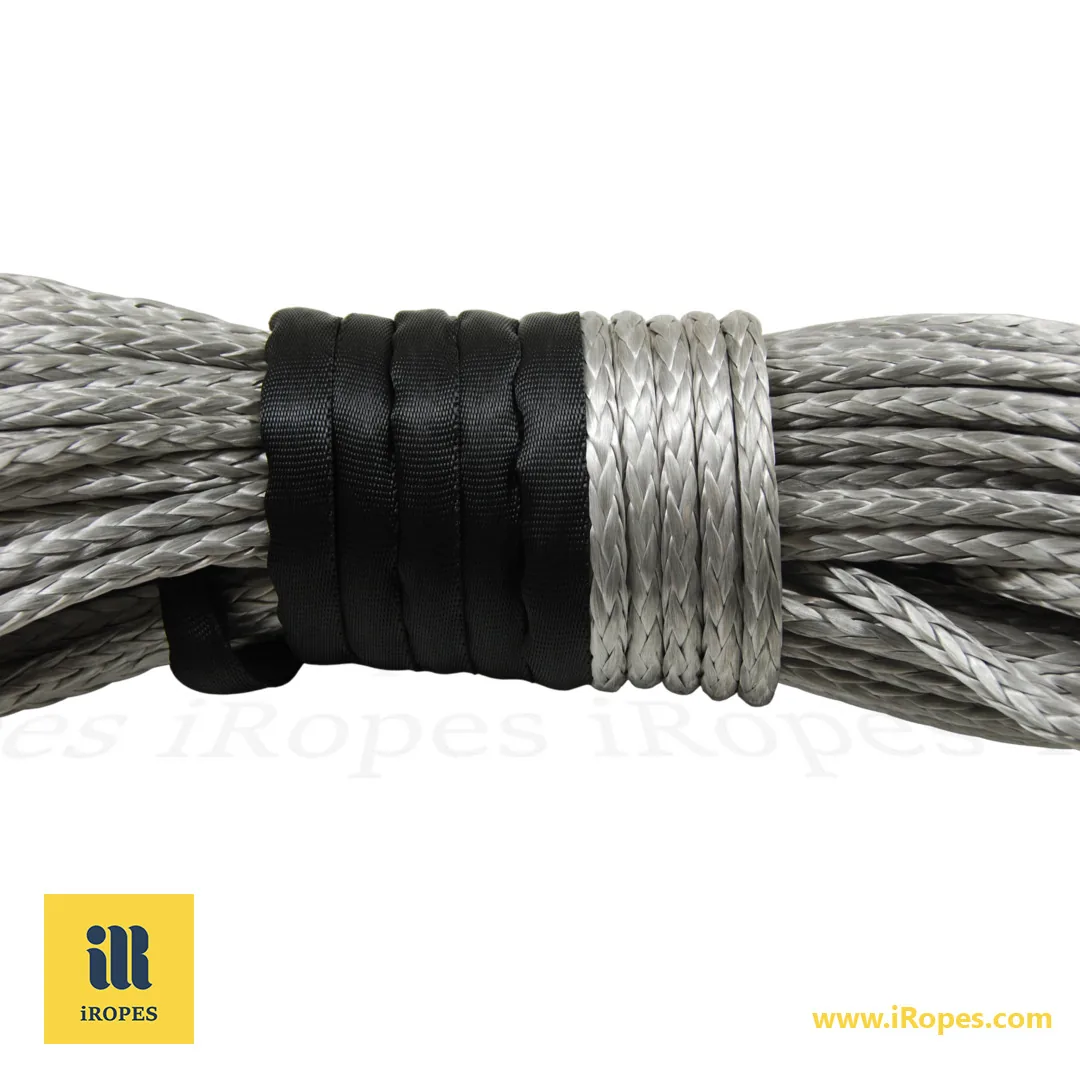
Our premium nylon line rope provides 9,300 lb minimum breaking strength on a 1/2″ kernmantle, delivering a 5‑to‑1 safety factor and reducing fall‑arrest forces by up to 30 %.
≈ 2 min read – What you gain
- ✓ Cut peak arrest force by 30 % compared with generic utility rope.
- ✓ Fully compliant with OSHA, ANSI & NFPA 1983 (MBS ≥5× load).
- ✓ UV‑ and abrasion‑resistant lifespan 2× longer in outdoor rigs.
- ✓ Tailored OEM/ODM specs – exact diameter, length, colour & branding.
Most contractors still trust cheap utility rope for lifeline systems, assuming any rope will hold. However, this myth ignores the physics of shock absorption and the hidden cost of non‑certified gear. Imagine a fall: a certified nylon line stretches just enough to dissipate energy, yet remains within a 5‑to‑1 safety factor, making all the difference. In the sections below, we’ll expose why conventional shortcuts fail and how iRopes’ engineered solutions restore both safety and confidence.
Understanding the Life Line Rope: Safety Foundations
When you step onto a roof or work alongside a suspended load, the rope that connects you to an anchor point becomes the literal line between safety and danger. A life line rope is a purpose‑built, safety‑rated rope. It's specifically designed to arrest a fall, support a worker’s weight, and keep the load within the system’s calculated limits. Unlike ordinary utility ropes used to move goods or tie down equipment, a quality life line rope must meet strict standards for strength, elongation, and durability to protect lives.

Because its role is so critical, a life line rope differs significantly from a generic line rope in three key ways:
- Certification – It carries OSHA, ANSI, and NFPA approvals which guarantee its performance under regulated test conditions.
- Construction – Most are kernmantle or 3‑strand designs, specifically engineered to control sheath slippage and provide predictable stretch.
- Inspection Schedule – Safety ropes require regular visual checks and documented retirement dates, unlike casual utility ropes.
So, where do you typically find these essential ropes in action? Below are the industries that rely on a dependable life line rope to keep their crews safe.
- Construction – Vertical and horizontal lifeline systems protect roofers, scaffold workers, and steel erectors.
- Rescue services – Fire‑fighting and mountain‑rescue teams depend on rapid‑deploy ropes for rope‑access and evacuation.
- Industrial maintenance – Confined‑space technicians and plant inspectors utilise lifelines when working at height.
One of the most common questions we hear is: What is a life line rope used for? In short, it serves as the primary anchor in a fall‑arrest system. When a worker slips, the rope stretches just enough to absorb kinetic energy, then holds firm while the harness and lanyard prevent the person from hitting the ground. This principle applies whether the rope is installed as a fixed vertical line, a horizontal rail, or a portable rescue line.
“A life line rope isn’t just a piece of cord; it’s a certified safety component that transforms a potential fall into a controlled stop.”
Understanding these fundamentals helps you assess whether a rope meets the specific demands of your workplace. With this clear definition in mind, we can now explore how to choose the most suitable line rope for specific safety scenarios.
Selecting the Optimal Line Rope for Fall Protection
Building on the definition of a life line rope, the next step involves matching the rope’s characteristics to the exact demands of your fall‑protection system. Choosing the right line rope means finding the perfect balance between strength, handling, and compliance, ensuring every descent ends safely.

When comparing options, three technical criteria often dominate the decision‑making process:
- Diameter – Larger diameters increase the minimum breaking strength (MBS) but add weight. Common sizes include 7/16", 1/2", and 5/8".
- Minimum Breaking Strength (MBS) – The rope's MBS must exceed the system’s load rating by at least five times. For instance, a 1/2" nylon kernmantle typically offers around 9,300 lb MBS.
- Material – Nylon provides high elasticity for shock absorption, while polyester‑based blends are often chosen for superior grip and UV stability.
Beyond these numbers, the construction type significantly influences how the rope behaves under load. The two most common architectures are 3‑strand twisted ropes and kernmantle ropes, each with a distinct performance profile.
3‑Strand
This twisted construction delivers excellent grip and a familiar feel. It is often favoured in rescue scenarios where rapid knotting is essential.
Kernmantle
This core‑sheath design limits sheath slippage and provides consistent elongation, making it the preferred choice for continuous fall‑arrest systems.
Grip & Handling
3‑strand ropes offer a softer feel, making them easier to tie and adjust quickly.
Strength & Consistency
Kernmantle construction maintains tighter tolerances, delivering repeatable performance across long‑term installations.
Regulatory alignment is the final piece of the puzzle. OSHA and ANSI fall‑protection rules require that the rope’s MBS be at least five times the maximum anticipated arrest force. For example, a 7/16" nylon line with a 6,400 lb MBS satisfies both OSHA’s 5‑to‑1 safety factor and ANSI Z359.1’s dynamic‑load criteria. When you select a rope that meets these thresholds, you also gain the confidence of NFPA 1983 certification, which differentiates “General Use” from “Technical Use” ratings based on diameter and load capacity.
To address a common query, the rope families most frequently deployed as lifelines include nylon kernmantle, polyester‑blended PolyDac, and traditional 3‑strand nylon. Each material offers a unique trade‑off between elasticity, UV resistance, and knotability, allowing you to fine‑tune the system for your operating environment.
With the selection fundamentals covered, the next part will explore why nylon line delivers the performance edge that many high‑risk industries rely on for continuous safety.
Performance Advantages of Nylon Line for Lifeline Systems
When a worker slips, the rope’s ability to stretch just enough to absorb kinetic energy can mean the difference between a safe stop and a serious injury. Nylon line delivers that crucial elasticity because its polymer chains can elongate under load and then return to their original length. This provides a predictable, shock‑absorbing curve without permanent deformation.

Typical specifications for a safety‑rated nylon line include diameters ranging from 7/16 in to 5/8 in. Minimum Breaking Strengths (MBS) for these ropes exceed 6,400 lb for the smallest size and approach 11,200 lb for the largest. Additionally, the weight per 100 ft remains modest—roughly 2.5 kg for 7/16 in, 3.5 kg for 1/2 in, and 5.0 kg for 5/8 in. This means the rope is easy to handle on‑site while still meeting the five‑to‑one safety factor required by OSHA and ANSI.
Typical Specs
• Diameter – 7/16", 1/2", 5/8"
• MBS – 6,400 lb (7/16") up to 11,200 lb (5/8")
• Weight per 100 ft – 2.5 kg, 3.5 kg, 5.0 kg respectively
Beyond sheer strength, nylon line significantly outperforms polyester or PolyDac when it comes to environmental durability. Its specific polymer structure resists UV‑induced degradation, ensuring minimal colour fade and brittleness even after prolonged sun exposure. Furthermore, the material offers superior abrasion resistance, meaning the sheath can endure contact with the rough edges of steel structures and abrasive surfaces without rapid wear. In contrast, polyester blends tend to stiffen under UV radiation and may absorb more moisture, which can negatively affect both handling and longevity.
Nylon Benefits
Why nylon excels
Shock Absorption
High elasticity allows controlled stretch, reducing peak arrest forces.
UV Tolerance
Resists sun‑induced weakening, maintaining strength outdoors for years.
Abrasion Resistance
Sheath endures contact with rough surfaces without rapid wear.
Polyester/PolyDac
Comparative limits
Lower Elasticity
Less stretch can increase peak forces during a fall.
UV Sensitivity
Prolonged sun exposure can cause fading and loss of strength.
Moisture Uptake
Higher water absorption may affect handling and weight.
So, does nylon line refer to a safety‑rated lifeline rope? In the context of fall‑protection systems, the term “nylon line” typically denotes a rope that has been tested, certified, and marked for life‑safety use. This means it meets OSHA, ANSI, and NFPA requirements, and carries appropriate MBS and elongation ratings. When the rope bears the proper certification labels, you can confidently treat it as a life line rope rather than a generic utility line.
Having seen how nylon’s material science translates into real‑world durability, the next step is to explore how iRopes tailors these advantages through custom blends, colour‑coding, reflective strips, and certification pathways that align with your exact industry standards. For a deeper look at rope strength, see our guide on solid braid nylon ropes.
Customisation, Certifications, and Partnering with iRopes
After exploring why nylon line excels in demanding lifeline systems, the next logical step is to see how iRopes turns that performance into a product that fits your exact workflow and regulatory landscape.

iRopes’ OEM/ODM platform enables you to define every visible and hidden attribute of the rope, ensuring the final product behaves exactly as your safety plan demands. Our expertise also helps you select the right rope size for your application.
- Material blends – Choose pure nylon, nylon‑polyester mixes, or specialty fibres for targeted performance characteristics.
- Colours & reflective elements – Select high‑visibility hues or add reflective strips for enhanced night‑work safety.
- Custom terminations – Benefit from factory‑installed loops, thimbles, snap hooks, or specialised grabs to precisely fit your system.
Beyond aesthetics, every life line rope we produce follows a strict certification pathway. Starting with ISO 9001‑based quality control, we then verify compliance with OSHA and ANSI fall‑protection rules. The final step involves NFPA 1983 testing, which distinguishes “Technical Use” from “General Use” ratings based on diameter and load capacity. This layered approach guarantees that the rope you receive not only meets legal requirements but also carries the confidence of independent third‑party validation.
All iRopes lifelines carry ISO 9001‑based quality assurance and meet OSHA, ANSI and NFPA 1983 certifications, ensuring legal compliance and worker protection.
For our wholesale partners, we streamline global logistics: pallets are shipped directly to your warehouse, and we protect your designs with full intellectual‑property safeguards. Packaging can be customised as non‑branded bags, colour‑coded boxes, or printed cartons that display your logo alongside the required certification markings.
Ready to see a prototype that reflects your brand’s colour palette and meets every line rope standard you require? Request a quote today or contact our technical team to discuss a tailored lifeline solution that keeps workers safe and your operations compliant.
Request a tailored lifeline solution
By now, you understand how a certified life line rope protects workers, why selecting the right line rope matters for fall‑arrest compliance, and the performance edge that nylon line provides in shock absorption, UV tolerance, and abrasion resistance. iRopes’ OEM/ODM capabilities allow you to fine‑tune material, colour, and terminations while maintaining ISO 9001, OSHA, and NFPA 1983 certifications, guaranteeing the high quality that safeguards every user’s life.
If you’d like personalised guidance to design a rope system that meets your exact safety standards and branding, simply complete the enquiry form above. Our specialists will work with you to create a solution that delivers reliable protection and peace of mind. You may also find our nylon mooring line guide useful for marine applications.