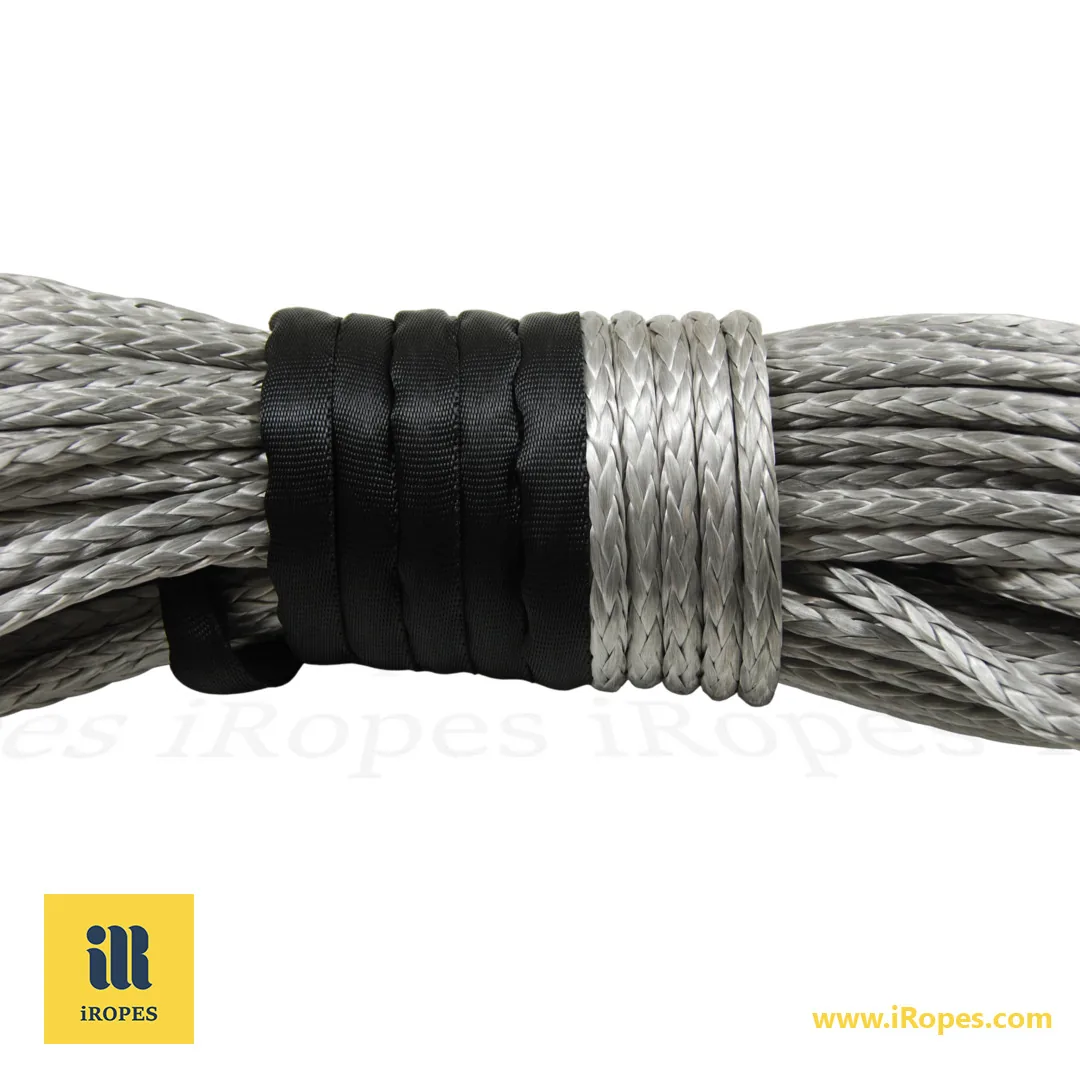
Boost rope assemblies by about 2.5× with a balanced three‑rope braid.
Read time: 6 min
- ✓ Choose UHMWPE, Kevlar™ or Technora™ for superior tensile strength‑to‑weight and heat resistance.
- ✓ Use a 3‑strand braid to balance load and limit unwanted stretch when tensioned evenly.
- ✓ Order ISO 9001–certified, custom‑branded ropes from iRopes with timely delivery and cost‑effective pricing.
Many teams join ropes by splicing, which typically reduces strength by about 5–10%. Learn a three‑rope braid that maintains balanced loading and can approach the combined capacity of its strands.
All Types of Ropes – Comprehensive Taxonomy
Now that you see why braiding ropes together can boost both strength and flexibility, let’s step back and look at the families that make up every rope you might ever need. Understanding the full range helps you decide whether a custom solution from “ropes are us” – iRopes – is the right fit for your project.

In a single sentence, “all types of ropes” can be defined as the distinct constructions and material blends that determine a rope’s strength, stretch, durability and ideal use‑case. The two most common classifications are single‑braid and double‑braid, but kernmantle and specialty designs round out the spectrum.
- Classification – single‑braid, double‑braid, kernmantle and specialty constructions such as diamond‑braid or parallel‑core.
- Material families – UHMWPE, Kevlar™, Technora™, Vectran™, polyester, nylon (polyamide) and polypropylene, each offering a unique mix of tensile strength, elongation and abrasion resistance.
Marine & Industry
Ropes built for ocean‑going vessels, offshore rigs or heavy‑duty conveyor systems rely on high‑modulus fibres and protective coatings to resist salt, UV and abrasion.
Construction & Mining
Industrial lines often use double‑braid constructions with high‑modulus cores, delivering the load capacity and handling required for hoisting and winching.
Safety & Arboriculture
Safety ropes for climbing or rescue use kernmantle constructions to provide predictable elongation and dependable performance.
Racing & Sports
Ultra‑light, low‑stretch UHMWPE or Technora™ strands dominate competitive sailing and high‑speed tow‑line applications.
Camping & Outdoor
Polypropylene and nylon ropes balance cost and flexibility for tents, hammocks and everyday gear‑tie setups.
Answering a common query, the two primary rope categories are single‑braid and double‑braid. Single‑braid offers a single braided structure for smooth handling, while double‑braid adds a braided core and a braided cover for greater strength and abrasion resistance. When it comes to braid patterns, the most frequent are the 3‑strand, 4‑strand and 24‑strand configurations, each trading ease of handling for load‑distribution efficiency.
Braiding Ropes Together – Theory and Benefits
Having just explored the most common braid configurations, you might wonder why engineers and climbers alike choose to braid ropes together instead of relying on a single strand.

When strands are intertwined, the load each fibre carries is shared across the entire assembly. This sharing yields three practical advantages:
- Load distribution – reduces localised stress and helps prevent sudden failure.
- Enhanced durability – the cover and interlacing protect fibres from abrasion.
- Reduced elongation – properly tensioned braids limit unwanted stretch under load.
Knowing all types of ropes lets you match the braid pattern to the material for optimal performance.
Three‑strand, four‑strand, and 24‑strand designs each balance handling ease with how evenly the force is distributed. To estimate the strength of a braided bundle, start with the breaking load of one rope, multiply by the number of strands, and apply an efficiency factor (typically around 0.85) to account for friction within the braid.
When you braid three identical ropes under equal tension, the resulting assembly can carry up to about 2.5× the strength of a single rope, provided the braid is tight and the fibres share the load evenly.
When you source your custom solution from ropes are us – iRopes – the exact braid configurations discussed here can be realised with the material, colour and branding you require.
Armed with this theory, you’re ready for the hands‑by‑step portion of the guide – a step‑by‑step walkthrough of how to braid three ropes together.
Ropes Are Us – iRopes Catalogue, Custom OEM/ODM Services and FAQs
With the theory of braiding ropes together fresh in mind, let’s explore what “ropes are us” actually offers when you need a rope that fits your exact project.

The mini‑catalogue snapshot reveals 2,348 distinct cordage SKUs. Whether you are outfitting a research vessel, a high‑speed racing yacht, a factory hoist or a rescue team, the list includes a dedicated line for each niche.
- Material selection – Choose from UHMWPE, Kevlar™, Technora™, Vectran™, polyester, nylon (polyamide) or polypropylene to match strength and stretch needs.
- Colour and branding – Apply company colours, logos or reflective strands for visual identity and safety.
- Construction & accessories – Specify single‑braid, double‑braid or kernmantle builds with loops, thimbles, terminations and protective coatings.
- Packaging & IP protection – Opt for non‑branded or customer‑branded bags, colour boxes or cartons, with full intellectual‑property safeguards throughout production.
- Global logistics – Timely delivery and direct pallet shipping to your location worldwide.
When customers ask “what are the two types of ropes?”, the concise answer is: a single‑braid rope uses one braided structure for smooth handling, while a double‑braid rope has a braided core and a braided cover for extra strength and abrasion resistance. Both families appear throughout the catalogue, each paired with the material options above.
- Secure the three ropes at one end and lay them side‑by‑side under equal tension.
- Move the right‑hand rope over the centre rope so it becomes the centre.
- Next, move the left‑hand rope over the centre rope so it becomes the centre.
- Repeat steps 2–3, keeping each strand snug to avoid gaps and uneven tension.
- Finish with whipping or a spliced eye; for strength‑critical uses, avoid bulky knots. A balanced braid typically achieves about 0.85 × 3 ≈ 2.55 of a single rope’s capacity.
Splicing, the professional way to join two ropes, is often confused with knotting. A splice weaves the strands together, typically sacrificing only 5–10 % of the original breaking strength, making it far stronger than a conventional knot.
Strength comparisons between rope families follow clear principles: for the same diameter, UHMWPE and other high‑modulus fibres generally outperform polyester by a wide margin, while nylon offers higher elongation for energy absorption. Match the fibre to your load, environment and handling needs.
Need a Custom Rope Solution?
With 15 years of experience manufacturing in China and a catalogue of 2,348 cordages, iRopes makes it simple to navigate all types of ropes across marine, racing sports, industrial, safety, tree work, yachting, camping, spearfishing and defence. As a trusted “ropes are us” partner, we design and produce ISO 9001–certified OEM/ODM ropes in UHMWPE, Technora™, Kevlar™, Vectran™, polyester and nylon (polyamide), with coating and accessory options to match your brief. Moreover, our custom colour, branding, IP‑protected processes and packaging choices ensure the final product aligns with your performance targets and brand identity, backed by timely delivery and direct pallet shipping worldwide.
For personalised assistance, complete the form above and our team will help you choose the ideal rope, material and braid configuration for your project.