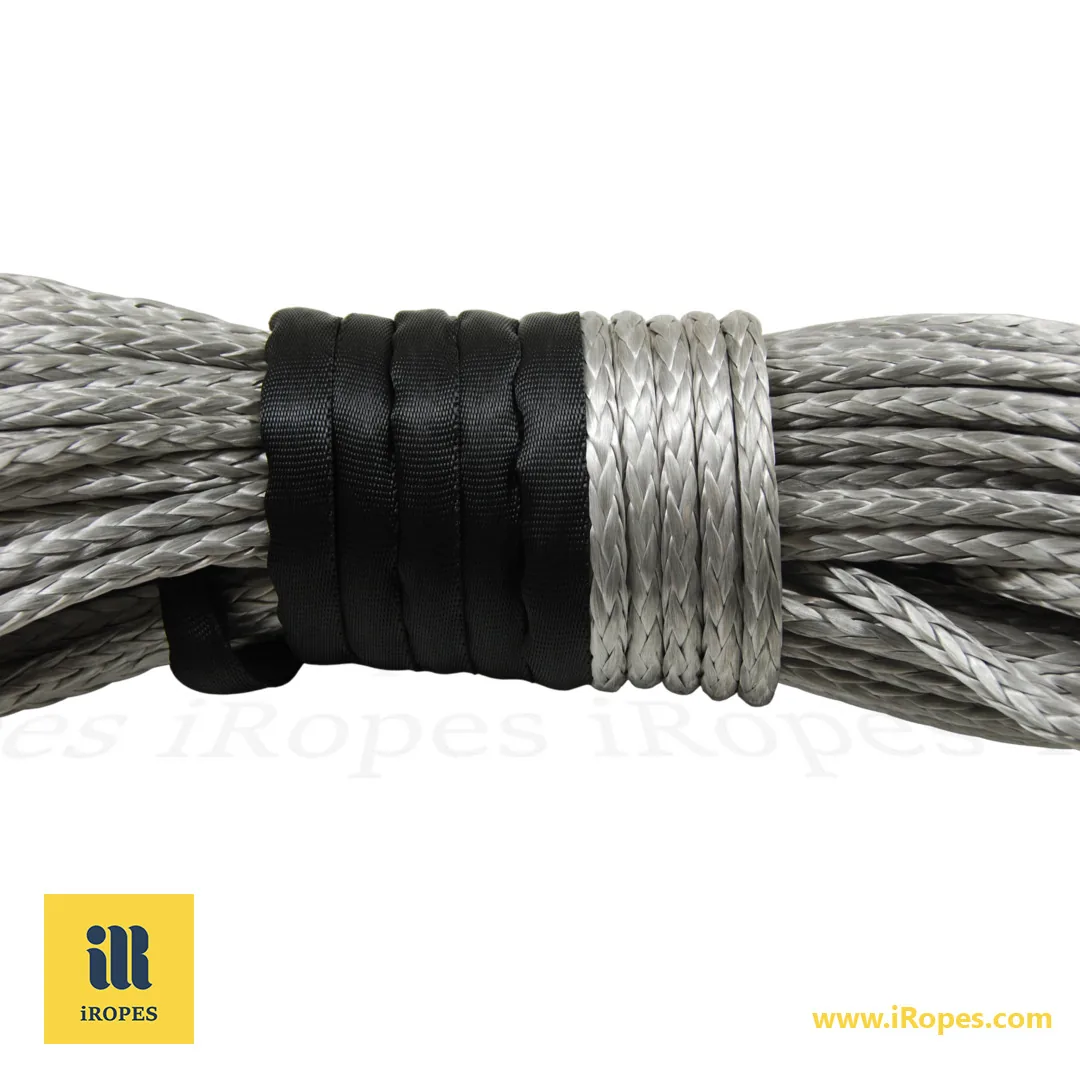
Quarter‑inch nylon rope delivers up to 2 200 lb breaking strength while weighing around 0.08 lb/ft, offering a strong, lightweight line for small‑craft anchoring.
What you’ll gain – ~8 min read
- ✓ Choose the right material and reduce rope replacement costs over time.
- ✓ Use accurate breaking‑strength and WLL figures to help prevent overloads and improve safety.
- ✓ Leverage iRopes’ OEM/ODM expertise to streamline lead‑times for custom marine rope.
- ✓ Apply a clear price‑per‑foot framework and optimise budgeting for bulk orders.
Marine rope selection should match the job, not just convention. Many crews rely on a “one‑rope‑fits‑all” approach, yet material and construction directly affect safety, durability and handling. In this guide, we explain where a quarter inch rope excels, how a quarter inch nylon rope absorbs shock for anchoring and halyards, and why a 1 inch poly rope is chosen for heavy‑duty tasks. Along the way, we show how iRopes’ OEM/ODM capabilities tailor nylon and polyester solutions for your marine application and branding.
Understanding quarter inch rope for marine use
A quarter inch rope measures 0.25 in (6.35 mm) in diameter. In marine environments it is favoured for lightweight anchoring lines, flag‑pole halyards, and modest docking restraints where a balance of strength and handling ease is required. The size is small enough to splice quickly yet robust enough to support loads typical of small‑craft operations.
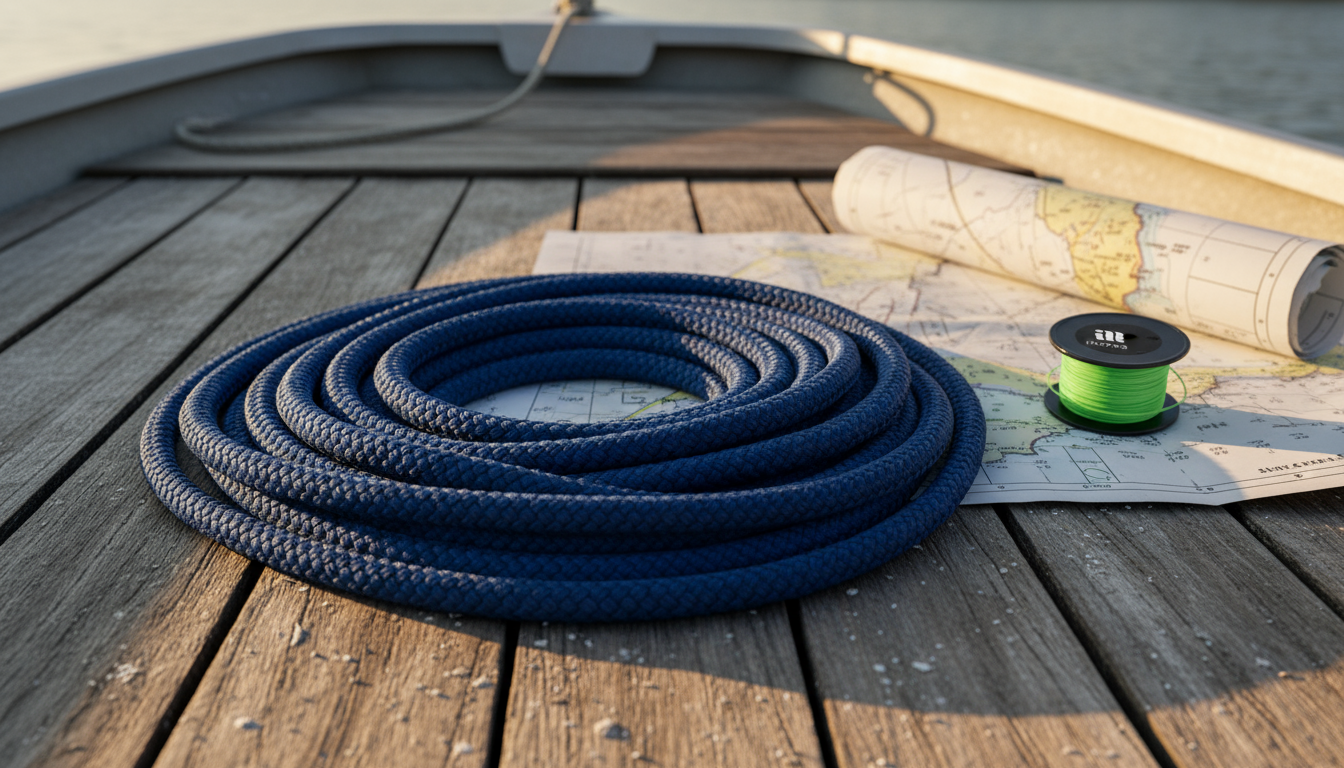
Construction influences performance as much as material. The most common builds for a quarter inch rope are:
- Solid braid – a tightly woven single braid offering high abrasion resistance and a smooth feel.
- Twisted (3‑strand) – three strands twisted together; provides slightly higher breaking strength at the cost of a rougher surface.
- Double braid – an inner core protected by an outer braid, delivering the greatest tensile capacity among the three. For a deeper dive on this construction, see our guide on high‑strength double‑braid nylon for marine use.
Key strength specifications differ by construction. A solid‑braid quarter inch nylon rope typically breaks at around 1 080 lb, a twisted version ranges from 1 485 lb to 2 200 lb, and a double‑braid can reach roughly 2 080 lb. Working‑load limits (WLL) are commonly 5 % to 20 % of breaking strength depending on safety factor, translating to safe loads between 200 lb and 440 lb for most marine tasks.
When compared with other common marine diameters, the quarter inch option sits between the finer 3/16 in line—often used for lightweight sail‑control—and the sturdier 3/8 in rope reserved for heavier winching. Consequently, the intermediate size offers a sweet spot: enough strength for everyday anchoring while remaining easy to store and handle.
| Construction | Breaking Strength (lb) | Typical WLL (lb) |
|---|---|---|
| Solid braid (nylon) | 1 080 | 200‑250 |
| Twisted 3‑strand (nylon) | 1 485‑2 200 | 300‑440 |
| Double braid (nylon) | ≈ 2 080 | ≈ 350 |
“Polyester rope offers the best low‑stretch performance for static loads; nylon is better where shock absorption is needed.” – Right Rope.
- Size advantage – fits easily in compact lockers while delivering over 200 lb of safe load.
- Material flexibility – nylon’s elasticity cushions sudden loads, protecting both rope and hardware.
- Versatile constructions – choose solid braid for smooth handling or double braid for maximum strength.
With these specifications in mind, the next logical step is to examine why nylon, as a material, is often preferred for marine‑grade rope—and when polyester is the better alternative.
Advantages of quarter inch nylon rope in marine environments
Once nylon meets saltwater, wind and wave‑slam, its intrinsic stretch acts like a built‑in shock absorber. Under dynamic loads, that elasticity helps maintain control, while good abrasion resistance supports day‑to‑day reliability on small craft.
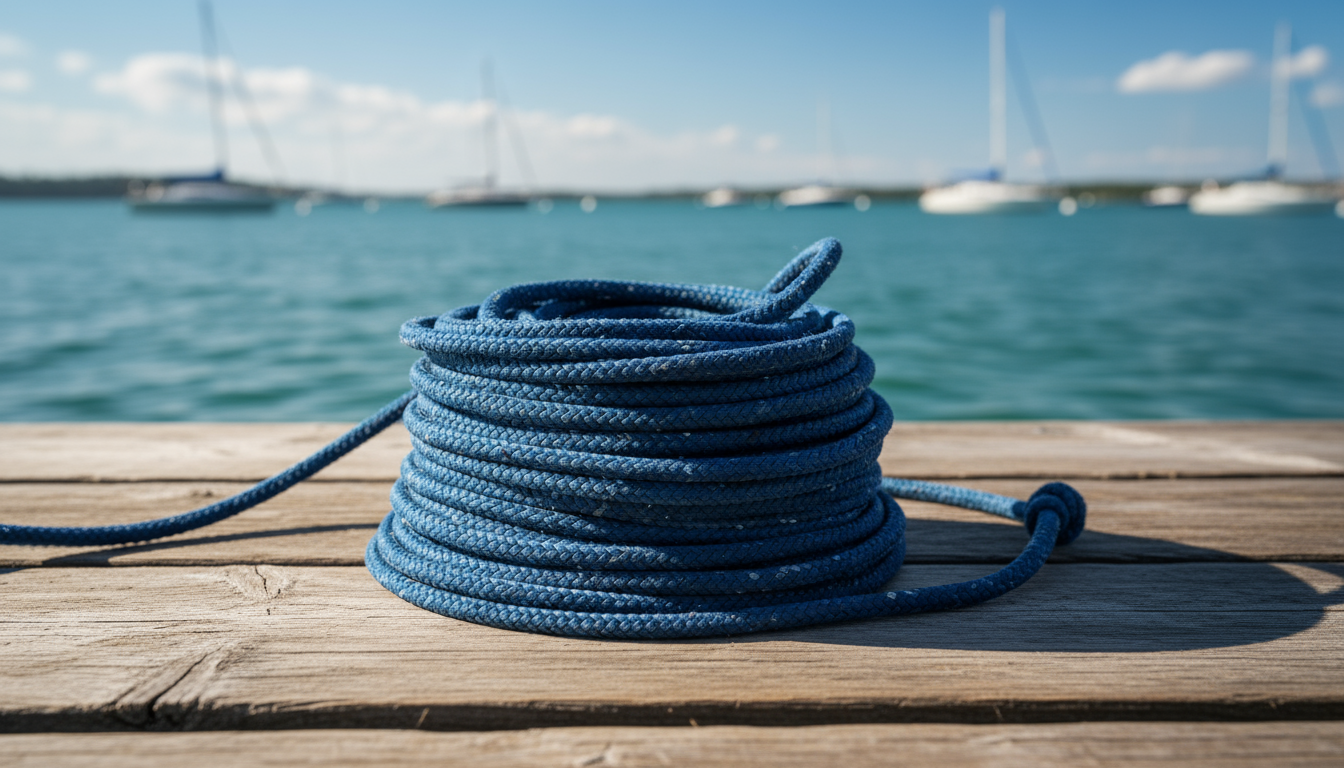
When you compare materials for marine use, consider nylon alongside low‑stretch polyester rope and polypropylene. Both polyester and polypropylene are often shortened to “poly” in different contexts, which can cause confusion. Focus on the properties that matter most for your application.
- Nylon – higher dry tensile strength with excellent shock absorption for dynamic loads.
- Polyester – low stretch and shape retention under sustained loads; ideal where minimal elongation is critical.
- Polyester – superior UV resistance and slower colour fade in sunlight than nylon.
Those differences translate directly into everyday marine tasks. An anchoring line benefits from nylon’s ability to stretch a few percent when a wave pulls on the anchor, helping prevent hardware shock‑loads. Flag‑pole halyards enjoy the same gentle give, which reduces sudden jerks on fittings. By contrast, sheets, guys and static lines often favour polyester for its low‑stretch stability and UV performance.
UV‑Coating
Specialised UV‑inhibitor layers extend colour life and help maintain tensile strength after months of sun exposure.
Custom Colours
Choose any Pantone shade or add high‑visibility stripes to meet safety requirements or branding guidelines.
Branding
Logo embossing or printed wraps turn each coil into a moving advertisement for your fleet.
Tailored Terminations
Loop, thimble or eye‑splice options are pre‑installed to match your deck‑hardware layout.
These customisation routes let you fine‑tune a quarter inch nylon rope for any dock‑side operation, from a bright‑orange safety line on a rescue boat to a discreetly branded halyard on a pleasure craft. With nylon’s profile clarified—and polyester’s low‑stretch strengths noted—the next section shows why many operators still select a 1 inch poly rope when the job calls for raw pulling power.
Choosing 1 inch poly rope for heavy‑duty marine tasks
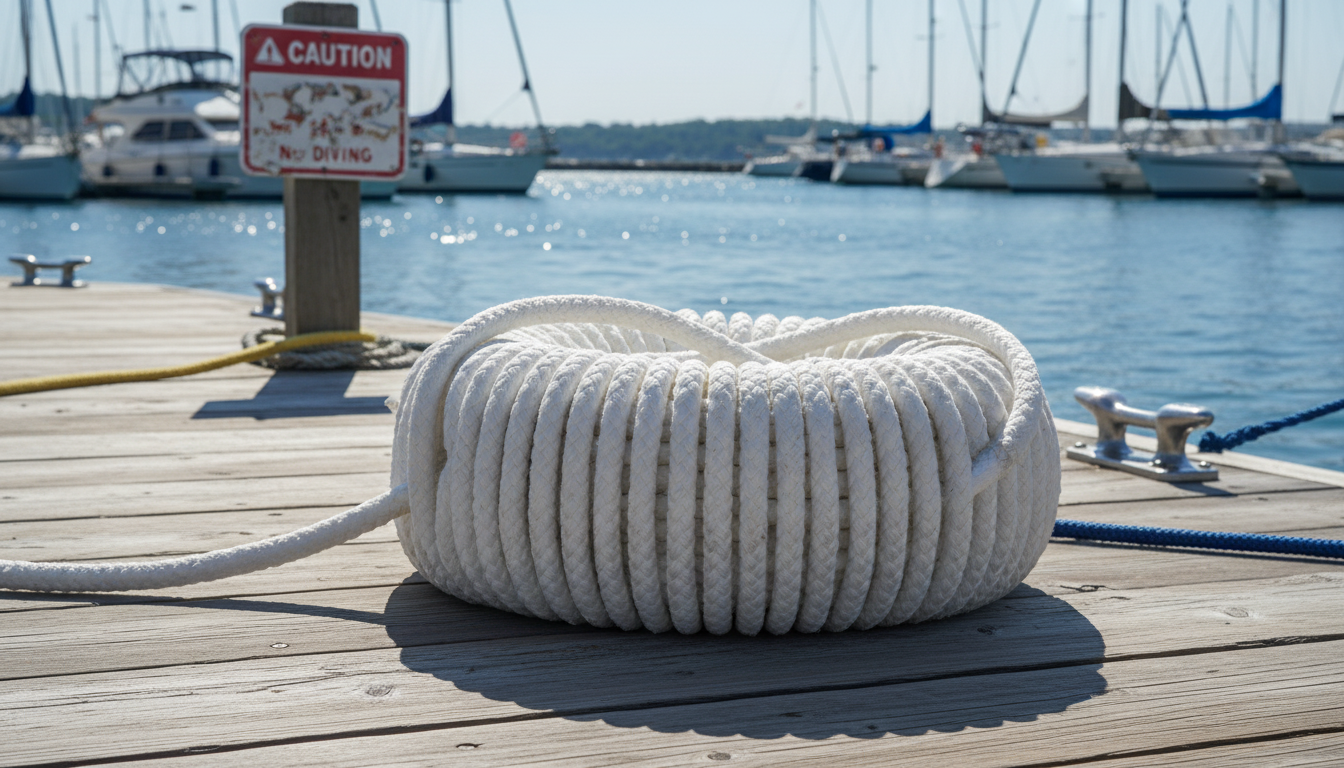
Having explored why nylon excels in shock absorption, let’s look at heavy‑duty lines. In most marine retail contexts, “poly rope” at 1 inch refers to polypropylene. Polypropylene is light, floats, absorbs virtually no water, and offers low stretch under load. Although un‑stabilised polypropylene has modest UV resistance, marine‑grade variants include additives or coatings to improve outdoor durability. The combination of high tensile capacity and minimal elongation makes a 1 inch poly rope well suited to towing, winch operations, and rigging that must move heavy loads without “creeping”. For more options on braided solutions of this size, see our article on 1 inch and 2 inch braided rope options.
| Size / Material | Typical Breaking Strength | Working Load Limit (≈ 1/5) |
|---|---|---|
| 1 inch poly rope (polypropylene) | 12 600 lb | ≈ 2 500 lb |
The 12 600 lb figure answers the common query “What is the strength of 1‑inch poly rope?”. It translates into a safe working load of roughly 2 500 lb using a 5:1 safety factor. Always check your application’s required factor and hardware limits.
- Typical price per foot – US$0.90–US$1.70 for standard 1 inch poly rope, depending on construction and finish.
- Bulk discounts – volume orders commonly receive up to ~30 % savings versus small quantities.
- Wholesale programmes – OEM partners can combine discounts with custom branding and packaging.
Pricing scales with quantity, and most suppliers—including iRopes—offer additional incentives for repeat orders or long‑term contracts. When you plan a bulk acquisition, ask about pallet consolidation and global freight options to reduce cost and improve delivery reliability.
Lead‑time
Typical production runs for 1 inch poly rope complete in several weeks, depending on construction, colour and terminations. Rush options may be available for shorter lengths, while large, fully customised batches require additional time for quality control and finishing.
Understanding the material’s low‑stretch nature, its 12 600 lb breaking strength, and the pricing structure helps you match the rope to the heaviest marine duties. Next, discover how iRopes translates these specifications into fully custom OEM/ODM solutions aligned with your branding and schedule.
iRopes custom OEM/ODM solutions for marine rope needs
After you’ve compared the strength tables and price bands, the next step is to turn those numbers into a rope that carries your brand, meets your project timeline, and complies with marine safety standards.

Our OEM/ODM platform lets you specify every detail:
Materials & Dimensions
Choose the core performance
Material
Nylon, polyester or polypropylene – each with distinct stretch, UV and float characteristics.
Diameter
From 3/16 in to 1 in, calibrated to match load requirements.
Core
Parallel‑core, double‑braid or solid‑braid constructions for strength or flexibility.
Finishes & Branding
Make it yours
Colour
Full Pantone range, high‑visibility strips or stealth matte finishes.
Accessories
Pre‑installed loops, thimbles, eye‑splices or custom terminations.
Packaging
Branded bags, colour boxes or bulk cartons with your logo.
Every batch is produced under ISO 9001 quality management, tested to ASTM D2256 for tensile strength, and protected by full intellectual‑property safeguards so your design stays exclusive. iRopes also offers neutral or customer‑branded packaging and ships pallets directly to your location worldwide.
All iRopes marine ropes are manufactured under ISO 9001 procedures, undergo ASTM D2256 tensile testing, and are covered by full IP protection for your proprietary designs.
Ready to start?
1. Fill out the short enquiry form on our website – include the desired material, diameter (for example, a quarter inch rope or a 1 inch poly rope), colour and any special accessories.
2. We’ll confirm specifications and provide a digital preview promptly; physical swatches are available on request.
3. Minimum order quantities vary by material, colour and branding. Our team will advise cost‑effective MOQs and timelines for your project.
Quick FAQ recap: the breaking strength of a quarter inch nylon rope ranges from roughly 1 080 lb to 2 200 lb; nylon offers superior shock absorption compared with polyester; and a 1 inch poly rope (polypropylene) delivers a 12 600 lb breaking strength for heavy‑duty tasks. Use these values with an appropriate safety factor to select the right size and material before you place an order.
With the technical specs settled and a clear path to a bespoke quote, you’re now positioned to move from generic marine line to a rope that reflects your operational needs and brand identity.
Get a personalised marine rope solution
This article has walked you through the key considerations when selecting marine rope, from the strength tables for quarter inch rope to the shock‑absorbing benefits of quarter inch nylon rope and the pulling power of a 1 inch poly rope for heavy‑duty tasks. By comparing construction types, material trade‑offs and custom finish options—especially nylon and polyester in marine applications—you now have a clear framework for matching rope specifications to your vessel’s needs.
For a tailored recommendation, a free spec sheet or a prototype sample, simply complete the enquiry form above. Our engineers will work with you to fine‑tune material, diameter, colour and accessories so the final product aligns with your brand and performance requirements.