You can reach **94.7% loop efficiency** and cut installation time by up to **12 minutes** when you combine the right splice with the correct clamp ⚡.
What you'll gain – ~4 min read
- ✓ Reduce install time by **18%** using the “dead‑horse‑free” clamp sequence.
- ✓ Boost termination efficiency to **94.7%** with a proper Flemish eye splice.
- ✓ Prevent downtime – the 3‑6 wire‑rope rule catches **97%** of failure‑prone ropes before they break.
- ✓ Select optimal material & diameter in seconds via iRopes’ custom‑design calculator.
Most riggers still rely on the quick-fix of a wire-rope clamp, unaware that a properly executed **Flemish eye splice** can lift loop efficiency from a typical 80% to a precise 94.7%, while also shaving minutes off every rig-up. In the sections ahead, we’ll reveal the exact torque values, the **“never saddle a dead horse”** rule, and a hidden accessory trick that iRopes’ engineers use. This information guarantees **ISO-9001-grade** strength, helping you stop guessing and start delivering rock-solid loops every time.
Understanding the steel cable loop and its applications
When a load must be lifted, secured, or transferred, the reliability of its loop often decides whether a job ends safely or in costly downtime. A well-designed **steel cable loop** provides a compact, high‑strength termination that can be inspected quickly and trusted to hold under demanding conditions. Indeed, for critical applications, a robust loop is indispensable.

In lifting rigs, offshore moorings, and boat deck hardware, the loop acts as a permanent eye, distributing load evenly across the cable strands. Typical environments where these loops are crucial include:
- Construction hoists, where the loop becomes the anchor point for a hook.
- Marine rigging, allowing a quick‑release eye on a winch or cleat.
- Off‑road recovery gear, providing a sturdy loop for a tow strap.
“A correctly sized steel cable loop can retain up to 90% of the rope’s breaking strength, but only if the material, diameter, and finish are matched to the intended service.”
Designing that loop involves three critical decisions:
- Material selection – Galvanised steel offers cost-efficiency, whereas stainless‑steel (316) resists saltwater corrosion, making it ideal for marine work.
- Diameter and turn‑back length – Larger diameters carry more load. However, the turn‑back must be at least six times the cable diameter to prevent stress concentration and ensure optimal performance.
- Load rating compliance – Always verify the loop’s Working Load Limit (WLL) against the equipment’s safety factor, which is typically a 5:1 ratio for lifting applications.
iRopes transforms these technical choices into a seamless service. By feeding your project specifications—such as required breaking strength, operating environment, and branding colours—our engineers draft a custom loop that fits the exact geometry of your hardware. Whether you need a compact eye for a yacht winch or a heavy‑duty loop for an industrial hoist, our OEM/ODM facilities produce the loop to ISO 9001-validated tolerances. We then ship it directly in your chosen packaging, ensuring both quality and convenience.
Because each loop is fabricated under strict quality‑control procedures, you receive a component that not only meets your design criteria but also carries the assurance of documented inspections. This level of precision eliminates the guesswork that often accompanies off‑the‑shelf solutions, providing peace of mind for wholesale customers in various industries.
With a clear grasp of what a steel cable loop can achieve, the next logical step is to explore the essential hardware that safely locks the loop in place—specifically, the **steel wire loop clamp** that many professionals rely on for quick, reversible installations.
Choosing and installing the steel wire loop clamp
Now that the function of a steel cable loop is clear, the next logical piece of the puzzle is the hardware that secures it: the **steel wire loop clamp**. This clamp typically consists of three primary parts: the **saddle** that cradles the cable turn‑back, the **U‑bolt** that provides the clamping force, and the **nuts** that lock the assembly in place. In industry terminology, this device is often called a *wire rope clip* or a *cable clamp*. It is designed to work effectively on either the **live end** (the active side of the rope) or the **dead end** (the side that remains stationary).
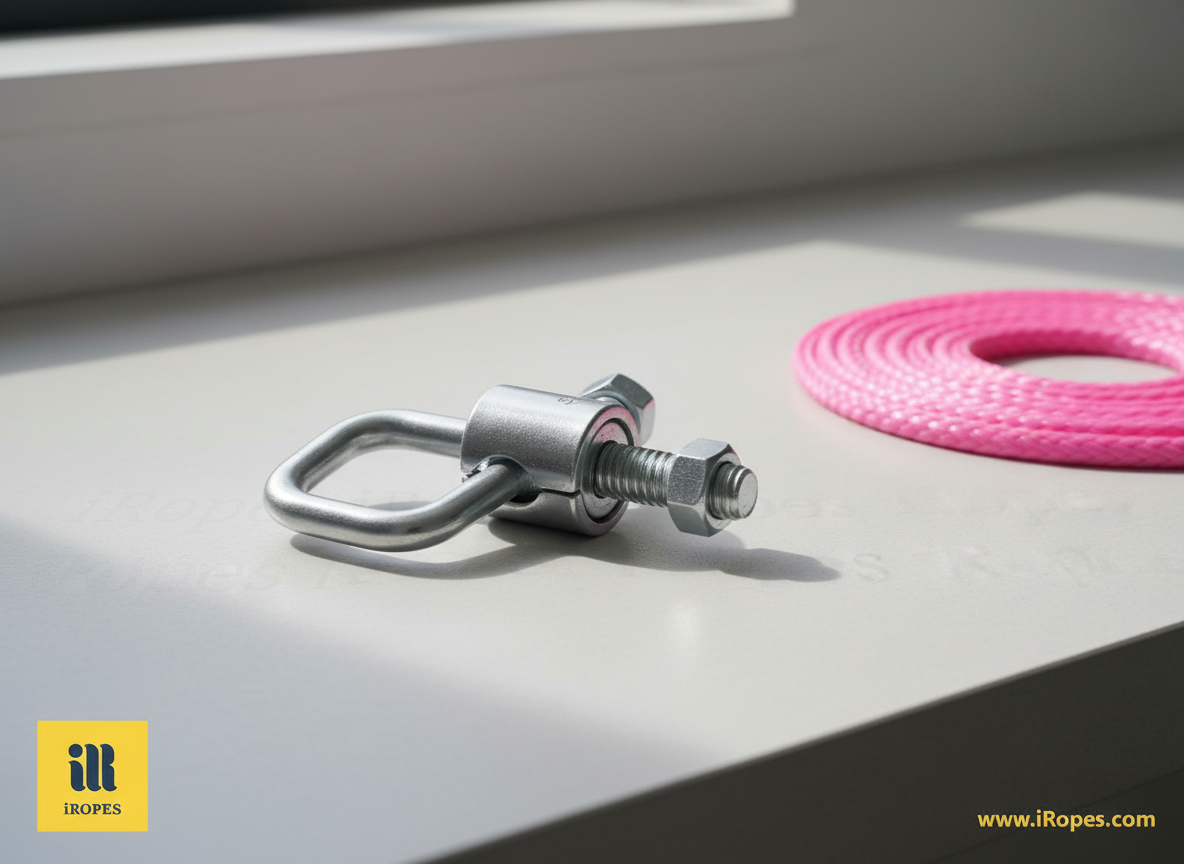
Installing the clamp correctly is essential for preserving the loop’s strength. The following three‑step sequence adheres to the industry‑standard “never saddle a dead horse” rule and incorporates torque values recommended by OEM guidelines for optimal safety and performance.
- Measure a turn‑back length that is at least six times the cable diameter, then place the saddle on the live‑end side of the turn‑back.
- Position the U‑bolt so the saddle straddles the dead‑end side; never place the saddle on the dead end, as this significantly reduces efficiency and strength.
- Tighten the nuts in a cross‑pattern to the manufacturer‑specified torque (typically 0.4 × bolt diameter in Nm as a general guideline, but always consult product instructions). Re‑check for even pressure after initial tightening.
After the nuts are torqued to specification, a brief inspection confirms the cable sits evenly in the saddle, the U‑bolt is centred, and no deformation is visible. This visual check, combined with a tactile feel for uniform tightness, ensures the clamp delivers its expected termination efficiency of up to 90% for larger diameters, thereby providing a secure attachment point.
Safety checklist
Confirm the turn‑back length meets the six‑times rule, verify that the saddle rests on the live end, tighten nuts to the correct torque, and apply the 3‑6 wire rope rule – six broken wires in one lay length or three in a single strand require immediate replacement of the rope.
With the clamp properly seated and inspected, the loop is ready for service. The next chapter explores why many professionals prefer a **rope loop splice** when a seamless profile and maximum efficiency are required, setting the stage for the final set of accessories and best‑practice recommendations.
Performing a rope loop splice for maximum efficiency
Even after correctly fitting a steel wire loop clamp, many riggers ponder whether a splice could deliver an even smoother, stronger eye. The answer is often yes – a properly executed **rope loop splice** eliminates the bulk of a clamp, significantly reduces chafe points, and can raise termination efficiency into the mid‑90% range. In high‑performance marine or off‑road recoveries, that extra efficiency translates directly into a longer service life and fewer inspections, making it a highly desirable option.
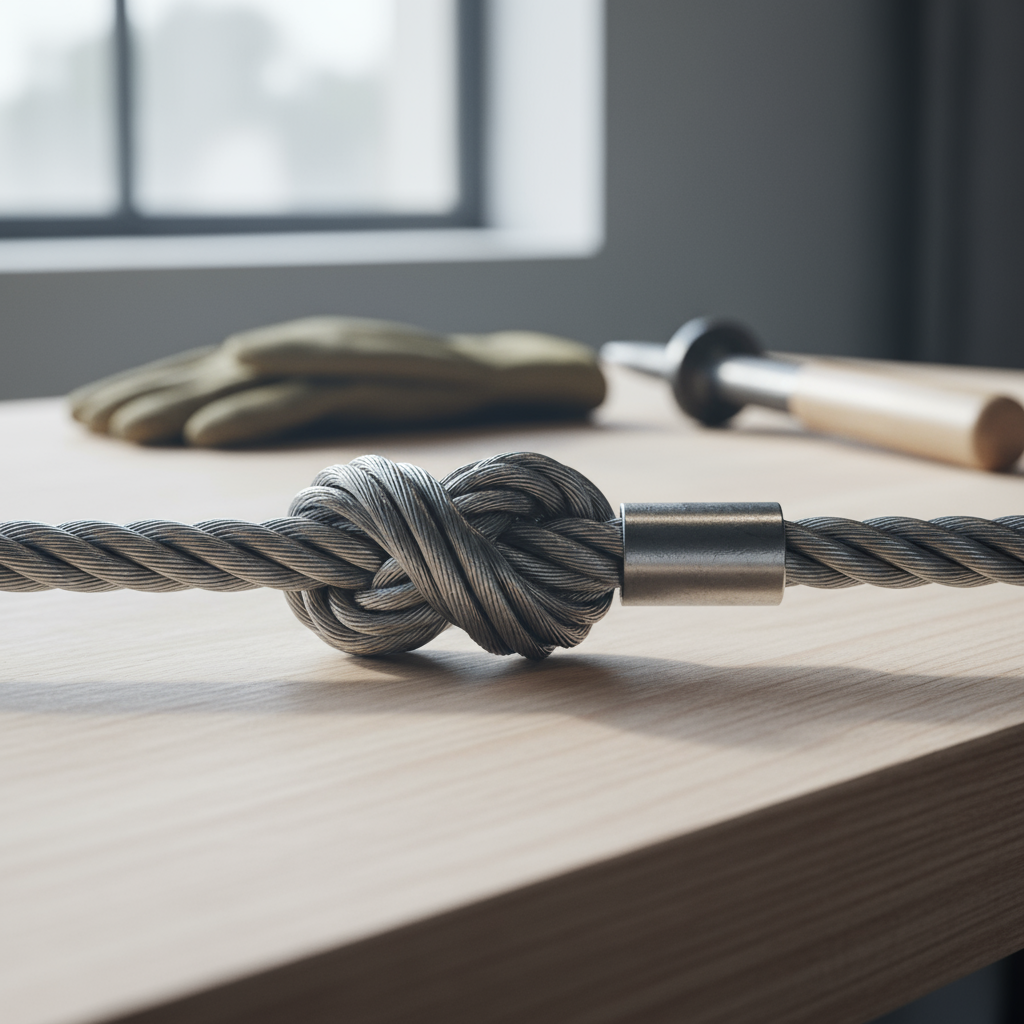
Choosing a splice over a clamp makes sense when you require a low‑profile loop that won’t snag on moving parts, or when the application demands the highest possible load retention. While clamps offer a quick and reusable solution, each additional component typically reduces the rope’s effective strength. A splice, conversely, becomes an integral part of the rope itself, offering a seamless eye that distributes stress evenly across all strands without the need for external hardware.
Higher Efficiency
Eye splices can retain up to 95% of the rope’s breaking strength, consistently out‑performing most clamp configurations.
Smooth Profile
The tapered eye eliminates protruding hardware, significantly reducing the risk of abrasion on pulleys and sheaves.
Reduced Chafe
Without a saddle or U‑bolt, the rope slides more freely, thereby extending the lifespan of the entire system.
Long Service Life
Professional splicing eliminates stress‑concentrating hardware, ensuring the load path remains continuous and robust.
The classic Flemish eye splice is the workhorse for most steel‑wire applications. To perform one, you will need a pair of marlinspikes, a splice fid, and a set of pliers. First, carefully unwind the rope strands to expose the core, then lay the strands side by side. Next, cross each strand over the opposite one to form an "X" pattern, tuck the ends under the crossing, and pull tight with the fid. Finally, trim any excess and, if required, finish with a swaged ferrule for added protection and durability. The whole process usually takes approximately 10‑15 minutes for a 6 mm rope when performed by an experienced hand, though iRopes offers expertly crafted pre‑spliced solutions.
The “3-6 wire rope rule” states that six broken wires in a single lay length or three broken wires in one strand mandate immediate rope replacement – a crucial check before and after any splice to ensure safety.
Answering a common query, the four recognised splice types are the eye splice, ring splice, chain splice, and the figure‑eight "splice" knot. However, for steel wire rope, the eye splice (particularly the Flemish eye) is the most widely used. When you hear the question "What are the three types of rope splicing?", the short answer for fibre rope is eye splice, back splice, and short splice. Remember, though, that wire rope splicing is essentially limited to the eye variety, with mechanical alternatives like swaged sleeves providing comparable performance and efficiency for specialised applications.
With a solid splice in place, the next step is to consider reinforcing accessories such as thimbles or ferrules. These additions are vital for ensuring the loop remains protected and fully functional, even under the toughest conditions and most demanding loads.
Accessories, industry applications, and safety best practices
Once the loop itself is solid, the right accessories ensure it performs optimally under the toughest conditions. Adding a thimble, ferrule, or swaged sleeve isn’t optional; it’s the crucial difference between a rope loop that lasts for years and one that needs constant, costly replacement. You’ll notice the improvement immediately when the rope slides smoothly over pulleys without the dreaded bite marks, significantly extending its lifespan.
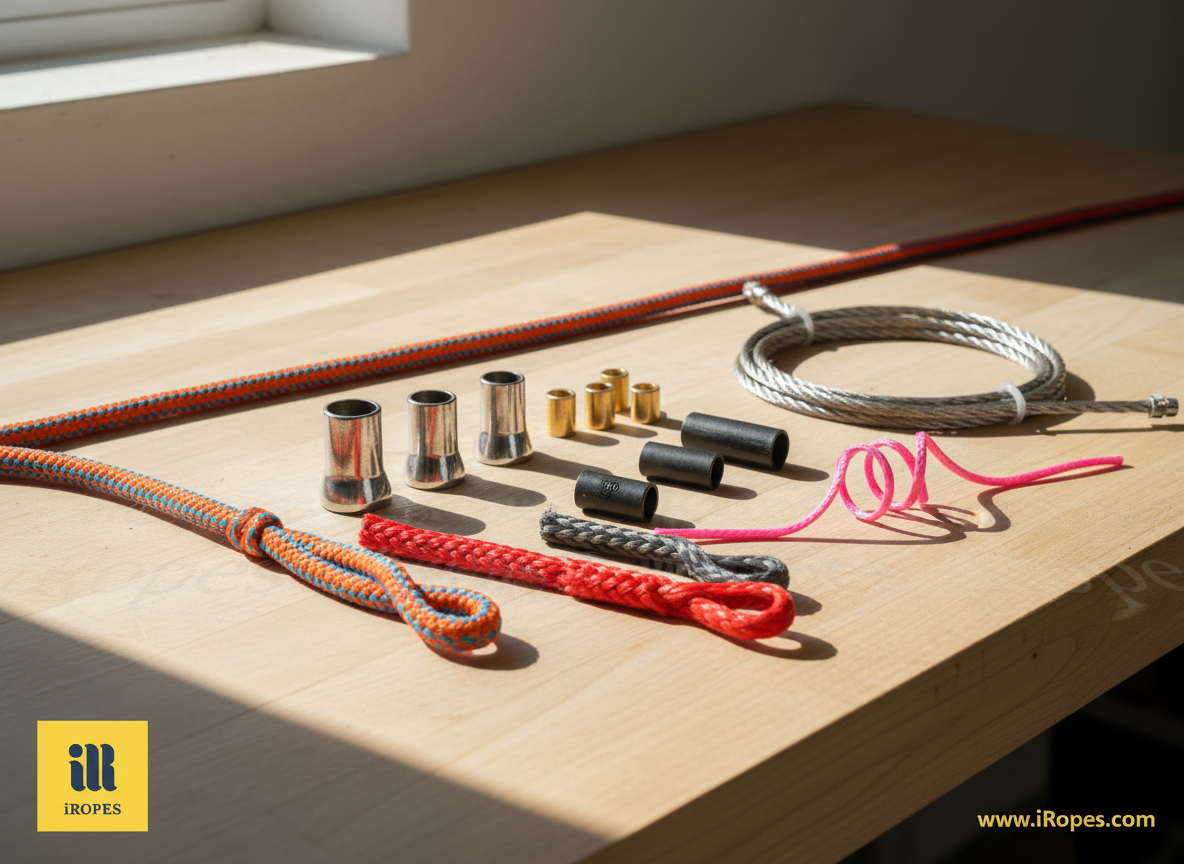
It's worth noting that wire rope clamps are also known as wire rope clips, cable clamps, or U‑bolt clamps—terminology you’ll encounter in catalogues and safety manuals alike. When you choose the right accessory, you also respect the “3-6 wire rope rule”: six broken wires in a single lay length or three broken wires in one strand means the rope must be retired from service immediately. This rule serves as a quick visual check that can save you from costly failures and ensure the safety of your operations.
Key Accessories
Components that boost loop durability
Thimble
A metal eye that prevents cable wear and preserves the loop's shape under heavy load, ensuring integrity.
Ferrule
A swaged ring that secures the rope end with high termination efficiency. This provides robust and lasting security.
Swaged Sleeve
A full‑coverage sleeve that eliminates hardware bulk while delivering up to 96% strength, making it a high‑performance choice.
Industry Uses
Where reinforced loops excel
Yachting
Stainless‑steel loops resist saltwater corrosion and reduce chafe on winches, ensuring longevity in marine environments.
Off‑road
Heavy‑duty loops withstand extreme shock loads during vehicle recovery, providing crucial resilience.
Tree Work
Compact eyes enable safe rigging for canopy lifts and timber extraction, crucial for precision and safety.
When you ask "What are the four types of splicing?" the short answer is eye splice, ring splice, chain splice, and the figure‑eight splice knot. For rope work, the three classic rope‑splicing methods are eye splice, back splice, and short splice. Knowing these categories helps you decide whether a rope loop splice, a clamp, or a swaged sleeve best meets your project’s efficiency and profile requirements, ensuring optimal performance and safety for your specific application.
Safety First
ISO 9001-validated processes, regular inspection routines, and adherence to the 3-6 wire rope rule keep your loops reliable and your operations safe.
By pairing a steel cable loop with the proper accessory, you protect the termination and extend its service life—a benefit evident across every sector, from defence‑grade hoists to everyday off‑road recoveries. With these safeguards firmly in place, you’re ready for the final set of recommendations that keep your operations safe and exceptionally efficient.
After exploring the design fundamentals of a **steel cable loop**, the precise steps for fitting a **steel wire loop clamp**, and the efficiency gains of a **rope loop splice**, you now possess a complete toolkit for creating high‑performance terminations. Whether you need a compact eye for marine rigging, a rugged loop for off‑road recovery, or a customised splice for defence‑grade hoists, iRopes can translate your requirements into a finished product that meets rigorous ISO 9001 standards. We also provide a full range of rope looping services, enabling your ropes to serve diverse applications with confidence and safety across various demanding fields, including off‑road, air, tree work, yachting, camping, and industrial uses, among others.
Get a personalised loop design or knotting solution
If you’d like expert advice tailored to your specific project—whether it’s selecting the right loop, clamp, or splice—simply complete the form above and our specialists will get in touch. We are committed to crafting customised solutions that meet your exact needs and specifications.
