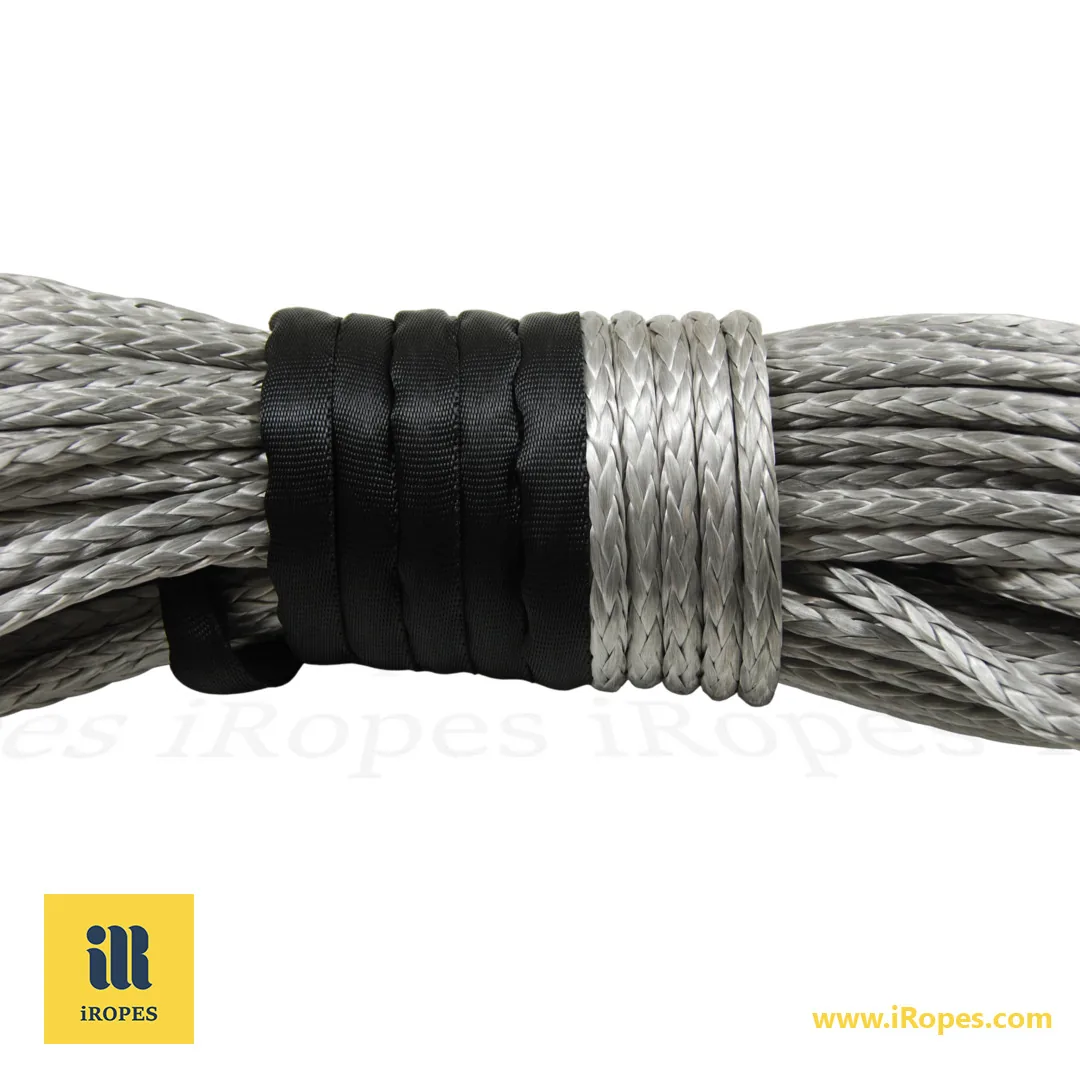
iRopes’ custom recovery ropes reach up to 10 200 lb breaking strength and are significantly lighter than comparable steel chain assemblies—the power‑to‑weight edge you need for demanding recoveries and lifts.
≈ 12‑minute read: What you’ll unlock
- ✓ Choose the optimal material to handle loads up to 10 200 lb with a lighter, easier‑to‑handle setup.
- ✓ Reduce lead time with iRopes’ OEM/ODM services and global shipping.
- ✓ Apply the OSHA‑recognised 5:1 safety factor and source ropes made under ISO 9001 quality systems.
- ✓ Control costs versus generic catalogue ropes while keeping branding consistent.
Most contractors assume the heaviest steel chain is the only safe choice for pulling a stalled 3‑ton vehicle, yet a ¾‑inch HMPE‑cored rope from iRopes typically delivers around 6 800 lb breaking strength while remaining far lighter and easier to handle. This insight reshapes how you plan every recovery, and we’ll show you the exact calculations, material choices, and supplier‑finding steps that turn it into measurable time and cost savings.
Overview of Materials and Structures
Now that you see why proper rigging matters in heavy‑industry projects, let’s explore the building blocks of rope rigging equipment. Understanding the raw materials and how they’re put together is the first step toward choosing a line that won’t let you down when the load gets heavy.

When you type “what are the three types of rigging?” into a search engine, the answer you’ll see is simple: rope, wire‑rope, and chain. Each family brings its own balance of strength, stretch, and durability.
- Rope – flexible synthetic or natural fibres, ideal for moderate loads and easy handling.
- Wire‑rope – steel strands woven for high tensile strength and abrasion resistance, suited to the toughest lifts.
- Chain – hardened metal links that tolerate extreme temperatures and fire, used where higher heat resistance is required.
Material choice goes beyond the obvious “steel is stronger”. Synthetic fibres such as polyester, nylon, and HMPE (Dyneema) provide excellent strength‑to‑weight performance. Polyester offers low stretch and good UV resistance, nylon provides controlled elongation for shock absorption, and HMPE delivers very high strength with ultra‑low weight and minimal elongation. Steel excels when you need cut‑through resistance and predictable behaviour in abrasive conditions.
Construction style also shapes performance. A braided rope interweaves strands for uniform load distribution and a supple feel, while twisted rope bundles fibres in a helix that can tolerate shock but feels stiffer. Parallel‑core designs arrange high‑modulus fibres in straight bundles inside a protective sheath, combining high strength with a flexible exterior.
Choosing the right rigging material isn’t just about maximum load rating. It’s about matching elongation, abrasion resistance, and temperature tolerance to the specific task at hand.
With these basics under your belt, you can now look at how a line’s diameter, core type and strand count affect the final breaking strength. The next step will show you how those numbers turn into real‑world decisions for heavy‑equipment recovery rope, so you’ll know exactly which line to pick for the job ahead.
Choosing and Using Recovery Rope
Now that you understand how diameter, core type and strand count shape a line’s breaking strength, let’s turn those numbers into a concrete selection process for the heavy equipment recovery rope you’ll rely on when a vehicle refuses to move.

To size the rope correctly, start with the maximum load you expect to pull and then apply the industry‑standard 5 : 1 safety factor recognised by OSHA and ASME B30.9. The calculation is simple enough to run on a scrap‑paper sheet or a phone calculator.
- Identify max load
- Apply 5:1 safety factor
- Select rope ≥ calculated strength
Standard diameters for recovery applications are ½‑inch, ¾‑inch and 1‑inch. A ½‑inch polyester line typically offers a breaking strength around 4 500 lb, a ¾‑inch version reaches roughly 6 800 lb, and the 1‑inch model approaches 10 000 lb. Match the calculated requirement from the list above to the nearest size; never choose a rope whose rating falls short of the safety‑factored load.
When it comes to the type of rope most often specified for heavy lifting and towing, the answer is wire‑rope slings. Their high tensile strength and abrasion resistance make them the go‑to solution for crane loads, winch pulls, and other demanding tasks.
Safety Tip
Before each use, inspect the rope ends for fraying, corrosion or broken fibres, and always employ a proper hitch knot such as a bowline or a double‑eye splice. A compromised end is a common cause of sudden failure.
In practice, a ¾‑inch HMPE‑cored rope works well for off‑road vehicle recovery because it combines lightweight handling with an ≈ 6 800‑lb rating. For crane load handling on a construction site, use properly rated wire‑rope or chain slings sized to the lift plan and applicable standards such as ASME B30.9. Whichever scenario you face, pair the rope or sling with compatible hardware—shackles, turnbuckles, or master links—so the entire system respects the calculated strength.
With the right line selected, the next step is locating a supplier who can deliver the exact specifications you need, whether that means a standard catalogue item or a fully customised, branded solution.
Finding Local Suppliers and Custom Solutions
Now that you know which recovery line will survive the toughest pull, the next logical step is locating a nearby source that can deliver exactly what you need. A quick “rope and rigging near me” search can shave days off lead time and keep shipping costs low, especially when you’re working on a tight project schedule.

Only work with vendors that hold ISO 9001 certification and can demonstrate OSHA and ASME compliance; this helps ensure recognised safety and quality standards.
iRopes supports your localisation needs with its OEM/ODM programme. Whether you need a corporate colour‑code, custom labelling, or a specific coil length, our ISO 9001‑certified facilities in China manufacture to spec—with IP protection, non‑branded or customer‑branded packaging, and direct pallet shipping to your location worldwide.
Search Strategies
How to locate a trustworthy dealer
Keyword + Postcode
Combine “rope and rigging near me” with your postcode or ZIP code; the map will auto‑populate the nearest authorised sellers.
Google Business Profile
Check the rating and read recent reviews; a strong average and recent activity usually signal consistent quality control.
Dealer Networks
Major distributors such as Bishop Lifting, Mytee, and Fulcrum list regional branches, making it easy to call ahead.
Vendor Checklist
Key criteria before you sign
Certifications
ISO 9001 and documented OSHA/ASME compliance should be readily available on request.
Price Brackets
Indicative ranges: $30–$50 for ½‑inch polyester, $150–$350 for ¾‑inch HMPE‑cored, and $400+ for 1‑inch HMPE‑cored models.
Delivery Timelines
Standard stock often ships within a few business days; custom‑branded orders typically require 2–3 weeks, depending on quantity and specifications.
By combining a targeted “rope and rigging near me” search with iRopes’ custom‑manufacturing capabilities, you can secure a supplier that not only meets technical specifications but also aligns with your brand and schedule. The next step is to request a quote and let iRopes handle the rest, ensuring your next lift or recovery runs without a hitch.
Understanding the three core rigging families—rope, wire‑rope and chain—along with the properties of polyester, nylon, HMPE and steel, lets you match material, diameter, construction and core type to the demands of your project, ensuring the rope rigging equipment you select delivers the right balance of strength, flexibility and durability.
Armed with the 5:1 safety‑factor method, you can size the perfect heavy equipment recovery rope and, when you search “rope and rigging near me”, quickly locate a certified supplier or request a fully customised, branded solution manufactured under ISO 9001 with IP protection and efficient global shipping.
Get Your Custom Rigging Quote Below
If you’d like personalised advice on selecting or customising your rigging line, simply complete the form above. Our specialists will help you fine‑tune specifications, ensure compliance, and arrange timely delivery tailored to your operation.