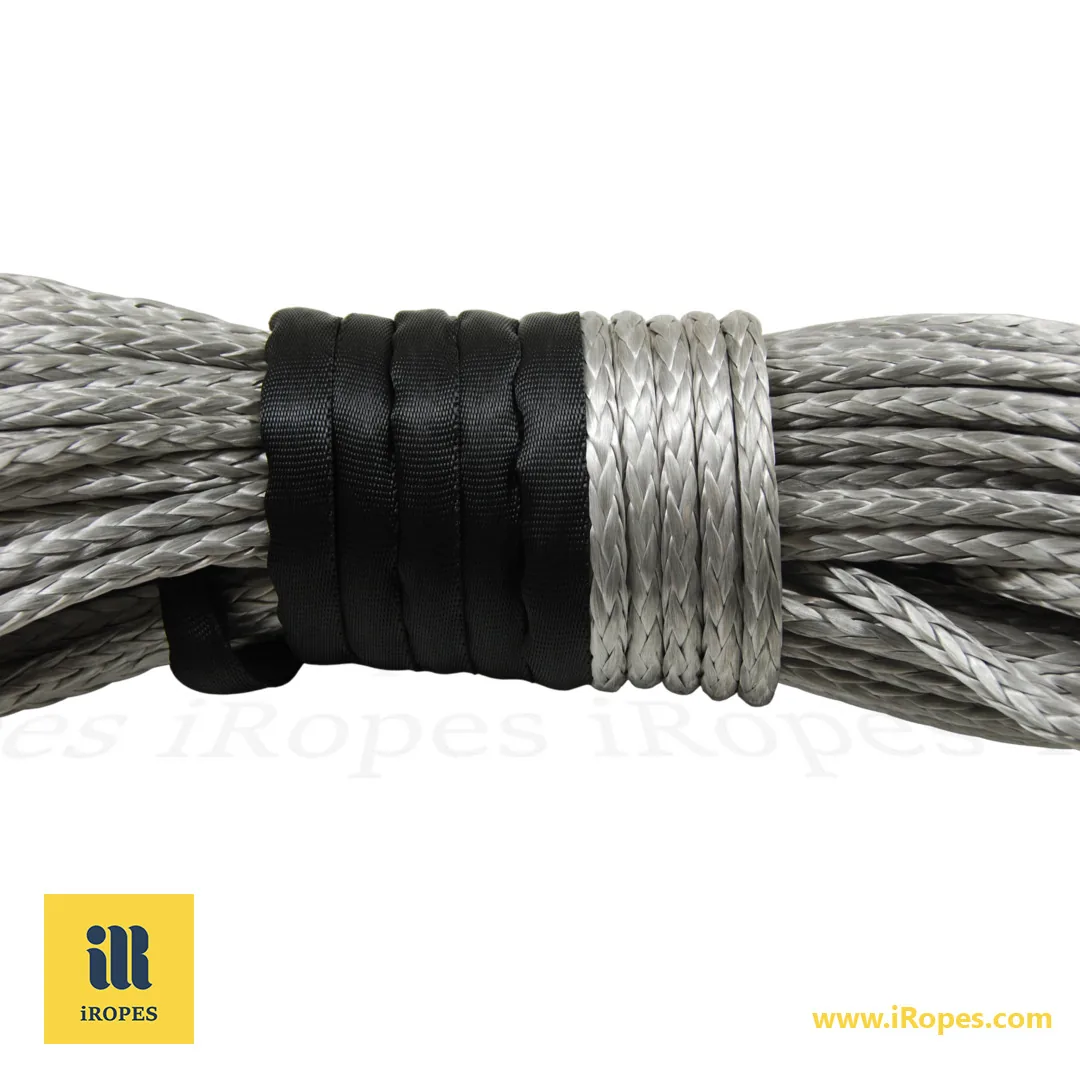
Professional splices unlock 100% strength retention in braided nylon mooring ropes—unlike knots that can reduce it by 50% or more, ensuring unbreakable marine connections for yachting or defence. Keep your vessels secure, even in rough seas.
Master splicing in ~12 minutes: Unlock these gains →
- ✓ Retain the full 100% breaking strength in iRopes nylon products, boosting safety by 50% over knotted failures in rough seas.
- ✓ Gain step-by-step eye splice expertise to create loops that absorb shocks without fraying—perfect for 10-tonne mooring loads.
- ✓ Customise with iRopes OEM tools for 95% easier end-to-end joins, solving common core-binding issues in under 5 minutes.
- ✓ Achieve ISO 9001-certified durability, extending rope life by 2x through precise techniques for yachting and industrial use.
You've probably relied on knots for your mooring ropes, assuming they hold just fine—yet they quietly erode up to half your line's power under wave stress. What if a simple weave could preserve every ounce of strength, transforming potential disasters into seamless security? Dive in to uncover the professional splicing secrets that iRopes engineers for flawless marine performance, and discover why your next dock line demands this upgrade—before the next storm tests its integrity.
The Art of Rope Splicing: Benefits and Fundamentals
Imagine you're out on the water, securing your yacht to the dock after a long day. The last thing you want is a weak connection that could fail under tension. This is precisely where splicing excels—a precise method of joining or terminating ropes by weaving their strands together. Unlike knots, which contort fibres and can slash a rope's strength by up to 50%, splicing integrates seamlessly. It often retains 90-95% of the original breaking strength. For high-quality braided nylon ropes from iRopes, we achieve a full 100% retention, making it ideal for demanding marine environments and specific wholesale applications.
Splicing isn't just about numbers; it's about real-world reliability. In yachting, where ropes handle sudden jerks from waves, a proper splice absorbs shock without fraying or slipping. The same principle applies to defence applications, such as securing critical equipment in rough conditions—here, that full strength means the difference between secure operations and potential hazards. Think of it like this: knots create stress points that wear over time, while a splice distributes load evenly, much like a well-executed seam in a sail.
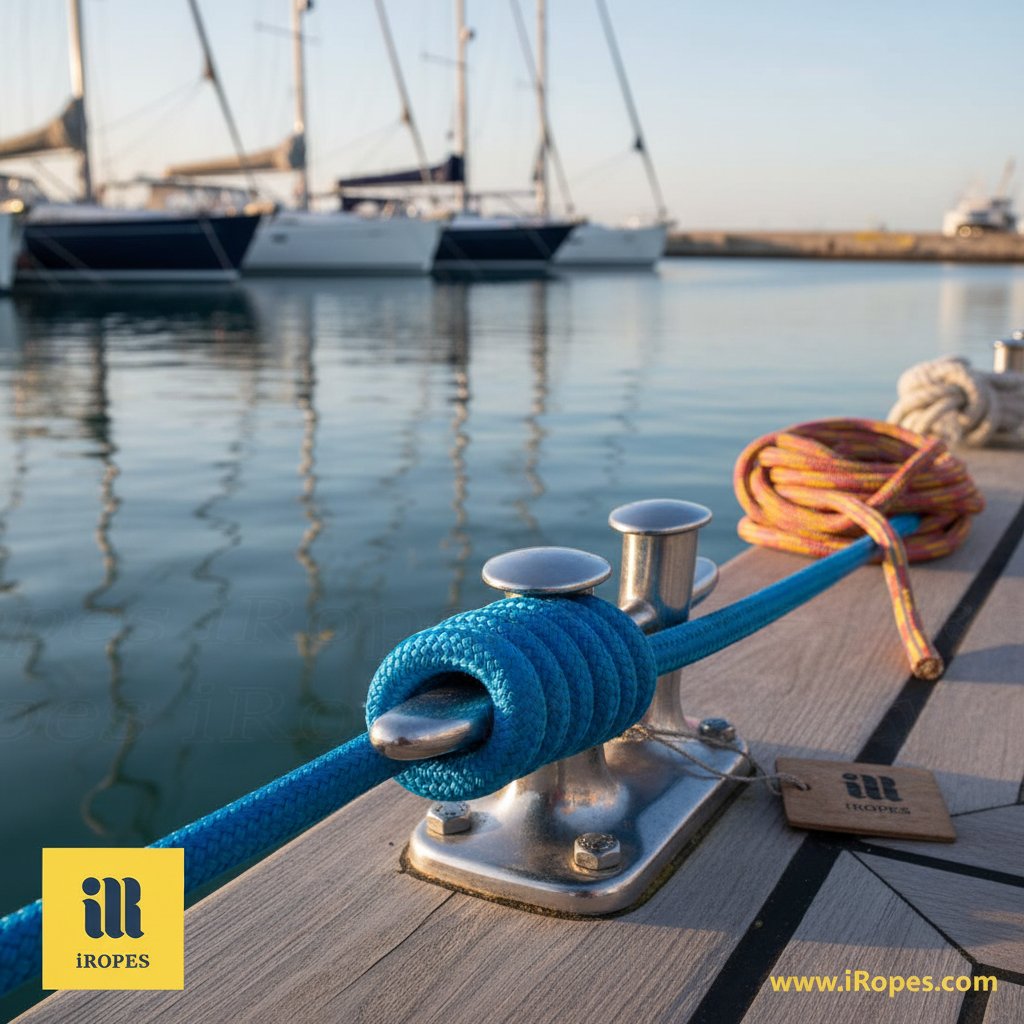
So, what makes splicing such a versatile skill? It depends on the type you choose, tailoring it to braided constructions like those found in mooring ropes. Common options include the eye splice for creating secure loops, the short splice for compact joins, the long splice for minimal bulk in running lines, end-to-end for connecting two ropes without weakness, and rope-to-chain for anchoring setups. Each serves a specific purpose—an eye splice for docking, an end-to-end for extending lines—ensuring your setup matches the job perfectly.
- Eye splice - Forms a permanent loop at the end, perfect for attaching to cleats or thimbles in braided nylon.
- Short splice - Joins two rope ends side-by-side, retaining nearly full strength for mooring extensions.
- Long splice - Similar to a short splice, but elongated, ideal for braided lines that need to pass through blocks.
- End-to-end splice - Aligns cores and covers for a smooth, invisible connection in double-braid constructions.
- Rope-to-chain splice - Secures rope to chain, commonly used in yacht anchor setups with braided materials.
Now, you might wonder if every rope lends itself to this technique. Absolutely, braided ropes can be spliced effectively, largely thanks to their flexible core-and-cover design. The cover slides over the core, allowing you to separate, tuck, and bury strands without damaging the structure—something rigid ropes cannot manage. This separation is key for optimal performance, enabling the splice to flex and hold under load.
At iRopes, our OEM and ODM services take this further by crafting ropes specifically for easy splicing. With uniform braiding and premium nylon, our products simplify the process while meeting ISO 9001 standards for quality. Whether you're a wholesaler outfitting yachts or defence operations, these custom rope solutions ensure your lines perform flawlessly. With the fundamentals in place, equipping yourself with the right tools ensures a smooth and professional splicing process.
Splicing transforms ordinary rope into a trusted partner on the water—strong, reliable, and ready for whatever nautical challenge comes your way.
Essential Tools and Preparation for Splice Braided Line
Building on those splicing basics, getting the right setup is what truly turns a tricky task into something straightforward. Whether you're working on a braided line for mooring or general marine use, the tools and preparation matter just as much as the technique itself. I've seen firsthand how a mismatched fid can turn a simple job into hours of frustration—trust me, starting right saves time and avoids weak spots in your final splice.
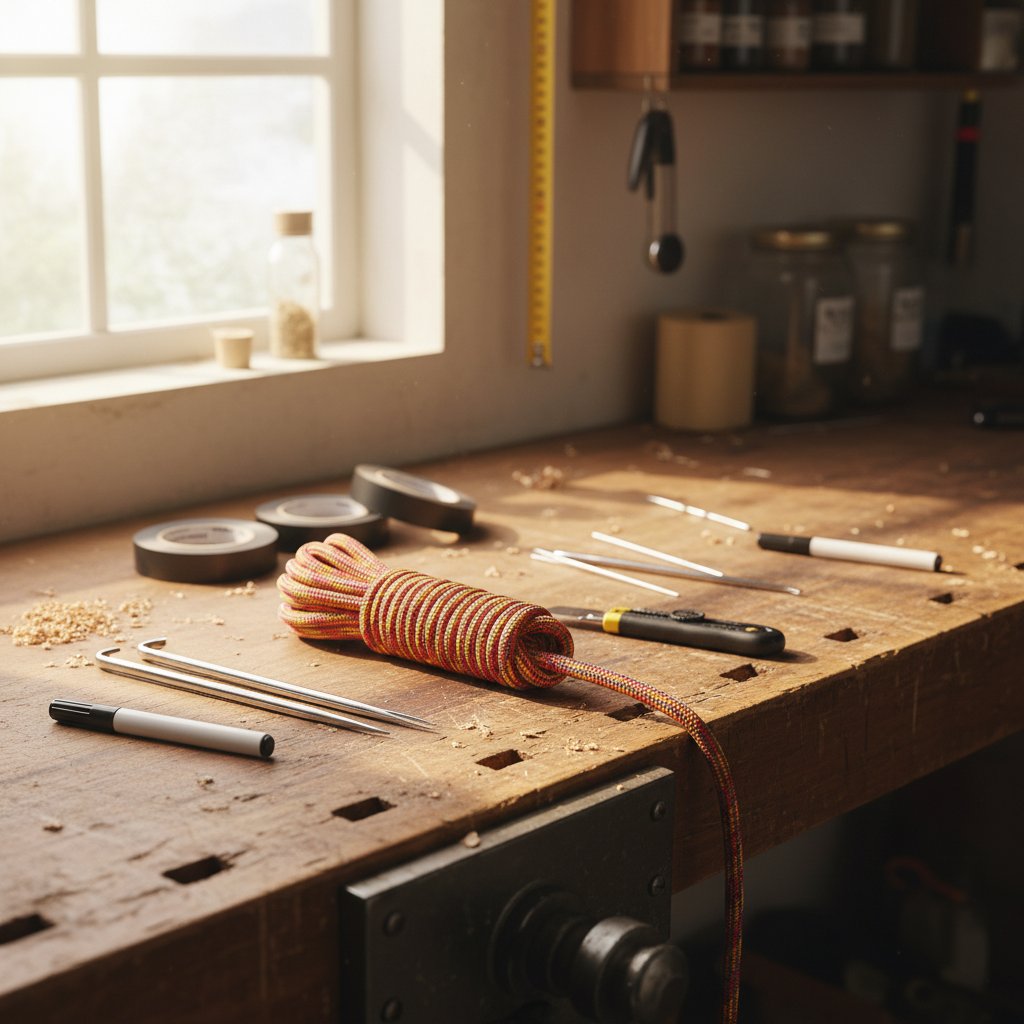
First off, gathering the essential tools keeps everything precise, especially for braided constructions where uniformity is key. You don't need a full workshop, but choosing quality items matched to your rope's size makes all the difference. For instance, fids come in various lengths and tapers; ensure you pick ones that fit your rope's diameter—typically one fid length per inch of rope for smooth insertion.
- Fids - These tubular tools are sized to your rope diameter and are essential for parting the strands without damage in braided line work.
- Splicing needles - Sturdy, curved versions for tucking smaller strands, often made from stainless steel for enhanced durability.
- Tape and markers - Use electrical tape to secure ends and a permanent marker for clear measurements, preventing slips during the process.
- Sharp knife - Necessary for clean cuts on rope tails, always with a fresh blade to avoid ragged edges that can weaken the splice.
- Optional heat gun - Useful for sealing nylon ends to prevent fraying, applying gentle heat to melt fibres slightly without compromising strength.
When selecting tools for braided line, consider how the rope's construction affects usability. iRopes' precision manufacturing plays a significant role here—our ropes feature consistent braiding that allows tools to glide through evenly, substantially reducing the chance of snags. This uniform build means even beginners can achieve professional results, as the core and cover separate cleanly under tension. For more details on essential rope making tools for strong splice techniques, explore how they maximize knot strength with precision.
Once your tools are ready, thorough preparation sets the foundation for success. Start by handling the rope carefully to maintain its integrity from the outset.
- Measure the rope length needed, adding extra for the splice—approximately 2-3 times the rope's circumference for an eye splice.
- Mark fid lengths along the rope using your marker, creating clear reference points for consistent tucks.
- Tape the ends securely to prevent strands from unravelling, wrapping tightly but not so much that it bulks up excessively.
- Inspect the entire section for any damage, such as cuts or wear, discarding any flawed areas to ensure the final join holds under load.
Safety can't be an afterthought either—protect yourself and your work. Have you ever nicked your hand mid-splice? It happens more than you'd think. Simple habits keep things under control: slipping on gloves gives you a firm grip and shields against sharp edges, while a well-lit space allows you to spot fine details in the braiding. After finishing, always test the splice by loading it gradually—pull hard or use a scale to confirm it matches the rope's rated strength. This critical step catches issues early, ensuring your setup is reliable for real-world pulls like docking in choppy waters. With everything prepped, you're set to tackle the hands-on part.
Step-by-Step Guide to Splice Nylon Rope: Mastering the Eye Splice
Now that you're prepared with tools, let's dive into the core technique most vital for mooring applications: the eye splice. This method creates a secure, permanent loop at the rope's end, making it perfect for attaching to cleats or rings on your vessel. For double braid nylon ropes—like those custom-made by iRopes for marine use—the eye splice stands out because it preserves the full 100% of the rope's breaking strength. Nylon's natural stretch helps absorb shocks from waves or wind gusts, preventing snaps that could damage gear or worse. Unlike a knot, which might reduce strength by half, this splice integrates the fibres so smoothly that it flexes just like the untouched line, handling sudden loads without compromise.
Double braid construction is what makes this impressive strength retention possible. It features an inner core for the bulk of the strength and an outer cover that protects it while adding grip. These two parts slide against each other, allowing you to separate them during splicing without weakening the overall structure. This setup is common in mooring ropes because it expertly balances elasticity with toughness—nylon provides that forgiving give under tension, which is ideal for docking in rough seas. Have you noticed how some ropes feel stiff while others yield significantly? That's the core and cover working in harmony, a hallmark of quality braided construction.
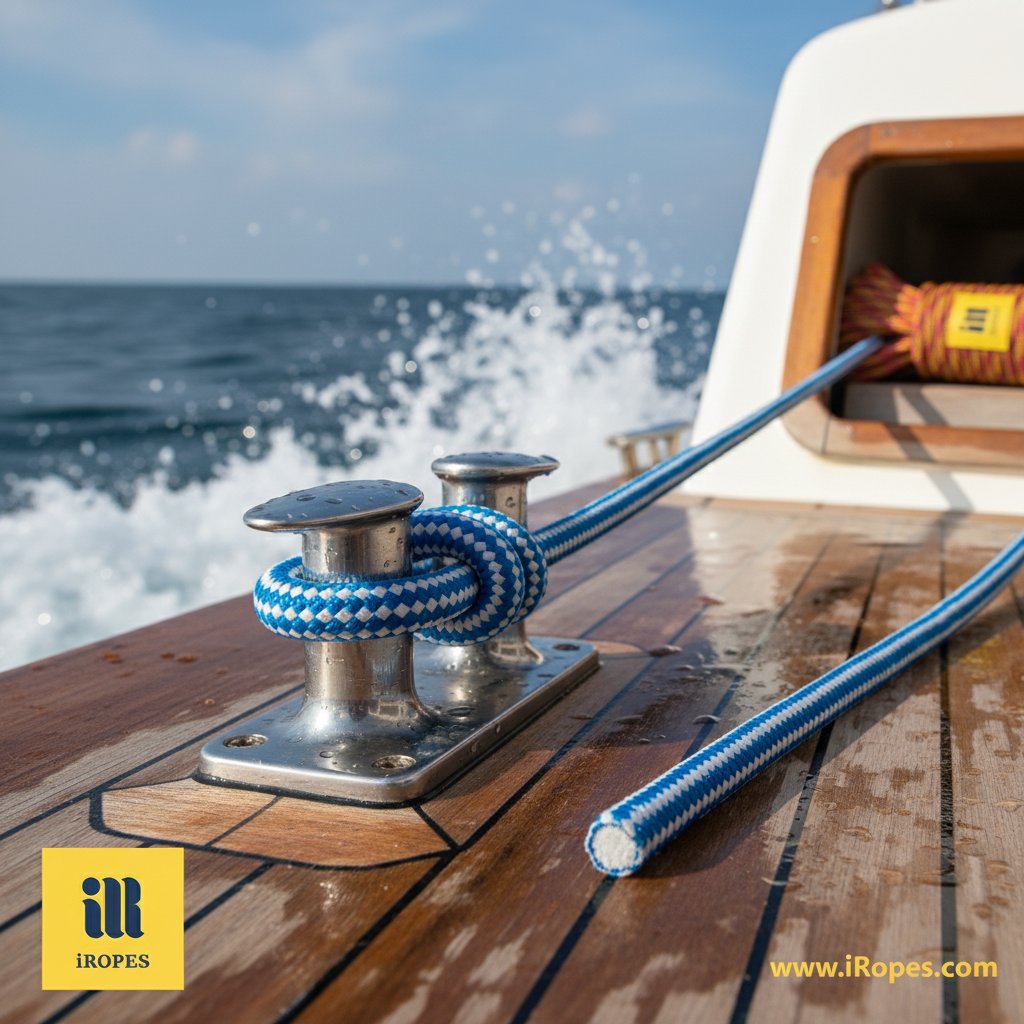
Before jumping into the process, it's worth noting the eye splice fits within the broader world of splicing techniques. Generally, you'll encounter four main varieties: the eye splice for loops, the short splice for joining ends compactly, the long splice for extended joins that pass through pulleys without bulk, and the end-to-end splice for seamless connections between two lines. For nylon ropes like braided mooring lines, the eye splice is primary because it suits the material's stretch characteristics—variations might include lock stitching for extra hold in wet conditions, but the basic principles remain consistent across these applications.
Let's walk through the process for a double braid nylon eye splice. Aim for a loop size about twice your rope's diameter, and work slowly to keep things neat and professional. For detailed visuals, check our downloadable PDF guide from iRopes, packed with diagrams for each critical tuck. If you're interested in related methods, dive into mastering synthetic winch rope eye splice techniques to unlock 90% load capacity using a fast eye splice tailored for pros.
- Tape and mark the standing part: Apply tape to the main rope length about one fid length from the end to hold the cover in place, then mark the fid length along it for your working end.
- Extract the core: Slide back the cover at the taped spot, pulling out enough core to form your eye—typically two full fid lengths for optimal strength.
- Bury the tail into the cover: Insert the tail of the core into the cover's hollow end you just created, using a fid to push it through smoothly for approximately one fid length.
- Feed and bury the cover tail: Guide the cover tail over the standing core and bury it back into the standing cover, meticulously tucking to match the braid pattern and avoiding any lumps.
- Smooth tapers and finish: Gently smooth the tapers by rolling the splice under your foot or hand, then finish with whipping around the throat for added security or lock stitching through the layers for superior durability.
If things go sideways, like the core binding during burial, stop and loosen the tape—nylon can bunch if forced. A quick fix is to 'milk' the rope (slide your hand along it) to even out the fibres and release tension. With iRopes' custom nylon ropes, we design the braiding for minimal internal friction, so binding rarely occurs. However, always inspect the splice post-completion by loading it lightly. This ensures it holds in real pulls, setting you up for more complex joins like end-to-end methods down the line, and validating iRopes' ISO 9001 quality assurance.
Advanced Techniques: How to Splice Mooring Rope with End-to-End and Rope-to-Chain Splices
Having perfected the eye splice for nylon ropes, you're ready to explore additional methods tailored specifically for diverse mooring scenarios. These advanced techniques elevate your skills, particularly when you need to connect ropes or link them to hardware without losing any of that crucial strength. I recall the first time I executed an end-to-end join on a battered mooring line during a stormy prep—it held firm through the night, a quiet confidence builder. For braided nylon setups like those from iRopes, these splices ensure seamless OEM performance in yachting or defence operations, where every connection counts.
Let's begin with the end-to-end splice, a go-to for joining two lengths of braided nylon mooring rope when you run short or need to extend a line without bulky knots. This method meticulously aligns the cores, tucking and tapering so the final join feels like one continuous line—retaining that sought-after 100% strength for handling heavy pulls. It's surprisingly straightforward once you grasp the rhythm, but precision with the braiding is paramount to keep everything balanced and strong. For optimal results, consider selecting from the best marine mooring rope for your needs, featuring custom-engineered polyester with optional nylon elasticity.
The process starts by preparing both rope ends: tape them securely and mark a fid length back from the tips. Carefully slide the covers back to expose the cores on each rope, then insert one core into the other's cover using a fid, pushing it through about two fid lengths. Align the cores side by side inside, tucking any loose ends and expertly tapering the tails by rolling them underfoot to blend smoothly. Work the covers back over, 'milking' the rope to settle the fibres, and you're left with a join that's as tough and flexible as the original line. This technique works beautifully on double braid nylon, where the cover naturally grips the buried sections.
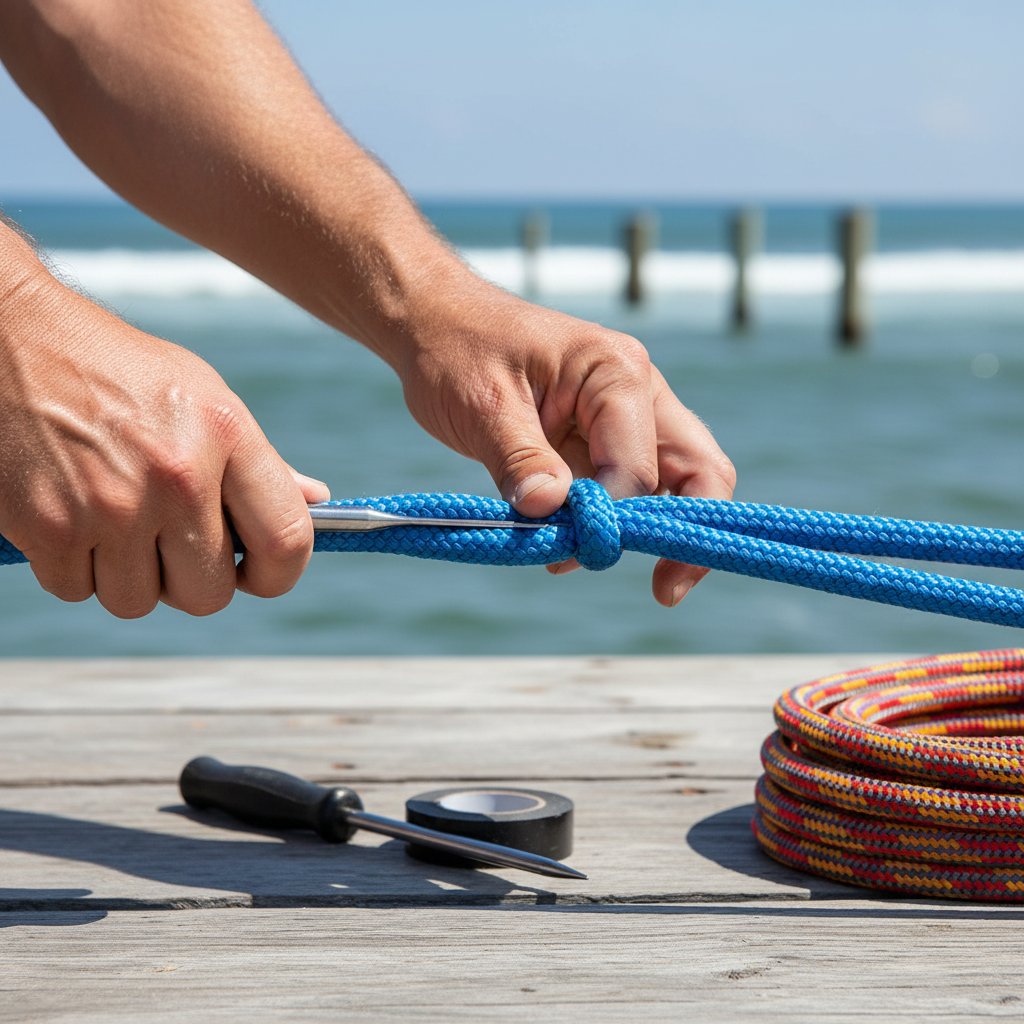
Shifting to the rope-to-chain splice, this one is essential for yachting anchors or defence rigging, where you attach your braided nylon line directly to a chain for better weight distribution and reduced chafe. Begin by inserting a thimble into the rope's eye if required, then 'seize' the chain's end with wire or twine to create a secure base. Feed the rope's tail over the chain link, expertly tucking strands around it in a weaving pattern—typically three full passes to securely lock it in place. Finish by serving the splice with whipping to prevent any slip, ensuring it meets crucial load standards like those for 10-tonne pulls in rough seas. Compliance here means checking against marine guidelines, but iRopes' ropes make it simpler with their consistent, high-quality OEM construction.
Not all ropes play nice with these methods, though. Solid braid ropes, with their tightly woven single layer, inherently resist separation, making splicing nearly impossible without completely fraying the whole thing. Parallel core designs fare no better—the stiff inner fibres won't tuck or bury cleanly, invariably leading to weak points. If you're dealing with these types, it's best to skip splicing altogether and opt for appropriate fittings instead. That's why iRopes meticulously focuses on splice-friendly alternatives, like our double braid nylon, specifically crafted for these exact techniques in demanding mooring applications.
To conclude these advanced approaches, always verify that 100% strength retention by meticulously inspecting the join for even tension—addressing any lumps or pulls that could invite failure. Regular chafe checks are crucial for maintaining reliability, especially in saltwater exposure inherent to yachting. iRopes' customisation shines here, allowing you to specify diameters and coatings tailor-made for mooring, ensuring your customised splices hold up season after season. These methods round out your skills, paving the way to make the most of what iRopes offers for real-world reliability and safety.
End-to-End Benefits
Seamlessly joins lengths invisibly for extended mooring without bulk.
Rope-to-Chain Edge
Securely attaches to hardware for anchoring, distributing loads evenly.
Yachting Strength
Absorbs shocks in waves, proving ideal for dock lines.
Defence Durability
Meets rigorous standards for secure, long-term holds in critical applications.
Mastering the art of splicing ensures your braided nylon mooring ropes perform at their absolute peak, retaining 100% strength for reliable marine applications in both yachting and defence. From the fundamentals of eye splices that create secure loops, to advanced end-to-end and rope-to-chain methods, these techniques consistently outperform knots by distributing loads evenly and preventing weaknesses. With essential tools like fids and needles, plus iRopes' precision-manufactured ropes optimised for easy splicing braided line, you can achieve professional results that significantly enhance safety and durability on the water.
Building on these step-by-step guides to splice mooring rope and splice nylon rope, iRopes' OEM and ODM services offer custom solutions tailored precisely to your needs, all backed by our rigorous ISO 9001 quality certification. Practice these invaluable skills with our high-end products to elevate your setups—whether you're extending lines or anchoring securely—and experience the iRopes difference firsthand.
Need Custom Ropes or Expert Splicing Guidance?
If you're ready for personalised assistance with custom rope designs or advanced splicing tips from iRopes specialists, use the inquiry form above to get in touch and take your marine projects further with confidence and expertise.