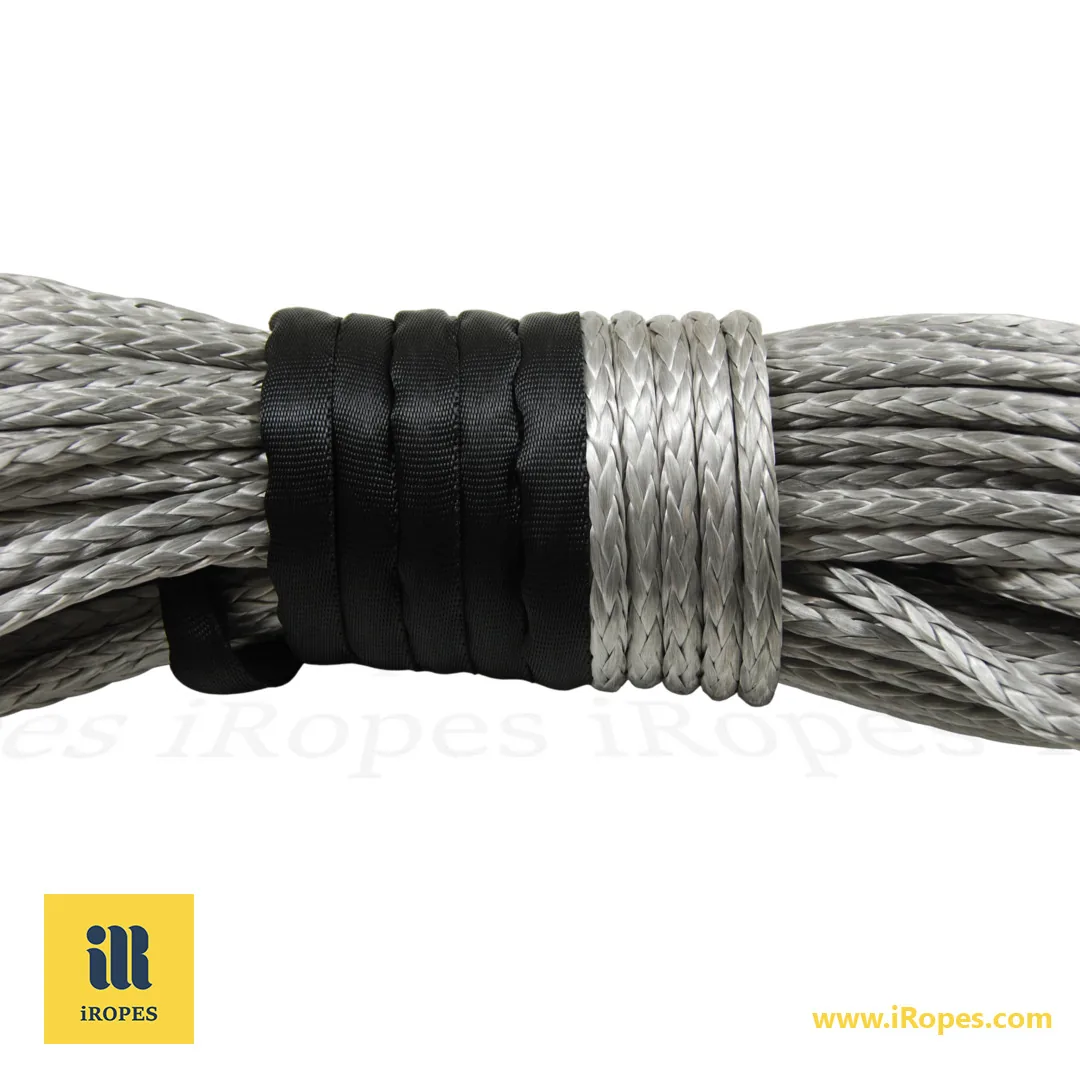
Storm-proof your boat with custom buoy lines: Anchor lines with thimbles prevent 90% of chafe failures, holding up to 6,400 lbs in 40-knot gusts. Additionally, the 7:1 scope rule secures your hold in 10-foot swells without dragging. **iRopes** customises these for unbeatable reliability, ensuring your vessel remains safe even in the fiercest weather.
Unlock storm survival in just 12 minutes of reading:
- ✓ Master the 7:1 anchor rule to slash drag risk by 75%, calculating precise lengths for your boat's 20-40 foot size and saving hours of repositioning in rough seas.
- ✓ Choose polypropylene buoy lines that float 100%, boosting visibility in low light and preventing prop fouls worth thousands in repairs during emergency tows.
- ✓ Integrate thimbles into nylon ropes for 80% stronger attachments, absorbing shocks up to 1,000 lbs and extending line life by 2 seasons through chafe elimination.
- ✓ Customise with **iRopes' OEM services** to match your vessel's needs, gaining ISO 9001-certified durability that cuts replacement costs by 40% over generic options.
Many skippers believe any sturdy rope will do when thunder cracks and waves rise. However, most discover too late that without proper buoy integration, their lines sink, tangle, or fail under surge. Picture this: your anchor drags in a midnight gale because polypropylene buoyancy wasn't factored in, transforming a safe situation into a frantic scramble. But **iRopes'** hidden customisation flips that script, revealing how tailored tow buoys and thimbles create unbreakable systems. Stick around to uncover the exact specifications that transform vulnerability into victory in the next storm.
Understanding Anchor Line with Thimble for Storm Protection
Imagine being out on the water when a sudden storm rolls in, with waves crashing against your hull as if trying to capsize your boat. In such moments, a solid anchor line with a thimble becomes your vessel's lifeline, holding everything steady against the chaos. This setup isn't merely about dropping an anchor; it's about establishing a secure connection that withstands severe weather, preventing the line from fraying against rough edges or sharp hardware. The thimble, a simple metal insert, fits inside an eye splice at the rope's end, distributing stress evenly and stopping chafe before it can weaken your hold. Without it, even the toughest line could wear through rapidly during high winds, leaving you adrift and vulnerable.
So, what constitutes the best type of anchor line for a boat? From extensive experience rigging vessels, Nylon 3-strand rope consistently proves ideal due to its inherent elasticity. It stretches just enough to absorb the shock from surging waves, much like a bungee cord easing a jolt, without snapping under pressure. Nylon also performs well in wet conditions, retaining approximately 80-90% of its dry strength even after soaking. Pair it with a thimble, and you have a robust solution. Opt for **stainless steel** if corrosion is a concern in saltwater; it's more expensive but lasts significantly longer without pitting. Galvanised steel is suitable for freshwater use, offering solid protection at a lower cost, though it might require earlier replacement in harsh environments.

A crucial element for effective anchoring is the **7:1 anchor rule**, a guiding principle from boating professionals that ensures a secure setup. It recommends deploying seven feet of rode—the combined anchor line and chain—for every one foot of water depth, plus the distance from the water's surface to your bow roller. Why seven? This ratio provides the anchor with the optimal angle to dig in deep, resisting pull-out from strong winds or currents. For instance, if you're in 10 feet of water with a 4-foot bow height, you'd need approximately 98 feet of rode in total (7 multiplied by 14). Skimping on this scope risks your anchor dragging, while excessive line can lead to tangles. Achieving this balance becomes second nature with practice in calm waters.
Correct sizing integrates all components, matching your boat's specific needs and avoiding either overload or inefficiency. For a 20-30 foot vessel, begin with a 3/8-inch diameter nylon line, which offers approximately 3,700 pounds of tensile strength—ample for typical storm loads up to 1,000 pounds. For boats measuring 30-40 feet, increase to a 1/2-inch diameter line, achieving 6,400 pounds breaking strength. Aim for lengths of 150-200 feet to accommodate various depths. Always consider your anticipated conditions; a heavier cruiser might require additional strength to manage gusts exceeding 40 knots. Have you verified your current setup against these fundamental guidelines? Doing so could be pivotal the next time the weather turns.
Considering how these lines interact with buoys for enhanced mooring stability reveals further opportunities to safeguard your boat in rough waters.
Essential Features of Boat Buoy Line in Marine Applications
Beyond the anchor lines that keep your boat securely positioned, boat buoy lines advance safety by connecting your vessel to surface markers. These markers facilitate easier navigation to designated mooring spots or enable quick retrieval in challenging situations. In bustling mooring fields, a reliable boat buoy line is indispensable; without one, you risk entanglement or worse while trying to locate your mooring. These lines link to marker floats or pickup buoys, providing a secure connection in crowded harbours or for emergency positioning if a storm forces rapid improvisation. They are more than just ropes; they represent your link to stability, allowing you to attach to a fixed point without dragging or swinging erratically.
When selecting the appropriate material, polyhedron stands out as the premier choice for a **boat buoy line**, thanks to its natural buoyancy. This property ensures the entire setup remains afloat on the water's surface. In contrast, nylon absorbs water and sinks while providing significant stretch for shock loads. Polyester, although highly durable, also sinks and resists stretching. Polypropylene, however, remains light and visible, preventing it from disappearing beneath waves where it could foul your propeller. Imagine navigating choppy conditions at dusk; a floating line guides you directly to safety without requiring a dive to locate it. It possesses adequate strength for most applications, though its UV resistance is lower over time, so rotating it every few seasons helps maintain effectiveness.

To enhance the safety of your boat buoy line in low light, incorporating visibility features such as **reflective strips** or **glow-in-the-dark tracers** can be transformative for storm navigation. These elements catch light from your flashlight or nearby vessels, or they emit a soft glow after dark, allowing you to spot the line before encountering it unexpectedly. A foggy evening once highlighted the value of a friend's reflective buoy line, which prevented an unintended drift—simple additions like these turn potential mishaps into non-events.
For mooring specifications that meet real-world demands, consider lengths of approximately 20-30 feet to accommodate tidal swings of 6-10 feet. Diameters should range from 3/8 to 5/8 inches, depending on your boat's weight: thinner for dinghies under 1,000 pounds and beefier for cruisers up to 5,000 pounds. Attachment methods are also critical. Use bowlines or spliced eyes with shackles to secure to the buoy's pickup line, ensuring it twists without binding in wind gusts of up to 30 knots. What size best suits your vessel? Matching these details guarantees your line will withstand strong tidal forces. For more on ideal mooring solutions, explore the best marine mooring rope options.
- Length Options - 20-30 feet covers most tidal ranges, allowing slack without excess drag.
- Diameter Choices - 3/8-inch for light loads, up to 5/8-inch for heavier vessels, balancing strength and flexibility.
- Attachment Tips - Opt for spliced loops with quick-release clips to handle wind shifts smoothly.
These buoy lines establish the foundation for managing more demanding pulls, such as those required for towing or recovery in rough seas.
Role of Tow Rope Buoy in Emergency Towing and Storm Recovery
When buoy lines secure you in a mooring field, but the weather turns severe, necessitating a tow to safety, a **tow rope buoy** emerges as an indispensable tool. I vividly recall being caught in a squall off the coast where visibility vanished, and lines thrashed chaotically. In that situation, a tow rope buoy maintained order and prevented a perilous entanglement. These devices attach to your towing line, ensuring it remains on the surface rather than sinking and potentially fouling propellers or interfering with the rescuer's equipment. By keeping the rope afloat, they significantly reduce entanglement risks, particularly during the chaotic nature of storm recovery when rapid action is paramount. Furthermore, surface visibility allows you to spot the line from a distance, guiding the tow boat directly without guesswork or close calls.
The primary advantage of a tow rope buoy lies in its intelligent design features, such as integrated quick-release clips that enable detachment within seconds if conditions change unexpectedly. Consider it an emergency brake for your setup; buoyancy keeps the line accessible and floating, eliminating the need to grapple with submerged gear during critical moments. In one challenging incident, a friend's quick-release buoy averted an entanglement during a sudden wind shear, disengaging cleanly and allowing the tow to proceed without complication. These features enhance safety during tow preparations, reducing stress when adrenaline runs high and waves pound relentlessly. For emergency towing, this extra layer of preparedness can transform a potential disaster into a manageable escape.

It's important to note that not all buoys are permissible for tying off; regulations explicitly delineate buoy types to ensure waterway safety and order. Designated mooring buoys, which are sturdy fixtures permanently anchored to the seabed for public use, are generally legal to attach to. However, specific local rules, such as time limits or fees in managed areas, must be observed. Navigational aids—the green and red markers indicating channels—must remain untouched. Securing to them constitutes interference and can result in fines from coast guard patrols. Always consult charts or navigation apps for buoy status before connecting, especially in unfamiliar locations. This simple habit prevents issues and ensures everyone respects maritime guidelines.
To maximise the effectiveness of your tow rope buoy, integrate it with boat systems that enhance its durability. For example, applying chafe guards over high-friction areas or incorporating thimbles at connection points creates smooth, wear-resistant links. These additions protect against the abrasive effects of hardware during heavy pulls, much like padding on a weightlifter's gloves, thereby extending the lifespan of your entire setup. In practical scenarios, a well-integrated tow rope buoy handles the stresses of towing without fraying, instilling confidence during storm recovery operations. Have you assessed your current gear for such critical "what-if" moments?
Core Functions
Afloat and Visible
Prop Protection
Floats lines to dodge underwater snags during urgent maneuvers.
Storm Visibility
Bright markers cut through fog and waves for clear spotting.
Recovery Aid
Supports swift line handling in post-storm retrievals.
System Pairings
Durable Enhancements
Chafe Guards
Shield against friction in high-tension towing spots.
Thimble Links
Secure eyes prevent wear at critical attachment points.
Quick Clips
Enable fast adjustments without compromising strength.
Layering in these elements not only fortifies your towing setup but also opens opportunities to tailor ropes precisely matched to your boat's specific demands for even greater resilience.
Customising Marine Ropes with iRopes for Ultimate Storm Safety
The desire to tailor your towing and mooring gear to perfectly suit your boat's idiosyncrasies is precisely where **iRopes** excels. We transform generic ropes into equipment that feels custom-made for your vessel. Many skippers advocate for custom setups, particularly after a challenging incident, which is logical: while off-the-shelf lines may suffice, during storms, you require equipment that rigorously meets your vessel's needs without compromise. Our OEM and ODM services allow us to customise everything from tow rope buoys to boat buoy lines and anchor lines with thimbles, beginning with your precise specifications such as boat length or typical cruising grounds. For example, if you operate a 35-foot sailboat in choppy coastal waters, we can specify a line with the ideal stretch to manage surges, complete with pre-installed hardware that integrates seamlessly with your deck fittings. This personalised approach saves you time on the water and mitigates potential issues during severe weather conditions. Learn more about our customization options to fit your unique marine needs.
Regarding materials, your choices depend on what your setup demands most: flexibility, grip, or buoyancy. **Nylon** provides forgiving stretch for absorbing wave impacts, making it perfect for anchor lines that need to yield without failing. **Polyester** is excellent for stable mooring applications, maintaining its shape under constant pull while offering superior resistance to UV damage and abrasion. Then there is **polypropylene**, which is light and buoyant, essential for tow or buoy lines that must remain visible and floating. We craft these into 3-strand twists for straightforward handling and easy field repairs, or into double braids for smoother operation and enhanced abrasion resistance. I once assisted a friend in retrofitting his lines this way, and the difference in their performance during a test pull was remarkable—less twist, greater reliability.
3-Strand Twist
Simple build for quick splices and solid everyday strength in wet conditions.
Double Braid
Tighter weave boosts flexibility and wear resistance for heavy-duty pulls.
Nylon
Elastic core soaks up shocks, ideal for dynamic anchoring scenarios.
Polyester
Low-stretch durability shines in fixed mooring holds against tide and wind.
Behind every custom order, our commitment to quality is stringent, underpinned by ISO 9001 certification. This means every inch of rope undergoes rigorous checks for consistency at our state-of-the-art facilities in China. We safeguard your intellectual property with full **IP protection**, ensuring that your unique designs for a buoy line remain exclusively yours. For our wholesale clients shipping worldwide, this precision guarantees ropes that perform reliably season after season, delivered directly from our factory to your operations without unnecessary intermediaries.
To maximise the lifespan of these vital investments in harsh marine environments, regular maintenance is paramount. Start with weekly inspections for any signs of fraying or stiffening after each outing, and rinse off salt with fresh water to prevent buildup. Store ropes loosely coiled in a dry place, away from direct sunlight, which can fade colours and weaken fibres over time. How frequently do you examine your lines? This simple habit can identify potential issues early, extending their life through many more storms.

Implementing these practices not only preserves your setup but also reinforces the comprehensive protection these ropes provide when adverse weather conditions arise.
As discussed, equipping your boat with a reliable **anchor line with thimble**, ideally made from nylon 3-strand rope, ensures secure anchoring aligned with the 7:1 rule. This setup effectively absorbs storm shocks and prevents chafe. Complement this with a buoyant **boat buoy line** constructed from polypropylene for mooring to pickup buoys and marker floats in mooring fields, enhanced with reflective and glow-in-the-dark elements for visibility in rough seas. For emergencies, a **tow rope buoy** keeps lines afloat, preventing prop entanglement and facilitating quick releases during towing. All these specifications are meticulously tailored for tidal changes and wind loads. **iRopes'** custom OEM/ODM services deliver these solutions with precision manufacturing and ISO 9001 quality, safeguarding your vessel through any challenging weather.
These integrated systems not only enhance safety but also empower confident boating, providing a setup perfectly matched to your individual needs. If you are keen to optimise your boat's rope systems, the form below offers a straightforward way to consult with our experts about personalised solutions.
Customise Your Marine Ropes Today
Ready for tailored advice on buoyancy, visibility, or mooring specifications? Fill out the inquiry form above to connect with **iRopes** specialists who can guide you towards storm-ready ropes that meet your exact requirements.