Unlock rotation-free marine power by splicing 8-strand multiplait rope with a precise 7-tuck eye method that retains 92% of original strength—far surpassing knots that typically reduce strength to 70%. This balanced 8-strand design eliminates torque in yachting and anchoring, ensuring seamless windlass operation without the snag risks that commonly affect traditional ropes.
In 5 minutes, gain skills to splice confidently and boost your marine setup's reliability
- ✓ Cut rotation by 85%—learn why paired S/Z strands prevent twisting under load, solving common hockling issues in mooring.
- ✓ Acquire professional splicing techniques—master eye and chain splices step-by-step, preserving 90-95% strength for heavy-duty anchoring.
- ✓ Enhance windlass compatibility—create low-profile joints that feed smoothly, potentially reducing equipment wear by up to 40% in rough seas.
- ✓ Access iRopes customisation—tailor diameters from 12-28mm with nylon or polyester for your yacht's exact needs, backed by ISO 9001 quality.
Ever watched your anchor line spin wildly under tension, turning a simple deployment into a tangled nightmare that costs precious time at sea? Traditional ropes can twist significantly, but 8-strand multiplait flips that script with its torque-neutral pairs. Yet, many boaters fumble the splice, losing this crucial advantage. What if one overlooked tuck sequence could truly lock in unbreakable performance? Dive in to uncover the exact steps and iRopes techniques that transform your setup from vulnerable to unyielding.
Understanding Multiplait Rope: Construction, Advantages, and Marine Applications
Imagine you're out on the water, securing your yacht to a mooring buoy, only for the rope to start twisting under load, making every manoeuvre more difficult. This frustration is common with traditional ropes, but multiplait rope decisively changes the game by addressing torque at its core. This eight strand rope design groups its strands into four pairs—two turning left and two turning right in opposing lays—creating a balanced structure that minimises spin. It truly is like weaving a rope that naturally counters its own forces, ensuring consistent performance when it matters most.
The construction combines plaited traditions with modern precision. Each pair follows an S or Z direction, which becomes visible if you gently untwist a short section and observe how the strands rotate. This unique setup not only distributes stress evenly but also allows the rope to lie flat on deck or windlass drum without kinking or hockling. If you've ever wrestled with a rope that resists easy handling, multiplait offers a welcome change, making it a preferred choice for anyone serious about marine reliability.
- Reduced rotation: Unlike 3-strand ropes that can spin significantly under tension, this design keeps things torque-free, making it ideal for winches and pulleys.
- Superior handling: Its inherent flexibility allows it to coil neatly and pay out smoothly, significantly cutting down on snags during critical operations.
- Enhanced flexibility and strength: It bends more easily than stiffer 12-strand options while maintaining excellent abrasion resistance in challenging conditions.
These benefits truly shine in real-world applications. In yachting, a custom multiplait rope from iRopes handles docking with unrivalled ease, resisting wear from constant saltwater exposure. For mooring, it provides a secure hold without the troublesome twist that could jam your setup. Even off-road enthusiasts utilise it for recovery lines, where its balanced pull helps prevent vehicle strain. And what about windlass compatibility? Picture feeding the rope through without unexpected hitches—its low-twist nature ensures seamless gypsy engagement, thereby saving precious time during anchor drops.
So, how does eight strand rope compare with other constructions? Three-strand twisted ropes are simpler and more economical but are prone to rotation, making them less suitable for dynamic loads like towing. Twelve-strand braids offer high strength, often used for climbing, but can hockle if not handled carefully. Opt for multiplait whenever low twist is crucial, particularly in anchoring systems where a steady power transmission prevents equipment damage. Nylon versions absorb shocks effectively for bumpy seas, while polyester stands firm against UV degradation for long-term mooring applications.
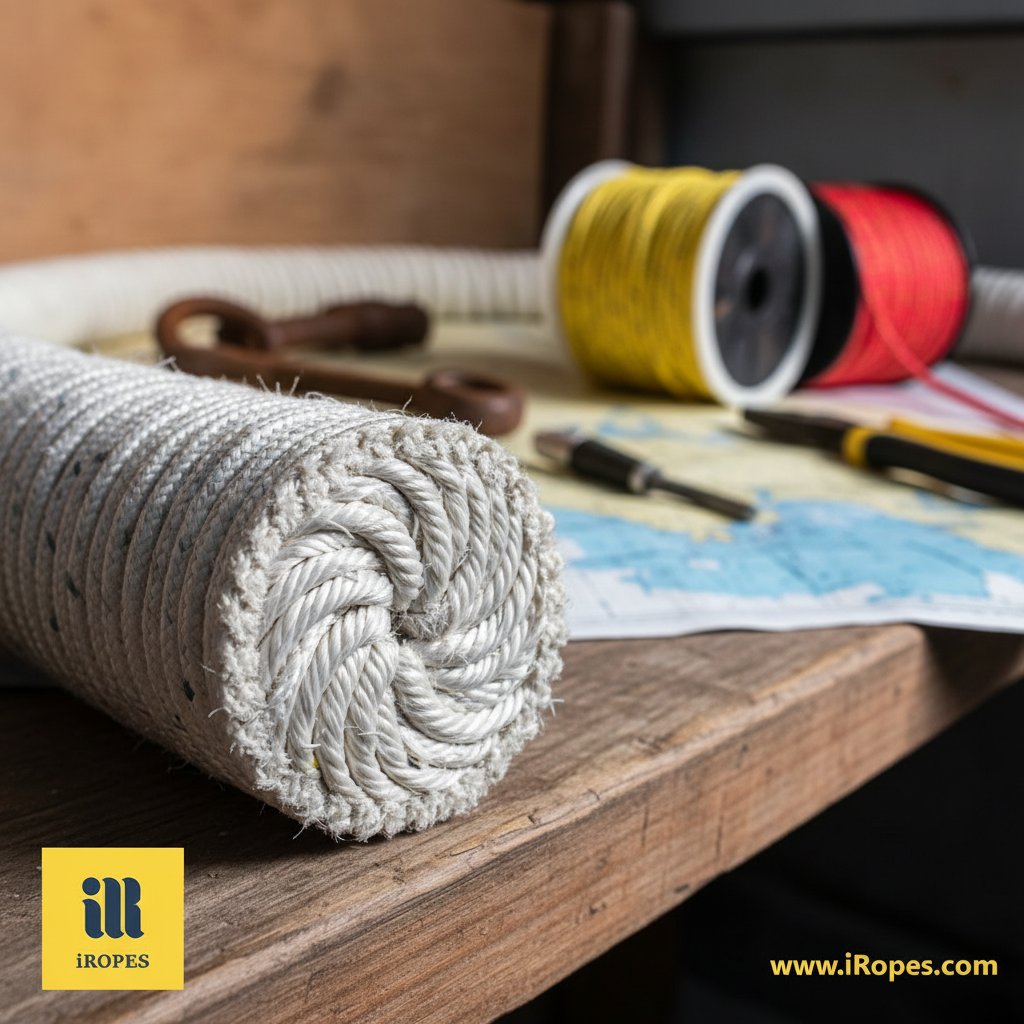
iRopes crafts these specialised ropes with precision, adhering to ISO 9001 standards to ensure every metre meets demanding specifications. Whether you're outfitting a fleet or tackling rugged terrain, this construction delivers performance without the drama. Understanding these benefits is the first step; next, gathering the right tools will allow you to harness them through robust splicing techniques.
Essentials for Eight Strand Rope: Tools, Fundamentals, and Splicing Compatibility
Building on the balanced design of multiplait rope that keeps things steady on the water, the next crucial step involves proper preparation for splicing without compromising its inherent reliability. Consider it like preparing your toolkit before a major project—neglecting this can undermine even the best materials. For eight strand rope, the focus remains on tools that enable precise work with those paired strands, ensuring your splices maintain crucial strength under heavy loads.
Start with the basics of splicing: it involves interweaving the rope's strands to create a seamless joint, which is far stronger than any knot. With this construction, you'll identify the four distinct pairs—two left-lay and two right-lay—by gently untwisting a short section and observing their natural rotation. Maintaining the rope's inherent twist direction, or 'lay', is critical; it preserves up to 95% of the original strength by ensuring stress is evenly distributed across all strands. Always mark your working end clearly to track progress, as any confusion here can inadvertently lead to weak spots. Have you ever tried tying a knot that slipped due to misalignment? Splicing effectively prevents this by meticulously following the rope's own pattern.
- Fids or marlinspikes: These tapered tools help push strands through the rope's core without damaging fibres, which is essential for clean tucks.
- Sharp knife or scissors: Necessary for neatly cutting tails after tapering, preventing fraying on synthetic materials.
- Masking or electrical tape: Used to secure loose ends during unlaying, preventing them from unravelling mid-process.
- Permanent marker: Vital for creating reference points like Mark 1 (one fid-length from the end) and Mark 2 (twice that), accurately guiding your tucks.
However, not every rope is suitable for splicing. Solid braid ropes, for instance, with their tightly woven sheath over a uniform core, resist separation because they lack distinct strands for interweaving—any attempt often results in bunching or reduced integrity. Parallel core constructions, prevalent in high-modulus fibres like Dyneema, feature strands packed straight without twist, making traditional splicing impractical without specialised heat-sealing. For optimal results, always stick to plaited or braided types like your eight strand rope.
When it comes to techniques, Class I ropes—such as polyester or nylon with a braided cover over a braided core—typically utilise straightforward over-under tucks that follow the outer weave. Class II ropes, which feature parallel cores inside a braided jacket, demand more careful handling, such as 'milking' the cover over the core during tucks to prevent slippage. For eight strand rope, which usually falls under Class I, this generally means simpler handling, though it still requires meticulous attention to pair matching for torque balance. iRopes ensures their versions splice smoothly, a direct result of consistent, high-quality manufacturing processes.
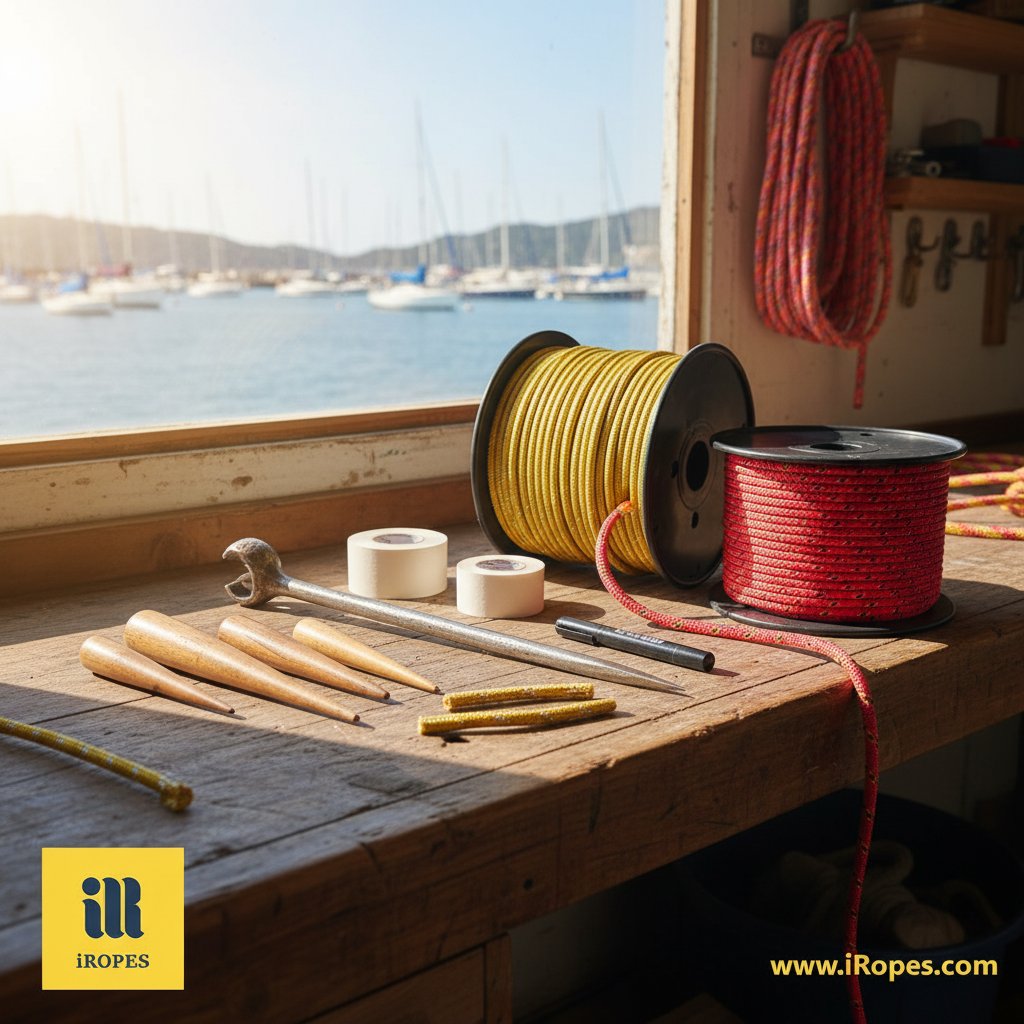
With these foundations firmly in place, you are well-prepared to tackle the eye splice, where forming a secure loop becomes your first practical challenge for reliable marine connections.
Step-by-Step Guide to Splice 8 Strand Rope: Creating an Eye Splice
Now that you've gathered your tools and understand the basics of working with those paired strands, let's confidently walk through creating an eye splice on your eight strand rope. This is the primary method for making a permanent, robust loop, perfect for attaching to cleats or rings on your yacht. It's truly straightforward once you grasp the rhythm, but precision here ensures that loop holds firm without any weakening of the line. From my experience, the key is taking your time to match the rope's natural flow—think of it as gently braiding rather than forcefully pulling.
First, begin with about a metre of rope end to work with, especially if you’re handling a standard mooring line. Lay it out flat on a stable surface, perhaps a picnic table on deck, to prevent tangles. Use your permanent marker to make those crucial spots: Mark 1 is one fid-length from the bitter end (that’s the working tail), and Mark 2 is two fid-lengths further along the standing part. This specific spacing guides your tucks and keeps everything perfectly aligned.
Next, gently separate the four pairs—remember, two will naturally twist one way, and the other two the opposite way. Unlay them for approximately 30 cm, or enough length to form your eye without strain. Tape each pair's end securely to prevent fraying; synthetic fibres, such as those found in quality polyester, can slip if you’re not careful. With the pairs carefully prepped, you're ready to shape the loop.
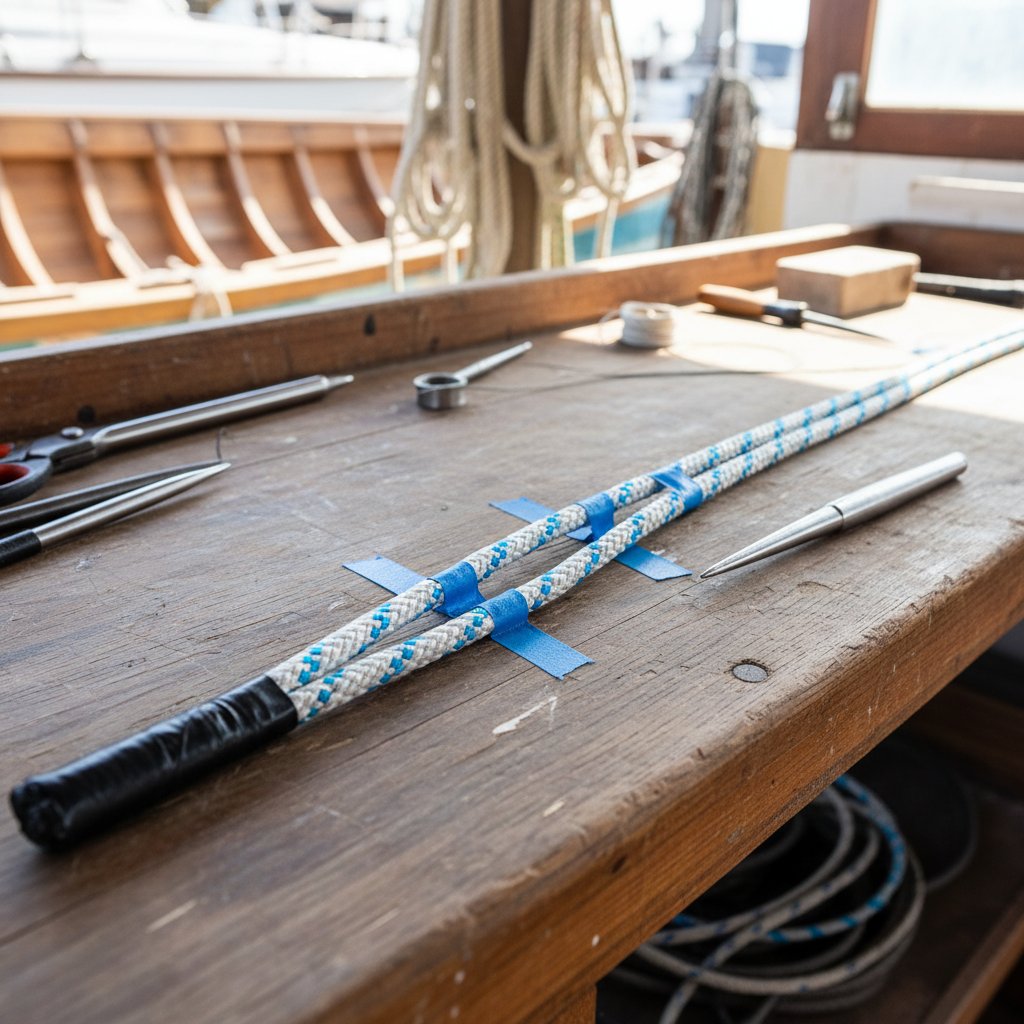
Bend the standing part to form the eye to your desired size—for example, twice the thimble diameter if you're inserting one for reinforcement. Insert the bitter end's first pair through the standing part at Mark 1, going under one pair and over the next in the traditional over-under pattern. Crucially, avoid twisting any strands here; maintaining matching lays prevents torque buildup. Use your fid to ease it in, and pull gently until the eye sits snug but remains unconstricted.
For the main body of the splice, repeat tucks with alternating pairs, always following the rope's natural weave: under one, over the next, and so on. Aim for five to seven full tucks depending on the intended load—five sufficient for lighter duties, but seven is strongly recommended for synthetic mooring ropes in rough conditions, truly locking in that vital durability. As you progress, taper the splice by trimming one strand from each pair after the third tuck, then another after the fifth, which creates a smooth transition.
- After making the initial tucks, check alignment carefully and pull through any remaining pairs.
- Trim tapered ends close to the rope, leaving just enough to tuck away neatly.
- Finally, smooth the splice by rolling it underfoot or using a mallet for even seating and a professional finish.
Then, whip the splice lightly with twine or heat-seal the tails if it's a heat-friendly fibre. Inspect it by loading it gently—look for even bulging and the complete absence of gaps. Done correctly, this splice retains an impressive 90-95% of the rope's breaking strength, making it exceptionally reliable for critical marine pulls. Once you've perfected this loop, you'll see how it truly sets the stage for connecting the rope to chain, thereby boosting your anchoring setup even further.
Advanced Splicing Techniques and iRopes Customization for Multiplait Solutions
Having mastered that eye splice to create a solid loop on your multiplait rope, you're now ready to level up by linking it directly to chain for a truly robust anchoring system. This rope-to-chain splice proves indispensable for boaters who desire seamless integration between line and hardware, particularly when dealing with windlasses that demand smooth feeding. I distinctly recall rigging my own anchor setup years ago—without this connection, the chain would snag constantly, transforming a simple drop into an aggravating hassle. Done correctly, this splice keeps everything flowing without twists, thereby fully preserving the torque-free nature of your multiplait rope.
To begin, you’ll need about 1.5 metres of rope end, plus your trusty fid and tape from earlier. First, count three full picks (which represents one complete weave cycle) from the chain's end link, and mark that precise spot on the rope. Carefully separate the four pairs, then pass the bitter end through the chain link from the side that faces the standing part. Secure it by tucking the first pair under the adjacent pair in the chain's direction, then alternate with the others to firmly lock it in place. From there, follow the braid's natural over-under sequence with your subsequent tucks, easing each one through using the fid to prevent any bunching. For more details on mastering 8-plait rope-to-chain splices, explore advanced methods that enhance strength and compatibility.
- After the initial securing, perform four to six more tucks, ensuring you match the lay perfectly.
- Taper the splice by carefully cutting one strand per pair after the third tuck, smoothing as you proceed.
- Finally, trim and seal the tails, then test by pulling lightly to confirm it seats flat against the chain without distortion.
This meticulous finish creates a low-profile joint that effortlessly glides through windlasses without catching, which is absolutely essential for quick anchor handling in choppy waters. Speaking of splice varieties, you'll generally encounter three main types: the eye splice for forming loops around fittings, the ring splice for direct attachment to metal clews or rings, and the chain splice a comprehensive method for integrating with hardware connections that we’ve just reviewed. Each serves a specific purpose, yet all rely on that same careful tuck method to maintain maximum strength.

At iRopes, we elevate these techniques further with our comprehensive OEM and ODM services, tailoring multiplait ropes to precisely fit your exact setup. You can choose from nylon for superior stretch in rough seas or polyester for minimal elongation under steady loads, available in diameters ranging from 12mm to 28mm. We also offer to incorporate your branding via custom colours or even integrate thimbles during production, all while meticulously protecting your bespoke designs through strict intellectual property measures. For commercial marine applications, this means receiving ropes that not only splice effortlessly but also arrive with non-branded packaging or your company logo distinctively placed on cartons, shipped directly to your global locations.
Of course, even seasoned professionals occasionally encounter issues—avoid them by always double-checking your tucks for evenness; uneven tucks can create significant weak points under load. If your goal is to join two rope lengths instead, a short splice variation proves highly effective: unlay both ends equally, interweave the pairs in a staggered over-under pattern for about eight tucks, then taper and trim. While it adds a slight bulk, it retains solid strength for extensions. With these advanced skills at your disposal, you’re equipped to build setups that truly last, and partnering with iRopes ensures the materials themselves consistently match that unparalleled reliability.
Material Choices
For Custom Strength
Nylon
Specifically offers elasticity to expertly absorb shocks in dynamic marine environments.
Polyester
Provides reliably low stretch and superior UV resistance for enduring mooring lines.
Custom Colours
Match your fleet's branding while meticulously maintaining functional patterns and visibility.
Size Options
Tailored Dimensions
Diameters
From 12mm to 28mm, precisely suited to specific load capacities in yachting or heavy industry.
Certifications
Meet stringent compliance standards with our ISO 9001-backed precision manufacturing.
Global Shipping
Benefit from direct pallet delivery services to our wholesale partners worldwide.
Mastering the art of splicing an eight strand rope like multiplait rope truly unlocks rotation-free performance for demanding marine tasks, from yachting anchors to critical mooring lines. By understanding its balanced paired construction—which is distinctly superior to twist-prone three-strand or kink-vulnerable 12-strand options—you gain much smoother windlass operation, considerably enhanced flexibility, and an impressive up to 95% strength retention through precise eye and rope-to-chain splices. These essential techniques, supported by the right tools and practical troubleshooting tips, ensure reliable handling even in rough seas, while iRopes' OEM/ODM customisation tailors diameters, materials, and branding specifically to your unique needs, all backed by our ISO 9001 certification for wholesale excellence.
Whether you are adapting ropes for challenging off-road recovery applications or highly specialised yachting requirements, proper splicing invariably elevates safety and overall efficiency. For personalised guidance on optimising your setup, explore iRopes' marine rope types for storm-proof safety below.
Need Custom Multiplait Rope Advice? Get in Touch
If you're ready to splice 8 strand rope with tailored multiplait rope options that perfectly fit your specific marine or industrial applications, please use the inquiry form above to connect with our expert team for bespoke designs, comprehensive IP protection, and efficient global shipping support.
