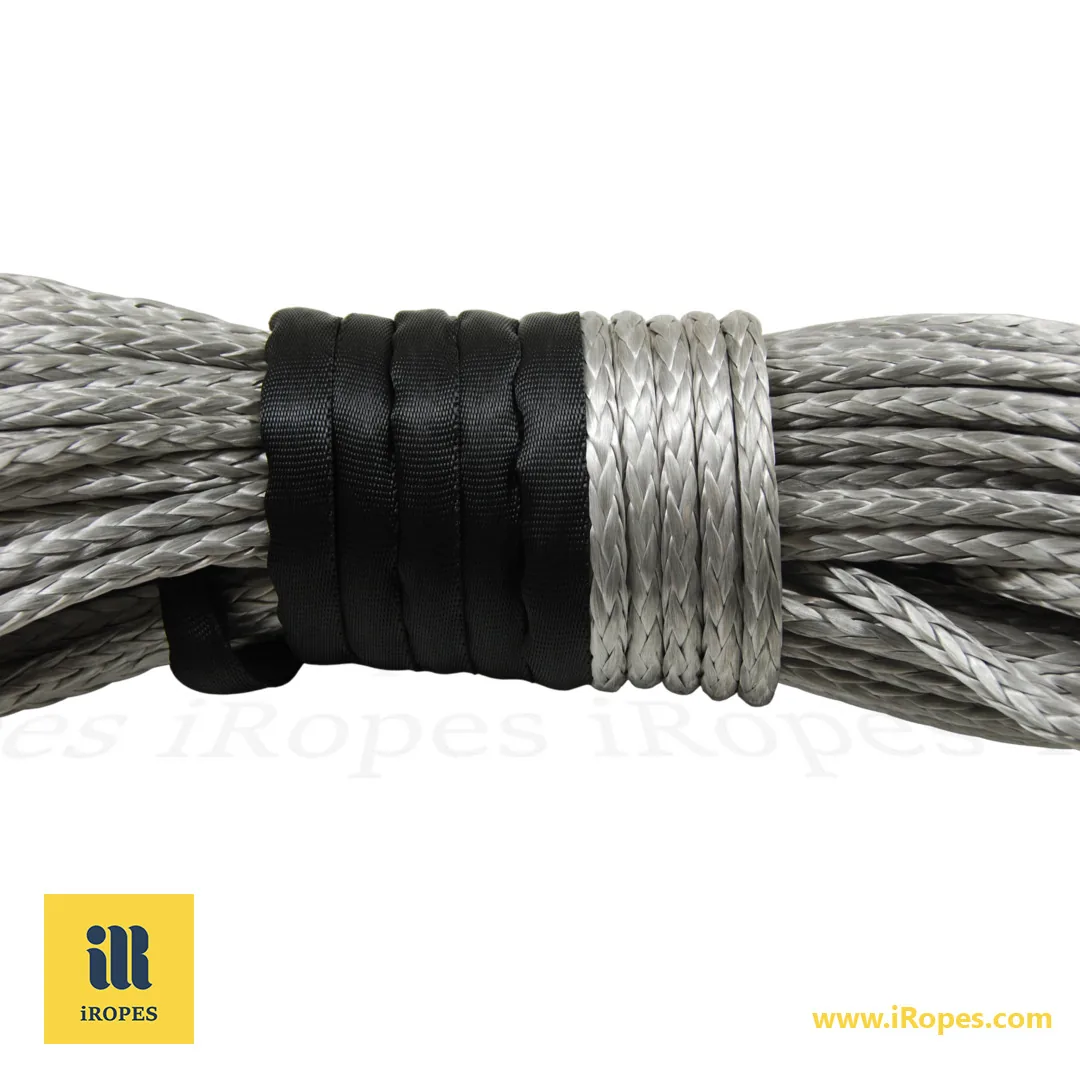
Fibre rope outperforms steel: up to 58% lighter and releases 70% less recoil energy while still delivering a 5.8-tonne WLL ⚡
Read in 2 min – what you’ll gain
- ✓ Reduce payload by up to 58%, cutting vehicle weight and fuel use.
- ✓ Boost operator safety with 70% lower recoil energy on line failure.
- ✓ Eliminate corrosion and UV wear – service life extended beyond 3 years in harsh environments.
- ✓ Customise colour, branding, or reflective strips for wholesale-ready packaging.
You might have always relied on heavy-duty steel cable. Yet, for most modern rigs, the seemingly slender fibre rope is actually the superior choice. iRopes’ fibre ropes offer comparable load capacity, significantly reducing weight and recoil thanks to their high-modulus polymer weave—a crucial detail often overlooked in standard specifications. Discover how data supports this shift and how you can leverage this advantage today.
Understanding cable for sale: Types, specifications, and key selection factors
Given the increasing demand for high-performance solutions, understanding the basic categories of cable for sale is essential before making a purchase. Cables primarily come in three constructions: steel-core wire ropes, fully synthetic fibre ropes, and hybrid blends combining a steel core with a synthetic sheath.

- Steel-wire rope – Traditional metal strands, excellent for high abrasion and extreme temperatures.
- Synthetic fibre rope – Ultra-light polymer fibres (e.g., UHMWPE), offering superior strength-to-weight ratios.
- Hybrid cable – Steel core protected by a synthetic outer sheath, merging durability with reduced weight.
When evaluating any cable for purchase, four specifications are critical: diameter, length, breaking strength, and Working Load Limit (WLL). Diameter directly influences load capacity; a 3/8" line typically supports a lower WLL than a 1/2" line. Length should match the winch or hoist travel distance, with standard options commonly ranging from 50 ft to 250 ft. While breaking strength indicates the absolute load a rope can withstand before failure, the WLL represents the safe operational limit, usually calculated with a safety factor of 5:1 for lifting or 3:1 for towing.
- Diameter – Larger diameters yield higher tensile capacity.
- Length – Select a length that avoids excessive slack yet provides full reach.
- Breaking strength & WLL – Always verify the WLL aligns with your equipment’s rated capacity.
A common question buyers ask is: "What is the difference between steel wire rope and synthetic winch rope?" Simply put, steel wire rope offers unmatched abrasion resistance and tolerates extreme heat. However, it’s heavy, prone to dangerous burrs, and stores significant recoil energy if it breaks. Synthetic winch rope, conversely, is up to 60% lighter, eliminates hazardous burrs, provides excellent corrosion and UV resistance, and typically recoils with far less kinetic energy, enhancing operator safety.
Choosing the right cable for sale isn’t just about price; it’s about matching material properties, dimensions, and safety ratings to your application’s specific demands.
With these fundamentals clarified, you can now explore why many operators are increasingly choosing fibre-based winch cables, especially when weight, safety, and longevity are paramount.
Exploring winch cable for sale: Fibre rope benefits and sizing guidance
Building on the basics we’ve covered, let’s examine why fibre-based winch cable often outperforms its steel counterpart, particularly when you need high performance without excessive bulk. Fibre ropes combine an exceptional strength-to-weight ratio with inherent safety features, making them a compelling choice for operators who prioritise efficiency and reliability.

Benefits
Fibre ropes offer up to 60% less mass than comparable steel lines. They resist rust and UV degradation, and crucially, eliminate hazardous wire burrs. Their flexible core also significantly reduces recoil energy, leading to safer handling during a snap-back scenario.
When purchasing a winch cable, selecting the correct diameter and length is crucial. Diameter directly impacts the Working Load Limit (WLL); for instance, a 3/8" line typically supports around 3 tonnes, while a 1/2" line can handle approximately 5 tonnes. Length should align with the winch’s stroke plus a small safety margin to prevent tangling or snagging from excess slack. For off-road recoveries, a 75-ft length is a popular choice, whereas marine applications often favour 100 ft or longer to accommodate varying deck heights.
Tip: Align the cable’s WLL with at least 1.5 × the winch’s rated load to maintain a safe safety factor, especially in high-impact recovery scenarios.
Regarding the benefits of using a fibre winch rope: beyond impressive weight savings, fibre ropes float, resist chemical exposure, and can be spliced in the field using simple heat-seal tools. Their low-stretch characteristic ensures precise control during winching, and colour-coded jackets help operators quickly identify the correct line. iRopes specialises in providing high-quality ropes for off-road, air, tree work, yachting, camping, and industrial applications, making fibre ropes a versatile solution for diverse needs.
iRopes offers comprehensive OEM and ODM services for every winch cable you need. Whether you require a custom length, a specific branded colour scheme, or specialised terminations such as self-locking hooks, our ISO 9001-certified facilities can deliver a tailored solution that meets your exact specifications and arrives on schedule. Our expertise extends to custom design solutions, ensuring alignment with your branding and specific operational needs.
With these sizing fundamentals in hand, you're now ready to compare fibre ropes directly against traditional steel wire options and see how these numerical advantages translate into superior real‑world performance.
Evaluating wire cable for sale: Steel versus fibre and customisation possibilities
Since fibre ropes are increasingly prevalent in the winch market, it’s time to directly compare the traditional steel option with its modern synthetic alternative. Understanding steel’s enduring strengths and limitations, alongside how both materials can be customised to your exact needs, will help you select the ideal wire cable for sale for your operation.

Steel wire cables have a well‑deserved reputation for rugged endurance. They tolerate extreme abrasion, can survive temperatures that would melt most polymers, and deliver predictable performance in heavy‑duty lifting or towing tasks. However, these same metal strands add significant mass, can generate dangerous burrs when frayed, and store a high amount of recoil energy if the line snaps unexpectedly.
Fibre ropes, conversely, weigh up to 60% less than an equivalent steel line, effectively resist rust and UV exposure, and flex without creating sharp edges. Crucially, if a fibre rope breaks, the recoil is substantially gentler, significantly reducing the risk of injury to nearby personnel. This makes them a safer choice in many demanding applications, including off‑road, yachting, and defence.
Steel Strength
Outstanding abrasion resistance and the ability to operate in temperatures above 300 °C make steel a reliable choice for harsh industrial environments.
Heat Tolerance
Metal cores retain structural integrity under prolonged exposure to furnace‑like heat, a demanding niche where most synthetic fibres would melt.
Fibre Flexibility
Lightweight construction cuts handling fatigue and lowers vehicle payload, while the flexible core minimises shock loads during winching.
Safety Edge
The absence of sharp wire ends and reduced recoil energy makes fibre ropes safer for operators, especially in busy work zones.
When comparing performance metrics side‑by‑side, the numbers are clear: a 5/8" steel cable might weigh around 12 kg per 100 ft, whereas a fibre line of the same diameter is roughly 4.5 kg. Both can be engineered to meet a 7‑tonne Working Load Limit, yet the fibre option delivers that capacity with less than half the mass. This exemplifies the technical expertise and precision manufacturing that iRopes applies, ensuring quality assurance backed by ISO 9001 certification. Learn more about why fibre ropes outperform steel cables in winch repair.
iRopes can customise any wire or fibre cable—select material, diameter, length, colour, termination type, and even add reflective or branding elements to suit your brand’s identity.
Can you get a custom‑made winch cable or wire rope? Absolutely. Understanding the key differences between steel and synthetic rope fittings helps you make an informed choice. iRopes’ comprehensive OEM/ODM service begins with a detailed brief on your specific application. Whether you need a 3/8" steel line for a heavy‑duty tow truck or a 1/2" fibre rope for marine recovery, our rope specialists will assist. From there, engineers recommend the optimal construction (e.g., 6×25 steel strands or a parallel‑core fibre weave), suggest compatible accessories like self‑locking hooks or swivel thimbles, and generate a prototype for your approval. Once the design is finalised, our ISO 9001‑certified factory produces the batch, packages it under your branding, and efficiently ships it directly to your warehouse, ensuring IP protection throughout.
By understanding the trade‑offs between steel and fibre and leveraging iRopes’ bespoke manufacturing, you can source a cable for sale that perfectly aligns with safety standards, performance targets, and your company’s visual identity. The next step is translating those specifications into a purchase plan that matches your project timeline and budget.
Get Your Personalised Rope Solution
By now, you've seen how fibre ropes deliver up to 60% weight reduction, superior corrosion resistance, and safer recoil compared with traditional steel. This makes them the preferred choice for off‑road, marine, and industrial winching. Whether you’re sourcing a cable for sale, a winch cable for sale, or a wire cable for sale with specific dimensions, branding, or accessories, iRopes’ OEM/ODM team can design a solution that meets your exact performance and safety requirements. Our state‑of‑the‑art facilities and skilled craftsmen ensure precision manufacturing and timely delivery. For more technical data, see our UHMWPE rope performance insights.
If you’d like personalised guidance or a detailed quote, just fill in the form above, and one of our experts will be in touch.