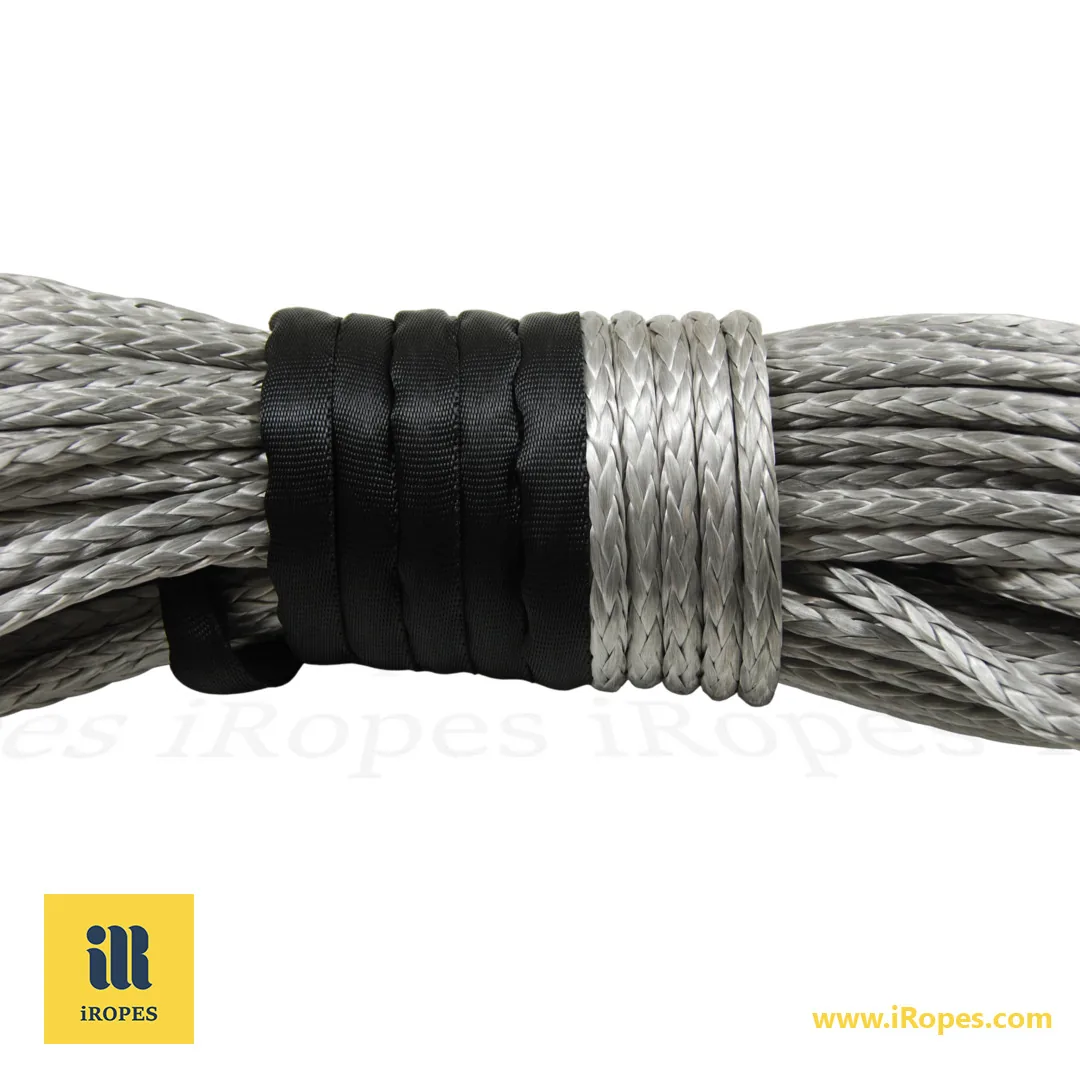
Synthetic rope outperforms steel wire – up to 70% lighter and 30% longer lifespan while retaining ≈ 90% of breaking strength.
What you’ll gain in a 5‑minute read
- ✓ Reduce dead load by up to 70 % – lighter rigs boost efficiency.
- ✓ Extend service life 30‑40 % with corrosion‑resistant synthetic fibres.
- ✓ Simplify installation – no grinding or de‑burring required.
- ✓ Lower total cost of ownership – fewer replacements and less maintenance.
You’ve probably been told that steel wire is the only safe choice for heavy‑duty rigs. However, the numbers tell a different story. Synthetic rope consistently outperforms steel wire in weight, corrosion resistance, and lifecycle cost. Are you curious how a fibre‑based line can carry the same loads while shaving off up to 70% of the dead weight? Keep reading, and we’ll break down the tests, the maths, and the exact scenarios where synthetic rope steals the spotlight.
Understanding Wire Cable Clamps: Definition and Core Benefits
Modern industries constantly seek dependable rope-termination solutions. This means zooming in on the critical hardware that secures these terminations: the wire cable clamps.
Wire cable clamps, also known as wire rope clips or cable clips, are essential metal fittings designed to grip the strands of a rope securely, creating a fixed loop or eye. They typically consist of a saddle that rests against the rope, a U‑shaped bolt that presses the saddle down, and nuts that securely tighten the assembly. This design effectively distributes the load across the rope’s surface, preventing slippage and maintaining alignment.
- Load retention – the clamping action preserves the rope’s rated breaking strength, even under dynamic forces.
- Safety compliance – properly installed clamps meet DIN 741 and OSHA standards, reducing liability and enhancing operational safety.
- Ease of installation – a simple tightening sequence allows field crews to finish a termination in minutes, increasing efficiency.
So, what exactly are wire rope clamps used for? In practice, they create eye loops for anchoring, secure the dead end of a rigging line, and act as temporary splices when a permanent eye isn’t feasible. They are also common in guard‑rail systems, agricultural fencing, and marine winch setups, where quick and reliable connections are essential.
Beyond their immediate function, wire cable clamps significantly enhance overall system durability. By preventing the rope’s fibres or steel wires from rubbing against rough edges, these clamps extend the service life of both the rope and the hardware. Consistent torque on the nuts ensures the load is shared evenly, which minimises fatigue cracks and prevents premature failure. This attention to detail contributes to a longer lifespan for your rope assemblies.
“A well‑chosen wire cable clamp is the quiet hero of any rigging system – it may not be visible, but its reliability under load is what keeps the whole operation safe.” – Senior Rigging Engineer, iRopes
When the clamp matches the rope diameter, material, and expected load, the entire assembly behaves as a single, robust component. This synergy explains why many wholesale buyers treat clamp selection as seriously as rope selection. iRopes, a leading rope manufacturer, offers a wide range of high-quality ropes for various industries, emphasising this crucial pairing.
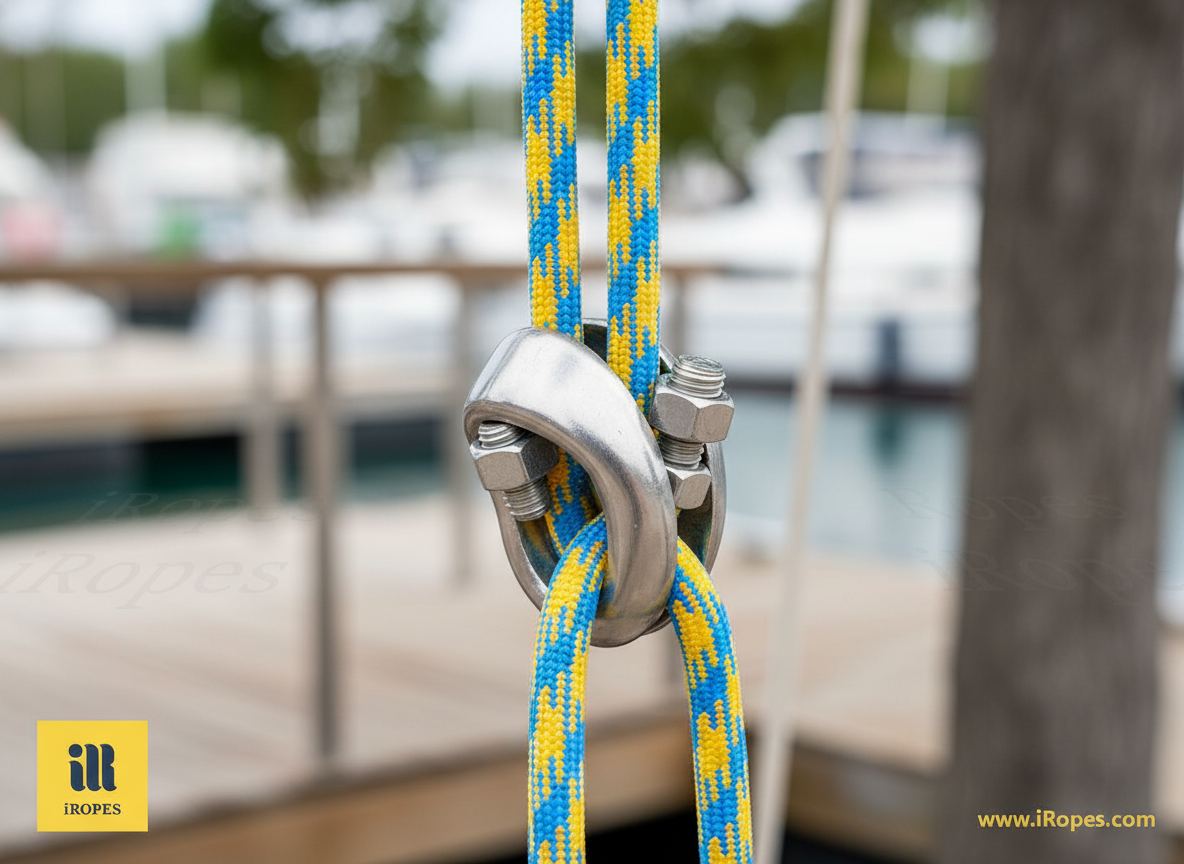
Now that you have a clear picture of how wire cable clamps work and the benefits they deliver, the next step is to explore the different types of clamps that suit specific rope applications.
Choosing the Right Cable Clamps for Wire Rope: Types and Selection Guide
You can now visualise a clamp in action; however, the real challenge lies in matching the right wire cable clamps to the rope and the specific job. Different hardware shapes handle forces in distinct ways, and the clamp's material must withstand the environment it will be exposed to.
U‑Bolt
Features a robust saddle with a U‑shaped bolt; ideal for heavy‑duty rigging where maximum grip is essential for securing ends and eyes.
Fist Grip
Designed with a rounded grip that minimises rope distortion; favoured in applications that require frequent adjustment or a cleaner aesthetic.
Duplex
A two‑clamp arrangement engineered for higher safety factors; commonly used on permanent eye loops or where greater security is needed.
Simplex
A single‑clamp solution suitable for light‑load tasks such as guard‑rails or temporary bracing, offering a cost-effective termination.
Each type serves a specific niche, but the decision ultimately hinges on three practical criteria:
- **Rope diameter**: Always select a clamp whose saddle precisely matches the rope size. Undersized saddles can bite into the rope strands and cause damage, while oversized ones may slip, compromising security.
- **Material compatibility**: For marine or chemical exposure, choose stainless-steel options. For general outdoor work, galvanised steel is appropriate. For instance, **steel wire clamps** with a 316 finish are ideal for salty breezes, whereas 304 grades are adequate for drier conditions.
- **Load requirement**: Calculate the expected working load and apply the manufacturer’s safety factor. Heavier loads generally dictate a duplex arrangement to ensure adequate holding power and safety.
Answering common queries, wire rope clamps are used not only for creating eye loops but also for securing cable trays, anchoring temporary scaffolding, and stabilising utility poles, particularly where a quick and reliable connection is needed. As for the number of clamps required, a good rule of thumb is two per termination for diameters up to 12 mm, three for 12-18 mm, and a minimum of four when the application exceeds 30 kN or when a duplex setup is required. This spacing ensures the load is evenly distributed and the rope retains its designed strength.
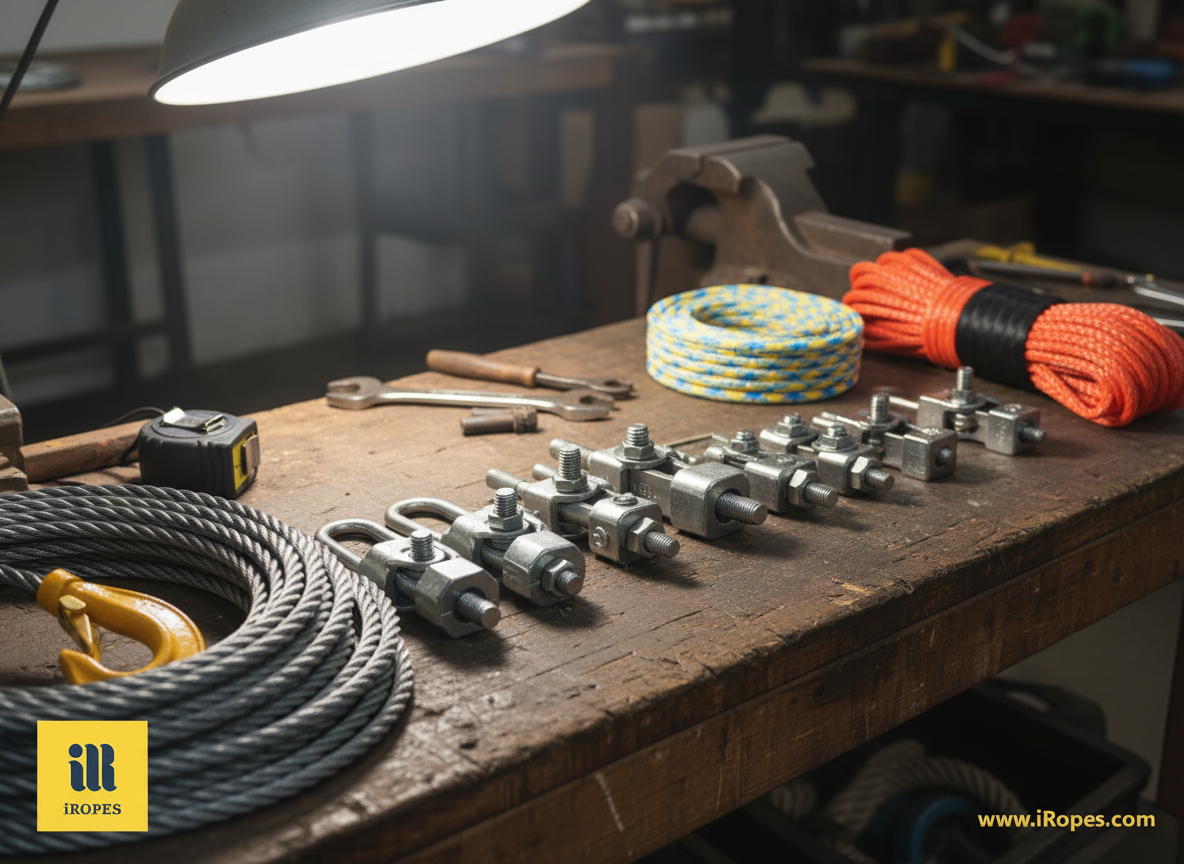
When you precisely align the clamp type, material finish, and quantity with the specific rope and load, the entire assembly behaves like a single, resilient component. This outcome is precisely what modern rigging projects demand, ensuring optimal performance and safety. iRopes excels in providing custom design solutions for these precise requirements.
Steel Wire Clamps vs Synthetic Rope: Material Comparison and Performance
Building on the idea of matching clamp type and finish to the rope, the next logical step is to examine how the material of the clamp itself influences overall performance. Steel wire clamps and synthetic rope each bring distinct characteristics that significantly affect weight, corrosion resistance, strength, and ultimately, the total cost of ownership.
When a steel-based clamp is paired with a high‑strength synthetic rope, the assembly inherits the metallic durability of the clamp while benefiting from the lightness of the fibre. Galvanised clamps, coated with a zinc layer, provide adequate protection against rust in dry or mildly humid environments. In contrast, stainless-steel variants — particularly grades 304 and 316 — form a passive chromium-oxide film that resists chloride-induced corrosion. This makes them the preferred choice for marine, chemical-processing, and food-industry applications.
Weight differentials become particularly noticeable in large-scale projects. For instance, a typical 12 mm duplex galvanised clamp weighs roughly 250 g, whereas its 316 stainless counterpart adds about 30% more mass. Synthetic rope, by comparison, can be up to 70% lighter than an equivalent steel cable. This substantial reduction in dead load for the combined system is a critical factor for offshore winches and aerial‑line installations, contributing to greater efficiency and safety. iRopes specialises in light yet durable synthetic ropes for such applications, offering customised solutions to meet precise needs.
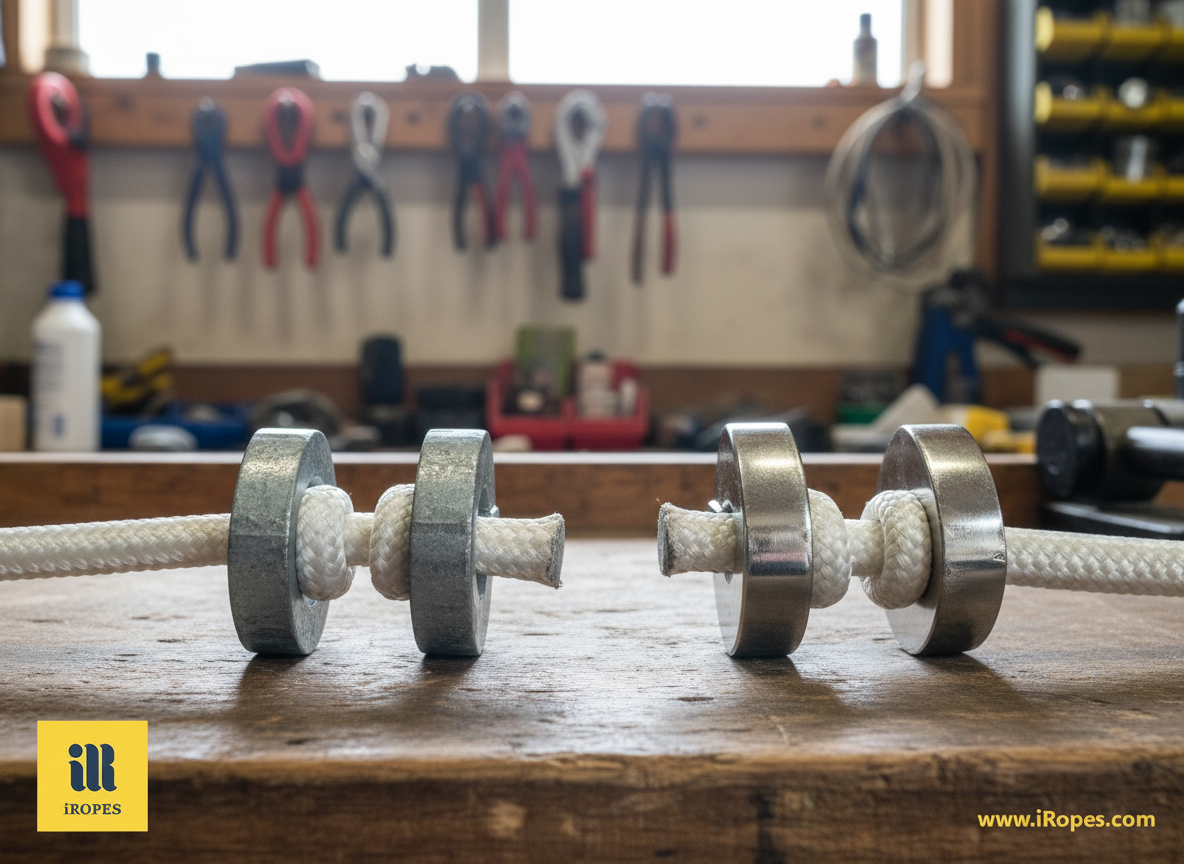
Lifecycle cost analysis reveals that the higher upfront price of stainless-steel clamps is often offset by reduced maintenance and longer replacement intervals. In salty sea air, for example, a galvanised clamp may require inspection every six months, whereas a 316 stainless clamp can remain serviceable for several years without noticeable degradation. For projects where downtime directly translates into lost revenue, the long-term savings of stainless steel become a compelling argument.
Key Takeaway
Choosing between galvanised and stainless-steel clamps should hinge on the environment: utilise galvanised for general outdoor use, and stainless-steel (304/316) for corrosive or marine settings where durability outweighs the modest weight increase. iRopes offers diversified solutions for high-quality, customised rope products across various industries, including yachting and defense, where specific material properties are critical.
From a performance standpoint, steel wire clamps typically retain up to 90% of the rope’s rated breaking strength when installed correctly. Meanwhile, synthetic ropes can offer tensile strengths that exceed many steel cables of comparable diameter. The combination of a well-specified clamp with a high-modulus fibre rope therefore delivers a system that is both lighter and equally strong. iRopes ensures precision manufacturing and quality assurance, backed by ISO 9001 certification, for all its rope and accessory solutions.
FAQ: The primary difference between galvanised and stainless-steel wire rope clamps lies in corrosion resistance. Stainless-steel (especially 316) tolerates salty or acidic environments far better than a zinc-coated galvanised finish.
Ultimately, the decision rests on a balance of weight savings, environmental exposure, and total cost of ownership. By pairing the appropriate steel wire clamp finish with a synthetic rope that matches the load profile, engineers can optimise both safety and efficiency across a wide range of applications. iRopes offers comprehensive OEM and ODM services to help wholesale customers in developed countries achieve these precise, tailor-made solutions.
Installation Best Practices and Safety Standards for All Clamp Types
Following the material comparison, the next crucial step is ensuring every clamp is installed correctly so that its promised strength actually reaches the rope. A well-executed termination not only protects the hardware but also safeguards the people who rely on it every day. iRopes emphasises precision manufacturing, ensuring the quality of ropes and accessories aligns with top-tier installation practices.
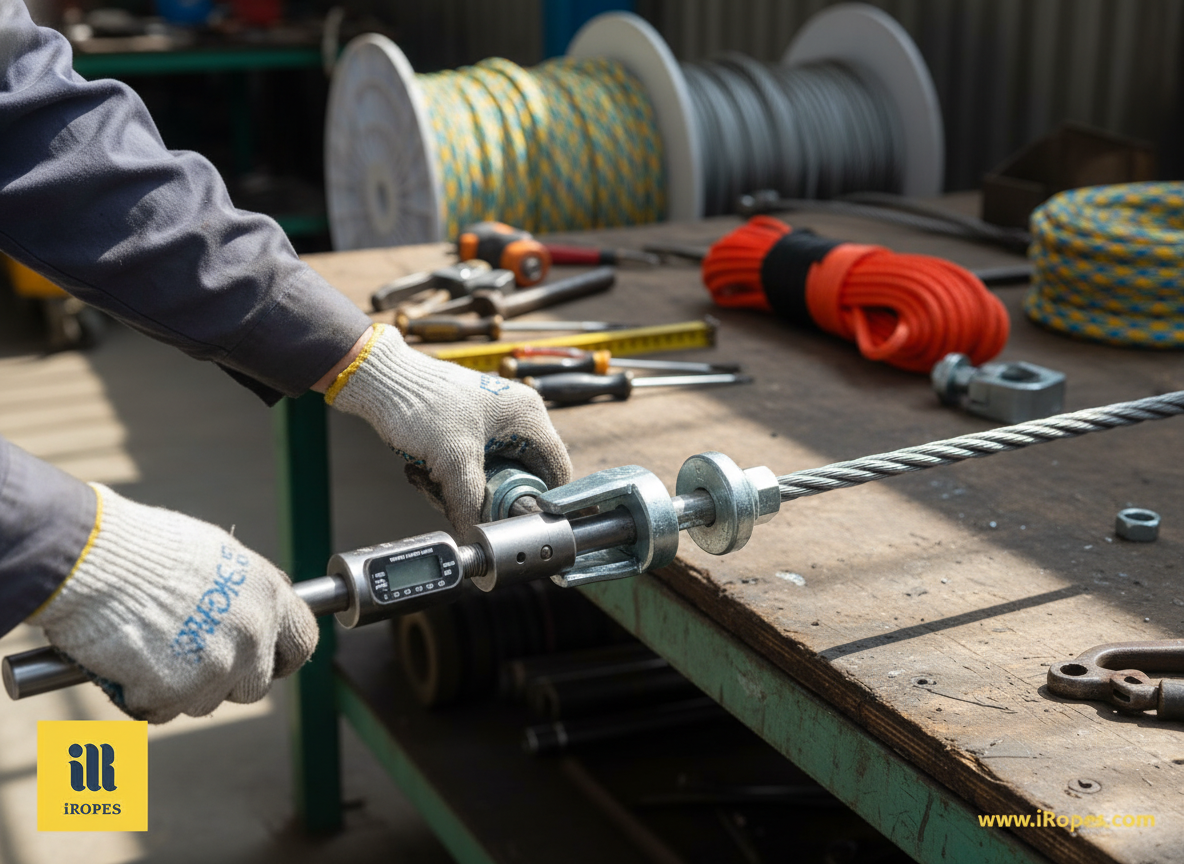
Before turning the first nut, identify the **live end** (the side that will bear the load) and the **dead end**. The saddle must always sit on the live end – a rule often summarised as “Never Saddle a Dead Horse.” Once the rope is threaded, follow these steps:
1. Place the saddle against the rope so the eye faces the load direction.
2. Slide the U-bolt over the saddle, ensuring the bolt sits centred.
3. Hand-tighten all nuts in a criss-cross pattern to eliminate any tilt.
4. Using a calibrated torque wrench, apply the manufacturer-recommended torque (typically 10 Nm for 6 mm rope, but always verify the chart for your specific size).
5. Re-check each nut after a short load test; the torque may settle and require a final tweak.
To answer a common query, *how do you install wire rope clamps correctly?* The key is consistent torque and correct live-end positioning. Skipping either step can reduce the effective breaking strength by up to 20%, compromising safety and performance.
Safety First
All installations must comply with DIN 741 and OSHA regulations; non‑compliant terminations are a leading cause of rigging incidents.
Regular inspection is just as vital as the initial installation. A visual check every six months (or sooner in corrosive environments) should confirm that nuts remain tight, the saddle shows no indentation, and the rope surface is free of wear. Replace any clamp that exhibits cracked nuts, deformed saddles, or signs of corrosion to maintain optimal safety and extend lifespan.
When it comes to lifting, the short answer is: **wire rope clamps are generally not recommended for critical overhead lifts**. While they are acceptable for temporary, non-load-bearing setups such as guide rails or low-stress eye loops, for any lifting operation exceeding a few hundred kilograms, a swaged or spliced eye is the safer, more reliable choice. iRopes prides itself on providing robust custom design solutions that align with the specific needs and safety standards of diverse industries.
Compliance Checklist
Key standards to verify
DIN 741
Specifies clamp dimensions, torque values, and minimum number of clamps per rope diameter, ensuring consistent performance.
OSHA
Mandates regular inspection intervals and clear documentation of load‑testing results, enhancing workplace safety.
Manufacturer Guidance
Always defer to the supplier’s torque chart for the specific **cable clamps for wire rope** you are using to guarantee optimal installation.
Common Pitfalls
What to avoid
Wrong End
Placing the saddle on the dead end reverses load direction and can cause premature failure, severely compromising safety.
Undertorqued Nuts
Insufficient torque allows the saddle to shift, reducing load retention and increasing the risk of catastrophic failure.
Corrosion Ignorance
Using galvanised **steel wire clamps** in a marine environment accelerates rust; instead, opt for 316 stainless for superior corrosion resistance.
By diligently following the torque sequence, respecting DIN 741 and OSHA requirements, and reserving clamps for appropriate tasks, you can significantly extend the service life of both the rope and the hardware. This proactive approach ensures long-term reliability and safety. The next and final segment recaps the advantages of synthetic rope over traditional wire and demonstrates how selecting the right clamp completes this picture of safety and efficiency, aligning with iRopes' commitment to quality and customer satisfaction.
Need a Custom Rope & Clamp Solution?
After exploring the load-retention benefits of wire cable clamps and the material trade-offs between galvanised and stainless finishes, it’s clear that synthetic rope delivers a decisive edge. UHMWPE rope, which can be up to 70% lighter, offers superior corrosion resistance, and boasts comparable tensile strength, making it ideal for marine, offshore, and high-rise applications. Pairing this fibre-based strength with the right **steel wire clamps** ensures the assembly remains robust while minimising dead weight and lifecycle costs.
Whether you are targeting the European construction market or the Australian mining sector, a tailored selection of **cable clamps for wire rope** – matched to rope diameter, load class, and environment – can transform those advantages into a significant competitive edge. iRopes’ ISO‑9001 certification can design the perfect solution for your project, ensuring both quality and customisation.
If you would like personalised guidance on choosing the optimal synthetic-rope and clamp combination for your specific application, please complete the form above. We are dedicated to building trust and long‑lasting relationships with our wholesale customers across diverse industries.