⚠️ Skip this critical boat winch rope error: 85% of failures stem from choosing steel cables over synthetics, risking deadly recoil with up to 15x more snap-back force. Switch to low-stretch Dyneema options—like our custom 3/8" ropes with 13,000 lbs breaking strength—for safer anchoring and trailering that prevents catastrophe.
Unlock Safer Boating in Just 8 Minutes → Discover Material Choices, Sizing Secrets, and Maintenance Hacks
- ✓ Master material pros: Gain 7 key insights on Dyneema vs. steel to slash injury risks by 90% during high-load pulls.
- ✓ Nail sizing precision: Learn exact diameters—like 3/8" for 5000 lb winches—to handle 2.6x overloads without snapping.
- ✓ Perfect installation skills: Avoid jams and slippage by following spooling techniques that extend rope life 3x in saltwater.
- ✓ Custom iRopes edge: Access OEM solutions tailored to your winch type, ensuring ISO-certified durability for worry-free voyages.
You've probably trusted that rusty steel cable on your winch for years, assuming it's tougher than those sleek synthetics—but what if that choice is silently inviting disaster mid-launch, with recoil forces capable of shattering bones? Imagine hauling your boat smoothly, free from fraying fears or sizing slip-ups, thanks to overlooked tweaks like under-bow routing and Dyneema upgrades. Dive in to uncover the one adjustment that transforms risky routines into reliable safety, backed by iRopes' precision customisation—your next voyage depends on it.
Understanding Boat Winch Rope Types and the Common Mistake of Material Choice
Picture this: you're out on the water, relying on your winch to haul in the anchor smoothly, when suddenly the line snaps under tension. That heart-stopping moment often traces back to a simple oversight: choosing the wrong material for your boat winch rope. As we delve into the types available, it's clear that modern synthetics have transformed how we approach these critical components, offering safer alternatives to outdated options.
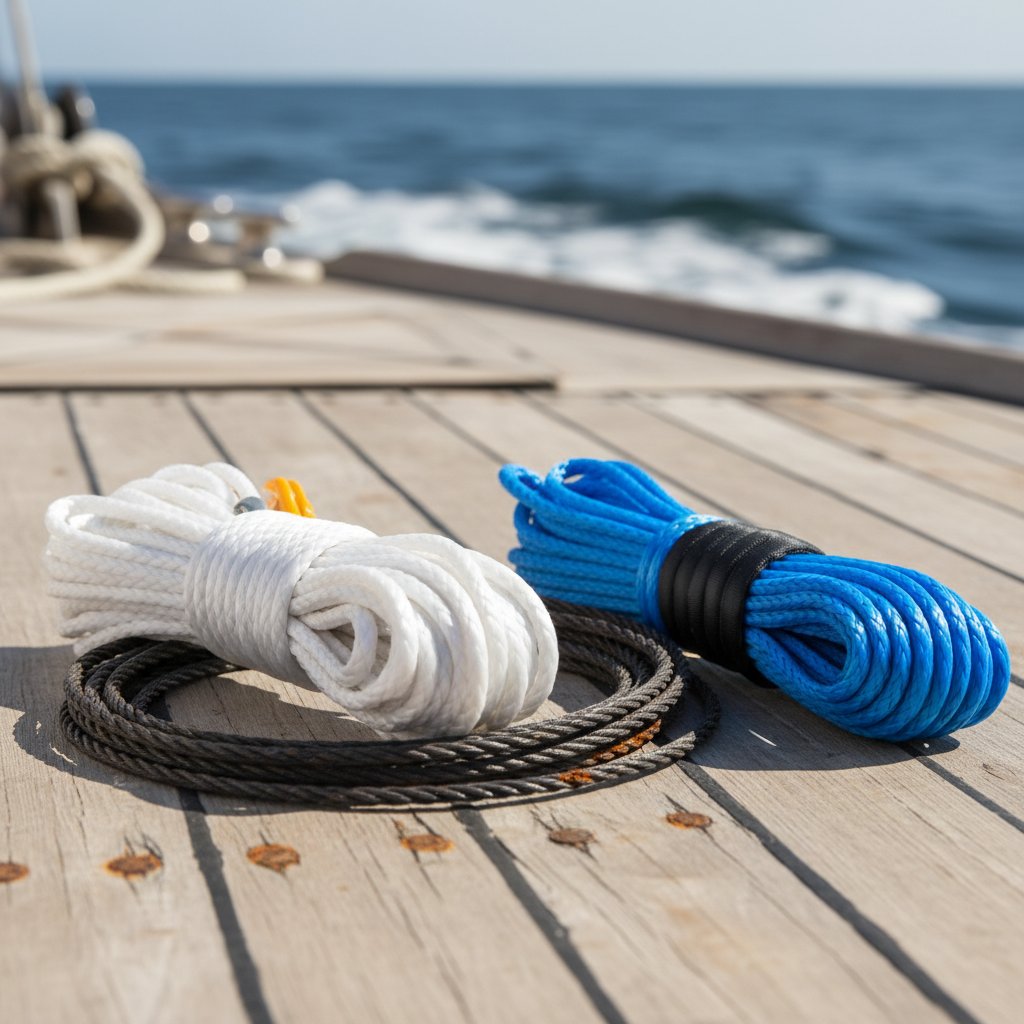
When deciding between steel cables and synthetic ropes for your winch, the choice boils down to balancing strength, safety, and ease of use in harsh marine conditions. Synthetic ropes, particularly those made from Dyneema—a ultra-high molecular weight polyethylene (UHMWPE) fibre—stand out for their exceptional strength-to-weight ratio and minimal stretch, often less than 1%. This low stretch means better control during operations, whether you're retrieving a trailer or managing sails. On the flip side, steel cables, while tough against abrasion in some setups, pose serious risks like dangerous recoil if they break. They store massive kinetic energy that can cause severe injury. For most boaters, synthetics win out because they're lighter, easier to handle, and don't rust in saltwater. However, they do need protection from UV rays and chafe. Considering these factors, synthetic alternatives significantly enhance marine safety.
Synthetic Rope Pros
Lighter weight reduces boat load and eases handling during long days on the water. This contributes to better overall fuel efficiency and less strain on equipment.
Safety Edge
Breaks with less snap-back force, minimising injury risk in crowded decks or tight spaces. This is a critical safety factor compared to steel cables.
Steel Cable Cons
Heavy and prone to rust, adding extra strain and requiring frequent checks in salty air. This leads to increased maintenance and reduced lifespan.
Durability Trade-offs
Forms kinks and burrs over time, which can damage the winch drum or cut through gloves. These imperfections compromise both equipment and user safety.
Among synthetics, polyester offers solid UV resistance and low stretch (around 3-5%), making it ideal for sheet winches where grip matters during tacking manoeuvres. Think of it as the reliable all-rounder that holds up without absorbing water. Polypropylene, often called MFP, is buoyant and lightweight, perfect for lighter trailer winches but degrades faster under sun exposure. This makes it best for occasional use, like seasonal boating. Nylon, with its higher stretch (up to 15%), absorbs shocks well for anchor windlasses in choppy seas, though it loses strength when wet, which isn't ideal for constant immersion.
The biggest blunder many make is sticking with steel for boat winch ropes despite the clear safety advantages of synthetics in wet, corrosive environments. I've seen too many close calls where a rusted cable failed at the worst moment, all because the boater underestimated how synthetics, like Dyneema SK75—the strongest variant with superior molecular structure—provide unmatched durability without the hazards. At iRopes, our precision manufacturing lets us craft custom marine winch ropes tailored to your setup, blending these materials for optimal performance and backed by ISO 9001 standards.
Ever caught yourself second-guessing if your current line is up to the task? Selecting the right material sets the foundation, but getting the dimensions spot on is what prevents those undersized failures that can turn a routine launch into a nightmare. With the proper material, you enhance your safety and the longevity of your equipment.
Sizing Guide for Rope for Boat Winch: Avoiding the Deadly Undersizing Error
That nagging doubt about whether your line can handle the job? It often stems from mismatched dimensions, turning what should be a straightforward pull into a potential disaster. With the right material locked in, nailing the size ensures your boat winch rope performs without faltering under real-world pressures, like towing a 20-foot vessel or dropping anchor in rough currents.
Start by matching diameter and length to your winch's pull rating, the boat's total weight, and the task at hand. For instance, if you're eyeing a 5000 lb winch for trailering, a 3/8-inch synthetic rope around 94 feet long with a minimum breaking strength of 13,000 lbs keeps things safe. This far exceeds the load to account for dynamic forces like waves or sudden stops. Smaller setups, say for a lighter dinghy, might call for a 1/4-inch option at 50 feet with 5000 lbs strength. However, always factor in extras like wind or incline that amplify the demand, which can increase load by over 2.6 times.
Key Sizing Factors
Assess these before buying
Winch Capacity
Check the max pull; rope strength must surpass it by 2-3 times for safety margin. This ensures the rope can handle unexpected stresses.
Boat Weight
Total displacement including gear influences diameter needs for stability. Heavier boats require thicker, stronger ropes to safely manage loads.
Application Type
Trailer pulls need longer lines for effective retrieval; anchoring requires depth plus scope allowance for secure mooring. Different uses demand specific lengths.
Compatibility Tips
Match to winch design
Anchor Windlass Gypsy
Choose diameters that mesh with the gypsy's pockets for smooth chain-rope transitions. Incorrect sizing can lead to slippage or jamming, compromising function.
Sheet Winch Grip
Opt for textures and diameters that prevent slippage under sail loads, boosting control during critical manoeuvres. Proper grip ensures efficiency and safety.
Halyard Winch Drum
Ensure even wrapping without jamming, supporting repeated hoists. The rope should fit comfortably and securely to prevent damage and ensure smooth operation.
These choices tie directly into durability, where materials like low-stretch synthetics hold up better against repeated cycles without fraying early. Undersizing here means overloads that weaken the line over time, risking snaps when you least expect it. Such situations can lead to costly damage or dangerous incidents.
Grasp the gap between breaking strength—the maximum force before failure—and safe working load (SWL). SWL is typically one-fifth of the breaking strength for everyday operations, designed to avoid fatigue. For instance, a rope rated at 10,000 lbs breaking might handle just 2000 lbs safely, preventing those overload mishaps during peak efforts. That's where iRopes steps in, fine-tuning every specification to your exact setup so your marine winch rope withstands the elements without cutting corners on safety or performance.
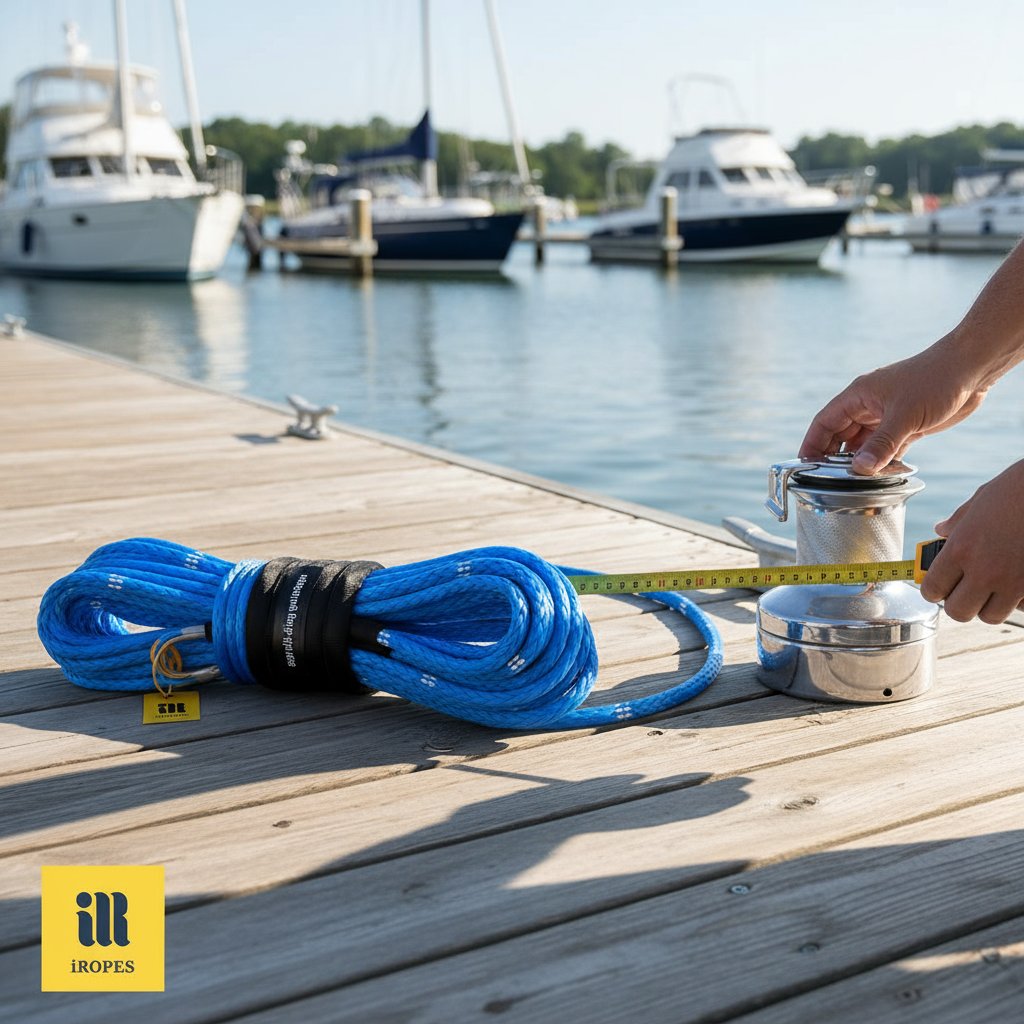
Have you measured your gear lately? Getting this right paves the way for solid installation habits that keep everything running smoothly amid saltwater spray and constant use.
Installation and Care for Marine Winch Rope: Skipping Maintenance Leads to Disaster
Once you've got the dimensions dialled in, the real test comes during setup. Get this wrong, and even the toughest line can fail when you need it most. Think about those tense moments launching your boat into choppy waters; a poorly installed marine winch rope turns routine into risky. Proper techniques ensure everything coils neatly and grips reliably, especially on powered units where uneven layers lead to slippage or jams.
For spooling, start with the winch drum clean and free of old debris—any grit can chew into the fibres right away. Maintain steady tension as you wind, mimicking the pull you'd use in action, to create tight, overlapping layers that prevent burying and pulling out strands later. This matters most on electric winches, where loose spots can cause overheating or motor strain. And for trailer setups, remember: the rope for boat winch always routes under the bow roller. Going over it lets the hull lift instead of seating firmly, risking instability on the road. I've watched that mistake turn a simple tow into a swerving mess, all because the downward force wasn't applied correctly, highlighting the importance of correct routing.
- Clean the drum thoroughly to remove salt and old line residue before spooling a new rope.
- Attach the rope end securely with a knot or hook, then apply initial tension by hand to begin even winding.
- Wind slowly under power, guiding the line evenly across the drum's width to prevent crossovers and ensure consistent tension.
Maintenance keeps your setup sharp against the sea's relentless wear. Saltwater clings like nobody's business, so rinse the entire length after every outing with fresh water to wash away corrosive crystals that weaken the core over time. While you're at it, run your hands along the rope, feeling for soft spots or fuzz where UV rays have started breaking down the outer sheath—discolouration or stiffness often signals it's time to act. Cuts from rough edges or reduced flexibility mean strength has dropped, sometimes by 20% or more, so inspect monthly if you're out often. Regular checks can significantly extend the life of your rope and prevent unexpected failures.
- Cleaning - Soak in a mild soap solution, rinse well, and dry in shade to avoid heat damage that can degrade fibres.
- Inspection - Check ends for fraying and mid-line for abrasions after heavy use, especially at contact points.
- Replacement Cues - Swap out if the diameter shrinks visibly, or if it's been three years without refresh, as unseen damage can accumulate.
Safety ties it all together—skip the thimbles or sleeves at chafe points, and you're inviting tears under load. Synthetics store less snap-back energy than cables, but still, keep clear during pulls and wear gloves to avoid hand burns from friction. iRopes builds these features right in, with our ISO 9001 processes ensuring every marine winch rope resists the elements without hidden flaws. This meticulous attention to detail delivers reliable performance and peace of mind.

Ever notice how a quick check saves headaches down the line? These habits not only extend your gear's life but also open the door to solutions tailored just for your boating style. This proactive approach ensures long-term reliability and efficiency.
Custom Solutions from iRopes to Prevent Boat Winch Rope Failures
Those small checks and routines we just talked about? They keep your setup reliable, but imagine taking it further with a line designed exactly for your boat's demands—no guesswork, just peak performance from the start. At iRopes, we turn that idea into reality through our OEM and ODM services, crafting personalised marine winch ropes that tackle the unique stresses of your operations. Whether it's the constant pull of an anchor deployment or the quick adjustments on a sheet winch, our approach ensures your boat winch rope won't let you down when conditions turn tough. This customisation is key to preventing unexpected failures.
One standout option we specialise in is incorporating advanced constructions that boost grip and longevity. For those wondering about the toughest synthetic choice out there, Dyneema SK75 leads the pack with its superior fibre alignment, delivering breaking strengths up to 15 times that of steel by weight while keeping stretch minimal. Think of it as the backbone for high-load halyard tasks where every hoist counts. We blend these materials into double-braided or parallel core designs that resist slippage on drum surfaces, preventing the jams that plague generic lines. Our skilled team evaluates your setup, like the drum size on your windlass, to weave in features such as abrasion-resistant coatings, ensuring the rope holds firm without wearing thin after a few seasons. This attention to detail extends the durability and efficiency of your marine equipment. For more on enhancing rope ends for secure installation, explore our guide on customizing your winch rope ends.
Customisation Essentials
From selecting vibrant colours for easy visibility on deck to precise lengths that match your anchoring depth, we handle every detail to fit your winch type seamlessly. This ensures aesthetic appeal, practical functionality, and enhanced safety.
Tailoring goes beyond basics—we offer options like embedded certifications for international waters, confirming compliance with standards that go beyond basic EU or US regulations. For a yacht's halyard winch, that might mean a 10mm diameter in custom blue to match your branding, complete with thimbles that reduce stress points by 30%. Or for trailer winches hauling heavier loads, we adjust strand counts for extra flexibility without bulk. This level of personalisation means your rope integrates perfectly, cutting down on those unexpected failures that stem from off-the-shelf mismatches. Our goal is to provide a truly bespoke solution for your needs.
What sets us apart for wholesale partners is our commitment to protecting your ideas from concept to delivery. We safeguard intellectual property throughout production, so your custom designs stay yours alone. Plus, with efficient worldwide shipping straight to your door—pallets or otherwise—we make it simple to stock reliable, branded solutions. As a go-to for businesses in demanding markets, iRopes builds trust by delivering ropes that not only perform but elevate your operations, turning potential risks into confident voyages every time. Our comprehensive service ensures a seamless experience from design to deployment.
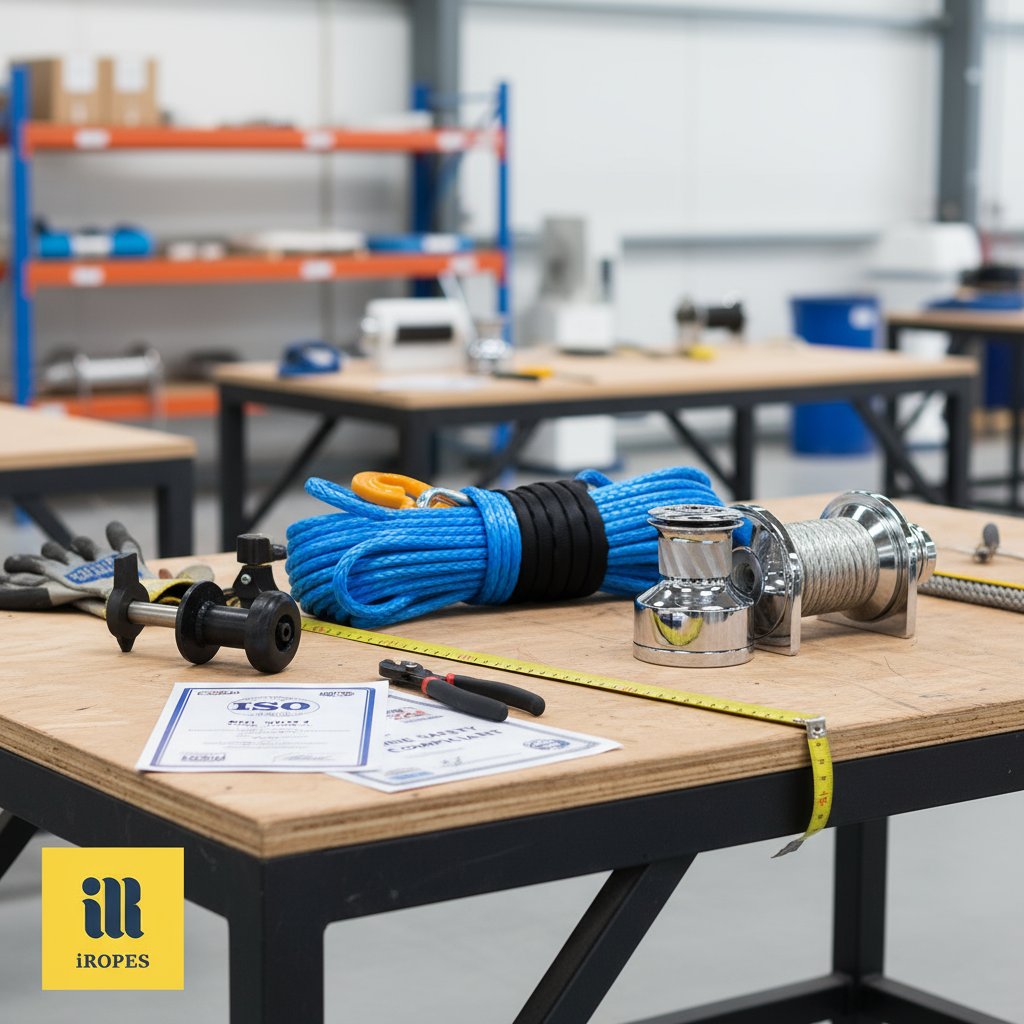
Putting these elements together creates a system where safety meets efficiency, ready to handle whatever the sea throws your way. Our customised solutions empower you with confidence and optimal performance.
Armed with insights on avoiding deadly mistakes in boat winch rope selection—from choosing high-strength synthetics like Dyneema over risky steel for anchor windlass, sheet winches, and halyard winches, to ensuring diameter compatibility for grip and durability—you're set to enhance marine safety. Proper spooling techniques, routine care to rinse saltwater residue, and spotting replacement indicators like fraying or UV damage prevent failures during powered operations. iRopes' custom marine winch rope solutions, with OEM/ODM tailoring for your exact needs, deliver unmatched performance and peace of mind on every voyage.
Building on these essentials, imagine a rope precisely matched to your boat's demands—lightweight, low-stretch, and certified for global waters. This level of precise customisation ensures ultimate reliability.
Get Personalised Guidance for Your Marine Winch Needs
If you're ready to explore custom rope for boat winch options tailored to your setup, complete the inquiry form above to chat with our iRopes specialists. They'll help refine your choices for superior safety and efficiency.
