⚠️ One wrong rope choice sinks 18% of sailing mishaps—yet selecting the right rope type, like Dyneema's 3.5% low-stretch lines, slashes failure risks by precisely matching load and sea fury. iRopes delivers custom marine ropes to keep your vessel afloat, no matter the storm.
In 8 minutes, master rope types to safeguard your sails →
- ✓ Grasp why nylon's 20% elongation prevents mooring snaps, cutting repair costs by 25% in rough seas.
- ✓ Identify braided versus twisted constructions for rigging, avoiding 15% of common deck failures.
- ✓ Follow a step-by-step guide to select UV-resistant synthetics, boosting vessel compliance and longevity.
- ✓ Unlock iRopes' OEM customisations—like reflective elements—for branded, ISO 9001-certified safety tailored to your fleet.
Imagine your halyard fraying mid-squall, the sail whipping loose as waves crash. Yet, most captains grab generic ropes, blind to how mismatched stretch dooms operations. What if a single overlooked factor, like core construction, turns your lifeline into a liability? Dive deeper to uncover the hidden mismatches sinking ships and iRopes' precise solutions that restore control, ensuring every line pulls true under pressure.
Understanding Rope Type in Marine Cordage
Picture yourself on the deck of a sailboat as the wind picks up, every line pulling taut under the strain. In the world of sailing and shipping, getting these details right isn't just about efficiency—it's about keeping everyone safe. Let's start with the basics that often trip people up: the difference between a rope and a line in nautical terms.
At its core, a rope is the general term for a thick cord made by twisting or braiding fibres together. But once that rope goes aboard a vessel and takes on a specific job—like hoisting a sail or securing a mooring—sailors call it a line. This distinction matters because it shifts how you think about its role; a plain rope in your garage becomes a lifeline at sea. And speaking of structure, the anatomy of these lines is surprisingly straightforward yet crucial. Fibres are the building blocks, tiny threads twisted into yarns that form strands. Those strands then twist or braid around a central core, which provides the bulk of the strength. Imagine it like the layers of an onion: the outer sheath protects, while the inner core bears the load during a sudden gust.
- Fibres: The fundamental threads, often synthetic like polyester, that determine overall durability and flexibility.
- Strands: Groups of fibres twisted together, forming the rope's body for even load distribution.
- Core: The hidden heart, which can be parallel or braided, absorbing most tension without visible wear.
Have you ever wondered why old sailing tales mention Manila or Hemp ropes? These natural fibres dominated for centuries, with Manila—harvested from abaca plants in the Philippines—prized for its strength in wet conditions, and Hemp offering a rough grip for heavy hauling. Back in the age of wooden ships, these plant-based ropes were the go-to. However, they swelled in water, rotted over time, and demanded constant maintenance. Fast forward to the mid-20th century, and synthetics changed everything. What is a sailor's rope called? It hasn't shifted—still a line in action—but the materials have leaped ahead. Today, a simple coil waiting to be used is just rope, but rigged up, it's your sheet or halyard, often made from tough, weather-resistant polymers that scoff at saltwater and sun.
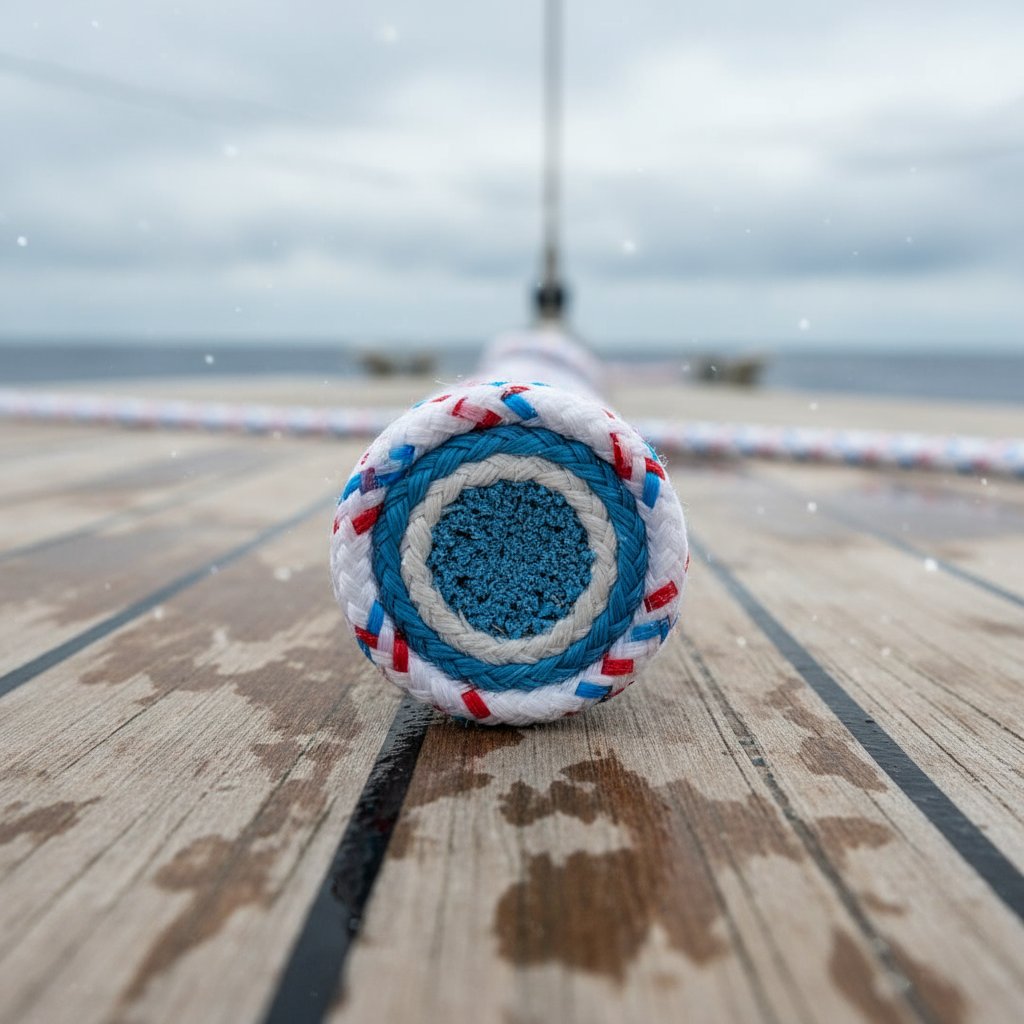
So, why does all this rope type knowledge pack such a punch for safety and performance? In harsh maritime environments, the wrong choice can lead to snaps under load, chafe from constant friction, or degradation from relentless UV rays and saltwater corrosion. Think about it: a line that stretches too much during a storm might let a boom swing wildly, endangering the crew, while one too rigid could shatter outright. Compliance adds another layer—regulations from bodies like the International Maritime Organisation demand ropes meet specific breaking strengths and resistance standards to handle everything from casual cruising to commercial shipping. Selecting a rope type with proven environmental toughness ensures it withstands abrasion on deck hardware and floats if dropped overboard, buying precious seconds in an emergency. With foundational knowledge established, exploring material choices reveals how synthetics outperform naturals for demanding sea conditions.
Rope Used in Sailing: Material Selection Essentials
Building on how synthetics have overtaken natural fibres in tough sea environments, let's dive into the materials that make modern sailing ropes so reliable. You've got the basics down now; picture choosing the perfect one for your next outing. It's like picking the right tool for a job where failure isn't an option. Sailors today rely on these engineered wonders to handle everything from gentle breezes to wild squalls without letting them down.
Start with the everyday heroes: polyester, often known as Dacron in sailing circles. This material offers just the right amount of stretch—around 15% at breaking point—for cruising sails, where you want some give to absorb waves without snapping. It's tough against UV rays and abrasion from deck gear. While it sinks in water, that rarely matters for halyards or sheets. Then there's nylon, the go-to for anything needing shock absorption, like dock lines or anchor warps. With up to 20% elongation, it stretches under sudden loads from boat motion, reducing stress on cleats and your vessel. Both are affordable and widely available, making them staples for most sailors tackling coastal trips. What type of rope do sailors use? These synthetics, tailored for the demands of the water, far outpace old-school options in durability and ease.
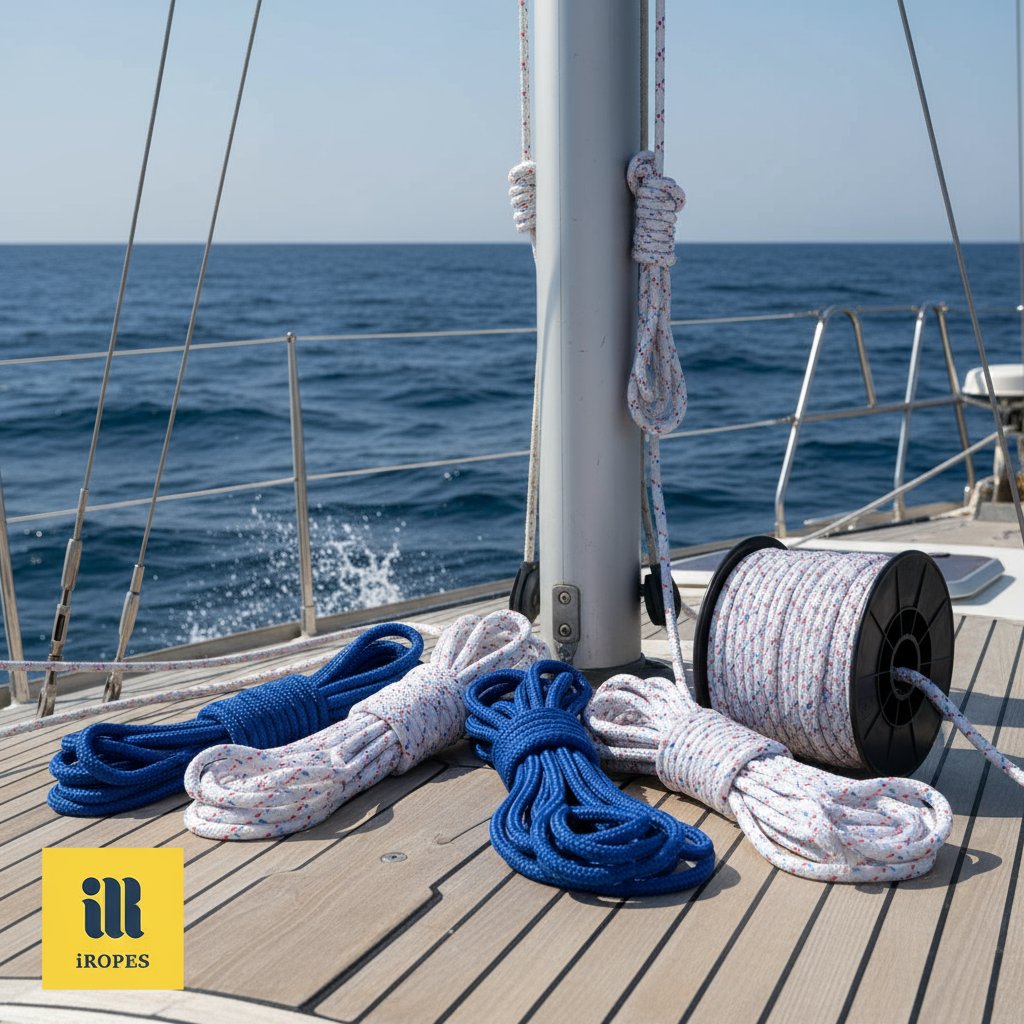
For those pushing limits in racing or long passages, advanced materials step up. Dyneema, especially grades like SK78 or SK99, delivers incredible low-stretch performance—barely 3.5% elongation—ideal for halyards that keep sails taut without sagging. It's 15 times stronger than steel by weight, floats effortlessly, and shrugs off chemicals, though it needs a cover for heavy chafe. Vectran shines in racing setups too, with under 2% stretch and no creep over time, perfect for control lines where precision matters. It flexes well but demands UV protection, often paired with a polyester jacket. These high-tech fibres mean lighter loads aloft, faster handling, and better speed—think shaving minutes off a race leg because your lines hold shape under full wind.
Basic Synthetics
For Everyday Cruising
Polyester
Moderate stretch eases wave impacts; strong UV hold for years at sea.
Nylon
High elasticity cushions jolts; ideal for secure moorings in chop.
Affordable Durability
Balances cost and performance without fancy extras.
Advanced Options
For Racing Edge
Dyneema SK99
Ultra-low stretch keeps sails precise; floats for easy recovery.
Vectran
No creep under load; flexible yet abrasion-tough with covers.
High-Tech Safety
Lightweight strength meets strict marine standards.
Natural fibres like Manila or hemp? They're relics now—swelling in wet conditions, rotting from moisture, and heavy to boot. Sure, they have a nostalgic charm for traditional boats, but for serious sailing, they fall short on longevity and reliability. That's where iRopes comes in, crafting custom blends to fit your exact setup. Need polyester with reflective strands for night visibility or nylon meeting international sailing regs? Their team tweaks diameters, colours, and even adds branding, all while ensuring ISO 9001 quality. This personalisation keeps you compliant and your gear uniquely yours, no matter the voyage. Selecting the right materials sets the stage for construction methods that optimise these properties for real-world sailing demands.
Rope Used on Ships: Applications and Construction
Now that we've covered the materials that give ropes their backbone, it's time to see how those choices come together in construction to handle the real chaos of life at sea. Think about it: a well-built line isn't just strong—it's designed to twist, pull, and endure without failing when it matters most. On ships, construction decides if your gear holds during a midnight docking or lets everything unravel in a storm. What type of rope is used on ships? It boils down to two main builds: twisted, or laid, ropes for heavy, static jobs, and braided ones for the dynamic work that keeps things moving smoothly.
Twisted ropes, often called laid, start with strands wound around each other in a helical pattern, usually three for simplicity or more for bulk. This setup shines in mooring and anchoring, where you need a rope that grips well and resists untwisting under constant tension. Picture securing a freighter to a pier in rough harbour swells—these lines absorb the push and pull without spinning loose. Braided constructions, especially double braid with a core wrapped in a protective sheath, take over for running rigging like sheets and halyards. The core handles the load, while the outer braid slides easily through blocks and winches, reducing friction and wear. I remember watching a crew swap out a frayed sheet mid-race; the new braided line flew through the hardware like it was greased, saving precious seconds. These builds optimise the synthetics we discussed, turning properties like low stretch into a practical edge on deck.

To make sense of it on board, ropes fall into clear categories based on their jobs. Deck operations rely on dock lines, typically nylon-twisted for their give during tying up, preventing snaps against pilings. Rigging systems demand precision: halyards hoist sails with low-stretch braided Dyneema to keep everything aligned. Control lines—like vangs or outhauls—use similar braids for quick adjustments under varying winds. Mooring setups, including anchor warps, favour twisted constructions in polyester or nylon to handle the massive, steady pulls from chain and rode, often with chafe guards for rocky bottoms. Ever wondered about the ropes tied to sails specifically? They're low-stretch braided lines for halyards that raise the canvas precisely and sheets that trim its angle for speed or stability—essential for sail control without excess sag or whip. iRopes enhances these with OEM accessories like thimbles, which reinforce eye splices to fit pulleys perfectly, cutting wear and boosting safety for your setup.
Twisted Ropes
Solid for static loads in mooring; easy to splice on site.
Braided Lines
Flexible for rigging; smooth handling in wet conditions.
Deck Duties
Dock lines secure vessels with reliable stretch.
Sail Support
Halyards and sheets control power without failure.
These applications show how construction pairs with your vessel's demands, from commercial hauls to yacht races, ensuring lines meet saltwater abrasion and load specs without compromise. Spotting the right fit early can dodge those close calls where a weak link turns disastrous.
Decision Guide: Selecting Rope Type to Avoid Fatal Mistakes
Spotting the right fit early, as we just explored with those shipboard applications, can indeed prevent disasters—but how do you actually make that choice without second-guessing? Let's break it down into clear factors and steps tailored to your vessel's world. Whether you're outfitting a yacht for weekend sails or a larger ship for trade routes, the key is matching the rope type to the job's demands, keeping safety front and centre.
First off, consider the core factors driving your pick: the nature of the loads (static like mooring or dynamic from waves), how it fares against the elements like relentless UV exposure or saltwater soak, and sticking to compliance standards from maritime bodies. For instance, dynamic loads need ropes with some give to handle jerks, while static ones prioritise raw strength. Environmental resistance is non-negotiable—UV can weaken fibres over months at sea, and saltwater accelerates corrosion if the material isn't up to it. Compliance might mean meeting breaking strength thresholds or floatation rules for certain ops. To see this in action for different styles, here's a quick side-by-side on cruising versus racing setups.
Cruising
Focus on Durability and Comfort
Load Type
Moderate dynamic pulls from waves; opt for 10-20% stretch materials like nylon.
Environmental Resistance
High UV and saltwater tolerance needed; polyester holds up for years without fading.
Compliance
Basic ISO and IMO standards; focus on cost-effective, easy-to-handle options.
Racing
Priority on Precision and Speed
Load Type
High dynamic stress; low-stretch under 4% like Dyneema prevents sail flap.
Environmental Resistance
Superior abrasion and UV; Vectran with covers for intense, short-term exposure.
Compliance
Rigorous class society rules; certified for lightweight, high-tensile performance.
Once you've weighed those, a step-by-step approach keeps things straightforward for rigging or mooring. Start by assessing the application—rigging lines zip through blocks, so braided low-stretch types shine, while mooring demands twisted for grip. Next, match material to conditions: nylon for bouncy anchors, Dyneema for precise halyards. Then, factor in size—thicker diameters for heavy pulls, slimmer for speed. Don't forget custom tweaks from makers like iRopes, who can adjust length, weave in colours for visibility, or add reflective strips for night ops, all scaled for wholesale orders with branding intact.
- Identify the task: Static hold or quick adjustments?
- Evaluate environment: Salt, sun, or rough hardware?
- Consult specs: Strength and stretch via load charts.
- Add custom: Diameter, accessories like loops for your fleet.

Watch out for traps, though—like skimping on stretch for dynamic spots, where a rigid line under gusts might part and drag a boat under. I once saw a cruiser ignore this for a cheap anchor warp; the snap in a swell cost them hours and nerves. To sidestep that, inspect regularly for chafe, rinse off salt after use, and store coiled loosely away from sun. Partnering with pros for IP-protected designs means your custom ropes stay secure and last, turning potential headaches into smooth sailing.
As we've navigated the critical world of marine cordage, it's clear that choosing the right rope type can mean the difference between a safe voyage and disaster. From the rope used in sailing—like low-stretch Dyneema halyards and flexible nylon sheets for rigging systems—to the robust rope used on ships for mooring configurations and deck operations, material selection must prioritise environmental resistance against UV and saltwater, alongside regulatory compliance. Twisted constructions suit heavy anchoring, while braided lines excel in dynamic sail control, all customisable through iRopes' ISO 9001-certified OEM solutions to match your vessel's demands and avoid common pitfalls like excessive stretch under load.
Armed with this decision guide, you're equipped to select ropes that enhance performance and safety. For tailored advice on applications from cruising to commercial shipping, iRopes' experts can refine these choices with personalised designs, branding, and global delivery.
Connect with iRopes for Custom Marine Rope Solutions
If you're ready to elevate your vessel's rigging with bespoke ropes that align with your specific needs, complete the inquiry form above. Our team at iRopes is here to provide personalised support, ensuring compliance, innovation, and reliability for your marine operations.
