Ship mooring lines secure vessels to docks against wind, waves, and currents—distributing loads across 4-8 lines to prevent drift with 99% effectiveness. Engineered for tensile strengths exceeding expected forces by 5-10 times, they transform chaotic seas into stable berths, often using UHMWPE that's 7x stronger than steel at 85% less weight. 💡
Unlock Mooring Mastery in Just 12 Minutes → Gain Expertise on Functions, Materials, and Custom Solutions
- ✓ Master load distribution and surge dampening to boost vessel stability by 70%, slashing docking risks in stormy conditions.
- ✓ Compare UHMWPE vs. Nylon materials for 30% better shock absorption, solving elongation issues in high-wave environments.
- ✓ Select optimal line types (head, stern, spring) with iRopes' OEM customisation, cutting maintenance costs by 25% through ISO-certified durability.
- ✓ Mitigate snapback dangers via low-stretch designs, enhancing crew safety and extending rope lifespan to 5+ years.
You might think mooring lines are basic ropes holding ships in place—but what if we told you they counter forces rivaling 10 elephants per line, yet 80% of operators underestimate their material engineering for snapback prevention? This hidden power dictates whether your next berthing ends in smooth efficiency or costly chaos. Dive in to uncover how iRopes' tailored UHMWPE solutions resolve these overlooked threats, promising safer, smarter maritime operations ahead.
Understanding the Purpose of Mooring Lines in Vessel Stability
Imagine a colossal cargo ship gliding into port after days at sea, its hull battered by relentless waves. What keeps it steady against the dock, unmoved by gusting winds or swirling currents? That's where mooring lines come in—these aren't just ordinary ropes; they're precisely engineered solutions that anchor vessels securely. As we dive deeper into the engineering marvels behind these lines, let's unpack their core role in keeping ships safe and stable.
The main purpose of mooring lines is straightforward yet vital: they secure ships to fixed points like docks, piers, or buoys, preventing unwanted drift caused by environmental forces such as wind, tides, waves, and currents. Think of them as the ship's invisible lifeline, ensuring it stays put during loading, unloading, or even while idle. Without them, even the sturdiest vessel could swing dangerously, risking damage to itself, the pier, or nearby boats. In essence, these lines provide the stability needed for safe maritime operations, allowing crews to focus on their tasks without constant worry about positional shifts.
At their heart, mooring lines perform several key functions that work together like a well-orchestrated team. First, they facilitate load distribution across multiple lines—typically four to eight per side—spreading the weight of the ship's mass and external pressures evenly so no single point bears too much strain. This setup is crucial for larger vessels, where uneven forces could twist the hull. Then there's surge dampening, where the elasticity of the rope material absorbs sudden jolts from waves or swells, acting like a shock absorber to prevent abrupt movements. Finally, they enable precise positioning control, guiding the ship into its berth with accuracy, which is especially important in tight harbours or during high winds.
Core Functions
How Mooring Lines Stabilise Vessels
Load Distribution
Spreads forces across several lines to avoid overload on any one, maintaining even tension during operations.
Surge Dampening
Material stretch absorbs wave impacts, reducing vessel motion and protecting against dynamic loads.
Positioning Control
Allows fine adjustments for safe berthing, countering winds and currents with targeted pulls.
Engineering Principles
Key Design Factors
Force Vectors
Lines are angled to balance directional pulls, like vectors in physics, ensuring the ship holds steady against multi-angle stresses.
Tensile Strength
Measures the max pull a line can handle before breaking; it guides selections for safe load capacities in harsh seas.
System Integration
Designs factor in interactions with winches and bollards for overall efficiency and reliability.
Ever wonder how engineers ensure these lines don't just hold but perform under pressure? It boils down to principles like force vectors—the directions and magnitudes of pulls that lines must counterbalance, much like balancing forces on a tightrope. Tensile strength, the rope's ability to resist breaking under tension, is another cornerstone; it's calculated to exceed expected loads by a safety margin, often 5 to 10 times the working load. For instance, in designing a mooring system for a tanker, engineers map out wind speeds and wave heights to select lines that align these vectors without compromising the vessel's hull integrity. This thoughtful approach turns potential chaos into controlled stability.
I've seen firsthand on a windy day in a busy harbour how these elements play out—a quick adjustment to line tension can mean the difference between a smooth docking and a tense scramble. By blending elasticity with raw strength, mooring lines don't just restrain; they adapt, keeping operations flowing safely.
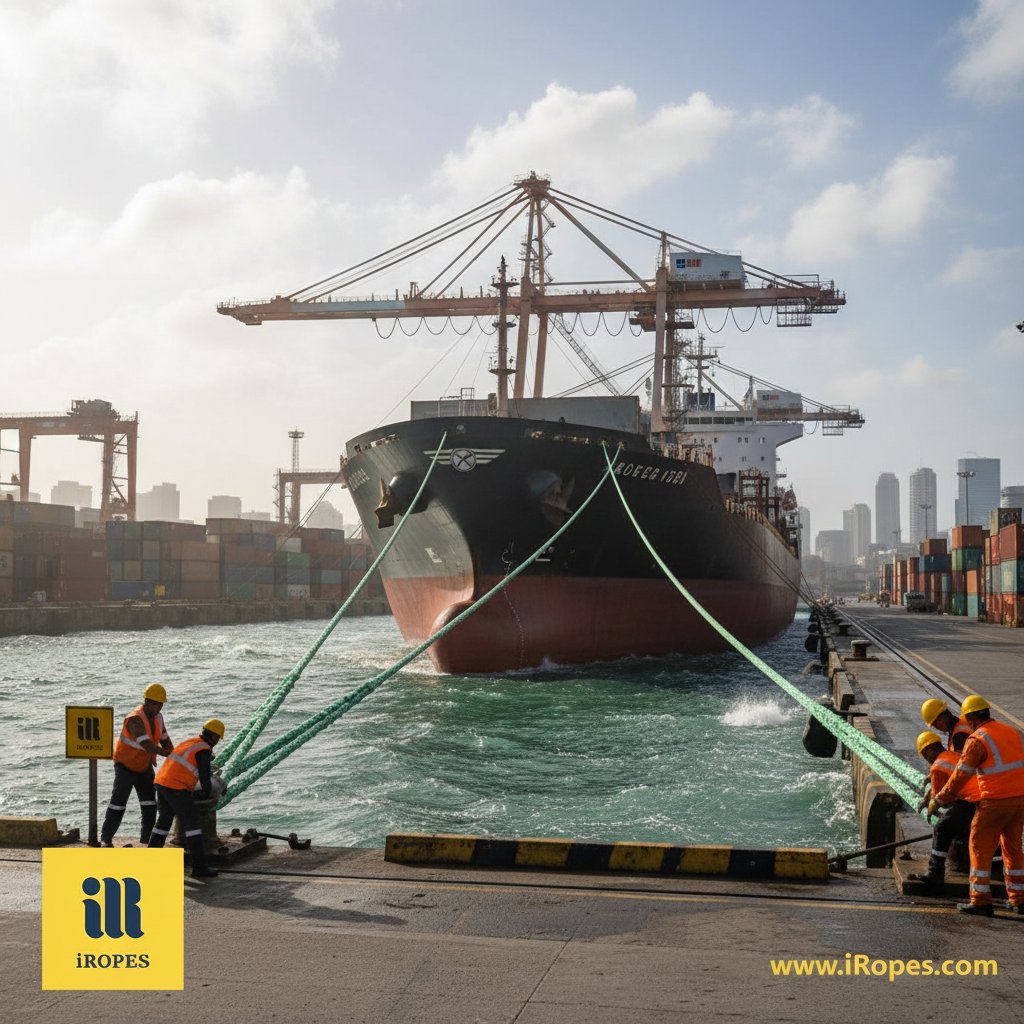
These foundational mechanics set the stage for why different types of mooring lines exist, each tailored to handle specific challenges in the maritime world.
Mooring Lines and Its Purpose Through Materials and Constructions
To grasp their full engineering potential, consider how materials and constructions define the mooring lines and its purpose—resisting breaks, absorbing shocks, and lasting in harsh conditions. At iRopes, we leverage OEM customisation to match these elements precisely to your operational needs, ensuring ropes that not only hold but endure.
When it comes to materials, choices directly influence a line's ability to manage performance. Ultra-high-molecular-weight polyethylene, or UHMWPE, stands out for its exceptional strength-to-weight ratio, making it up to seven times stronger than steel while weighing far less; this lets ships carry lighter gear without sacrificing security. Nylon, on the other hand, excels in shock absorption thanks to its elasticity, stretching up to 30% under load to cushion sudden pulls from waves. Polyester offers solid UV resistance, holding up against sun exposure that degrades other fibres over time, which is vital for long-term dockside use. Through iRopes' tailored services, you can blend these—say, coating UHMWPE for added environmental protection—to fit exact vessel demands.
Construction methods further refine how these materials perform their roles. A 3-strand twisted build provides flexibility, ideal for easy handling during quick berthings, though it may elongate more under stress. Double-braided ropes deliver superior durability, with a woven core and cover that minimise wear and control stretch to just 3-4%, ensuring steady tension without constant adjustments. These variations impact everything from how the line coils on deck to its response in high winds.
- By Material - UHMWPE for lightweight strength, Nylon for elasticity, Polyester for weather resistance, Polypropylene for affordability in calmer waters, and wire for ultimate heavy loads.
- By Construction - 3-strand twisted for bendability, double-braided for toughness, 8-strand plaited for balanced handling, and 12-strand single-braided for high-performance smoothness.
- By Function - Head lines forward, stern lines aft, spring lines diagonally, breast lines sideways—offering endless combinations for any setup.
So, how many types of mooring lines are there? It's not a fixed number, but categorising them by material for core properties, construction for build quality, and function for placement reveals dozens of options tailored to scenarios. On board, these translate to specific roles: head lines control fore-aft movement from the bow, stern lines stabilise the rear, spring lines prevent forward or backward drift with angled pulls, and breast lines keep the ship flush against the dock sideways. Picture a tanker in a narrow channel—these lines work in concert, each pulling just right to hold position amid crosscurrents.
During a visit to a busy shipyard last year, I watched crews swap nylon springs for braided polyester ones to better handle tidal surges; the difference in stability was immediate, turning a choppy tie-up into a routine task. Selecting the right combo isn't guesswork—it's about aligning material resilience with construction efficiency to meet the mooring lines of ship's evolving needs.
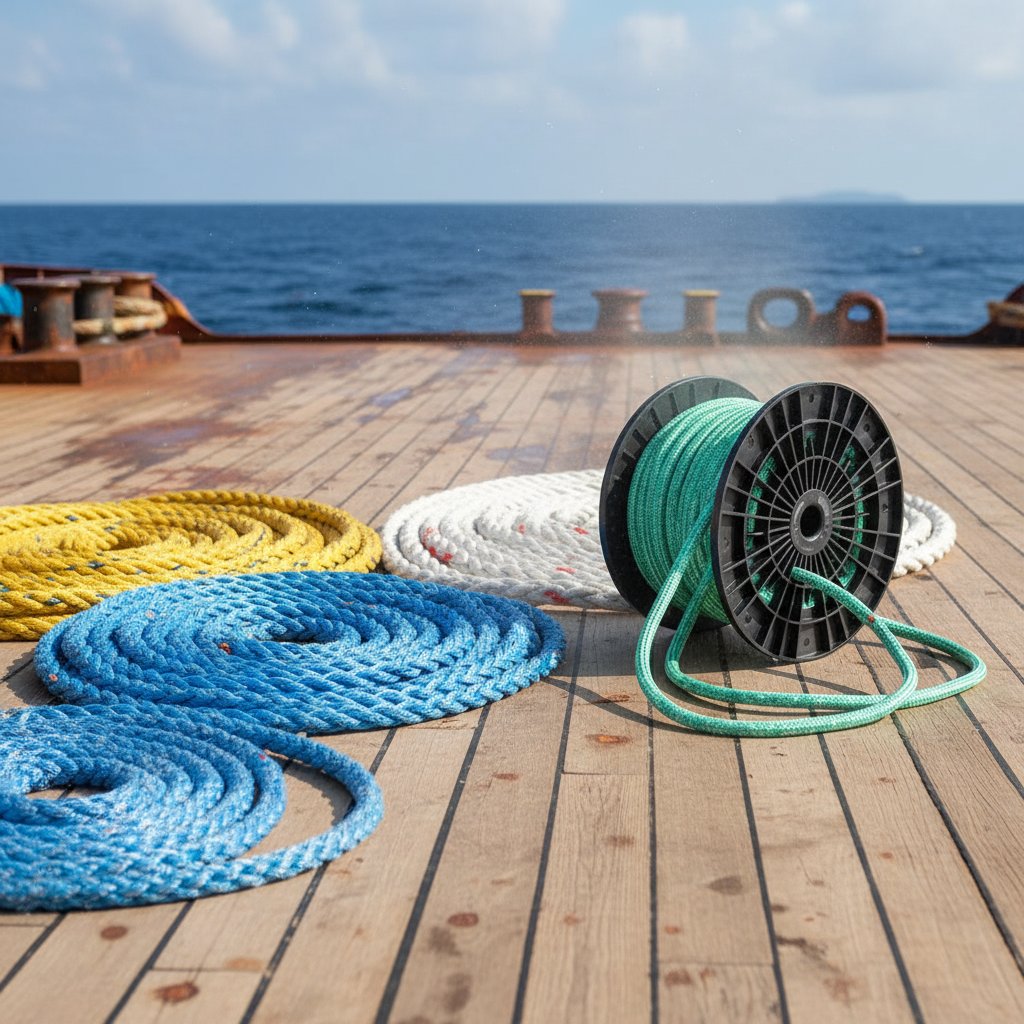
With these building blocks in place, it's clear how mooring lines adapt to real-world pressures, paving the way for their roles in everything from port docking to offshore rigs.
Mooring Lines of Ship in Diverse Applications and Selection
These engineered ropes step up in all sorts of maritime scenarios, where managing intense loads under tough conditions is non-negotiable. Whether it's a bustling commercial harbour or a remote oil platform, the right mooring lines of ship make all the difference in keeping operations smooth and secure.
Take dock mooring in busy commercial ports, for example. Here, lines secure cargo ships alongside piers, handling the constant push-pull of tides and passing vessels. Crews rely on them to absorb lateral forces, ensuring the hull stays parallel to the dock for efficient loading. Out at sea, offshore platforms for oil rigs demand lines that withstand relentless wave action and corrosion from saltwater—think massive structures floating in deep water, where mooring lines anchor them against storms that can generate thousands of tonnes of force. Then there are towing operations during salvage missions, pulling disabled ships through rough seas; these require ropes that distribute sudden jerks without snapping, turning potential disasters into controlled recoveries.
Have you ever wondered how teams decide on the perfect line for such varied demands? It starts with key selection factors tailored to the job. Vessel size plays a huge role—larger ships like tankers need thicker diameters to handle greater weights. Environmental forces, from gale-force winds to strong currents, dictate the need for materials that resist abrasion and fatigue. Engineers calculate required Minimum Breaking Strength (MBS), the maximum load before failure, and Working Load Limit (WLL), typically one-fifth of MBS for safety. At iRopes, our ISO 9001-certified precision manufacturing ensures these specs are met exactly, blending custom designs with rigorous testing for reliability in extreme setups.
Dock Mooring
Secures vessels in ports against tidal shifts, focusing on lateral stability for safe cargo handling.
Offshore Rigs
Anchors platforms in deep water, managing dynamic loads from waves up to 20 metres high.
Towing Salvage
Supports rescue tows, distributing shock loads during high-speed pulls in adverse weather.
Load Management
Emphasises even force spread to prevent overload, vital in all extreme maritime conditions.
So, what is the best rope for mooring lines? It depends on the application, but for heavy-duty ship uses, UHMWPE often tops the list—its low stretch keeps positions precise, and high abrasion resistance outlasts alternatives in rough seas. Compare it to Nylon, which absorbs shocks well but elongates more, risking slack in storms; or Polyester, strong against UV but heavier for handling. UHMWPE's lighter weight reduces crew fatigue, though it costs more upfront—yet its longevity pays off, cutting replacements over time. iRopes customises these with eye splices or coatings for seamless fit.
Engineering design takes this further for compliance, tweaking lengths to match berth distances, diameters from 16mm for yachts to 100mm for supertankers, and adding accessories like thimbles to reinforce eyes against sharp bollards. I recall advising a salvage firm on upsized UHMWPE lines with integrated chafe guards; it not only met regulatory standards but boosted their response times in choppy waters. These tailored choices ensure mooring lines of ship perform reliably, whatever the challenge.
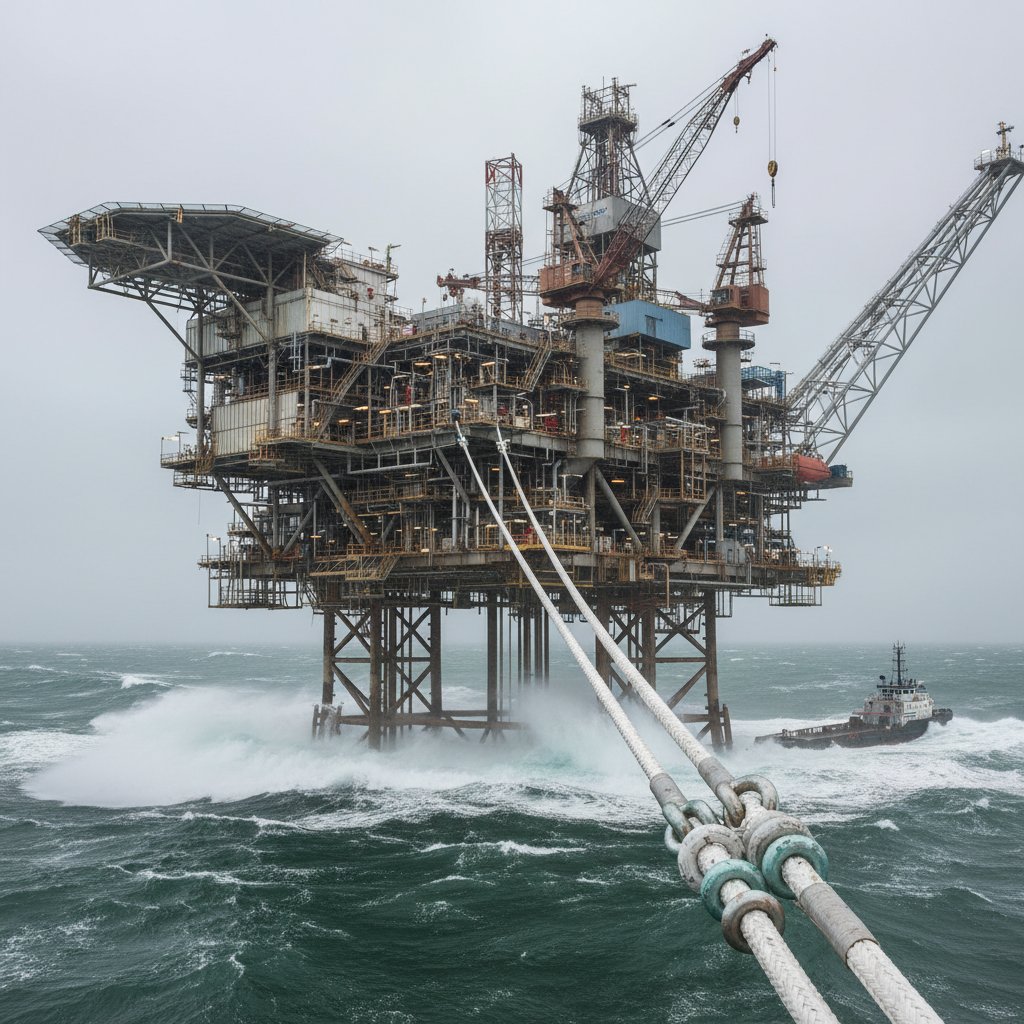
Yet even the strongest lines need careful oversight to avoid hazards like sudden releases, underscoring the need for solid maintenance routines.
Engineering Safety and Maintenance for Mooring Systems
Even the strongest lines need careful oversight to avoid hazards like sudden releases, underscoring the need for solid maintenance routines. In the high-stakes world of maritime operations, safety isn't just a checklist—it's the backbone of every docking. Let's explore how engineering principles and daily care keep these systems reliable, turning potential risks into preventable routines. At iRopes, our custom designs play a key role here, incorporating features that prioritise crew protection from the start.
One of the most pressing safety considerations is snapback, the violent recoil when a mooring line breaks under tension. What are the dangers of mooring ropes snapback? They can cause severe injuries or fatalities, as a whipping line travels at speeds up to 100 km/h, creating lethal danger zones within a 10-metre radius of the line. I've witnessed the aftermath on a salvage vessel once—the crew stayed clear after a near-miss, but it could have been tragic. To mitigate this, low-stretch materials like UHMWPE limit initial tension buildup, reducing recoil force by up to 70% compared to elastic alternatives. Establishing clear danger zones during rigging, using proper tensioning protocols with winches to avoid overloads, and training crews on escape routes are essential. iRopes enhances this through designs with integrated break indicators, alerting operators early to weaknesses before they escalate. For more on these risks, explore the hidden dangers in vessel mooring ropes.
Engineering principles guide system design to embed safety from the ground up. The factor of safety, often set at 5:1 or higher, ensures lines exceed expected loads—MBS must outpace WLL by this margin to account for surges. Chafe protection, via sleeves or coatings on high-friction areas, prevents cuts that weaken ropes over time; without it, a line might fail prematurely against rough bollards. Integration with hardware like bollards or winches demands precise alignment, distributing forces evenly to avoid stress points. Think of it as building a bridge: every connection must harmonise, or the whole structure falters. Our ISO 9001-certified processes at iRopes ensure these elements align in custom setups, from thimble reinforcements to compliant terminations.
- Inspect visually and manually for frays, cuts, or discolouration every six months or after heavy use.
- Clean with fresh water and mild detergent to remove salt buildup, preventing stiffness and UV degradation from embedded grime.
- Store in cool, dry areas away from sunlight, coiled loosely to avoid kinks that compromise strength.
Maintenance best practices extend a line's lifespan dramatically, supporting iRopes' durable custom ropes that resist wear longer than generics. Regular inspections catch issues early—feel for soft spots or measure diameter reductions exceeding 10%, signalling replacement. Cleaning removes corrosive salts that accelerate breakdown, while proper storage in shaded coils wards off heat and light damage. Have you checked your setup lately? A quick routine can prevent downtime; for instance, on a long-haul ferry route, monthly checks revealed early chafe, averting a full swap. These steps not only comply with standards but build trust in your gear, ensuring every voyage starts secure.
Snapback zones extend beyond the line—always designate and mark areas during mooring to protect all personnel on deck.
By weaving these safety and care elements into operations, mooring systems evolve from mere necessities to reliable allies, highlighting how quality engineering transforms everyday risks into managed realities.
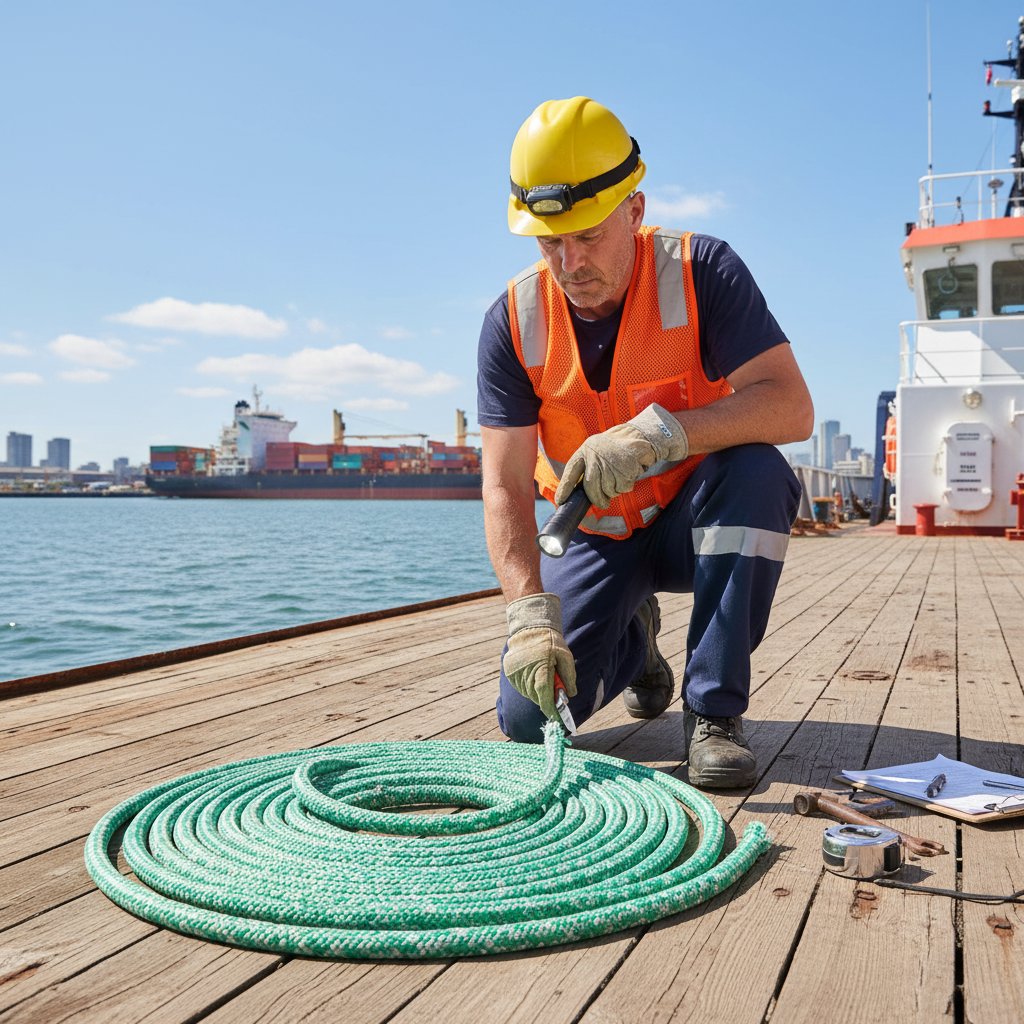
Exploring the purpose of mooring lines reveals their vital role in vessel stability, from load distribution across multiple lines to surge dampening via elastic materials and precise positioning control against environmental forces. Engineering principles like force vectors and tensile strength ensure effective designs, while safety features mitigate snapback risks and promote longevity through maintenance. The mooring lines and its purpose extend to diverse materials such as UHMWPE for strength and Nylon for shock absorption, tailored constructions, and applications in docking, offshore rigs, and towing. At iRopes, our ISO 9001-certified OEM solutions customise these mooring lines of ship to meet your specific operational demands, enhancing safety and efficiency worldwide.
Discover Tailored Mooring Solutions for Your Maritime Needs
If you're seeking personalised advice on selecting or customising mooring lines to optimise your vessel operations, the inquiry form above connects you directly with iRopes specialists ready to assist.
