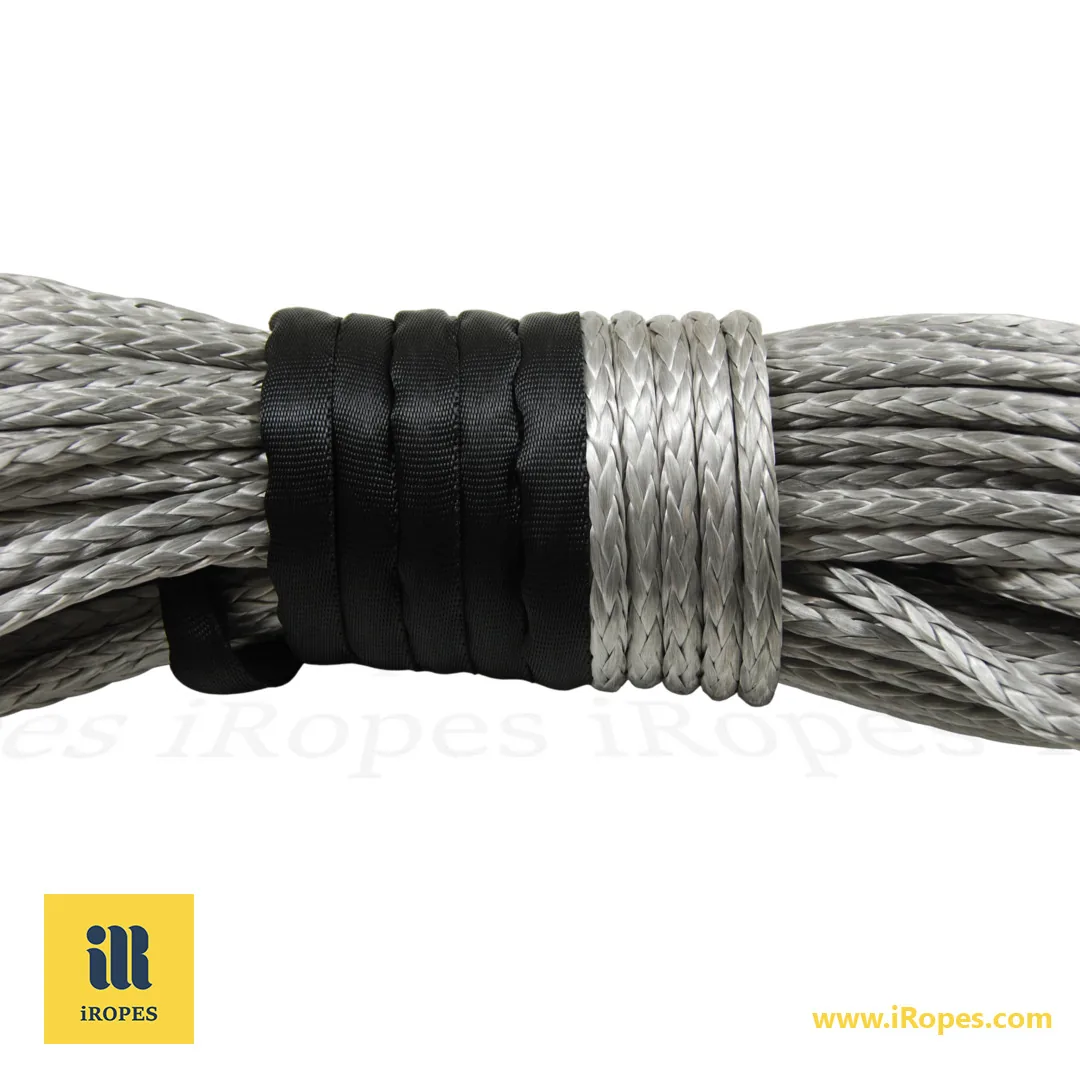
Proper mooring lines avert 95% of vessel drifts even in high winds. For instance, UHMWPE types deliver 7–10 times the strength of steel at 85% less weight, while nylon absorbs 20–30% shock from waves, ensuring secure docking without snap-back disasters.
Unlock Safer Mooring in ~12 Minutes → Gain Expertise on Types and Uses
- ✓ Master UHMWPE and polyester materials to cut line failure risks by 70% in offshore operations, boosting vessel stability.
- ✓ Learn head, stern, and spring line functions with configurations that prevent collisions, potentially saving up to $50,000 in damages per incident.
- ✓ Apply selection criteria like MBS ratings for 5:1 safety factors, extending line life by 2–3 years through proper maintenance.
- ✓ Customise via iRopes OEM for your yachting or defence needs, ensuring ISO-certified ropes match exact environmental loads.
You've felt that gut-wrench when a line strains against a sudden gust, wondering if it will hold or snap. But what if the real disaster-stopper isn't brute force? What if it's picking the precise type for your setup, like buoyant polypropylene for buoys or low-stretch Dyneema for open seas? Discover how one overlooked factor in construction could slash your snap-back dangers by 80%, transforming routine docking into unbreakable security—before the next storm tests you.
Understanding Different Mooring Lines: Foundations for Safe Vessel Securing
Imagine a sturdy ship bobbing gently at the dock, its lines taut against the pull of the sea. That's the quiet confidence mooring lines bring to maritime life. These essential ropes secure vessels to fixed points like piers, buoys, or anchors, countering the relentless forces of nature. In essence, mooring lines are the unsung heroes that keep boats from drifting into chaos during storms or calm alike. Their core purpose? To stabilise ships against wind gusts that shove from the sides, waves crashing with unpredictable power, and tides that rise and fall like a living breath. Without them, a simple docking could turn disastrous, as uncontrolled movement risks collisions or groundings.
But why dive into the details of different mooring lines right from the start? Mooring principles rest on balancing these elemental forces. Think of wind creating lateral pressure, currents tugging longitudinally, and tides altering water levels to slacken or strain the setup. Classification matters because not every rope handles these pressures equally. A line too weak might snap under a sudden squall, while one too stiff could transfer shocks directly to the hull. Safety hinges on matching the right type to the job, preventing what experts call "snap-back"—that whip-like recoil when a line fails, endangering nearby crew. Have you ever watched a line fray and wondered what invisible stresses it endured? Understanding these basics helps you see why thoughtful selection averts real hazards on the water.

Setting up a basic mooring system starts with key considerations that influence every choice. Vessel size plays a starring role—a yacht might need lighter lines for easy handling, while a cargo ship demands heavy-duty ones to manage massive loads. Environmental factors seal the deal: salty harbour waters accelerate wear, so corrosion-resistant options shine there, whereas offshore winds call for low-stretch ropes to maintain position. Picture a small fishing boat in a sheltered cove versus an oil rig battling open-ocean swells; the setups differ wildly to ensure reliability.
Other practical elements include the docking site's layout—narrow slips require precise lateral control—and expected weather patterns, like frequent gales prompting extra redundancy. For instance, in tidal zones, lines must allow for height changes without going slack. These factors guide the initial configuration, ensuring your vessel stays put without undue stress on cleats or bollards. By weighing them early, you build a foundation that adapts to real-world demands, much like choosing the right tool for a task based on the job's scale and conditions.
As we build this groundwork, it becomes clear how material choices amplify these principles, tailoring performance to withstand diverse challenges ahead.
- Vessel Size: Larger ships require thicker diameters and higher breaking strengths to handle greater loads without failure.
- Environmental Exposure: Harsh conditions like UV rays or abrasion demand materials with superior resistance for longevity.
- Site-Specific Needs: Confined docks call for elastic lines to absorb minor shifts, while open waters favour rigid ones for precision.
Mooring Lines Types: Materials and Constructions for Optimal Performance
Building on those foundational principles, the real magic happens when you match the right materials to the job at hand. Different mooring line types shine in specific scenarios because their makeup directly influences how well they hold up against the sea's demands. Let's break down the key materials first, exploring what makes each one tick for various vessel needs.
UHMWPE (Dyneema): The Lightweight Powerhouse
Picture a rope that's as strong as steel but floats like a feather—that's ultra-high-molecular-weight polyethylene, or UHMWPE, often branded as Dyneema. This synthetic marvel offers an incredible strength-to-weight ratio, meaning it packs serious punch without adding bulk to your setup. With minimal stretch—around 3–4% elongation—it keeps your vessel precisely positioned even in rough offshore conditions, where every inch counts. Abrasion resistance is top-notch too, shrugging off scrapes from rocky shores or equipment. For operations like oil platforms or heavy towing, where loads can skyrocket, UHMWPE prevents that dreaded snap-back by staying firm under pressure. At iRopes, we customise these lines with options like specific diameters or reflective elements, all backed by our ISO 9001 standards, ensuring they fit your exact offshore or defence applications seamlessly.
Nylon and Polyester: Balancing Stretch and Endurance
Shifting to more traditional synthetics, nylon brings elasticity to the table, stretching up to 20–30% to absorb shocks from sudden waves or gusts. Think of it as a built-in shock absorber for your docking lines. This makes it ideal for dynamic harbour environments where vessels heave and pull constantly. However, it does absorb water, which can temporarily cut its strength by 10–15%, so it's best for shorter-term uses. Polyester steps in as the durable alternative, with about half the stretch of nylon and far better UV resistance, holding up for years in sunny marinas without degrading. It's a go-to for long-term berthing, offering reliable hold without the water-weakness issue. Have you noticed how some lines go limp after a wet season? Polyester avoids that, providing steady performance for yachting or industrial docks.
High-Performance Synthetics
Lightweight and Tough
UHMWPE Strength
7–10 times stronger than steel per weight, low stretch for precise control.
UV Resistance
Excels in prolonged sun exposure, reducing breakdown over time.
Buoyancy Option
Floats for easy buoy mooring, minimising drag in water.
Traditional Options
Reliable and Versatile
Nylon Elasticity
High shock absorption for wave impacts, but monitor water effects.
Polyester Durability
Lower stretch for stable holds, superior against UV fading.
Cost Balance
Affordable for everyday use, balancing performance and price.
Polypropylene and Wire: Practical Choices for Specific Loads
For lighter duties, polypropylene delivers buoyancy that keeps lines afloat, making it perfect for temporary buoy setups or small craft in calm waters. It's affordable and easy to handle, though its lower abrasion resistance means it's not ideal for rough-and-tumble spots. Wire ropes, typically steel, bring unmatched robustness for extreme loads, such as in salvage operations, with next-to-no stretch for rock-solid control. But watch for corrosion in saltwater; regular galvanising helps. These options round out the spectrum, suiting everything from camping gear ties to heavy industry pulls.
Constructions That Enhance Handling and Strength
Beyond materials, how a line is built matters just as much. Three-strand twisted ropes are straightforward and simple to splice, great for basic tasks where ease triumphs everything. Double-braided designs layer a core inside a protective cover, boosting abrasion resistance for frequent-use scenarios. Eight-strand plaited lines resist twisting, ideal for winches without jamming. Twelve-strand braided offers supreme tensile strength and flexibility, perfect for high-demand applications like offshore rigs. Each construction tweaks the rope's feel and performance, ensuring it suits your crew's workflow.
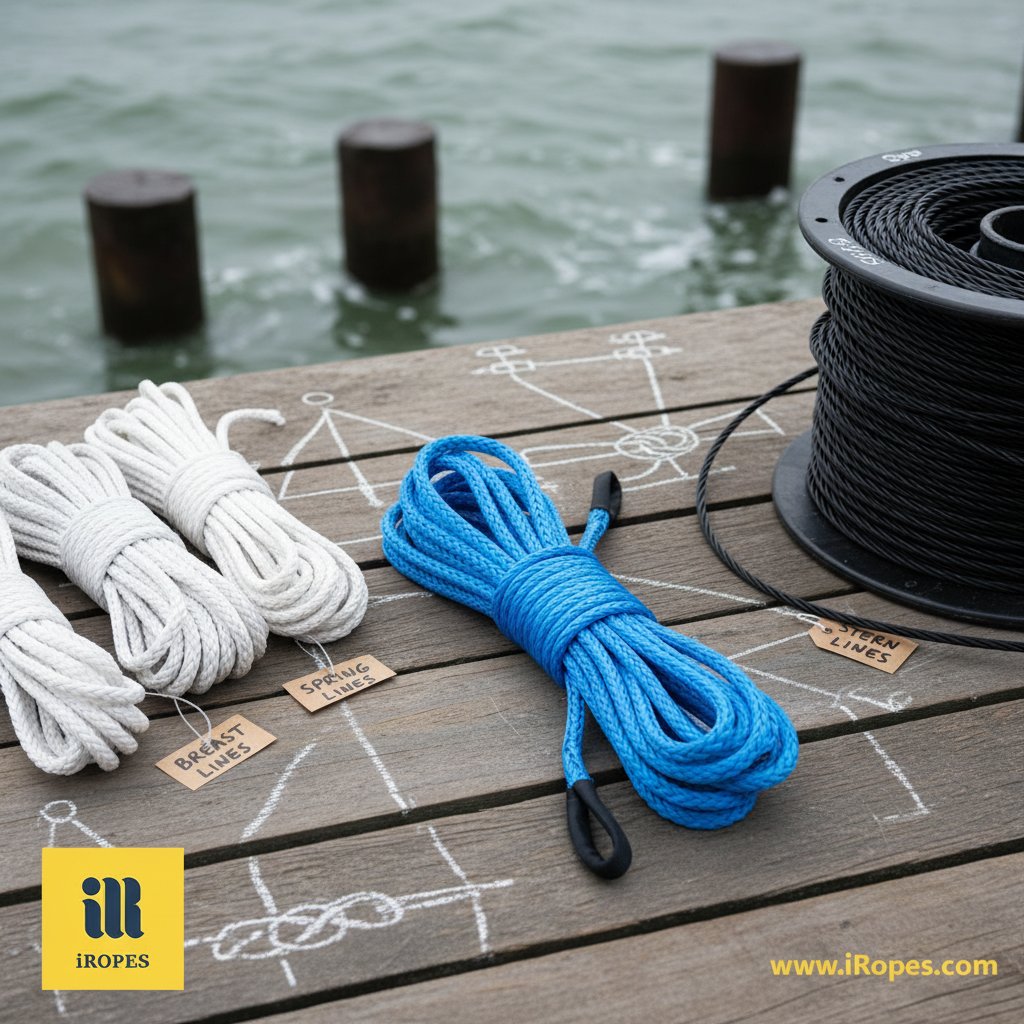
These material and construction choices set the stage for how lines function in real setups, from preventing forward drifts to stabilising against side surges.
Mooring Lines and Their Uses: Functions and Applications Across Scenarios
Those material and construction choices we just explored truly come alive when you see them in action, dictating how a vessel holds steady against the sea's push and pull. Now, let's shift to the functional side of different mooring lines, where each type plays a specific role in keeping everything in place. Think of them as the crew members of your docking setup—each with a job that prevents chaos. Head lines, often called bowlines, run from the front of the boat to the dock, stopping forward drifts when wind or currents try to nudge it ahead. Stern lines do the opposite, securing the rear to halt backward motion, ensuring your vessel doesn't swing loose in a sudden tide shift.
Complementing these are breast lines, which pull sideways to maintain lateral stability, keeping the boat snug against the pier without scraping or wandering into neighbours. Then there are spring lines—the real dynamos for dynamic control. Forward springs run from the bow to a point farther back on the dock, countering forward surge, while aft springs connect the stern forward to resist backward pull. Together, they absorb the constant rocking, much like suspension on a car smoothing out bumps. Ever been on a boat that sways wildly because one line was missing? These arrangements make all the difference, creating a balanced system that addresses movement in every direction.
Head and Stern Lines
Secure bow and stern to prevent longitudinal drifts, essential for basic docking stability.
Breast Lines
Control side-to-side movement, keeping vessels flush against the dock in crosswinds.
Spring Lines
Diagonal connections for dynamic tension, mitigating surges from waves or wakes.
Overall Arrangement
Combines all types for comprehensive hold, adaptable to vessel and site needs.
These mooring lines and their uses extend far beyond simple harbours, fitting into a range of demanding scenarios. In dock and harbour mooring, they're the backbone for safe berthing of everything from leisure yachts to cargo ships. For anchoring or buoy setups, buoyant options like polypropylene keep lines floating and accessible, reducing underwater snags. Offshore platforms rely on them for tethering massive structures against relentless swells, where low-stretch varieties maintain precise positioning. Towing operations call for shock-absorbing types to handle jerky pulls, while permanent systems in remote sites demand ultra-durable builds for years of exposure. At iRopes, we adapt these for specialised fields like yachting, where UV-resistant lines withstand sunny outings, or defence applications needing stealthy, high-strength setups. Our OEM services let you tailor them to your operation.
Visualising typical configurations helps clarify this: a standard dock arrangement might feature two head lines, two stern, paired breasts amidships, and crossed springs for full control. In a 4-point mooring system—common for large vessels or platforms—four equal legs extend from the centre, each with an anchor, chain segment, and synthetic rope floated by buoys, distributing loads evenly in open water. Best practices here include using buoyant ropes for the surface portions to ease handling and inspections. For crowded marinas, prioritise elastic springs to buffer wakes from passing boats. Always angle lines at 45 degrees for optimal tension, and double up in high winds. What setup have you tried that worked wonders in rough conditions?

Mastering these applications sets the groundwork for picking lines that match your needs, factoring in strength ratings and upkeep to keep risks at bay.
Selecting and Maintaining Different Mooring Lines: Safety and Best Practices
Mastering the applications of mooring lines sets a strong foundation, but choosing the right one for your setup takes it further by aligning performance with real demands. When selecting from different mooring lines, start with core criteria that ensure reliability under pressure. Strength ratings guide this process: minimum breaking strength (MBS) marks the maximum load before failure, while working load limit (WLL) sets safe daily use at about 20% of that. The factor of safety (FOS) adds a buffer—often 5:1 for critical operations—to account for wear or surges. Elasticity matters too; some lines stretch to cushion jolts, others stay firm for precision. Abrasion resistance fights chafing against rough edges, and buoyancy keeps ropes afloat for easy retrieval in buoy work. If you're wondering about the strongest option, ultra-high-molecular-weight polyethylene (UHMWPE) stands out with its steel-like power at a fraction of the weight, making it a top pick for heavy offshore tasks where every ounce counts.
These factors aren't just specs—they directly impact safety, where overlooking them can lead to trouble. Snap-back poses a real threat; if a line parts under tension, it recoils like a released spring, potentially injuring anyone nearby. To counter this, always inspect lines before and after use, checking for frays, UV damage, or stiffness that signals weakness. Replace them every one to two years, or sooner in harsh environments like constant saltwater exposure. Proper storage keeps them serviceable: coil loosely in a cool, dry spot away from sunlight to prevent kinking or degradation. iRopes enhances this with built-in chafe protection, like reinforced covers or sleeves, that extend life and reduce those hidden wear points during routine handling.
- Visual check for cuts or fuzzing on the outer layer.
- Test strength with a gentle tug, feeling for unusual give.
- Log usage hours to track replacement timing.
For length, aim for 1.5 to 2 times your vessel's size to allow slack for tides without over-tightening—say, 60 metres for a 30-metre ship, as detailed in our mooring line sizing secrets. Combining types works well too; pair elastic nylon springs with low-stretch UHMWPE heads for balanced control. Eco-friendly choices, like bio-based synthetics, cut environmental impact without sacrificing hold, aligning with sustainable maritime shifts.
At iRopes, our OEM and ODM services make selection straightforward for wholesale partners. We tailor materials from buoyant polypropylene to robust wire, adjusting diameters for load needs, colours for visibility, and adding accessories like thimbles or eyes. All under ISO 9001 certification, guaranteeing precision and trust for your global operations.
Custom Fit
From yachting to defence, we craft lines that match your specs, protecting ideas with full IP safeguards.
These practices not only safeguard your assets but also build confidence in every tie-up, paving the way for long-term maritime success.

Exploring different mooring lines reveals how essential they are for preventing maritime mishaps, with mooring line types like UHMWPE for low-stretch strength, nylon for shock absorption, and polyester for UV durability shaping optimal performance. Understanding mooring lines and their uses—such as stern lines halting backward drifts, breast lines ensuring lateral stability, and spring lines managing dynamic surges—equips you to configure safe setups, from harbour docks to offshore platforms. Best practices, including 1.5–2x vessel length guidelines and regular inspections, combined with iRopes' custom OEM solutions, empower reliable, disaster-proof securing tailored to your operations. For deeper insights into marine rope performance, explore our guide to marine rope specifications and uses.
These insights build a foundation for safer voyages, but applying them precisely to your vessel's needs can elevate security further. Whether adapting configurations for tidal zones or selecting eco-friendly options, personalised expertise ensures seamless integration.
Ready to Customise Your Mooring Lines? Contact iRopes Today
If you're seeking tailored advice on mooring line types or configurations for your specific scenarios, the inquiry form above connects you directly with our iRopes specialists for personalised guidance and wholesale solutions.