Pick the right weatherproof marine rope, and you’ll secure up to 14,000 lb breaking strength on 5/8″ lines and 1,500 lb on 1/4" sizes, with no loss of load capacity from saltwater or UV.
Unlock ROI – ~2 min read
- ✓ Preserve up to 48% more tensile strength after 6 months of UV exposure.
- ✓ Gain 15% higher load capacity with double-braided construction versus standard 3-strand.
- ✓ Reduce routine maintenance frequency by roughly 30% thanks to superior water-repellent treatment.
- ✓ Secure OEM-ready custom branding and ISO-9001-verified quality for wholesale orders.
Most boat owners assume any synthetic line will endure a salty, sun-soaked season, yet many off-the-shelf ropes lose up to 25% of their strength after just three months of exposure. What if you could lock in the full-rated breaking load, keeping your dock lines performing optimally for years? Below, we’ll expose the hidden flaws of ordinary rope and demonstrate how iRopes’ custom-engineered 1/4″ and 5/8″ weatherproof solutions deliver measurable durability gains. As an expert rope manufacturer, iRopes specialises in high-quality customised rope solutions for wholesale customers, ensuring your specific needs are met.
Understanding Weatherproof Rope for Marine Environments
When a rope spends most of its life drenched in saltwater and hammered by sunlight, ordinary fibres quickly lose strength. Weatherproof rope is specifically engineered to survive these harsh conditions. It incorporates UV inhibitors, water-repellent treatments, and rot-resistant compounds. Without these safeguards, a standard line can become brittle, lose grip, and ultimately fail when you need it most. iRopes provides comprehensive OEM and ODM services, ensuring your customised rope solutions are built for endurance.

- UV stabilisation – additives absorb harmful rays, preventing fibre breakdown and preserving rope integrity.
- Water resistance – treated sheaths repel salt, reducing swelling and preventing strength loss.
- Rot, mildew, and abrasion protection – antimicrobial agents and tough outer layers keep the rope functional for years, even with continuous wear.
So, what is weatherproof rope used for? You'll find it on dock lines holding boats steady against tides, anchor rodes bearing the load of heavy vessels, rigging enduring constant motion, and tow lines pulling other crafts without fraying. Each task demands a rope that won’t deteriorate after a single storm. This is why marine professionals choose weatherproof solutions for both 1/4 marine rope and 5/8 marine rope applications. iRopes ensures precision manufacturing and quality assurance, backed by ISO 9001 certification.
“A rope that can shrug off UV rays and salt spray not only extends its service life but also protects the safety of everyone on board. Investing in truly weatherproof rope saves time, money, and headaches down the line.”
Understanding these fundamentals sets the stage for your next decision: which material—nylon, polyester, or polypropylene—will give your chosen diameter the performance edge you need. iRopes offers extensive customization options, including material selection, to create the perfect rope for your unique requirements.
Choosing the Right 1/4 Marine Rope Materials
Building on the weatherproof basics, the next question is which fibre will give a 1/4" marine rope the right blend of strength, flexibility, and longevity for your specific job. iRopes offers a wide range of rope products covering distinct fields, ensuring you find the right fit.

Each polymer brings a unique set of traits that become especially noticeable once the rope is exposed to salt, sun, and constant motion. iRopes' rope specialists consider all these factors when designing tailor-made solutions.
- Nylon – offers high elasticity and excellent shock absorption, making it a favourite for light-duty dock lines and lashing where sudden loads are common. Ideal for applications requiring some give.
- Polyester – features low stretch combined with superior UV resistance. It's ideal for small rigging, flag halyards, and any application demanding dimensional stability and minimal elongation.
- Polypropylene – is lightweight and naturally buoyant. It’s a cost-effective choice for utility lines, short tow ropes, and any situation where the rope must float.
So, what is the best material for marine rope? There isn’t a one-size-fits-all answer; the “best” depends on your performance priorities. If UV exposure and minimal elongation top the list, polyester usually edges out the competition. When shock absorption and a softer feel are crucial, nylon takes the lead. For projects benefiting from flotation and the lowest upfront cost, polypropylene is the logical pick. iRopes provides expertise in tailoring these materials by working closely with customers.
Once you’ve settled on the fibre that matches your operational needs, the next layer to consider is how the rope is built—double braid versus 3-strand. This is because construction amplifies or tempers the material’s inherent qualities. Our comprehensive OEM and ODM services include custom design solutions for rope construction.
Rope Construction: Double Braid vs. 3-Strand
After deciding which fibre best suits a 1/4" or 5/8" line, the next factor shaping performance is how the strands are assembled. Whether you choose a double‑braided profile or a classic 3‑strand twist will dictate the handling, stretch, and long‑term durability of your weatherproof rope. iRopes offers various constructions, evaluating different types for the best fit.
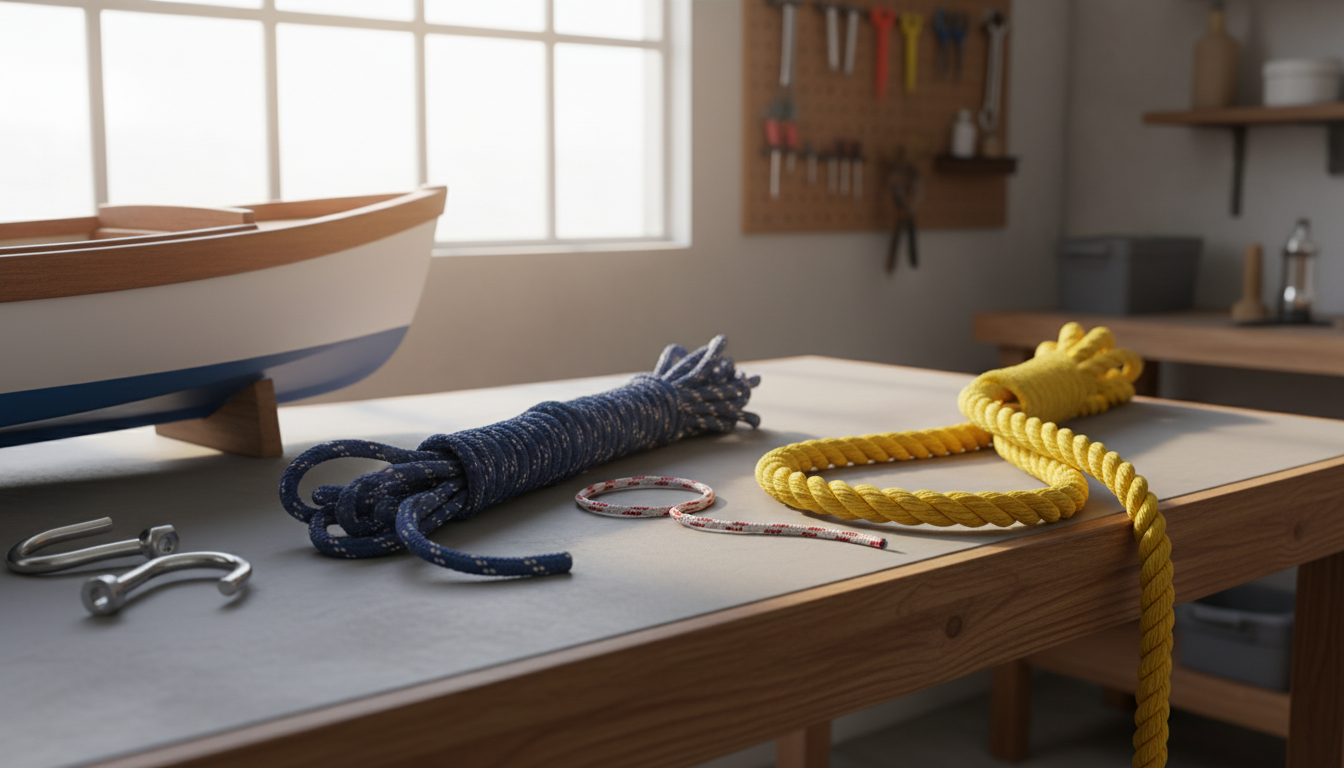
Double braid consists of a tightly woven core wrapped by a protective outer cover. This sandwich‑like structure gives the line a higher tensile rating, a smoother feel in the hands, and noticeably less elongation when a sudden load hits. These qualities matter significantly when you’re hoisting a sail or securing a heavy dock line due to enhanced strength and low stretch.
By contrast, a 3‑strand rope is built from three yarns twisted together in a helical pattern. This traditional construction keeps production costs down, makes splicing a breeze with an eye splice, and offers a familiar aesthetic. Many traditional riggers still prefer it for its economic benefits and ease of repair.
Double Braid
Strength-Focused Construction
Higher strength
Core-cover design delivers up to 15% more tensile strength than comparable 3‑strand ropes.
Low stretch
Tight braiding reduces elongation, giving steadier handling under load and greater control.
Smooth handling
Rounded surface resists kinking and feels easier to coil or splice, enhancing user experience.
3-Strand
Economy and Versatility
Cost-effective
Simpler twist requires less material and lower manufacturing cost, offering economic advantages.
Easy splicing
Traditional lay allows quick eye splices for on-site repairs, a major benefit for maintenance.
Classic look
The familiar twisted appearance appeals to traditional riggers who value classic marine aesthetics.
So, how does double braid compare to 3‑strand marine rope? In a nutshell, double‑braided lines win on strength, low stretch, and smooth handling. They offer superior performance for demanding tasks. In contrast, 3‑strand ropes excel in price, ease of splicing, and the timeless look many boat owners still favour. iRopes provides various customisation options, including strand count and core type, to meet diverse performance needs.
Quick Tip
If your primary load is steady and you need minimal elongation, choose a double‑braided polyester for a 5/8" dock line. When budget and quick repairs dominate the decision, a 3‑strand nylon or polypropylene works well for 1/4" utility lines.
With the construction choice clarified, the next step is to match the right 5/8" marine rope to the heavy‑duty tasks it will face on board. iRopes provides customised design solutions that align with customer branding and specific needs for all product categories.
Selecting the Ideal 5/8 Marine Rope for Heavy‑Duty Tasks
Now that you understand how double‑braid and 3‑strand constructions differ, let’s look at situations where a 5/8" line truly proves its worth. Large cruising yachts, commercial workboats, and offshore support vessels all rely on a rope that can absorb sudden loads, resist relentless UV exposure, and stay reliable after years of saltwater immersion. Typical heavy‑duty tasks include primary dock lines for vessels over 30 ft, anchor rodes that must hold the vessel in stormy weather, permanent mooring lines on permanent berths, and towing ropes. These applications depend on robust, weatherproof rope to prevent accidents and ensure safety. iRopes delivers high‑quality rope products for diverse industries, including yachting and defence.
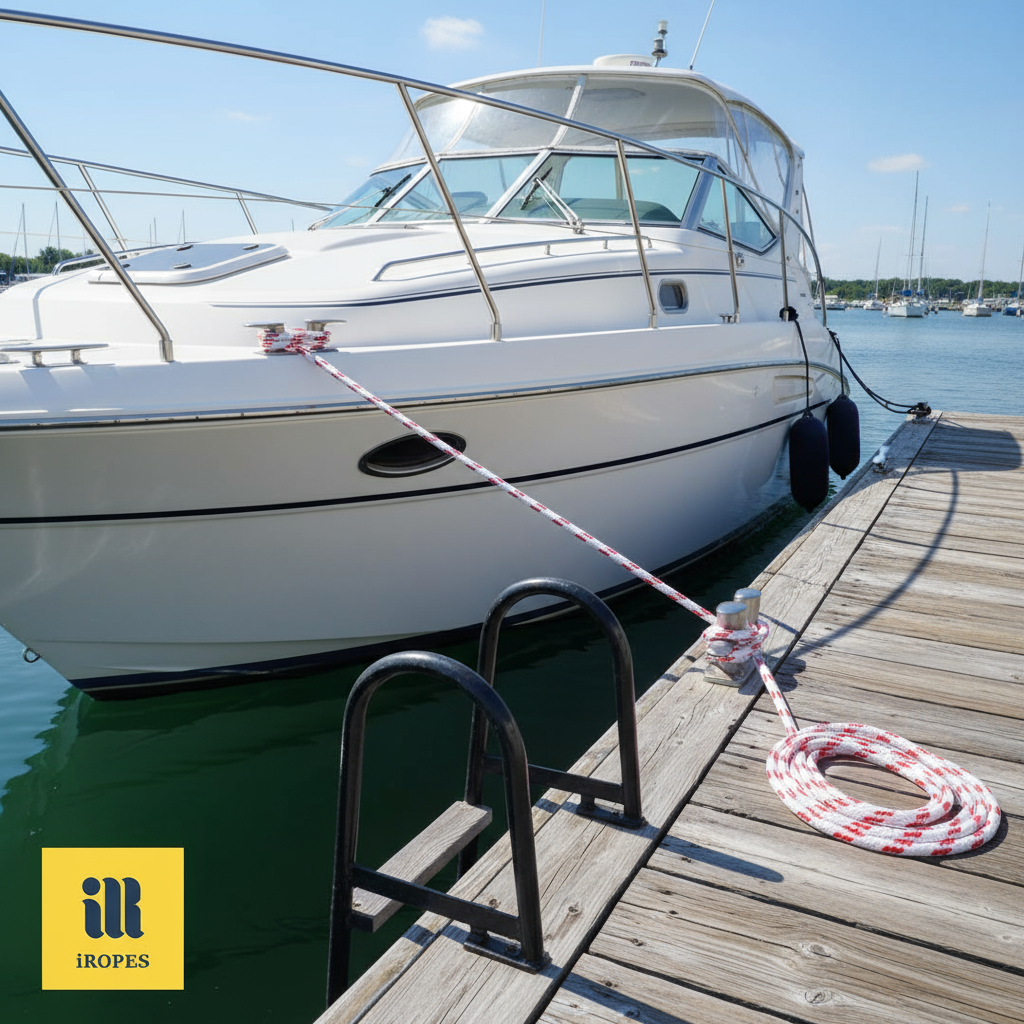
Choosing the right material‑construction pairing is the next decision point. Below are the most common combinations that balance performance with cost for 5/8" lines. For those needing superior mooring performance, our high‑strength double‑braided marine rope for mooring offers the durability and load capacity required for permanent installations.
- Double‑braided polyester – excels in UV resistance and low stretch, making it perfect for permanent dock and mooring lines where stability is paramount.
- Double‑braided nylon – offers high elasticity and shock absorption, making it ideal for tow ropes that encounter sudden jerks and require flexibility.
- 3‑strand polypropylene – is lightweight and buoyant, useful for temporary utility lines where flotation is a critical benefit.
Understanding breaking strength and working‑load limits (WLL) helps you match the rope to the vessel’s size. For a 5/8" diameter, you can expect the following typical ranges from iRopes' high‑quality products:
- Polyester double‑braid – breaking strength roughly 12,000–13,000 lb; WLL about 2,400–2,600 lb.
- Nylon double‑braid – breaking strength around 13,000–14,000 lb; WLL approximately 2,600–2,800 lb. This option also offers the added benefit of 15-30% elongation under sudden load.
- Polypropylene 3‑strand – breaking strength near 9,000–10,000 lb; WLL approximately 1,800–2,000 lb. This rope floats if it goes overboard, offering an additional safety feature.
These figures illustrate why a larger diameter is favoured for heavy‑duty tasks: the higher tensile capacity provides a comfortable safety factor, especially when you factor in dynamic loads from waves and wind. iRopes ensures certification and compliance for ropes to meet required industry standards.
Even the best‑engineered rope will degrade if you neglect routine care. Follow these maintenance habits to keep your weatherproof rope performing at peak level. This preserves the quality and longevity provided by precision manufacturing at iRopes.
- Rinse with fresh water – removes salt crystals after each outing, preventing corrosion of the fibre surface.
- Inspect for abrasion – look for worn spots, especially where the line contacts cleats or chocks; replace sections before the damage spreads.
- Store off the ground – coil the rope loosely and keep it in a shaded, dry area to minimise UV exposure when not in use.
- Apply UV‑protective spray – occasional re‑application of a marine‑grade UV inhibitor prolongs the coating’s effectiveness and extends durability. For more on anchor‑rope care, see our essential tips for choosing and maintaining boat anchor ropes.
When you align the application, material, construction, and maintenance plan, the 5/8" rope becomes a reliable partner for any heavy‑duty marine operation. If you need a customised solution that meets these exact parameters, partnering with a specialist manufacturer like iRopes can turn your specifications into a rope that perfectly fits your fleet. iRopes is committed to being a strategic partner, offering competitive pricing, timely delivery, and dedicated IP protection.
Looking for a customised marine rope solution?
Need a tailored recommendation? Complete the form above, and our specialists will help you select the ideal material and size for your project. iRopes provides comprehensive OEM and ODM services, focusing on wholesale customers who require customised rope solutions.
By now, you understand that a truly weatherproof rope is essential for saltwater and UV exposure, and that material choice drives performance. For light‑duty work, a 1/4 marine rope in nylon offers elasticity, polyester gives low stretch and UV stability, while polypropylene provides buoyancy and cost‑effectiveness. When higher load capacity is required, a 5/8 marine rope—typically double‑braided polyester for durability or double‑braided nylon for shock absorption—delivers the strength and longevity needed. For broader material insights, see our 5 best tug‑boat rope materials guide. iRopes is your trusted partner for high‑quality, custom ropes, backed by ISO 9001 certification and a dedication to customer satisfaction.
