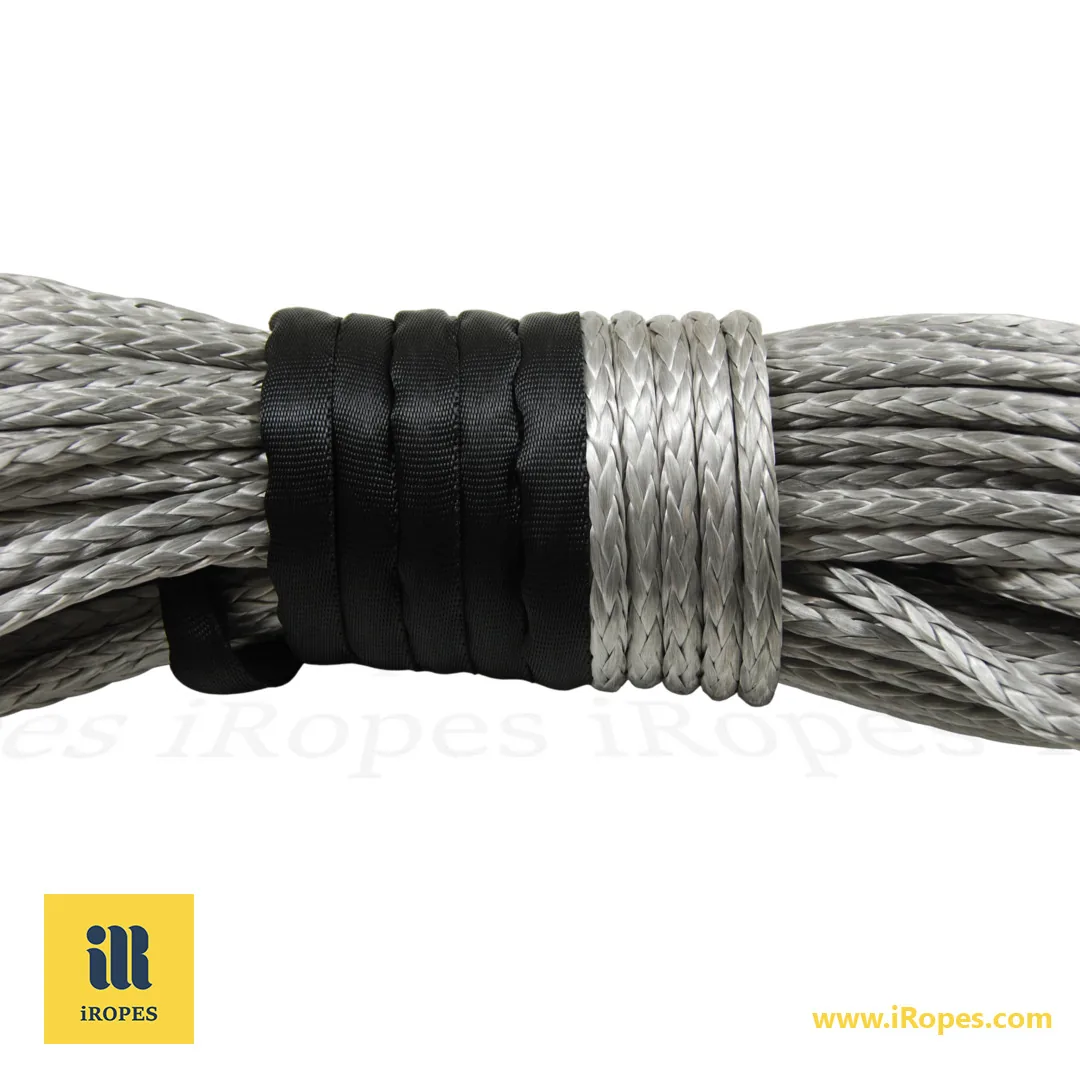
⚠️ Non-compliant ship ropes risk fines up to $10,000 per violation under MEG4 regulations. Yet, choosing the correct types—from nylon's 30% stretch to UHMWPE's unmatched strength—ensures vessel safety and helps avoid penalties.
Unlock Compliance in ~15 Minutes: Essential Benefits for Your Operations
- ✓ Distinguish natural vs. synthetic fibres—gain 25% better durability insights to select abrasion-resistant options like polyester, potentially slashing replacement costs by up to 40%.
- ✓ Master construction methods—learn how twisted vs. braided impacts handling, acquiring skills to meet MEG4 standards and prevent failures from 75% strength loss.
- ✓ Classify by function and location—solve mooring, lashing, and safety rope challenges, ensuring regulatory alignment that dramatically cuts compliance risks.
- ✓ Implement maintenance protocols—discover inspection routines backed by ISO 9001 expertise, extending rope life 2-3 times and shielding against hefty fines.
You might assume all ship ropes perform equally under strain. However, data reveals that mismatched types cause 80% of undetected failures, leading to MEG4 violations. Imagine a mooring line snapping in a swell, costing thousands in damages and fines. What if understanding just one overlooked classification could transform your fleet's safety? Dive in to uncover the precise rope selections and iRopes' custom solutions that resolve these hidden threats before they escalate.
Types of Ropes Used Onboard Ship: Natural vs. Synthetic Fibres
Building on the essential role ship ropes play in maritime safety and compliance, let's explore the core distinction that shapes their performance: the materials they're made from. Natural and synthetic fibres each offer unique traits, influencing everything from strength to how they handle harsh sea conditions. Understanding these differences helps crews select ropes that not only meet operational needs but also align with regulations like MEG4, helping sidestep hefty fines.
Start with natural fibre ropes, which have been maritime staples for centuries. Derived from plants, these options offer a tactile, traditional feel but come with limitations in modern, demanding environments.
- Manila: Sourced from abaca plants, it provides solid tensile strength but absorbs water, swelling up to 10-15% and losing some grip when wet. Traditionally used for mooring and rigging on older vessels, its natural rot resistance made it reliable in saltwater.
- Sisal: Made from agave plants, this coarse rope boasts moderate strength but high water absorption, making it prone to mildew in damp storage. It is typically seen in lighter rigging tasks, though less common today due to faster degradation.
- Coir: From coconut husks, coir stands out for its buoyancy and elasticity, resisting abrasion better than many natural ropes. Historically favoured for towing warps and mooring springs on smaller craft where flotation is crucial.
- Hemp: Derived from cannabis sativa, it offers flexibility and low water absorption, avoiding much shrinkage. Once essential for sailing ship rigging, its fine texture aided in knotting, but its availability has dwindled.
Shifting to synthetic fibre ropes, these engineered materials dominate today's fleets due to their reliability and longevity. They resist environmental wear far better, frequently lasting years longer than natural ropes while maintaining consistent performance.
Nylon leads with exceptional shock absorption—stretching up to 30% under load, making it ideal for dynamic mooring where waves pull unpredictably. Polyester follows as an all-rounder, possessing low elongation (around 12-15%) for stable holds, plus top-tier UV and abrasion resistance that keeps it viable in sunny, rough ports. Polypropylene shines for its lightweight buoyancy and chemical tolerance, perfect for temporary lashing without sinking if dropped overboard, though it melts at just 165°C near heat sources. For premium needs, UHMWPE (like Dyneema) delivers unmatched strength-to-weight—up to 15 times stronger than steel wire by weight—with minimal 3-4% stretch and superior durability against cuts and fatigue, suiting heavy offshore mooring. Kevlar, meanwhile, excels in extreme heat (up to 500°C) and cut resistance, though its rigidity demands careful handling in winch applications.
What are the different types of ropes used in ships? Broadly, they fall into natural fibres like manila and sisal for heritage uses, synthetics such as nylon and polyester for everyday reliability, and specialised options like UHMWPE for high-stakes tasks. To clarify choices, consider how these stack up on critical traits.
Natural Fibres
Strength-to-weight: Moderate; Elasticity: Low to medium; Abrasion resistance: Fair, degrades faster; Buoyancy: Varies, often sinks when wet.
Key Drawback
High water absorption leads to rot and a reduced lifespan in marine settings.
Synthetic Fibres
Strength-to-weight: High to exceptional; Elasticity: Varies (nylon high, UHMWPE low); Abrasion resistance: Excellent; Buoyancy: Often floats (e.g., polypropylene).
Key Advantage
UV and chemical resistance ensures longevity, significantly cutting replacement costs.
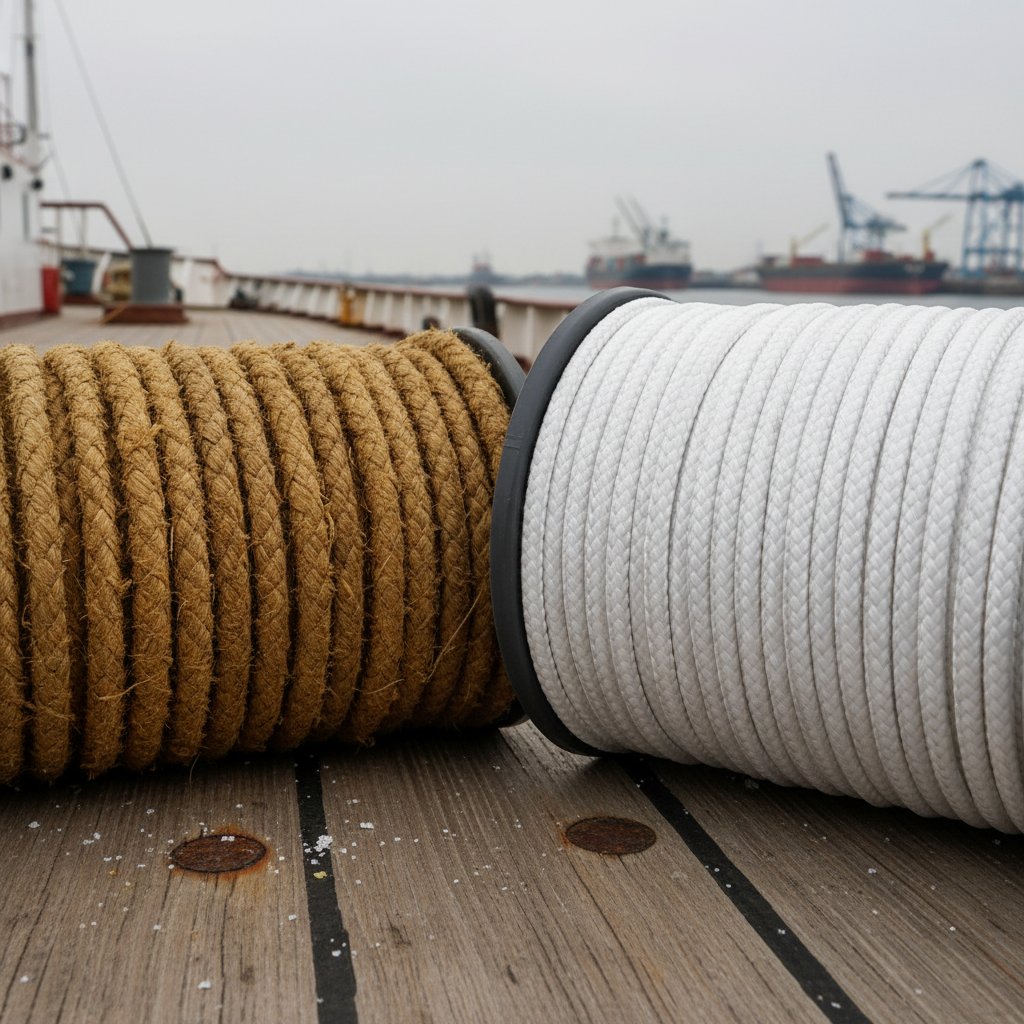
Do not overlook wire or metal ropes for ultra-heavy lifting, such as crane operations; these are constructed from steel strands for immense load-bearing. However, they lack the flexibility of fibres, making them unsuitable for shock-heavy tasks like docking. As we can see, material choice sets the foundation, but how these fibres are woven together next determines their real-world handling on board.
Types of Rope in Ship: Construction Methods and Their Impact
Material choice sets the foundation for any rope's performance, but the way those fibres are assembled—whether twisted or braided—truly defines how it behaves under pressure at sea. This construction isn't just about appearance; it directly affects everything from ease of use to how well the rope holds up against waves and wind, keeping operations compliant and crews safe. Let's break down the main methods and see why they matter for ships.
Twisted, or laid, ropes form the backbone of traditional marine work. Strands are spun together in a helical pattern, creating a rope that looks like a sturdy spiral. This design makes them straightforward to splice—essentially weaving ends together for a seamless join that is as strong as the rest. They are a common choice for classic tasks where reliability is prioritised over aesthetics.
- Hawser Laid: Three strands twisted right-handed, common for mooring where flexibility helps absorb docking jolts.
- Cable Laid: Multiple twisted groups combined into a larger rope, ideal for heavy towing due to its balanced strength.
- Shroud Laid: Four strands for added stability, frequently used in rigging standing parts that need to resist side loads without kinking.
Braided ropes, on the other hand, weave strands in an interlocking pattern, resulting in a smoother, more compact build. This reduces snagging on cleats or winches and helps prevent the ends from fraying easily, even after heavy use. Modern ships favour them for dynamic rigging where quick adjustments are essential.
The braided family includes several styles, each tuned for specific needs:
- Solid Braid: Tightly woven for all-purpose handling, suitable for temporary lashings that demand grip without bulk.
- Diamond Braid: A crisscross pattern offering even flexibility, ideal for running lines that slide smoothly through blocks.
- Double Braid: Features an outer sheath over a core for balanced strength, perfect for halyards where both stretch control and abrasion protection are crucial.
- Hollow Braid: Tubular and lightweight, excellent for splicing over fittings in control lines.
- Eight-Plait: Multi-strand for superior torque resistance, used in anchors to minimise spinning under load.
Construction shapes more than just appearance—it influences handling on deck, how strength holds over time, and alignment with standards like MEG4. MEG4 mandates that ropes maintain safe load-bearing capabilities without sudden failure. Twisted ropes, with their open structure, allow better inspection for internal wear but can lose tension if not re-twisted. Braided versions retain shape longer but can conceal damage until it's advanced. For compliance, choosing the right build ensures the rope's minimum breaking load remains above vessel requirements, thus helping avoid fines from overlooked degradation.
What makes twisted versus braided rope suitable for different marine applications? Twisted ropes excel in static roles like long-term mooring, where splicing repairs are feasible, and the rope's give mimics natural fibre traditions. Consider securing a freighter overnight without constant checks. Braided ropes, with their sleek profile, suit active setups such as sail adjustments or cargo shifts, offering less drag and quicker deployment but often requiring specialised tools for joins. Imagine a stormy approach: a twisted hawser absorbs surges reliably, while a double-braided line whips through pulleys without jamming. Each prevents mishaps that could trigger regulatory scrutiny.
Twisted Ropes
Traditional Strength
Easy Splicing
Allows field repairs without special tools, vital for remote voyages.
Balanced Flexibility
Handles shock loads well in mooring, reducing snap risks.
Visible Wear
Open design aids quick checks, supporting MEG4 inspections.
Braided Ropes
Modern Efficiency
Smooth Handling
Glides through gear, speeding up rigging in tight spots.
High Retention
Maintains shape under repeated use, extending service life.
Secure Ends
Resists unravelling, minimising downtime during operations.
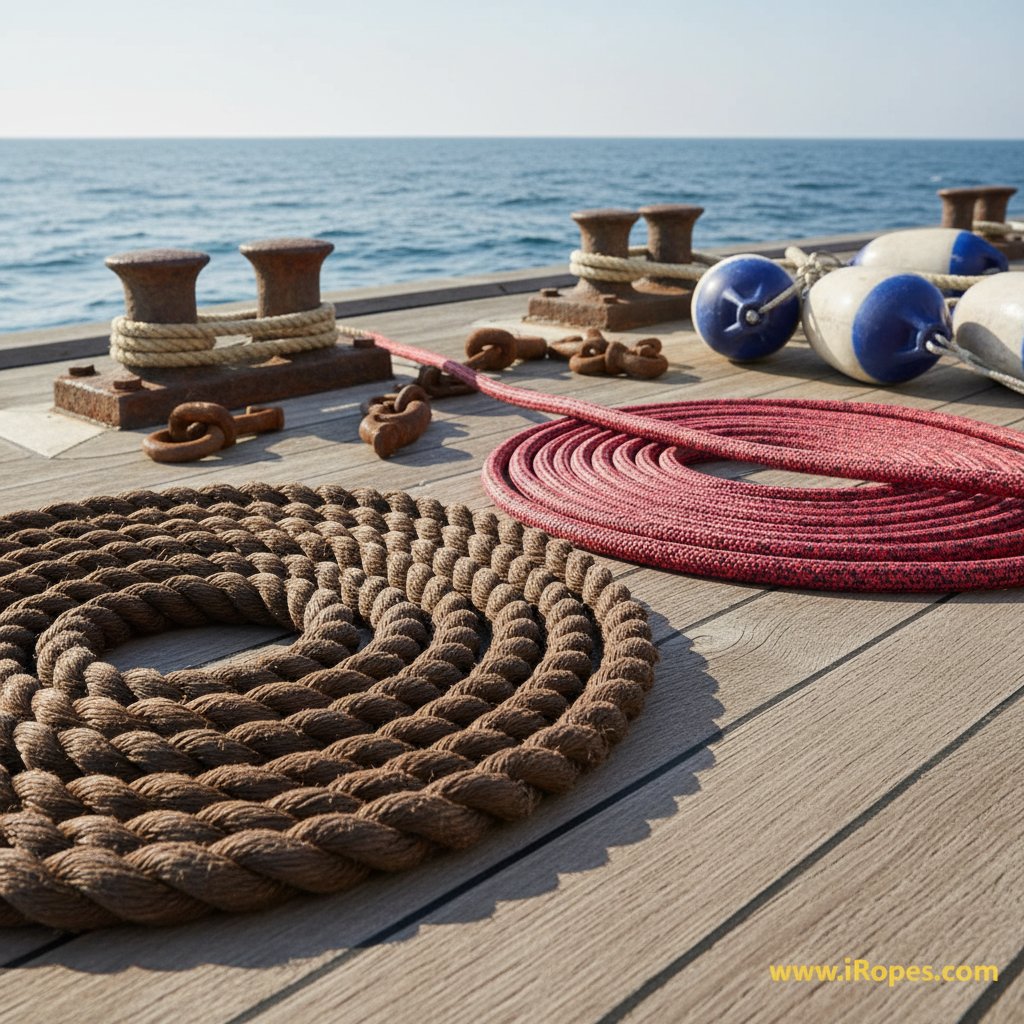
Grasping these construction methods makes it possible to match ropes to exact roles, whether tying down cargo or launching a lifeboat, ensuring every line serves its purpose without compromising safety.
Rope in Ship: Classifications by Function and Location
Understanding rope construction shows us how fibres come together for strength. Now, let’s consider where and how those lines actually function on a vessel. Ships rely on ropes tailored to precise tasks and locations, from holding position in choppy waters to securing heavy gear during rough hauls. This classification by function and location ensures everything stays in place, directly tying into compliance with guidelines that prevent fines for unsafe setups. Selecting the right type here isn't just practical—it's about keeping operations smooth and legal.
Mooring lines top the list for securing vessels to docks or buoys, demanding ropes that handle tidal pulls and sudden gusts without snapping. High-elongation nylon excels here, stretching to absorb shocks from waves, much like a car's suspension system smooths out bumps on a potholed road. In contrast, low-stretch polyester offers rock-solid stability for longer holds, resisting creep over days at port. These choices align with MEG4 guidelines, which specify minimum breaking loads (MBL) based on vessel weight to avoid overload risks. Have you ever watched a ship nudge against a pier in a storm? The right mooring rope makes that contact forgiving, not catastrophic.
What are the three main types of marine mooring ropes? They generally boil down to nylon for its energy-absorbing give, ideal on larger ships facing heavy surges; polyester for steady tension in calmer conditions or for smaller craft; and polypropylene for lightweight, floating options that suit modest vessels in mild environments. Tailor the choice to your ship's size and local waters—nylon might flex too much on a rigid yacht, while polypropylene's buoyancy prevents underwater snags during manoeuvres.
- Nylon Mooring Lines: Up to 30% stretch under load, perfect for dynamic docking where energy dissipation reduces stress on hulls.
- Polyester Mooring Lines: Around 12% elongation, providing firm holds with less rebound, suitable for extended berthing.
- Polypropylene Mooring Lines: Floats and resists chemicals, a budget-friendly choice for temporary ties in protected areas.
For cargo lashing and securing, abrasion-resistant polypropylene is often used to bind loads against deck shifts, its toughness shrugging off scrapes from shifting containers. Regulations require these ropes to meet specific strength thresholds, with mandatory inspections for cuts or wear to avoid penalties. Consider a loose crate sparking a chain of violations during a port audit. On deck, these lines form a web that keeps everything secured, even as the ship rolls in swells.
For lifeboat falls and pilot ladders, ultra-high-molecular-weight polyethylene (UHMWPE) steps in with its featherlight durability and low 3-4% stretch, ensuring quick, reliable deployment. These critical safety systems demand certifications like those from the International Maritime Organization (IMO), focusing on fall prevention through routine checks for kinks or fading. Picture a crew scrambling to a tender in an emergency; this rope's reliability means it won't fail mid-descent, upholding protocols that inspectors scrutinise closely.
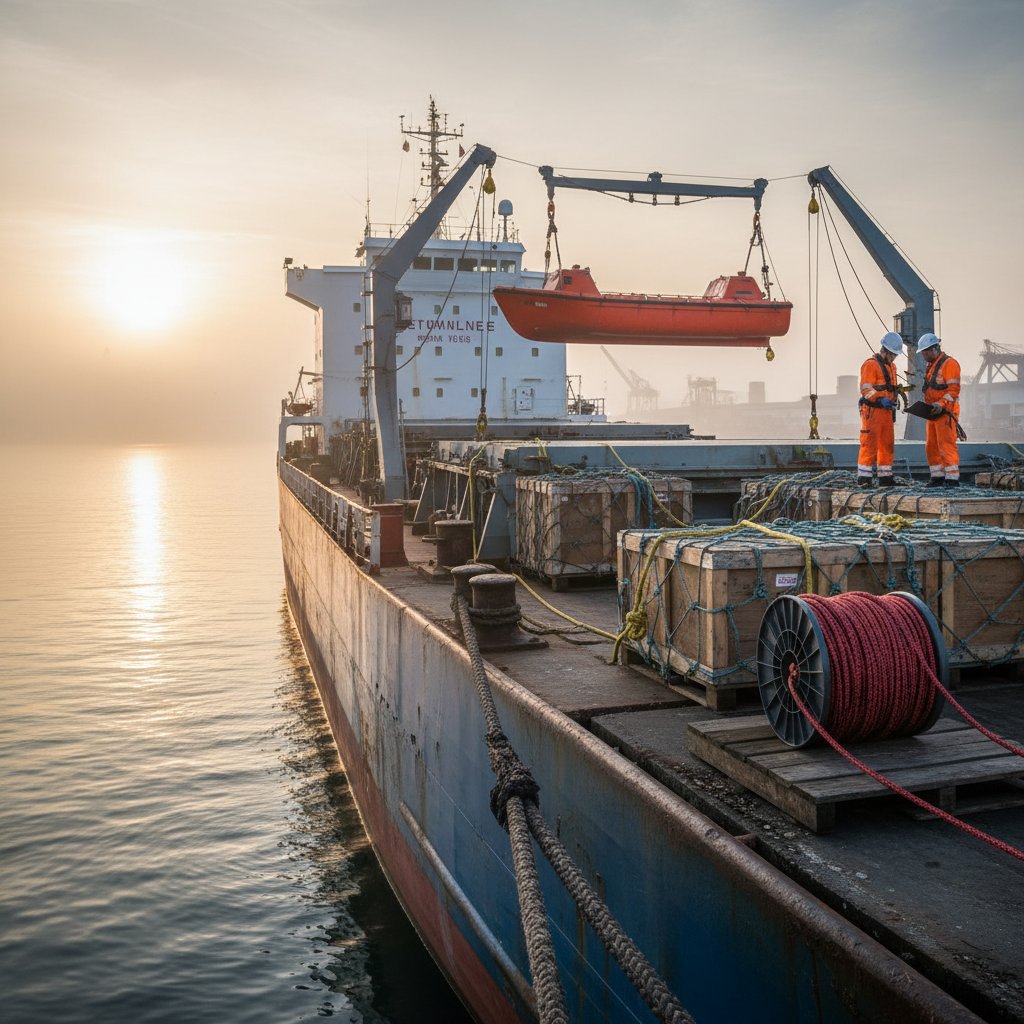
These placements highlight how a single material or construction might not fit every job. They also underscore the importance of inspections and upkeep to catch issues before they lead to regulatory headaches.
Regulatory Compliance and Maintenance to Avoid Fines with Ship Ropes
While optimising rope placement is crucial, even the perfect rope won't help if it falls short on regulatory standards or goes unchecked for too long. On commercial vessels, overlooking compliance can lead straight to fines that hit hard—think thousands in penalties from port authorities or classification societies. Let's walk through the key rules and routines that keep your lines in line, drawing from guidelines like MEG4 to ensure your setup stays safe and legal.
MEG4 sets the benchmark for rope selection in mooring and towing, focusing on the minimum breaking load, or MBL, which is the force a rope can handle before snapping. For instance, it requires lines rated well above your vessel's expected loads, often 1.5 to 2 times the safe working load, to account for surprises like sudden storms. Here's a critical cutoff: replace any rope once its strength drops to 75% of the original MBL, as testing shows that's when hidden wear compromises safety. What are the MEG4 guidelines for ropes? They essentially dictate that every line must match your ship's design specifications for safe operation, preventing overloads that could endanger crew or cargo. Skipping this invites audits that expose non-compliance, turning a routine docking into a costly headache.
Under MEG4, mooring ropes must undergo proof loading tests to verify MBL. Failure to document this can result in immediate operational halts and fines up to $10,000 per violation.
Inspection protocols form the frontline defence, demanding regular visual and hands-on checks for issues such as fraying at ends, chafe from rubbing against bollards, or UV damage that stiffens fibres over time. For mooring setups, lashing systems, and safety gear like lifeboat falls, crews should log these weekly on larger ships, noting any cuts or discolouration that signal trouble. Commercial vessels need this paperwork trail—including photographs or checklists—to prove diligence during flag state inspections. Have you ever felt that twinge when uncoiling a line and spotting a weak spot? Catching it early avoids the drama of a parted rope mid-manoeuvre.
Maintenance best practices ensure inspections are straightforward and extend your ropes' life. Start with gentle cleaning using fresh water and mild soap to rinse off salt buildup, then air-dry in shade to prevent further UV harm—avoid harsh chemicals that could weaken synthetics. Store coils loosely hung in dry, ventilated lockers away from direct sun or rodents. Handle with care to prevent kinks that create stress points. Don't forget personal protective equipment (PPE): thick gloves guard against snaps, while helmets and sturdy boots protect during heaving lines. In emergencies, such as a fouled anchor, have quick-release knots ready and clear communication to avoid tangles that escalate risks. How do you maintain ship ropes? Consistent habits like these not only fend off accidents but also help shield against penalties for neglect.
- Weekly Visual Scans: Look for external wear like fuzzing or flat spots.
- Monthly Load Tests: Tug gently to feel for internal softening.
- Quarterly Deep Cleans: Rinse and inspect splices for separation.
For wholesale buyers seeking long-term reliability, iRopes provides OEM and ODM services that tailor ropes to your exact compliance needs. This involves selecting materials like low-stretch polyester for stable mooring, adjusting diameters from 16mm to 100mm for load precision, and incorporating certifications that meet or exceed MEG4 standards. We also offer branding options, from subtle logos on packaging to reflective tracers for night operations, all while protecting your intellectual property (IP) in our ISO 9001-certified facilities. Picture outfitting a fleet with custom lines that arrive pallet-ready for global ports—it’s how we help turn potential fines into seamless, efficient voyages.

Layering these compliance steps and upkeep routines builds a robust system that not only helps avoid fines but also fosters trust in every line you deploy, setting the stage for smarter partnerships in marine gear.
Navigating the types of ropes used onboard ship requires understanding natural versus synthetic fibres and construction methods like twisted hawser or double-braided designs, which profoundly impact strength and handling in maritime operations. From high-elongation nylon for shock-absorbing mooring lines and abrasion-resistant polypropylene for cargo lashing to durable UHMWPE in lifeboat falls and pilot ladders, selecting the right types of rope in ship ensures compliance with MEG4 regulations, including minimum breaking loads and 75% strength replacement thresholds. Regular inspections for fraying, chafe, and UV damage, coupled with proper maintenance protocols, prevent fines and enhance safety on commercial vessels.
As we've explored the critical role of rope in ship systems by function and location, partnering with iRopes for tailored OEM/ODM solutions can align these essentials with your vessel's needs. We offer ISO 9001-certified customisation in materials, diameters, and branding for global efficiency.
Need Custom Ship Rope Solutions? Get Personalised Guidance
If you're seeking expert advice on customising ropes for your specific maritime requirements, including compliance-focused designs, fill out the inquiry form above to connect with iRopes' specialists for personalised support.