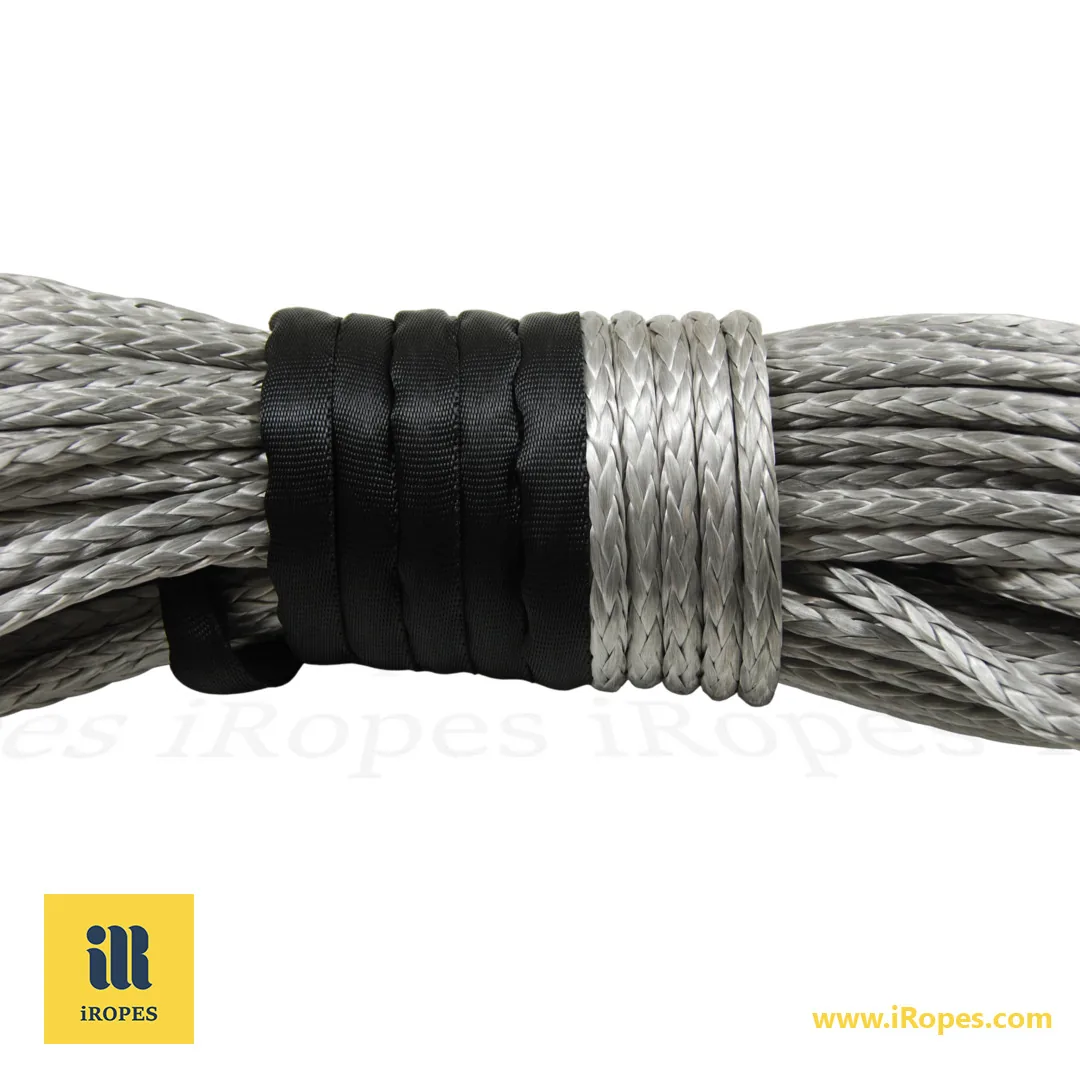
UHMWPE rope offers up to 15× the strength‑to‑weight ratio of steel and is dramatically lighter, reducing handling effort and lifecycle cost, while remaining available in bright‑white for high visibility.
What you’ll gain – approx. 3 min read
- ✓ Far higher strength‑to‑weight ratio, enabling heavier lifts with smaller diameters.
- ✓ Significantly fewer corrosion‑related failures with no rust maintenance.
- ✓ Faster installation thanks to low mass and flexible handling.
- ✓ Lower total cost of ownership across material, transport and upkeep.
You might assume steel is the undisputed champion for heavy‑duty lifts. However, white UHMWPE rope often outperforms it in many applications. In this guide, we compare white nylon twine, white poly rope and white shock cord, then weigh UHMWPE rope against steel wire rope. Keep reading to see the key metrics and how iRopes can customise a high‑visibility solution for your operation.
White Nylon Twine – Definition, Specs and Key Applications
White nylon twine is a lightweight, high‑visibility cord made from polyamide‑6 (PA‑6) or PA‑6.6, usually supplied in a bright white colour with a UV‑stabilised coating. It is offered in diameters from 2 mm to 6 mm, providing enough strength for many everyday tasks while remaining easy to see.

How strong is white nylon twine and what is its break load? A 5 mm strand typically reaches a break strength of roughly 950 kg (2 100 lb). Using a safety factor of five, the working load limit is about 190 kg (420 lb). For a quick check, divide the quoted break strength by your safety factor — for a 6 mm rope rated at 1 200 kg, a 5‑to‑1 factor yields a safe working load of 240 kg. Tensile performance for ropes is commonly characterised under standards such as ASTM D 4261 for nylon rope and ASTM D 2256 for yarn testing.
- Material – PA‑6/6.6 nylon with UV stabiliser
- Diameter range – 2 mm to 6 mm
- Break strength – 800 kg to 1 200 kg (1 760‑2 650 lb)
- Working load limit – typically 10‑20 % of break strength (safety factor 5‑10)
- Typical applications – packaging, kite‑line, crafts, light‑duty rigging
Because it combines strength with a bright colour, white nylon twine is favoured for packaging pallets, flying lightweight kites, assembling craft projects, and securing modest loads on temporary rigging. Its modest stretch (30‑40 %) gives a helpful amount of give without compromising control, which is why many DIY enthusiasts reach for it when a visible, reliable line is needed.
"Nylon’s higher tensile strength makes it ideal for load‑bearing applications, but polypropylene’s low density and inherent buoyancy give it a clear advantage in marine environments." — Dr. Alan Harper, Materials Engineer (ASTM Committee)
When you need a rope that floats and stays affordable, the next option to explore is white poly rope, which offers buoyancy without sacrificing basic strength. This lighter, floatable alternative sets the stage for the dynamic choices covered later in the guide.
White Poly Rope – Lightweight, Floatable and Cost‑Effective Features
After seeing how a bright, buoyant line can simplify a job, you’ll notice that white poly rope takes the idea a step further. Its low‑density construction means it not only stays on the surface of water but also reduces the overall weight you have to handle, making transport and installation feel almost effortless.

Polypropylene (PP) gives the rope a density of roughly 0.91 g/cc, which is lighter than water and most other synthetic fibres. That single property translates into three practical advantages you’ll feel on the job:
- Buoyancy – the rope naturally floats, eliminating the need for additional flotation devices.
- Corrosion and chemical resistance – it resists saltwater and many chemicals; UV‑stabilised grades offer excellent weathering outdoors.
- Cost efficiency – manufacturing uses economical material, keeping the price per foot below many comparable fibres.
Strength‑wise, white poly rope typically delivers a break load between 300 kg and 800 kg (660‑1 760 lb), depending on the chosen diameter. Sizes run from 3 mm up to 12 mm, so you can match the line to anything from lightweight boat‑deck ties to medium‑duty offshore moorings. When you calculate the working load limit, divide the quoted break strength by a safety factor of five — a 6 mm strand rated at 500 kg would safely support about 100 kg (220 lb) of static load.
Pricing is another reason the material shines. Retail listings show a range of US $0.03 to $0.09 per foot, which is noticeably lower than the $0.04‑$0.12 range you see for white nylon twine. That gap widens further when you order in bulk, making white poly rope the go‑to choice for projects where budget and buoyancy matter most.
Because of its chemical inertness, the rope thrives in marine environments, offshore platforms, and any setting where exposure to oils, fuels or salty spray is routine. It also works well in chemical processing areas where acids or alkalis could degrade metal or other synthetic fibres.
So, what’s the difference between white poly rope and white nylon rope? In a nutshell, polypropylene is lighter, floats, and resists corrosion, while nylon offers higher tensile strength and a bit more stretch. If you need a line that stays on the water’s surface and won’t rust, white poly rope is the clear winner; if your priority is maximum load‑bearing capacity, you’d lean toward white nylon twine.
Cost Snapshot
A 10‑metre coil of 8 mm white poly rope often costs around US $1‑$3, whereas the same length of white nylon twine typically lands about $1.50‑$4.00. The lighter weight also cuts shipping expenses, especially for overseas orders.
When you’ve picked the right diameter and confirmed the working load limit, the next step is to consider any custom branding or accessory options. iRopes can colour‑match the rope to your logo, add reflective strips for night‑time visibility, or terminate the ends with loops or thimbles that suit your application. This OEM/ODM flexibility — backed by ISO 9001 quality assurance, dedicated IP protection, custom packaging, and global pallet shipping — ensures the rope not only performs but also reinforces your brand identity.
With buoyancy, corrosion resistance and a friendly price tag, white poly rope often becomes the logical bridge between the lightweight nylon twine you just read about and the dynamic, stretch‑focused options that follow.
White Shock Cord – Stretchable Bungee Solution for Tie‑downs
Building on the buoyant advantages of white poly rope, the next material introduces intentional elasticity. A white shock cord combines a rubber‑filled core with a durable nylon or polypropylene jacket, delivering a stretch factor of 100‑125 %. This elasticity makes the cord behave like a bungee, absorbing sudden loads while keeping the line visible in demanding environments. Many shock cords are produced to defence and industrial expectations, and performance is commonly referenced to MIL‑SPEC B‑11879 for bungee assemblies.

When sizing a shock cord, the working load limit (WLL) is usually 5‑20 % of the quoted break strength. Break strength depends on diameter; for example, many 1/8‑inch cords rate around 250‑500 kg. Apply a safety factor of 5‑10 to set your WLL — at 400 kg break strength and a factor of eight, the WLL is about 50 kg.
High Stretch
Stretches to about 100‑125 % of its original length, absorbing shock while protecting equipment from sudden jolts.
Lightweight
Textile construction keeps mass low compared with heavier steel tie‑downs.
Marine Tie‑downs
Corrosion‑resistant jacket keeps the cord functional in saltwater without rust.
Camping Gear
Ideal for tarp‑guy‑lines, gear‑ratchets and quick‑release shelters where flexibility matters.
Beyond marine and camping scenarios, the cord finds use in defence equipment, where rapid‑release straps must survive abrupt forces without permanent deformation. Its bright white colour also enhances visibility on cluttered job sites, a safety benefit shared with white nylon twine and white poly rope.
Typical pricing for a foot of white shock cord ranges from US $0.10 to $0.25, depending on diameter and jacket material; bulk orders often qualify for additional discounts.
With its stretchable nature and predictable WLL, white shock cord bridges the gap between static ropes and fully elastic solutions. The next comparison pits ultra‑high‑molecular‑weight polyethylene (UHMWPE) rope against traditional steel wire rope, revealing where each excels in strength‑to‑weight ratio and long‑term handling.
UHMWPE rope vs steel wire rope – performance and advantage comparison
Having explored stretchable shock cord, it’s time to look at a fibre that rivals steel in strength while staying feather‑light. An ultra‑high‑molecular‑weight polyethylene rope delivers the power of high‑tech polymers, and the comparison below shows why many industries are replacing heavy wire with this bright, white alternative.

UHMWPE rope achieves a strength‑to‑weight ratio up to fifteen times higher than steel. In practice, smaller diameters can deliver very high break strengths while staying easy to handle, improving safety and productivity on site.
Durability is another arena where the polymer shines. Its surface resists abrasion, UV radiation and, crucially, corrosion — there’s no rust to fight and no galvanising required. Steel wire rope, by contrast, corrodes when exposed to moisture and needs protective coatings that add both cost and maintenance overhead.
From a cost perspective, the lower mass reduces transportation expenses and handling labour. Over the rope’s lifecycle, the absence of corrosion‑related failures and reduced maintenance can translate into a lower total cost of ownership, even if the upfront price per metre is comparable to premium steel.
UHMWPE Advantages
High‑performance characteristics
Strength
Up to 15× higher tensile strength per kilogram compared with steel, allowing lighter lifts.
Durability
Resists abrasion, UV exposure and corrosion, maintaining performance in harsh environments.
Handling
Flexes easily, needs no galvanising, and reduces installation time.
Steel Rope Limits
Traditional drawbacks
Weight
Heavy mass increases load on supports and handling equipment.
Corrosion
Requires galvanising or coating to combat rust, adding maintenance.
Cost
Higher material and lifecycle expenses due to wear and protective treatments.
iRopes extends these benefits with a full OEM programme: you can order UHMWPE rope in a crisp white colour, add your logo or reflective strip, and receive ISO 9001 documentation. The company also offers custom diameters, lengths, specialised terminations, IP‑protected designs, non‑branded or branded packaging, and direct pallet shipping worldwide — ensuring the final product matches the exact load rating and branding needs of your project. Learn more about how UHMWPE ropes outperform traditional steel cables in winching applications in our article Why Winch Wire Cable Can't Beat Our UHMWPE Ropes.
Key Takeaway
UHMWPE delivers lighter, stronger and more durable performance than steel wire rope, while lowering total cost and simplifying installation — especially when customised in white for high‑visibility applications.
For deeper insight into hoist applications, read Why UHMWPE Ropes Surpass Wire Rope for Hoist Applications, which explores load‑rating nuances and cost benefits in detail.
With these advantages laid out, the next part of the guide pulls together the main points and invites you to request a free iRopes OEM quote tailored to your specific white‑rope requirements.
Ready for a custom white‑rope solution? Request your free iRopes OEM quote below
The Essential Guide to UHMWPE Mooring Rope for Mooring Systems provides additional details on marine‑grade options and installation tips.
We’ve compared the bright, high‑visibility options — from sturdy white nylon twine and buoyant white poly rope to elastic white shock cord — before showing how UHMWPE rope excels versus traditional steel wire rope in strength‑to‑weight ratio, abrasion resistance, UV stability and corrosion‑free durability. These characteristics translate into lighter lifts, lower lifecycle costs and easier handling for demanding industrial applications.
For personalised advice on the ideal rope, custom branding or specialised terminations, simply fill in the form above and our specialists will help you design the perfect solution.