Cable pulling ropes revolutionise marine hauling and lifting by slashing friction by 25% and handling loads up to 40,000 lbs with 5:1 safety factors—transforming risky offshore operations into precise, efficient workflows you can trust.
Unlock Marine Efficiency: 8-Minute Read on Rope Innovations
- ✓ Cut downtime by 30% in submarine cable lays with low-stretch UHMWPE designs that glide through conduits without snags, saving your crew precious hours on-site.
- ✓ Boost safety margins by using abrasion-resistant hauling ropes certified to ISO 9001, preventing failures in rough seas and potentially reducing accident risks by 40%.
- ✓ Customise for your rig: tailor diameters from 1/2 to 2 inches and add thimbles for lifting, ensuring compliance and peak performance in critical salvage operations.
- ✓ Enhance visibility and branding with reflective elements and coloured patterns, making your marine projects faster and your operations distinctly yours.
Imagine battling relentless waves with ropes that fray under pressure, turning a routine haul into a near-disaster—yet 70% of marine teams still rely on generic lines that ignore saltwater's hidden toll. But what if specialised cable pulling ropes could flip that script, absorbing shocks and resisting corrosion in ways standard gear never could? Dive in to uncover how iRopes' tailored solutions—backed by real metrics—deliver the edge you need for safer, swifter offshore success.
Understanding Cable Pulling Rope in Marine Cable Installation
In the demanding world of marine operations, where every pull counts against relentless waves and corrosive saltwater, cable pulling ropes emerge as unsung heroes. Building on the challenges of harsh environments we touched on earlier, these specialised tools make installing electrical and submarine cables not just possible, but precise and safe. Think of them as the steady hand guiding massive undersea infrastructure into place, minimising risks while maximising efficiency.
A cable pulling rope is essentially a robust line designed to draw cables through tight conduits or across vast ocean floors during installation. What sets it apart are its core features:
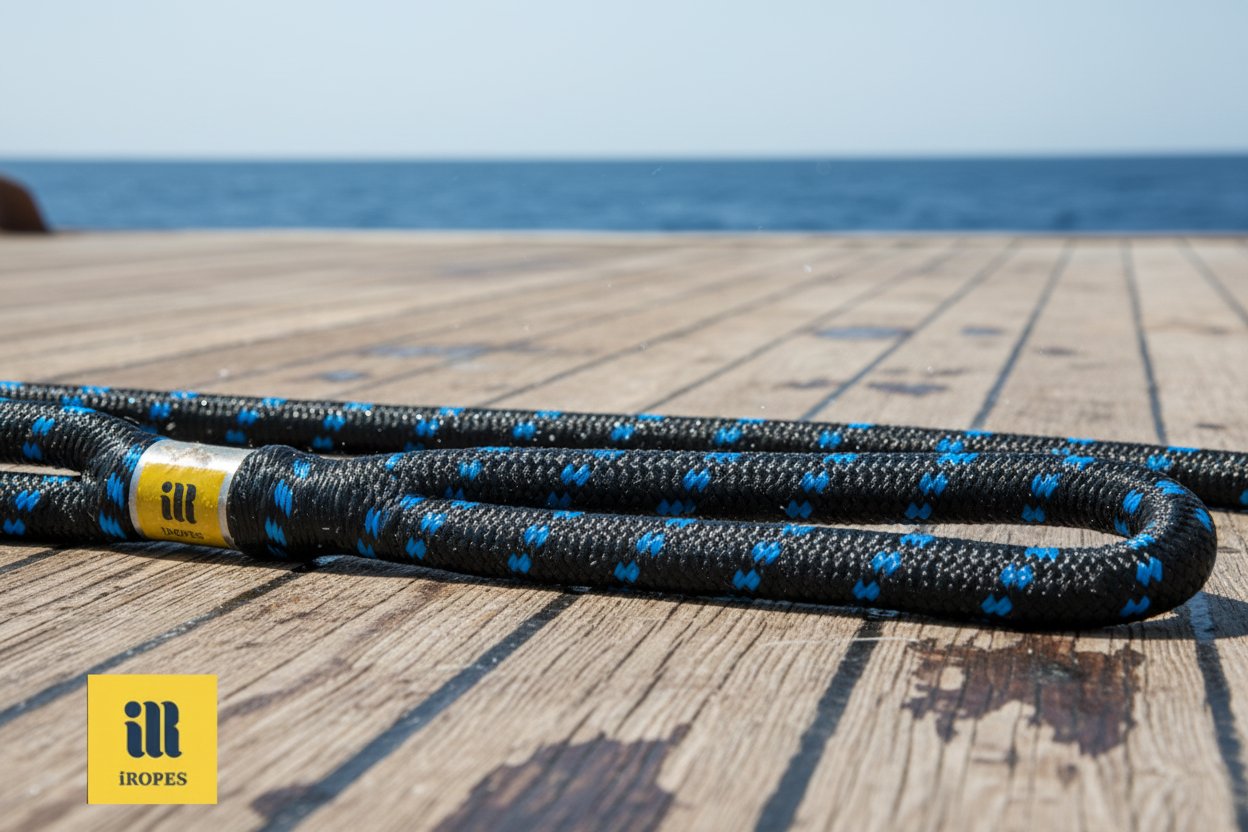
When it comes to applications in marine construction, these ropes shine when pulling heavy electrical lines through underwater conduits or across offshore platforms. Offshore wind farms, for instance, rely on them to thread power cables from turbines to the mainland, often over miles of uneven terrain. Moreover, if you're wondering about the best rope for pulling cable in such scenarios, it's typically a synthetic option like double-braided polyester. Its smooth surface glides effortlessly, reducing the snag risks that often plague rougher alternatives and ensuring smoother workflow for crews battling ocean swells.
Choosing the right specifications is key to matching these ropes to your project's demands. Common materials include polyester for its balance of strength and affordability, or ultra-high-molecular-weight polyethylene (UHMWPE) for lightweight power in extreme loads. Diameters range from 1/2 inch for lighter pulls to 2 inches for heavy-duty jobs, with breaking strengths climbing up to 40,000 pounds to support massive cable weights without compromise.
The real payoff comes in the benefits tailored for saltwater environments. These ropes cut down on friction during pulls, which means less energy wasted and fewer equipment strains. Imagine hauling a 10-tonne cable bundle without the rope binding up halfway through. Their enhanced durability also fights off saltwater's corrosive bite, lasting longer than standard lines and keeping operations humming without frequent replacements. In one project I recall from a coastal installation, switching to an abrasion-resistant model shaved hours off the timeline, turning a gruelling day into a straightforward success.
- Low Stretch Design - Prevents uncontrolled cable movement, ideal for precise submarine deployments.
- High Tensile Strength - Supports loads up to 40,000 lbs, ensuring reliability in deep-water pulls.
- Abrasion Resistance - Shields against seabed friction, extending usability in rough marine conditions.
With these foundations in place, it's clear how cable pulling ropes transform tough installations into manageable tasks. Yet, when heavier loads demand even more grit, hauling ropes step up to tackle towing and winching in the roughest seas.
The Role of Hauling Rope in Heavy Marine Operations
As we shift from the precise pulls of cable installation to the brute force needed for moving massive loads across turbulent waters, hauling ropes become indispensable. These workhorses handle the chaos of salvage jobs and construction out at sea, where every tug against a storm-swollen wave tests their limits. Unlike the smoother glides of pulling lines, hauling ropes are built to absorb punishment, turning what could be a backbreaking ordeal into a controlled operation.
At their heart, hauling ropes boast core traits that make them perfect for winching and towing in high-stakes environments like marine salvage or offshore builds. High abrasion resistance lets them scrape against barnacle-crusted hulls or rocky bottoms without fraying, while built-in shock absorption cushions sudden jerks from rolling seas. Think of it as a built-in buffer against the ocean's unpredictable punches. Moreover, their raw strength ensures they can drag anchors or tow disabled vessels without giving way, even under loads that would snap lesser lines. Have you ever seen a salvage team wrestle a sunken rig free? That's hauling rope in action, providing the reliable grip that keeps operations on track.

In marine settings, these ropes excel at anchor handling, where they manage massive chains in depths that challenge even the toughest crews, or mooring ships to platforms amid swells that could otherwise cause drift. Dragging heavy debris from wrecks or positioning equipment in construction zones also falls under their domain. They are often paired with essential handling equipment like winches and pulleys to multiply force and direct pulls precisely. Such equipment not only amplifies the rope's power but also distributes wear evenly, making long hauls less taxing on the gear and the team alike.
When selecting materials and construction, double-braided synthetics stand out for their blend of flexibility and toughness. This allows the rope to bend around sheaves without kinking while resisting UV rays that bake exposed lines and chemicals from fuel spills or rig fluids. These constructions—layers of fibres woven tightly—offer a supple feel that's easy to handle, yet they hold firm against the grind of daily use. For those wondering if such jobs are as gruelling as they sound, the right hauling rope certainly lightens the load; it eases the strain on workers by requiring less manual force, turning a potential all-day slog into efficient progress.
Performance hinges on smart metrics, like working load limits set with a 5:1 safety factor. This means the rope's breaking point is five times its everyday capacity, a crucial buffer that prevents surprises in dynamic marine conditions. For instance, a line rated for 8,000 pounds working load can snap only at 40,000 pounds, giving crews peace of mind during tows. This approach not only boosts reliability but also aligns with broader safety practices, such as monitoring for wear to avoid failures. As demands grow vertical in these settings, the focus sharpens on ropes designed for secure elevation.
- Assess Load First - Calculate expected forces including dynamic sea impacts before selecting capacity.
- Check Resistance - Ensure UV and chemical durability matches your exposure levels.
- Verify Safety Factor - Aim for at least 5:1 to cover operational surprises safely.
Lifting Rope Innovations for Safe Marine Lifting and Rigging
From the horizontal tugs of hauling in rough seas, operations often turn skyward, where lifting ropes step in to elevate heavy gear without a hitch. These innovations aren't just about hoisting loads—they're about doing it securely on swaying offshore platforms, where a single slip could spell disaster. Picture a salvage team raising a massive propeller from the ocean floor; the right lifting rope keeps everything steady, turning potential chaos into calculated precision.
At the core of these ropes are features that prioritise control and capacity. Minimal stretch means the load stays put without bouncing like a yo-yo under wave motion, while high WLL (

In salvage and construction, multi-leg synthetic crane slings made from these ropes lift everything from engines to entire modules, spreading the weight evenly to avoid overloads. Adherence to standards like ISO 9001 guarantees they're built to last, reducing the odds of mid-lift failures that could endanger crews. For those tackling heavy equipment in tight quarters, such as positioning generators on a listing barge, these slings provide the flexibility needed without sacrificing power.
Safety comes down to vigilance, especially with rules like the 3-6 wire rope guideline for inspections. This rule states to
Handling them right involves fittings that boost longevity in salty air. Thimbles reinforce eyes against crushing, shackles connect securely without slipping, and proof loading—testing to 1.25 to 2 times the WLL—confirms integrity before the real action. These steps shield against the marine world's constant assault, ensuring your setup holds when it matters most.
Core Features
Built for Elevation
Minimal Stretch
Keeps loads stable during lifts on unstable platforms, preventing dangerous swings from ocean motion.
High WLL
Supports safe capacities up to thousands of pounds, tailored to crane and hoist demands.
Key Certifications
Meets ISO 9001 and similar, verifying reliability for offshore rigging applications.
Safety Essentials
Inspection and Handling
3-6 Rule Check
Inspect for wire breaks to catch wear early, essential for wire-based lifts.
Right Regular Lay
Promotes straight pulls in overhead tasks, reducing twist risks during hoists.
Proof Loading
Tests setups beyond normal loads to ensure endurance in corrosive settings.
These elements not only safeguard operations but also open doors to fine-tuning ropes for unique marine hurdles, like varying depths or specific equipment types.
Customising Cable Pulling Rope, Hauling Rope, and Lifting Rope for Marine Success with iRopes
Those unique marine hurdles we just discussed, from unpredictable depths to specialised equipment, don't have to remain roadblocks when you partner with a manufacturer like **iRopes**. Instead of settling for off-the-shelf options that might fall short in a salvage dive or submarine cable run, customisation turns standard ropes into precision tools that fit your exact needs. At iRopes, our OEM and ODM services let you tweak everything from the basics to the fine details, ensuring your hauling rope or lifting rope performs flawlessly in the thick of offshore action.
Start with the essentials: diameter and length get dialled in based on your load and reach, whether you're threading a cable pulling rope through a narrow conduit 500 metres down or extending a hauling line across a wide salvage site. Colours can match your team's branding or boost visibility in murky waters—imagine a bright orange lifting rope that's easy to spot from the deck during a night lift. Accessories like thimbles add that extra layer of security, preventing wear at connection points during repeated pulls in submarine operations. It's all about making the job smoother; back in my days shadowing a rigging crew, seeing a mismatched accessory cause a minor snag reminded me how these small tweaks prevent bigger headaches.
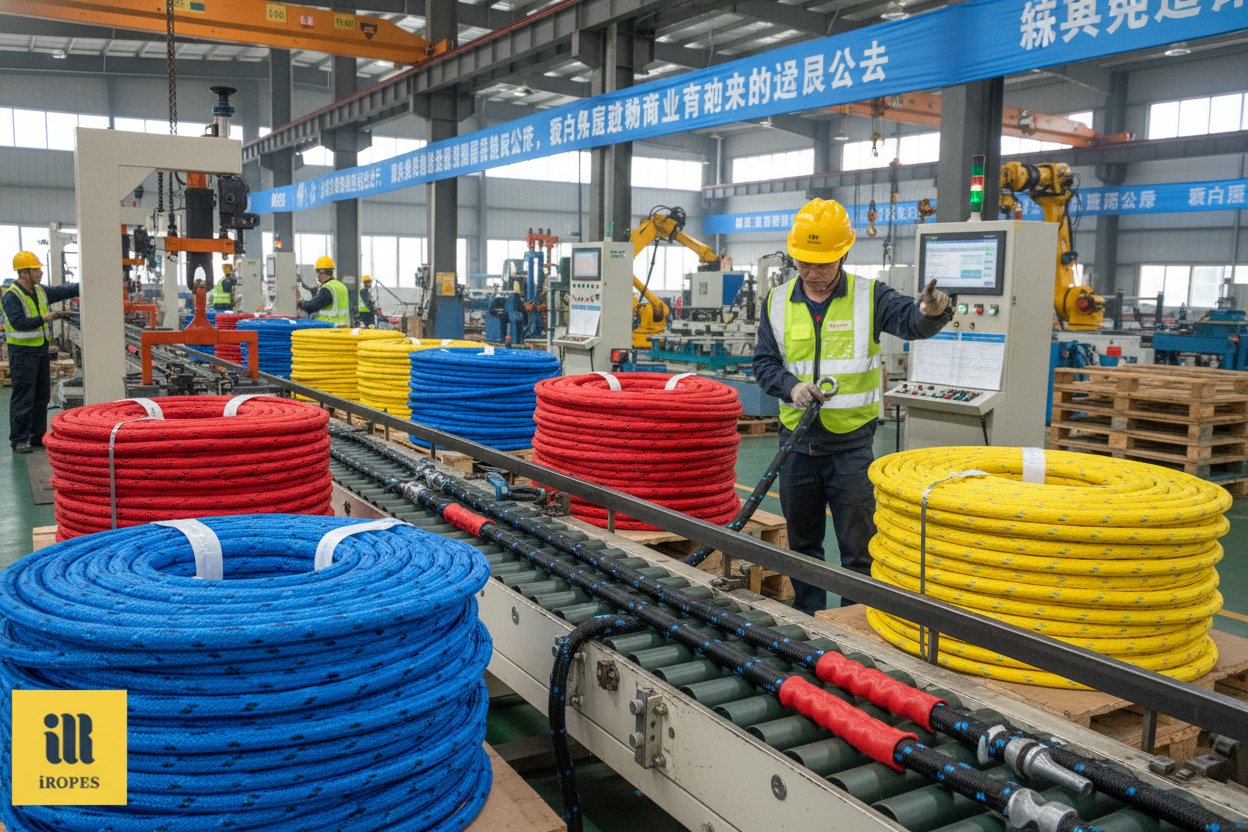
Beyond the build, iRopes prioritises your peace of mind with solid IP protection—your designs stay confidential from concept to shipment, letting you innovate without worry. For global exports, we handle branded packaging in bags, boxes, or cartons, and ship pallets directly to your warehouse in developed markets like the US or Europe. This streamlines logistics for wholesale partners, cutting out middlemen and getting your customised cable pulling ropes to site faster. To further enhance durability against abrasion in rough marine conditions, consider integrating chafe protection solutions tailored to your specific applications.
Quality isn't an afterthought; it's woven into every step with precision manufacturing in our ISO 9001-certified facilities, where skilled teams ensure each rope meets rigorous safety factors—like that 5:1 buffer for hauling loads. Timely delivery keeps projects on schedule, even for urgent salvage jobs, building reliability you can count on for industrial-scale operations.
Tailored Specs
Adjust diameter from 1/2 to 2 inches and lengths up to thousands of feet for precise submarine pulls.
Colour and Add-Ons
Custom hues and fittings like loops enhance branding and safety in salvage rigging.
Efficiency Gains
Specialised designs cut friction, speeding up marine hauling by up to 30% in rough conditions.
Risk Reduction
Built-in durability minimises downtime, lowering accident rates in lifting tasks offshore.
The payoff shows in real scenarios: one partner using our tailored lifting ropes for offshore crane work saw fewer equipment swaps, trimming downtime by days and easing the physical toll on crews—proving that when ropes match the challenge, operations transform from risky gambles to streamlined successes. This level of partnership not only boosts your bottom line but sets the stage for even greater innovations ahead.
In the challenging realms of marine hauling and lifting, a cable pulling rope with low stretch and high tensile strength up to 40,000 lbs revolutionises submarine cable laying and offshore construction by reducing friction and ensuring precise installations. For heavy operations, the hauling rope delivers abrasion resistance and 5:1 safety factors, ideal for salvage towing and anchor handling with winches and pulleys, minimising risks in rough seas. Meanwhile, the lifting rope innovation supports safe rigging on platforms, incorporating minimal stretch, ISO 9001 certifications, and handling essentials like thimbles and the 3-6 wire rule to prevent failures during vertical lifts of industrial loads.
iRopes' OEM/ODM customisation tailors these ropes—adjusting diameters from 1/2 to 2 inches, materials like UHMWPE or polyester, and accessories—for your specific marine needs, enhancing efficiency, durability against saltwater, and compliance in salvage and construction projects. This expertise ensures reliable performance, cutting downtime and boosting safety for wholesale partners worldwide.
Need Tailored Marine Rope Solutions? Get Expert Guidance
For those ready to apply these insights to your industrial marine operations, the inquiry form above connects you directly with iRopes specialists who can provide personalised recommendations on custom rope specifications and safety integrations to optimise your projects.
