Nylon's 20% stretch makes it unreliable for boat docking in winds or tides — opt for double-braided Polyester with only 8% elongation for stable control and 30% better abrasion resistance, preventing costly drifts and damage.
Unlock Safer Docking in 5 Minutes →
- ✓ Master material myths: Understand why Polyester surpasses Nylon's instability, gaining 25% more precision in challenging conditions.
- ✓ Size for success: Obtain exact diameters, such as 1/2" for 25-35ft boats, ensuring 10,000lb load safety without guesswork.
- ✓ Boost longevity: Learn quarterly inspections to cut replacement costs by 40% and prevent chafe failures.
- ✓ Customise with iRopes: Tailor OEM ropes for your fleet, incorporating UV protection and branding for wholesale reliability.
You've probably trusted Nylon's stretch for years, believing it perfectly absorbs every wave shock. Yet, that elasticity can become a liability when tides surge or winds howl, allowing your boat to drift unpredictably by up to 2 metres. What if a low-stretch alternative could securely anchor your vessel with surgical accuracy, significantly reducing risks and hassle? Dive in to uncover the counter-intuitive construction that transforms docking from dicey to dependable — and discover how iRopes crafts it precisely for your needs.
The Myth of Nylon as the Best Rope for Boat Docking
Picture this: you're pulling into your slip after a long day on the water, with waves gently lapping against the hull. You toss your lines and feel that familiar give as the boat settles. This is the appeal of nylon – it has been a go-to for boaters for decades. But is it truly the best rope for boat docking in every situation? Let's explore why this common choice might not always be optimal, particularly when safety and reliability are paramount.
Nylon excels in its elasticity, stretching up to 15-25% under load to absorb shocks from waves or sudden gusts. This characteristic makes it a favourite for calm harbours, where a degree of give prevents cleats from yanking loose. I've observed firsthand on smaller outings how nylon lines maintain stability without requiring constant adjustments. Its widespread popularity stems from this forgiving nature, making it straightforward for beginners to secure their vessel without complications.
However, that same stretch can prove detrimental in tougher conditions. Excessive elongation—sometimes exceeding 20%—may cause your boat to move too far during high winds or significant tidal shifts, increasing the risk of collisions or strain on fittings. So, what is the best material for boat dock lines? While nylon is suitable for mild scenarios, polyester often surpasses it for demanding locations. Polyester offers a lower stretch of just 5-10%, providing precise control to keep your boat securely in place without unpredictable movement. Moreover, polyester demonstrates superior resistance to UV rays, degrading slower than nylon in sunny marinas.
Nylon
Elastic and Absorbent
Shock Absorption
Stretches to handle wave impacts, reducing stress on hardware.
UV Tolerance
Moderate resistance, but fades more quickly with prolonged sun exposure.
Over-Stretch Risk
Can lead to instability in windy or tidal areas.
Polyester
Stable and Durable
Low Stretch
Maintains position with minimal give for better control.
Superior UV Resistance
Retains strength longer in harsh sunlight.
Abrasion Toughness
Wears less against rough pilings over time.
Handling characteristics add another layer of consideration: nylon typically starts soft and pliable, but after repeated saltwater exposure, it can stiffen, making coiling a hassle. Imagine wrestling with rigid lines on a windy deck; it's frustrating and time-consuming. Polyester generally remains more supple, making it a more practical choice for frequent use. Have you ever struggled with lines that feel like they're resisting your efforts? Switching materials can make docking feel considerably more effortless.

While nylon has its place in lighter duties, its drawbacks in dynamic waters prompt us to consider sturdier options. Understanding how ropes are constructed—such as braids versus strands—can reveal even better choices for keeping your boat secure.
Double-Braided Polyester: The Best Rope for Docking Boat
Building on nylon's limitations, let's explore a construction that truly excels for everyday docking: the double-braided polyester line. This is no ordinary rope; it's engineered to provide the control and reliability essential for securing your vessel, especially in locations prone to energetic waves. Having handled many lines over the years, I can attest that switching to double-braided polyester felt like upgrading from a bumpy road to a smooth highway. What distinguishes it? The unique weaving technique: an inner core is braided tightly for strength, then encapsulated by an outer sheath that enhances smoothness and protection. This design delivers impressive flexibility without nylon's excessive stretch, making it ideal when precision is crucial for the best rope for docking boat scenarios.
Now, to address a common question among boaters—what is the real difference between 3-strand and double-braided rope? Three-strand nylon, typically twisted together, is simpler and more economical to produce, but it can kink easily and stiffen after prolonged exposure to salt and sun. Double-braided polyester, conversely, resists kinking, offering up to 20% more strength per diameter while maintaining its suppleness. It's akin to comparing a basic garden hose with a high-end pressure washer—both perform their function, but the braided version handles pressure much more effectively. This reduced kinking means fewer tangles on deck, saving you time and frustration during busy arrivals.
3-Strand Nylon
An affordable option, but prone to kinks and decreased flexibility over time.
Stiffens with Use
Repeated exposure leads to harder handling and potential weak points.
Double-Braided Polyester
Offers superior flexibility and strength with minimal kinking for smooth operations.
Ease of Handling
Stays soft and easy to coil, even after seasons of saltwater contact.
For boats that experience frequent docking—such as in busy marinas—this rope truly excels due to its inherent abrasion resistance. The outer braid effectively shields the core from friction against pilings or cleats, wearing 30% slower than basic nylon, according to marine expert studies. Coupled with effortless handling, it glides smoothly through your hands without snagging, which is a considerable advantage on a rocking boat. Consider those quick overnight stops—you need lines that secure rapidly and hold steadfastly without additional fuss.
Regarding conditions, double-braided polyester is ideally suited for transient slips where moderate waves occur regularly. Its low stretch prevents your boat from surging excessively, enhancing safety while significantly outlasting stretchier alternatives. No more worrying about lines snapping during an unexpected swell; this setup ensures your vessel remains securely in place. To further enhance durability, incorporate smart accessories like spliced eyes at the ends for secure cleat attachments using premium marine fittings—they distribute the load evenly, preventing tears. Add chafe guards over contact points with docks, and you've established a system that withstands daily demands. Have you noticed how subtle adjustments like these provide substantial peace of mind?

Of course, the full performance of these ropes hinges on selecting the correct size to match your boat's power and the environmental forces it encounters.
Sizing and Features for the Best Rope for Boat Mooring
With the right construction, like double-braided polyester, in hand, the next crucial step is ensuring it precisely fits your boat's individual requirements—think of it as tailoring a suit rather than purchasing off the rack. Incorrect sizing can lead to lines that snap under pressure or sag ineffectively, so let's break down how to match diameter, length, and essential features to your vessel for genuinely rock-solid mooring every time.
Begin with diameter, which directly correlates with your boat's load capacity and the force it generates in wind or waves. What size mooring rope for my boat? A reliable guideline is to scale based on length: for vessels between 25-35 feet, a 1/2-inch diameter is suitable to handle typical breaking strengths of approximately 10,000 pounds without being excessive. Smaller boats under 25 feet can efficiently use 3/8-inch, while boats 35-45 feet require 5/8-inch to safely distribute loads across cleats and pilings. This isn't merely about thickness; it's about ensuring the rope's tensile strength safely exceeds your boat's weight with a significant safety margin, perhaps 3:1, to prevent failure during a squall. I've learned this lesson from experience on a friend's 30-footer; undersized lines resulted in a midnight drift that could have been avoided with proper scaling.
- Under 25 feet - 3/8-inch diameter supports lighter loads up to 2,700 kg.
- 25-35 feet - 1/2-inch for balanced strength, approximately 4,500 kg in moderate conditions.
- 35-45 feet - 5/8-inch handles heavier pulls, safely exceeding 6,800 kg.
- Over 45 feet - 3/4-inch or larger to manage extreme forces without strain.
Length is also crucial, particularly for permanent mooring where tides can fluctuate by 3 metres or more. Aim for lines 1.5 times your boat's length to provide sufficient slack for rising and falling water without becoming taut or excessively loose. For a 30-foot yacht, this equates to approximately 45 feet per line, allowing enough movement to absorb surges while keeping the hull close to the dock. In transient locations, you might opt for a length equal to the boat's length plus a small allowance, but always factor in piling distance—too short risks exceeding tension limits; too long invites tangles.
Don't stop at the basics; essential features can elevate your setup from adequate to exceptionally reliable. UV resistance is indispensable for ropes exposed to sunlight—polyester significantly outperforms alternatives, retaining 80% of its strength after a year of typical exposure. For night-time operations or foggy evenings, reflective elements woven into the rope make lines visible from 15 metres away, substantially reducing accident risks when visibility is low. How many dock lines does a boat need? A minimum of four is necessary: two bow lines and two stern lines to maintain a stable position. However, for comprehensive security, especially in strong currents, six lines are ideal—adding spring lines fore and aft prevents forward or backward movement, creating a robust network that keeps everything aligned regardless of conditions.

Equipped with these specifications, your mooring system will withstand daily demands, but consistent monitoring for wear ensures it won't fail when you need it most.
Maintenance and Custom iRopes Solutions for Docking Optimization
Now that your lines are perfectly sized, the real task begins: maintaining them to perform at their peak. Think of your docking ropes like a dependable pair of boots—they’ll last if cared for properly, but neglect quickly shows its effects in saltwater and sun. Regular upkeep not only identifies issues early but also spares you from those alarming moments when a frayed line unexpectedly gives way. Let's review some straightforward routines to keep everything shipshape on your vessel.
Start with inspection—it forms the cornerstone of longevity. Quarterly, thoroughly examine your ropes, focusing on areas where they rub against pilings or cleats. Look for chafe, those worn patches that can rapidly weaken the fibres, and signs of UV damage, such as faded colours or brittle texture. How do you prevent chafe on dock lines? Simple additions such as tubular guards or sections of old hose slipped over high-friction areas work remarkably well; they act as a buffer, redirecting wear away from the rope itself. I recall inspecting a friend's setup after a stormy season—we detected a small fray just in time, averting a complete replacement. Pay close attention to spliced eyes too; if they show signs of separation, it's either time to re-splice or replace the line to preserve crucial strength.
- Examine ends and loops for unraveling or cuts from hardware.
- Feel along the length for soft spots indicating internal wear.
- Check colour uniformity—uneven fading signals sun exposure issues.
Cleaning is equally important for removing accumulated grime after each excursion. Following use, rinse lines with fresh water to eliminate salt crystals that accelerate degradation—a quick hose-down suffices; harsh chemicals are unnecessary unless mildew is present. For storage, coil them loosely in a figure-eight pattern to prevent kinks that stress the fibres; hang them in a shaded area away from direct sunlight. Tightly coiled ropes can trap moisture, potentially leading to rot over time. Adopting this habit ensures smooth handling, so when you need to deploy them quickly, they uncoil without resistance.
Naturally, the most effective maintenance begins with ropes specifically tailored to your routine. If you're docking daily in a busy harbour, opt for blends that enhance abrasion resistance, such as those polyester mixes from iRopes' best marine mooring ropes. Their comprehensive OEM (Original Equipment Manufacturer) and ODM (Original Design Manufacturer) services allow you to specify every detail, from core strength to added UV stabilisers, ensuring the lines precisely match your usage frequency and local conditions—whether calm bays or choppy inlets. It's about proactive design, not merely reactive responses.
iRopes Edge
Backed by ISO 9001 certification, iRopes delivers precision-crafted lines with full IP (Intellectual Property) safeguards, ensuring your custom designs remain proprietary. Wholesale branding options transform generic ropes into your fleet's unique signature for lasting impact.
These actions, coupled with smart customisations, mean your setup will not only endure but also improve over time, prepared for whatever challenges the water presents.
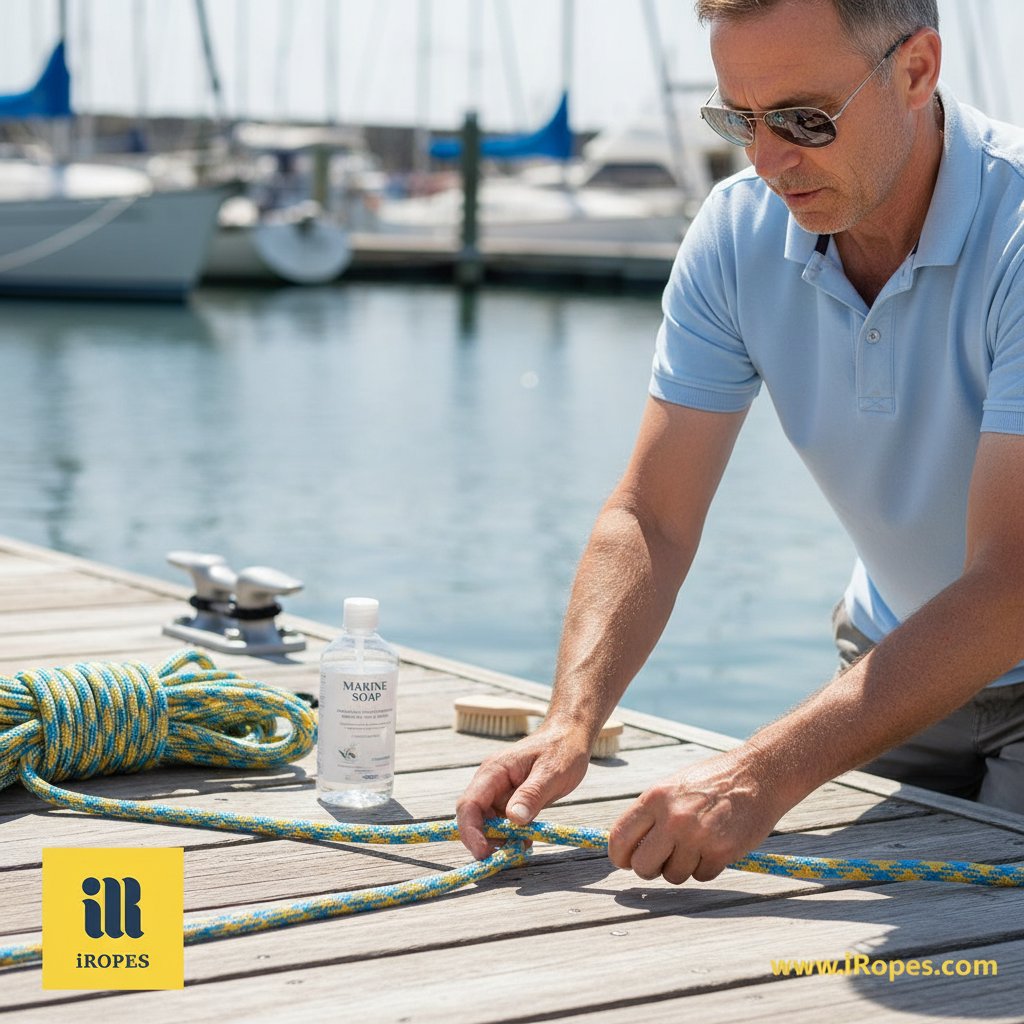
As we've explored, while nylon's elasticity suits calm docking, its excessive stretch can compromise stability in winds or tides, making it less than ideal as the best rope for boat docking. Double-braided polyester emerges as the superior choice—the best rope for docking boat—offering low stretch for precise control, superior UV and abrasion resistance, and easy handling that remains supple over time. Proper sizing (such as 1/2-inch for 25-35ft vessels), lengths at 1.5 times boat size, reflective features, and a minimum of four to six lines ensure secure mooring. Regular inspections, chafe prevention, and cleaning extend longevity, particularly for frequent use, while iRopes' custom OEM and ODM solutions optimise for your specific conditions, blending safety with convenience.
Applying these insights to your setup can transform docking from a chore into a confidence-boosting experience. For tailored recommendations that precisely match your boat's demands, our experts at iRopes can guide you towards ropes that genuinely last and perform.
Need Custom Docking Ropes Tailored to Your Boat?
If you're seeking personalised assistance to select the best rope for boat mooring or explore custom options from iRopes, simply fill out the inquiry form above—we're here to help optimise your setup for ultimate safety and reliability.
