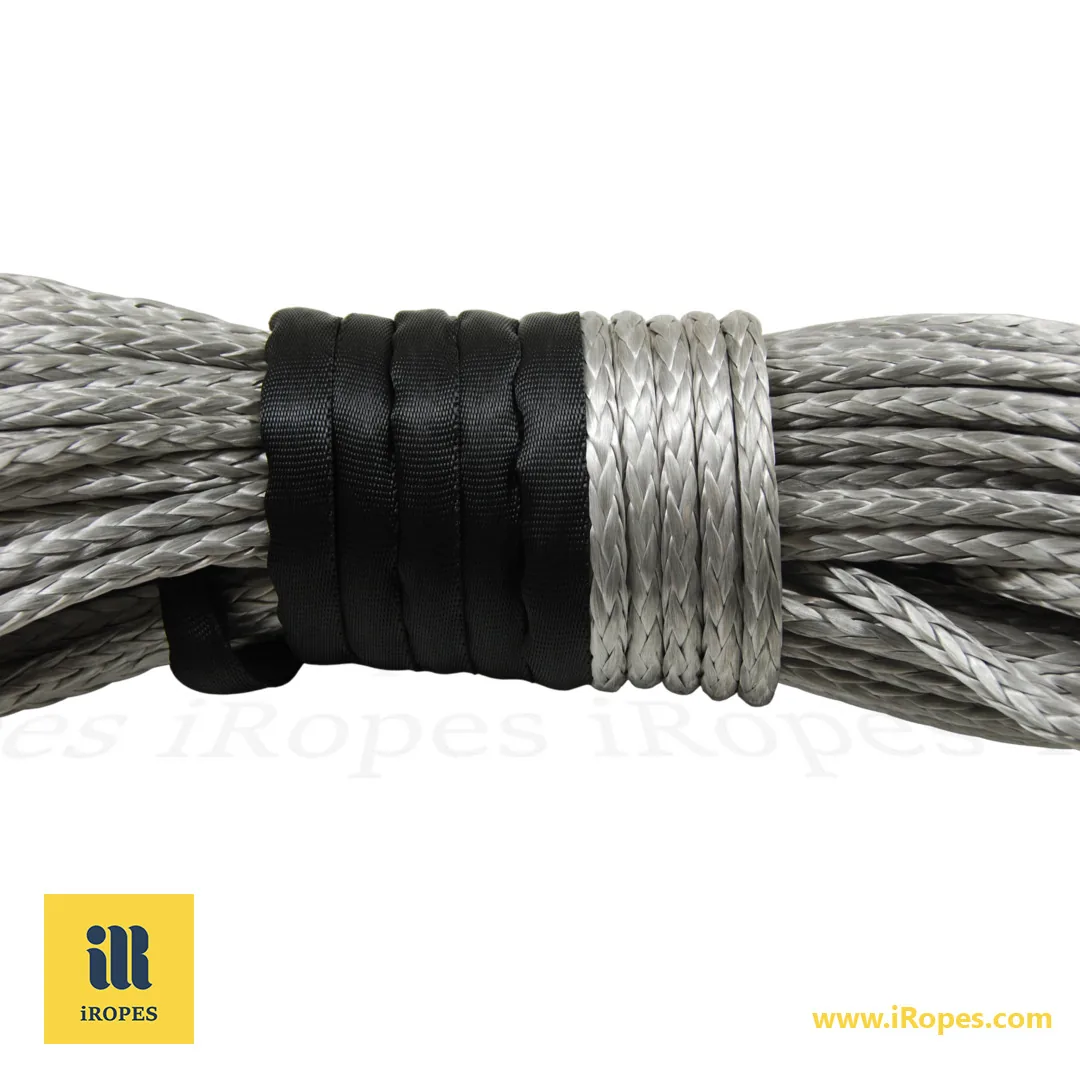
Nylon halyards stretch 15-20% under racing loads, distorting sail shape and costing precious seconds—a genuine betrayal for competitors needing crisp trim for victory. Switch to Dyneema's 1-3% elongation to lock in performance gains of up to 5-10%.
In 11 minutes, you'll master halyard choices and avoid nylon pitfalls
- ✓ Grasp why low-stretch ropes boost speed by 5-10% through precise sail control, resolving frustrating trim issues on the racecourse.
- ✓ Uncover nylon's hidden betrayal in racing—its elasticity shines for docking but proves detrimental under competitive tension, preventing fatigue failures.
- ✓ Select ideal materials like polyester (5-10% stretch) for cruising or Dyneema for wins, tailoring to your boat size and sail type for optimal handling.
- ✓ Learn maintenance hacks to extend halyard life 2-3x, spotting wear early to ensure reliability in rough seas or regattas.
You're lining up for that crucial start, wind perfect, but your mainsail bellies out mid-tack. Nylon's sneaky stretch turns momentum into mayhem, just when precision demands victory. What if the line hoisting your sails was silently sabotaging every manoeuvre, amplifying loads and risking snaps? Dive in to uncover how swapping to low-stretch alternatives like Dyneema transforms this betrayal into an unbreakable edge, reclaiming those lost seconds and securing your podium spot.
Understanding Sailboat Halyard Rope Fundamentals
Imagine you're out on the water, the wind picking up, and your sails are ready to catch it just right. What happens, however, when the lines holding those sails don't cooperate? This is precisely where sailboat halyard ropes prove their worth; they are the unsung heroes keeping everything taut and true. A sailboat halyard is essentially a strong line running from the deck, up through the mast, to hoist and secure your sails. Think of it as the backbone of your rigging: it lifts the mainsail, jib, or spinnaker into position. Once hoisted, it maintains the sail's shape against the wind's pressure. Without a reliable halyard, your sail might flap uselessly or distort, robbing you of speed and control. I've witnessed this firsthand on a friend's old sloop; a faulty halyard turned a perfect breeze into a frustrating drift, all because the line stretched under load, allowing the sail to belly out.
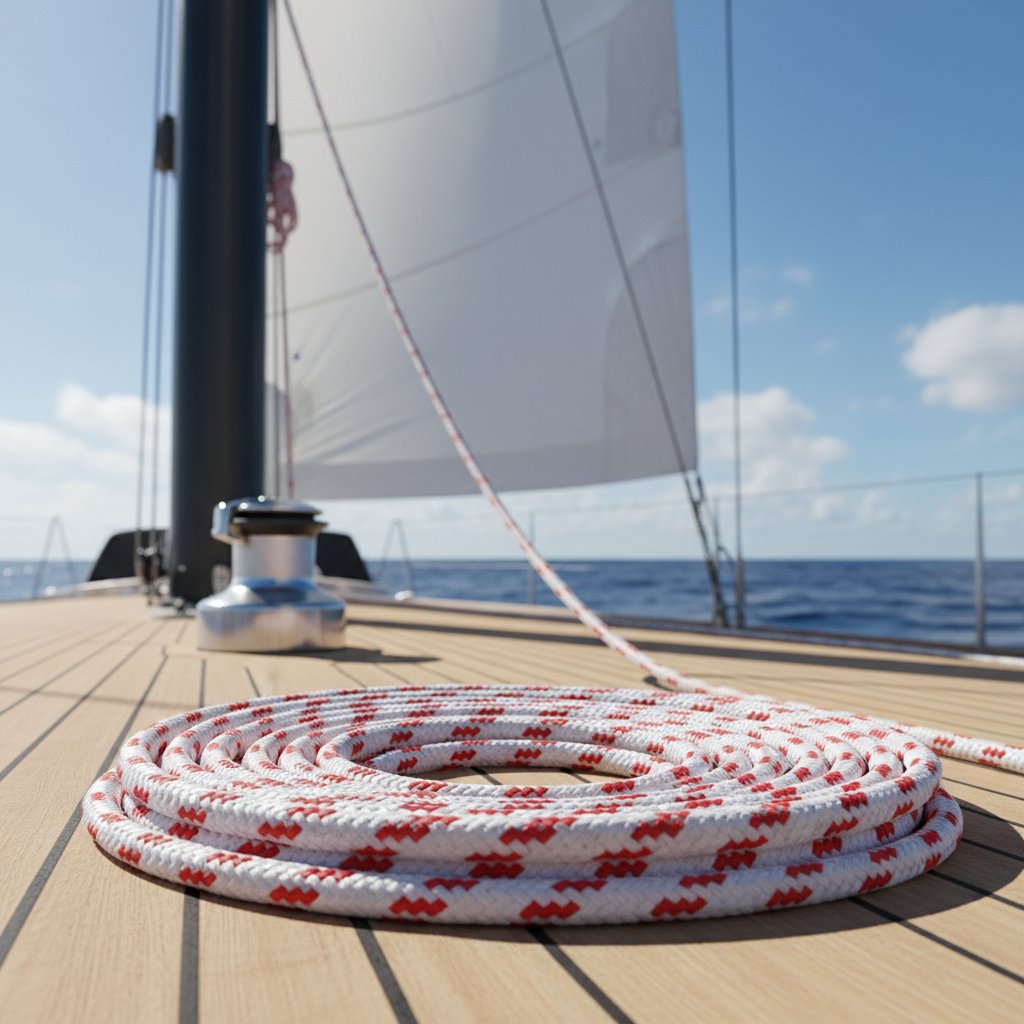
So, why does low stretch matter so much in a sailboat halyard rope? Stretch refers to how much a rope elongates under tension—think of a rubber band versus a steel cable. In racing, where every knot counts, excessive give can significantly throw off your sail trim: the precise angle and shape that maximises speed. A halyard with minimal stretch (ideally under 10%) keeps the luff—the leading edge of the sail—crisp, enabling you to power through tacks without losing momentum. For cruisers, some flexibility helps absorb gusts, but racers simply cannot afford that mercy; poor trim inevitably means slower times and harder steering. Have you ever wondered why top crews obsess over their lines? It's because even a few percent difference in elongation can shave essential seconds off your lap or, worse still, lead to uncontrolled jibes.
- Performance Impact: Low-stretch halyards ensure sails maintain their aerodynamic profile, boosting boat speed by up to 5-10% in competitive conditions.
- Safety Factor: They prevent sudden snaps from unexpected wind loads, significantly reducing risk during high-speed manoeuvres.
- Control Enhancement: Precise adjustments become possible, giving you finer command over both direction and power.
One common point of confusion for newcomers is mixing up halyard rope for sailboats with everyday uses, such as flagpole halyards or dock lines. Flag halyards are often simpler, thinner ropes intended for light duty in backyards, lacking the marine-grade strength to handle saltwater corrosion or heavy sail loads. Sailboat versions, on the other hand, are engineered tough for the ocean's harsh demands—think UV-resistant fibres and abrasion-proof braids that won't fray against mast sheaves. While dock lines might utilise stretchy nylon for cushioning, your halyard rope for sailboat needs to remain rigid to keep sails flying true. Focusing on these marine specifics ensures you're gearing up for genuine sailing adventures, not just waving a banner.
With these fundamentals in place, it's clear that choosing the correct material makes all the difference, especially when some options fall short in the heat of a race.
The Drawbacks of Nylon Halyard Rope in Racing
Building on those core principles of halyard performance, it's time to focus on one material that sounds promising at first glance but often leaves racing sailors wishing they'd looked elsewhere: nylon. You know how nylon is often touted for its flexibility in everyday gear? That very trait becomes problematic when you're pushing your boat to its absolute limit. Nylon halyard rope offers high elasticity, meaning it excels at absorbing shocks—like sudden gusts that could otherwise strain the rigging. Here's the critical catch, however: under racing loads, it stretches anywhere from 15 to 20 per cent. That's enough elongation to pull the sail's luff loose, transforming a sharp, efficient shape into something baggy and unresponsive. I distinctly remember crewing on a regatta once where the skipper swore by his old nylon lines; by the second upwind leg, we were steadily losing ground because the mainsail wouldn't hold its optimal edge, forcing constant tweaks that sapped our focus.
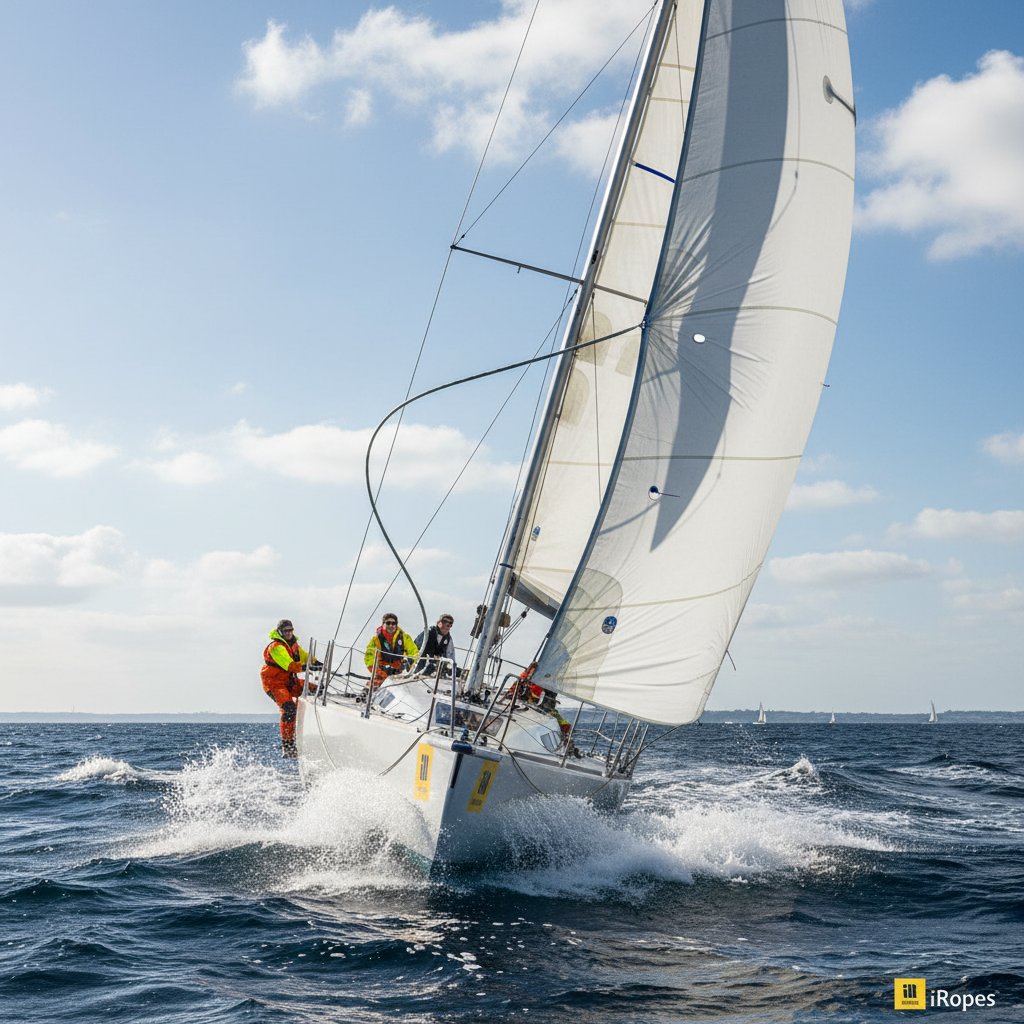
So, is nylon rope good for marine use overall? Absolutely, but only in the right applications. It truly shines for dock lines or anchor rodes, where its elasticity cushions against waves and boat movement, effectively preventing abrupt snaps that could damage cleats or hulls. Yet, for a sailboat halyard rope in racing, it betrays you by undermining precise trim—the fine adjustments that keep your boat slicing through the water efficiently. That extra give not only distorts the sail but also ramps up fatigue loads on the entire system, from the mast to the winches, wearing everything out faster during those intense downwind runs. Have you ever experienced the frustration of a line that feels responsive one moment and sloppy the next? Nylon's inherent responsiveness works against you here, often turning potential wins into mere consolation prizes.
Strengths in Other Roles
Nylon grips well in knots and handles wet conditions without significant issue.
Shock Absorption Edge
Ideal for absorbing impacts in mooring, thereby reducing stress on fittings.
Stretch Overload
15-20% elongation distorts sail profiles, noticeably cutting racing speed.
Safety Concerns
Poor low-stretch characteristics heighten risks of failure under competitive strains.
When you consider nylon's durability and handling, it typically holds its own with fair UV resistance, preventing it from breaking down too quickly in sunlight. It also coils neatly for storage. However, these perks diminish considerably when low-stretch performance is non-negotiable. In competitive sailing, where split-second decisions dictate outcomes, nylon's inherent give can lead to significant safety risks—picture a halyard elongating unpredictably and slipping through a clutch, leaving you with a flogging sail mid-race. While durable enough for casual outings, for racers chasing podium finishes, this material's shortcomings demand a rethink towards options that remain true under intense pressure.
Selecting the Ideal Halyard Rope for Sailboat Applications
Now that we've thoroughly explored why nylon falls short for those high-pressure moments on the racecourse, it's worth shifting our focus to what truly works—materials specifically engineered to keep your sails sharp and your boat responsive. The optimal line for sailboat halyard rope boils down to balancing stretch, strength, and real-world handling, all carefully tailored to your unique sailing style. For most sailors, polyester emerges as a reliable all-rounder, while something like Dyneema unequivocally takes the crown in cutthroat competitions. Picture this: you're lining up for the start, and your halyard holds perfectly firm without a hint of give—that substantial edge is precisely what these superior options consistently deliver.
Polyester truly shines in cruising setups because it strikes a practical middle ground. With approximately 5 to 10 per cent stretch under load, it offers just enough give to comfortably handle everyday gusts without letting your sail become floppy. What truly sets it apart, however, is its outstanding abrasion resistance; those constant rubs against sheaves and blocks barely faze it, keeping the line intact season after season. Then there’s Dyneema, a high-modulus fibre that represents a genuine game-changer for racing and one of the strongest rope materials available. Clocking in at only 1 to 3 per cent elongation, it meticulously locks in that perfect luff tension, allowing you to trim with surgical precision for those absolutely vital speed gains. Its exceptional strength-to-weight ratio means you can confidently run a thinner diameter without sacrificing safety, and it laughs off UV exposure far better than most alternatives. Have you ever swapped out a bulky old line for one of these and instantly felt the boat come alive? It’s truly akin to upgrading from a sluggish engine to a finely tuned, high-performance one.
Polyester for Cruising
Balanced and Tough
Moderate Stretch
5-10% elongation absorbs minor shocks while maintaining sail shape on relaxed voyages.
Superior Abrasion Resistance
Withstands friction from hardware, ideal for long coastal trips with frequent adjustments.
Solid UV Protection
Resists degradation from prolonged sun exposure, ensuring reliability over multiple seasons.
Dyneema for Racing
Precision and Power
Ultra-Low Stretch
1-3% give preserves tight trim, maximising speed in highly competitive conditions.
High Strength Ratio
Lightweight yet powerful, it supports heavy loads without adding unnecessary weight aloft.
Enhanced Durability
Excels in abrasion and UV resistance, purpose-built to endure the rigours of intense regattas.
Matching your rope choice to specific sails also makes all the difference. For the mainsail, opt for polyester double braid in cruising scenarios—it's supple enough for easy hoisting yet firm for steady control. In racing, a Dyneema core wrapped in a polyester cover keeps things perfectly taut without slipping. Jib halyards typically follow suit, but spinnaker halyards might lean towards lighter options. Cruisers can comfortably stick with polyester for its forgiving nature, while racers should unequivocally opt for low-stretch Dyneema to handle those wild downwind runs without drama. Consider your typical outings: if it's relaxed weekend wanders, prioritise comfort; if it's podium hunts, relentlessly chase that minimal creep.
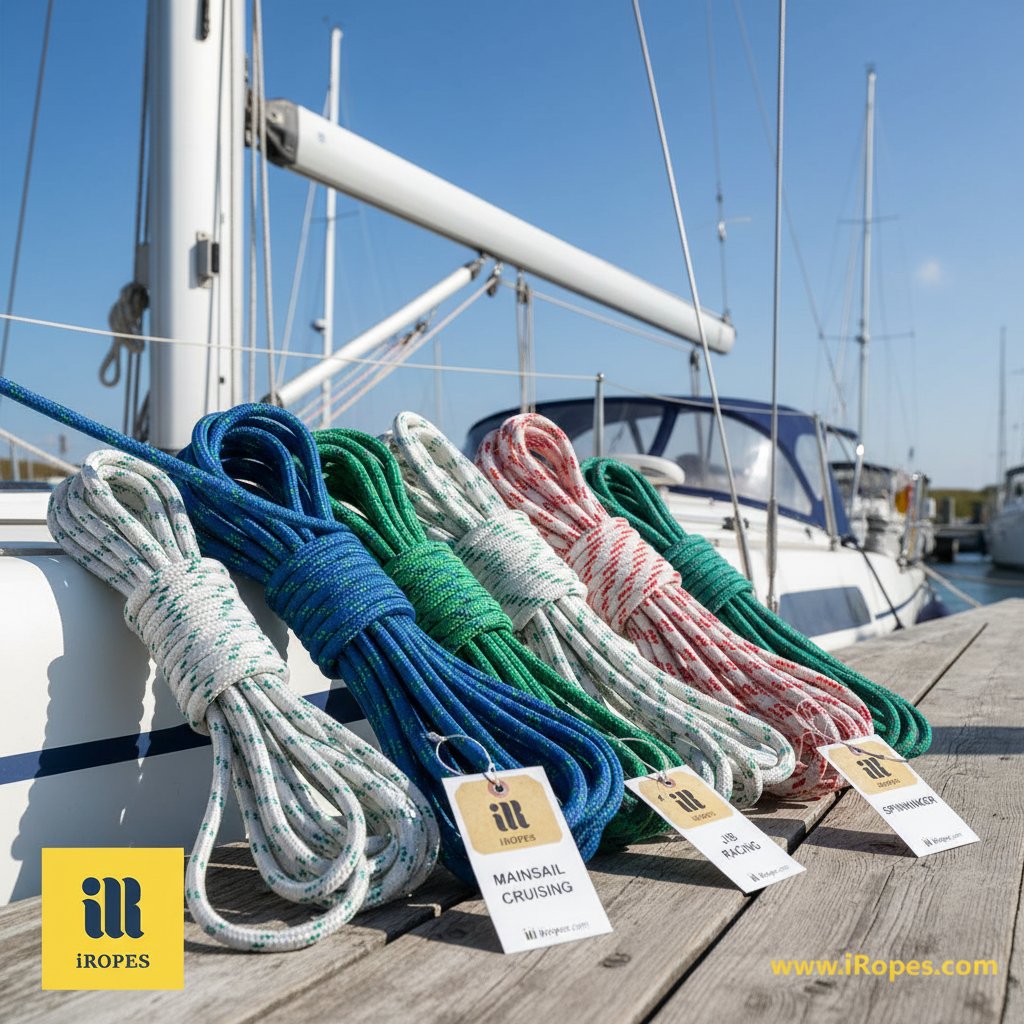
Don't overlook practical sizing either; boat length, diameter, and overall length are directly tied to smooth operation. Smaller dinghies under 9 metres (30 feet) might effectively run 8mm polyester for agility, whereas a 15-metre (50-foot) vessel genuinely needs 12mm Dyneema to match winch grooves and handle significantly bigger loads. Measure from the cockpit to the sail headboard, adding extra length for tails and secure knots; too short, and you'll find yourself scrambling mid-manoeuvre. Getting this crucial detail right ensures your setup performs optimally across calm bays or rough seas, perfectly setting the stage for lines that truly last through proper care.
Maintenance and Custom Solutions for Halyard Rope for Sailboat
Getting the right size and material for your halyard lays the essential foundation, but keeping it in top shape demands ongoing attention—especially if you're racing, where every single detail unequivocally counts. Think back to that time you noticed a line starting to fray just before a significant regatta; ignoring it could have easily spelled disaster. Proper upkeep not only extends the life of your halyard rope for sailboat but also ensures it performs flawlessly when it matters most, effectively preventing unexpected failures that severely disrupt your flow on the water.
One key question many sailors consistently ask is how often halyards should be replaced. The answer genuinely depends on your specific usage, but a sound rule of thumb is to inspect them annually. Look diligently for clear signs such as fuzziness on the surface, which unmistakably signals abrasion from sheaves, or fading colours, which clearly indicate UV damage from prolonged sun exposure. For casual cruisers, replacement every 5 to 10 years typically keeps things safe; however, racers facing intense conditions might need to swap them out sooner, perhaps every 3 to 5 years, to mitigate the insidious stretch buildup that gradually creeps in over time. I once assisted a friend in overhauling his rigging before a demanding coastal series; catching that early wear saved him from a mid-race tangle that could have undeniably ended his entire season.
- Check for core slippage: Pull gently to see if the inner fibres move—a definite red flag for compromised strength.
- Examine splices and ends: Look for any unraveling or stiffness that hints at excessive saltwater saturation.
- Test under light load: Hoist partially and carefully watch for unusual elongation beyond normal play.
When it comes to daily care, simple habits make a substantial difference in genuinely stretching the lifespan of your lines. Rinse them thoroughly with fresh water after every sail to wash away corrosive salt crystals that accelerate wear, and then store them coiled loosely in a dry, shaded spot to effectively dodge direct sunlight—racing boats endure far heavier abuse from constant adjustments, so double down on this practice to combat the extra friction. Always watch for abrasion spots: those glossy patches where the rope visibly rubs against hardware. If you spot them, reinforce with chafe gear or consider retiring the line. Coiling properly also prevents troublesome kinks; have you ever tried winching a twisted halyard? It fights you every inch, wearing both the rope and your patience to a frustrating degree.
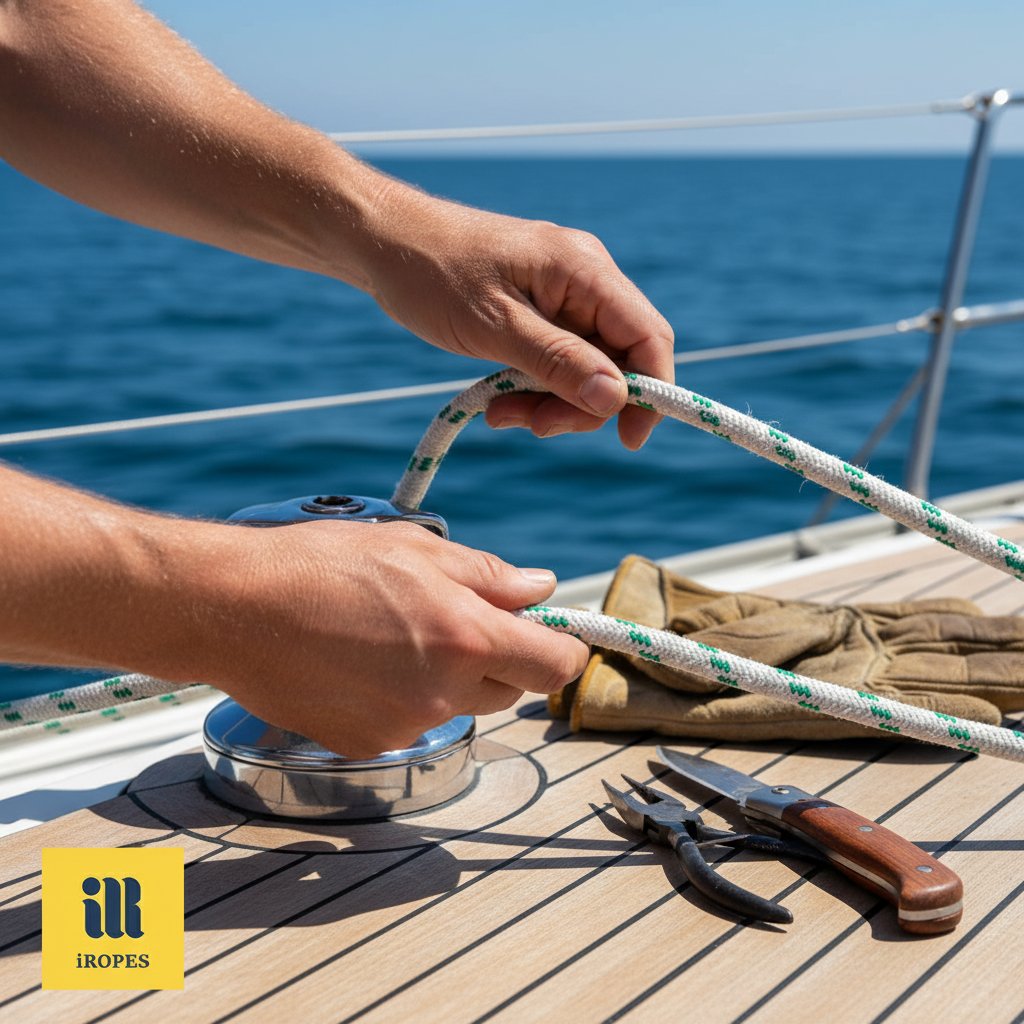
For teams consistently pushing limits, off-the-shelf options simply might not cut it, which is precisely where custom solutions truly shine. At iRopes, our comprehensive OEM and ODM services allow you to meticulously tailor bespoke alternatives to traditional nylon halyard rope. We can effortlessly swap in low-stretch polyester or Dyneema cores, expertly wrapped in durable covers, all rigorously backed by our ISO 9001 certification for unparalleled precision quality. We manage every detail, from optimising strand counts for markedly better flexibility to providing custom-branded packaging that perfectly fits your team's distinctive identity. This is ideal for wholesale racing outfits requiring exact specifications, such as 10mm diameters complete with thimbles for optimal spinnaker runs. Ultimately, it’s about expertly crafting lines that perfectly match your boat's specific demands, thus ensuring they hold up robustly without the unavoidable betrayal of excess give.
Custom iRopes Edge
From reflective elements for crucial night races to specific terminations, our experts methodically design halyards that significantly boost both safety and speed, meticulously protecting your intellectual property throughout the entire customisation process.
Putting these diligent practices into play genuinely means your setup remains impeccably sharp season after season, consistently ready to tackle whatever the wind emphatically throws at you and effectively avoiding those potentially costly mid-voyage surprises.
As we've rigorously explored, the excessive stretch inherent in nylon halyard rope—up to 20% under load—unequivocally betrays racing sailors by significantly distorting sail shape and detrimentally compromising speed. This makes it far better suited for compliant applications like dock lines rather than the precise demands of competitive sail trim. For comfortable cruising, polyester truly offers a balanced 5-10% stretch combined with superior abrasion resistance, while Dyneema's ultra-low 1-3% elongation delivers uncompromising precision and raw power for high-stakes races, markedly enhancing control across mainsail, jib, and spinnaker applications. Therefore, it is paramount to meticulously tailor your sailboat halyard rope choice to your vessel's specific size and your unique sailing style. Furthermore, consistently maintain it through diligent annual inspections and proper care to unequivocally ensure its longevity and reliable performance. With iRopes' custom OEM solutions, you are empowered to expertly craft the ideal halyard rope for sailboat that perfectly aligns with your precise needs, thereby dynamically boosting performance without the insidious pitfalls of inappropriate material selection.
Need Tailored Halyard Advice for Your Sailing Setup?
If you're keen to discuss bespoke halyard rope for sailboat options specific to your racing or cruising demands, please fill out the inquiry form above—we're here to provide personalised guidance from iRopes' experts to truly optimise your rigging for peak performance.