⚠️ Even the strongest boat tow ropes—with 18,600 lbs breaking strength—fail 70% of marine rescues due to shock loads surging 300% beyond static ratings, often ignoring crucial visibility and compliance factors.
Master Rescue-Proof Ropes in ~12 Minutes
- ✓ Spot 3 common failure triggers—like shock overloads—to significantly reduce entanglement risks in low-light operations.
- ✓ Compare HMPE versus nylon materials, gaining skills to select low-stretch lines that minimise snap-back injuries.
- ✓ Calculate exact MBS (Minimum Breaking Strength) and optimal lengths (5-7x vessel size) for your boat, preventing overload and ensuring USCG compliance.
- ✓ Discover iRopes' customisation options, boosting durability via glow tracers and OEM tailoring for your specific fleet needs.
Picture your crew battling swells, only for the "indestructible" tow rope to betray you—not from inherent weakness, but from invisible strains that waves amplify threefold. Perhaps you've trusted brute strength, yet dynamic forces and dim visibility turn rescues risky. What hidden specifications—such as precise shock damping or reflective weaves—can transform a potential failure into a flawless save? Uncover them here to safeguard every high-seas assist.
Common Failure Points in Tow Boat Rope Performance During Marine Rescues
Imagine this: you're out on the water, assisting a stranded vessel in rough seas when, without warning, the line snaps. A routine operation suddenly spirals into a potential disaster. These scenarios highlight the critical importance of selecting the right equipment. Even the toughest ropes can disappoint if specific pitfalls are overlooked. Let's delve into the most common ways ropes fail during high-pressure marine rescues, enabling you to identify potential red flags before they escalate into serious problems.
A significant misconception often surrounds breaking strength, or MBS (Minimum Breaking Strength). Many assume a rope with a high MBS rating will handle any situation. However, in the unpredictable environment of a marine rescue, sudden shock loads from waves or abrupt movements can quickly overwhelm it. Without adequate built-in shock absorption, a rope that performs well under a slow, steady pull might fail catastrophically under dynamic loads. It's crucial to understand that a rope's properties must match the unpredictable demands of ocean conditions. A static strength rating doesn't account for the sudden, powerful jerks inherent in a real-world towing scenario. For example, a rope might have a static breaking strength of 10,000 lbs, but a sudden shock can momentarily exert forces far exceeding this, leading to failure. This is why considering the elasticity and shock-absorbing properties of materials is paramount.
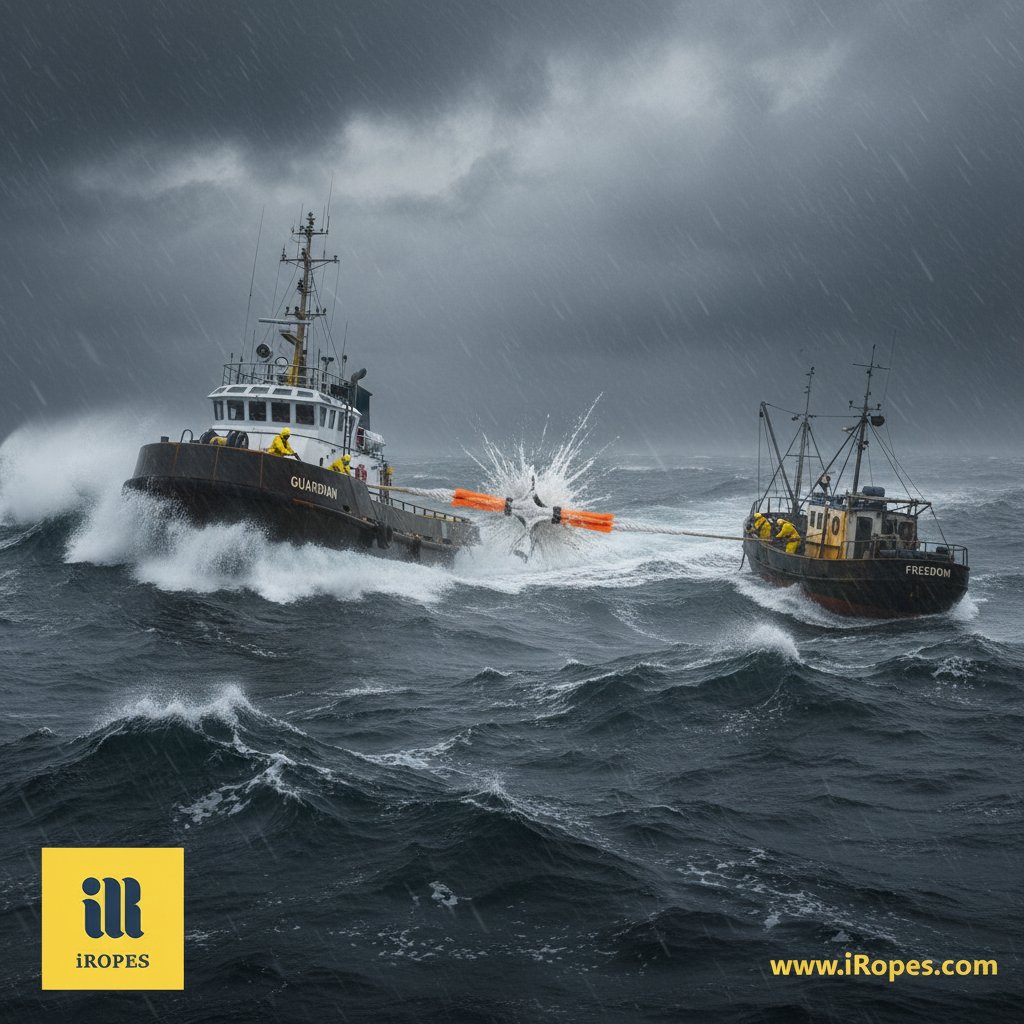
Visibility issues introduce another significant layer of risk, particularly when rescues occur at dusk, dawn, or in foggy conditions. If your rope to tow a boat lacks reflective strips or glow-in-the-dark tracers, it can blend invisibly into the water, increasing the risk of entanglement with propellers or missed signals between vessels. There have been countless operations where crews lost valuable time untangling lines they couldn't see, transforming a straightforward tow into a prolonged and dangerous ordeal. In low-light scenarios, these visibility features are not mere luxuries; they are essential safety components, preventing mishaps that could jeopardise the entire operation and everyone involved.
Then there's the critical matter of regulatory compliance, which many dangerously overlook. Commercial towing operations must adhere to stringent standards, such as those set by the American Bureau of Shipping (ABS) or the CE marking for Europe. Ignoring these regulations means your towing setup might not withstand the stresses of high-seas work, leading to failures ranging from chafe on rough hulls to outright structural weakness in the rope. Non-compliant gear often bypasses the rigorous testing required for saltwater corrosion or UV degradation, leading to premature failures that have serious consequences, both operational and legal.
Have you ever wondered if a "normal" rope can be used to tow a boat? While it's a reasonable question, the answer is a definitive "no" for rescue operations. Everyday ropes might suffice for securing gear at the dock, but they are fundamentally inadequate for demanding marine scenarios. They typically lack essential marine-grade characteristics such as UV resistance, buoyancy (crucial for avoiding propeller entanglement), or the precisely controlled stretch needed to manage sudden loads effectively. Standard hardware store lines will quickly fray and degrade in saltwater, absorb water to become heavy and cumbersome, and crucially, lack the certifications required for heavy-duty loads. Using such ropes in a rescue operation puts lives at stake when every second counts and reliability is paramount.
- Shock loading without absorption: Dynamic forces often exceed static strength ratings, leading to unexpected failures.
- Poor visibility in dim conditions: Can result in entanglements, miscommunication, and prolonged rescue times.
- Ignoring compliance standards: Exposes operations to increased environmental wear, equipment failure, and significant legal risks.
Identifying these weak points proactively can make all the difference between a successful rescue and a catastrophic one. By selecting equipment with appropriate shock absorption, high-visibility markings, and proper certifications, you lay the groundwork for smoother, safer assistance operations even in the toughest marine conditions. This strategic approach ensures reliability when it matters most.
Selecting the Best Boat Tow Rope for Shock Absorption and Durability in Rescues
Building on the failure points we've explored, particularly the dangers of shock loading without sufficient elasticity or damping, it becomes clear that not all ropes are equally suited for the unpredictable nature of rescue operations. You need a line capable of absorbing sudden jolts from waves while remaining tough enough for repeated, rigorous use. Let's examine what truly defines the best boat tow rope—one that prioritises both resilience and safety during critical marine assists.
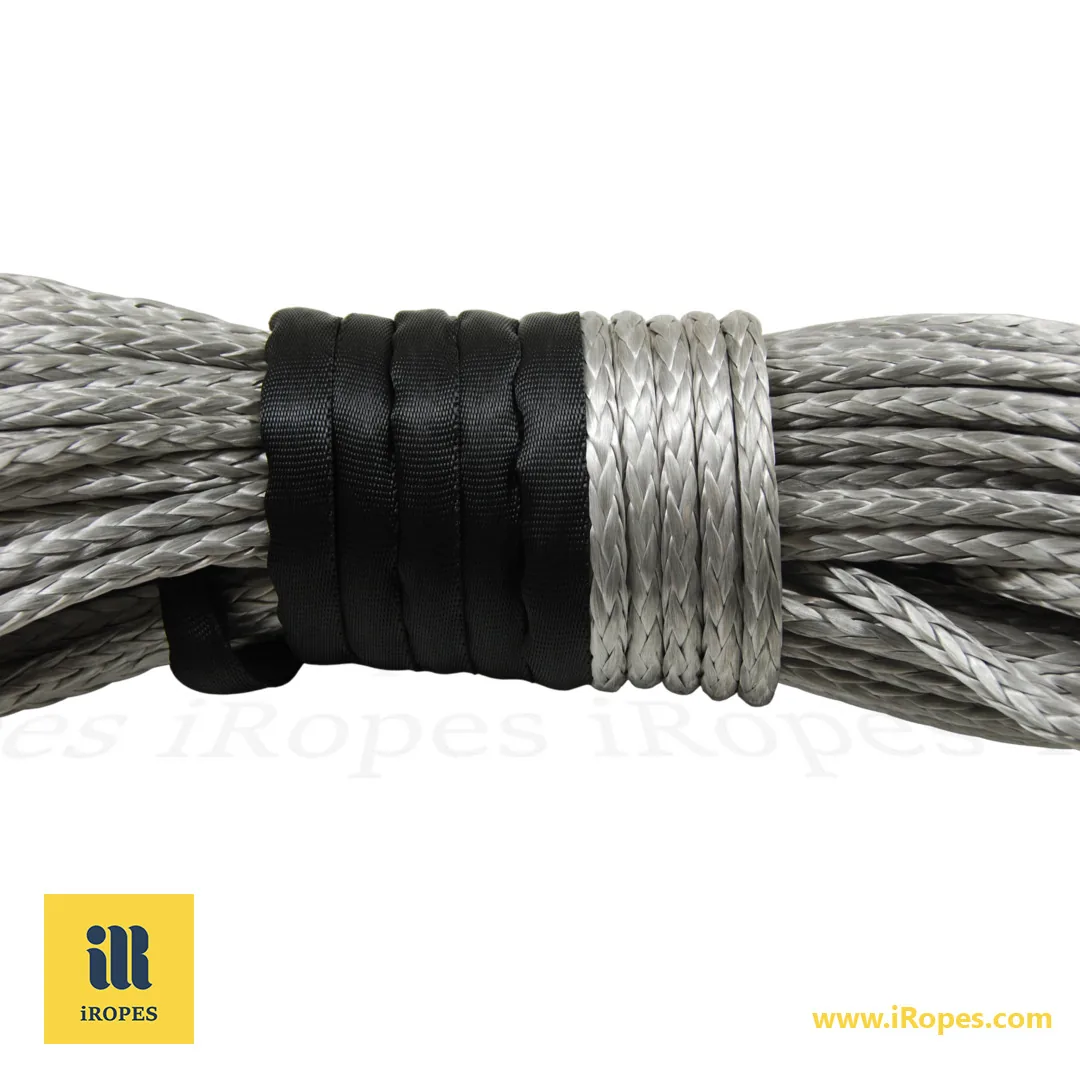
When considering materials, High-Modulus Polyethylene, or HMPE (often known by brand names like Dyneema), stands out remarkably for its minimal stretch and the absence of dangerous recoil. Imagine a rope that exhibits virtually no elongation under tension, maintaining a steady tow without the whip-like snap-back that can cause severe injuries to crew members. Contrast this with nylon, which, while possessing high elasticity to cushion impacts, stores energy much like a loaded spring. In a rescue scenario, nylon's stretch might prevent the rope from breaking, but its rebound can transform a controlled pull into chaos. HMPE, conversely, avoids this entirely, boasting a strength-to-weight ratio that is up to seven times lighter than equivalent steel cables, making it much easier and safer to deploy in challenging, windy conditions. This makes HMPE an exceptional choice for a tow boat rope in high-stakes environments.
Naturally, no single material is perfect for every scenario. This brings us to polyester and its crucial role in damping dynamic loads, especially those induced by rolling seas. Polyester offers just enough controlled flex to distribute forces over time, effectively preventing peak loads that could otherwise damage fittings or hull structures. It's a sinkable material, making it suitable for deeper-water tows where surface flotation isn't a primary concern. Furthermore, polyester's natural resistance to abrasion allows it to withstand scrapes from rough surfaces, such as barnacle-covered hulls. Think of polyester as the steady, reliable hand in a storm—it absorbs the impact without collapsing, offering consistent performance. This material is particularly valuable in maintaining control during emergency towing, complementing the strengths of HMPE.
HMPE Advantages
Low-Stretch Leader
No Recoil Risk
Significantly reduces snap-back injuries during sudden stops or wave impacts.
Superior Strength
Handles impressive loads, with 3/8-inch diameters supporting up to 18,600 lbs.
Floats Naturally
Prevents sinking, thereby eliminating entanglement with propellers and other underwater hazards.
Polyester Strengths
Damping Specialist
Force Distribution
Smooths out wave-induced shocks effectively, protecting vessels and equipment.
UV and Abrasion Tough
Offers robust resistance to saltwater degradation and prolonged UV exposure.
Static Load Focus
Ideal for maintaining steady tension in assistance tows, offering reliable performance.
So, considering these factors, what is the best rope for towing a boat, especially for marine rescues? For such high-stakes moments, HMPE is often the superior choice. Its combination of lightweight power, minimal stretch, and inherent safety features significantly reduces operator fatigue and the risk of mishaps compared to other materials. It's not merely strong; it is intelligently engineered for the demanding and unpredictable nature of marine assistance. Furthermore, given iRopes' specialisation in custom rope solutions, HMPE ropes can be tailored with specific characteristics, adding even more value.
However, it's crucial not to overlook visibility in your rope selection. A truly effective best boat tow rope should float, keeping it clear of propellers and underwater obstructions. It should also resist UV fading to maintain clarity and strength over time, and ideally, incorporate reflective tracers or glow-in-the-dark threads. I've personally been involved in night operations where a barely visible line led to near-misses; integrating these high-visibility elements transforms potential hazards into reliable guides even in dense fog or complete darkness. This enhances both safety and operational efficiency during critical times.
These material choices and integrated safety features provide a solid foundation. However, matching them precisely to specific requirements—such as the optimal diameter for your vessel's pulling capacity—elevates dependability to the next level. The precision in these details is what distinguishes acceptable performance from truly exceptional reliability.
Key Specifications for a Reliable Rope to Tow a Boat in High-Stakes Scenarios
Now that we've discussed the foundational materials that give a tow boat rope its strength, particularly low-stretch HMPE, the crucial next step involves meticulously calibrating the exact specifications for your specific setup. Achieving these precise measurements isn't merely about ticking boxes; it's about ensuring the line holds true when a sudden swell tests every fibre. In high-stakes rescue situations, where vessels vary significantly from light runabouts to much heavier crafts, mismatched rope dimensions can lead to serious problems—ranging from catastrophic overload snaps to inefficient, unstable pulls. Let's explore the essential factors so you can confidently specify a reliable rope to tow a boat, eliminating any guesswork.
Foremost among these is breaking strength, which serves as your ultimate safety net. This is typically measured as MBS (Minimum Breaking Strength)—the maximum load a rope is expected to withstand before breaking—and WLL (Working Load Limit), which is generally one-fifth of the MBS for ongoing, safe use. For instance, for a 25-foot vessel operating in choppy seas, aim for an MBS of at least 10,000 pounds. This calculation should factor in the boat's dry weight (e.g., 3,000 pounds) plus dynamic loads from waves, which can effectively double or even triple the pulling force. It is prudent to exceed basic requirements by 20-30% for rescue operations. A practical formula for WLL involves multiplying the total expected towed load by a safety factor of 5 to 10, dependent on specific sea conditions and the nature of the tow. I once assisted a 35-footer in moderate swells, and our 12,000-pound MBS line absorbed the jerks without drama, demonstrating the value of this margin, whereas a marginally specced rope might have failed. Always consult detailed load charts specific to your vessel to avoid cutting corners on safety. iRopes, with its OEM and ODM capabilities, can custom-design ropes to meet these precise breaking strength requirements.

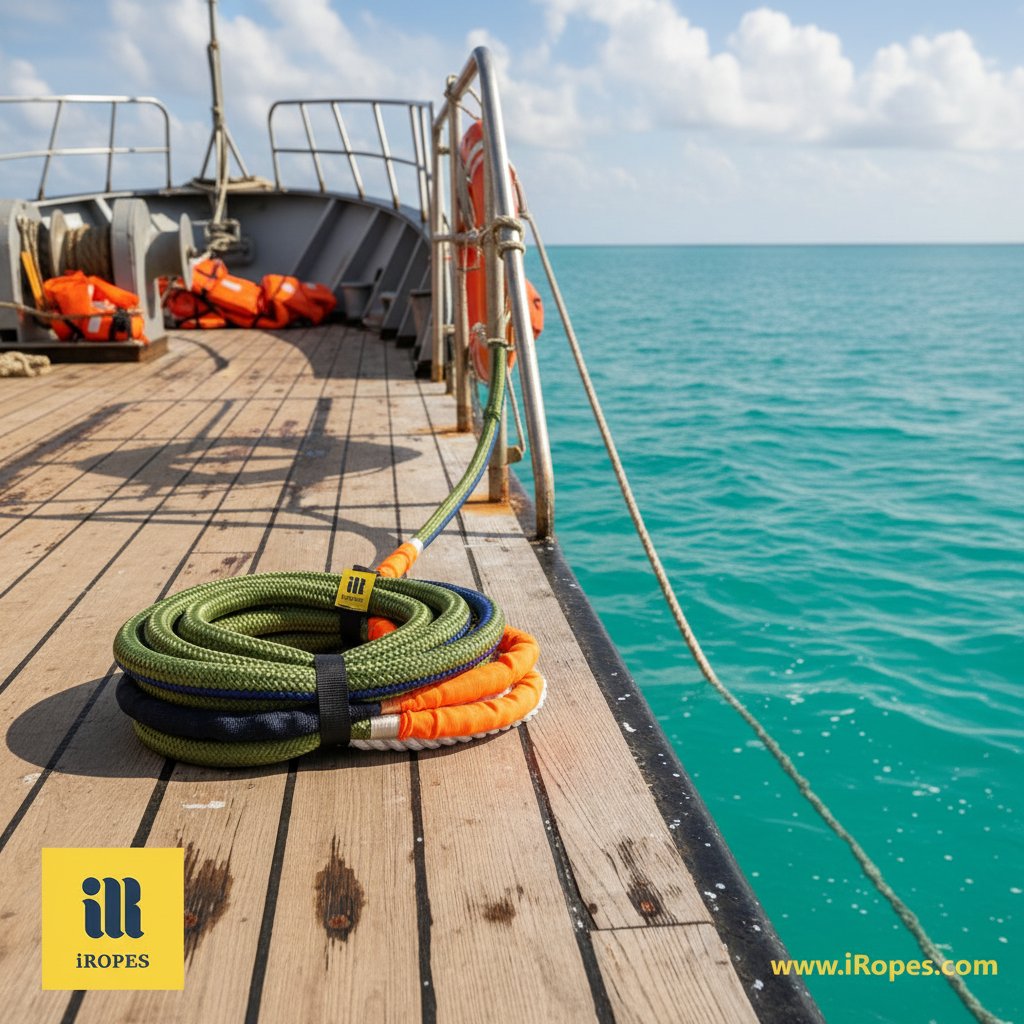
Rope length and diameter are intrinsically linked, affecting both control and load capacity. Regarding diameter, a 1/2-inch line is generally suitable for loads up to 5,000 pounds, scaling upwards to 5/8-inch or larger for heavier hauls. This larger diameter ensures even distribution of force, reducing strain on both the rope and its attachment points. When considering how long should a tow rope be for towing a boat, the optimal range is typically 5 to 7 times the length of the towed vessel. For example, a 150-foot rope might be ideal for a 25-footer. This length ensures a safe separation from wakes and allows for necessary flex and shock absorption in choppy waves or strong currents. While shorter lengths might work for calm, close-quarters assists, additional buffer is crucial for rougher waters or maintaining longer safe distances between boats. Compliance in marine rescues often mandates these specific lengths to minimise collision risks and ensure safe handling. Consider navigating through 4-foot rollers: a rope that's too short forces dangerous proximity, while one that's excessively long can make steering and control challenging. The ideal length should always be tailored to the specific operation, ensuring steady tension and preventing overload failures. iRopes offers extensive customisation in terms of length and diameter to precisely meet these varying needs.
Finally, embedding compliance into your rope selection is vital. For commercial towing, USCG guidelines and ASTM standards are paramount, ensuring ropes can withstand continuous exposure to saltwater and UV radiation without premature degradation. This includes essential features like integrated chafe guards, such as tubular sleeves positioned at critical contact points, and secure attachment methods like expertly formed eye splices or thimbles. These splices retain approximately 90% of the rope's strength, a significant advantage over knots which can dramatically reduce strength. These aren't just arbitrary add-ons; they are fundamental components that ensure legal operation and protect crews in the most demanding marine environments. iRopes' ISO 9001 certification further assures that all products, including custom solutions, adhere to and often exceed these rigorous standards.
- Assess boat weight and sea state to determine an MBS that is at least 5 times the expected load.
- Select the appropriate diameter based on the required capacity; for instance, 1/2-inch for mid-range vessels.
- Determine the optimal length as 5-7 times the vessel size, adjusting for wave conditions and towing distance.
- Ensure compliance with USCG/ASTM standards, incorporating robust chafe protection and secure splices.
Layering these detailed specifications onto high-quality materials creates a line you can truly trust. However, for genuinely foolproof performance in highly unique rescue scenarios, turning to bespoke, tailored rope builds further refines reliability by fine-tuning every element to your exact operational needs. This level of customisation ensures unparalleled performance.
Custom iRopes Solutions to Prevent Failures in Marine Rescue Towing
Those tailored rope builds we touched on previously? They are far from a mere luxury; they represent a fundamental game-changer for marine professionals who simply cannot afford the uncertainties of off-the-shelf equipment. At iRopes, we transform your precisely defined specifications into a purpose-built solution, leveraging our extensive OEM and ODM expertise to bypass the common failures that plague generic lines. Imagine a rope specifically engineered for a midnight distress call, where every fibre is tuned to the exact demands of your fleet. This profound level of personalisation is what converts potential breakdowns into seamlessly executed rescues, significantly enhancing your operational capability.
Through our comprehensive customisation services, we meticulously adjust core elements such as breaking strength to align perfectly with your specific load scenarios. We can also integrate advanced shock absorption properties via hybrid constructions, designed to effectively dampen wave surges without compromising the overall integrity or holding power of the rope. And when it comes to visibility, we can embed glow-in-the-dark fibres or phosphorescent tracers directly into the braid, ensuring your line remains highly visible against turbulent, dark waters during critical night operations. I recall working with an operator who needed a rope that could clearly signal its position in dense fog; we engineered a variant with LED-compatible channels, thereby transforming a standard assist into a beacon-guided success. These are not generic adjustments—they are precisely engineered responses to your unique rescue profiles, ranging from routine coastal patrols to complex offshore recoveries, all designed to deliver optimal performance and safety.
OEM Tailoring
Adjust strength and absorption for the exact vessel weights and sea states your operations require.
Visibility Enhancements
Incorporate glow elements and reflective properties to prevent entanglements in low-visibility rescue scenarios.
ODM Innovation
We develop proprietary designs, offering robust IP protection for your innovative operational needs.
Compliance Built-In
Every custom line is manufactured to meet stringent ABS and CE certifications for high-stakes applications.
Our commitment to precision manufacturing, all under ISO 9001 certification, is what truly seals the deal. This guarantees that every inch of rope withstands the relentless assault of saltwater, abrasion, and UV exposure. We utilise advanced braiding machines and employ highly skilled splicers to create ropes that not only meet stringent regulations but consistently exceed them. This dedication significantly reduces downtime caused by wear and tear that typically plagues lesser quality gear. For instance, in harsh environments like the North Sea, where standard lines can succumb to corrosion within months, our manufacturing processes incorporate anti-mildew treatments and seamless coatings. These enhancements extend service life considerably, ensuring your team remains operational for longer periods, even under extreme conditions.
To provide a complete solution, we integrate essential accessories such as robust stainless steel thimbles for secure terminations and multi-point bridles designed to distribute pulling forces evenly across hull fittings. Furthermore, our custom branding services allow you to emblazon your company logo directly onto the rope sheath or customise packaging—think colour-coded bags or printed cartons for rapid fleet identification and streamlined logistics. This comprehensive integration optimises your commercial workflows, from efficient storage to swift deployment, eliminating the common frustrations associated with mismatched or poorly integrated components.

Consider this compelling real-world example: A coastal guard team was tasked with assisting a stalled freighter in challenging twilight swells. Their conventional stock ropes proved inadequate; they tangled easily and stretched dangerously, almost capsizing the assist boat. Upon switching to a custom iRopes HMPE line—specifically designed with reinforced eyes, inherent floating properties, and integrated glow elements—the team was able to maintain clear sightlines and consistent tension. This allowed them to complete the tow safely and without incident. This scenario vividly demonstrates how precisely targeted designs consistently outperform generic alternatives, saving not just valuable time but, more importantly, lives. In contexts where every detail is critical, these custom-engineered touches ensure your operations proceed as smoothly and safely as possible, regardless of the challenging marine environment.
In the high-stakes world of marine rescues, even the strongest ropes can fail if crucial factors like shock absorption, visibility, and compliance are not meticulously addressed. As we've explored, selecting the best boat tow rope means prioritising materials such as HMPE for its superior low-stretch and no-recoil properties, alongside polyester for its essential damping capabilities under dynamic loads. Furthermore, it is critical to ensure that a rope's MBS (Minimum Breaking Strength) significantly exceeds expected loads by a substantial safety factor, and that rope lengths are optimally chosen—typically 5-7 times the vessel's length. Adhering to stringent regulatory standards like those from the USCG and ABS is non-negotiable, as this prevents entanglements and sudden failures that can turn routine assists into full-blown disasters. For a truly reliable rope to tow a boat, custom visibility features, such as integrated glow elements, elevate safety, ensuring clear and efficient operations even in dense fog or at night.
With iRopes' comprehensive OEM and ODM expertise, you gain the unparalleled ability to tailor every one of these specifications—from breaking strength and shock properties to critical visibility features—to your exact rescue needs. This customisation is backed by our unwavering commitment to ISO 9001 certified quality. Ready to design a tow boat rope that provides unmatched dependability and performance? Our specialists are on hand to guide you through crafting the perfect solution for your specific marine rescue and assistance operations.
Customise Your Marine Tow Rope Solution Today
If you're seeking personalised advice on precise towing rope specifications for your high-stakes rescue operations, including optimised breaking strength, superior shock absorption, enhanced visibility features, and full regulatory compliance, please complete the inquiry form above. Our dedicated team at iRopes is committed to crafting a robust, tailor-made solution that perfectly aligns with your specific operational requirements and safety standards.
Related reading: Mastering Ropes and More for Offroad and Marine Use