UHMWPE (Dyneema®) delivers up to 15× the strength‑to‑weight of steel. A standard 12 mm bungee cord typically carries ≈ 0.7–1.3 kN working load when used with proper safety factors.
Read in 1 min – What you’ll gain
- ✓ Reduce rope weight by up to 30 % versus steel, improving handling efficiency.
- ✓ Extend service life to > 10 000 cycles, reducing replacement costs over time.
- ✓ Get ISO 9001‑validated OEM design, IP protection and custom branding on every order.
In any rope material comparison, it’s tempting to assume bungee material is the go‑to for shock absorption. However, in many demanding applications a high‑modulus soft rope material often wins on safety, longevity and cost. In the sections ahead we unpack the exact metrics—from tensile‑strength ratios to cycle‑life—and explain why many engineers now reach for UHMWPE instead of rubber.
Comprehensive Rope Material Comparison
Imagine a recovery line snapping just as a 4 × 4 vehicle teeters on a steep slope – the difference between a safe pull and a dangerous drop often comes down to the rope you chose. This rope material comparison gives you a clear picture of which fibres stand up to the toughest jobs.
When you evaluate any rope, four performance metrics usually guide the decision: tensile strength (how much load the fibre can bear before breaking), elongation or stretch percentage (how much it lengthens under load), density and strength‑to‑weight ratio, and environmental resistance (ability to survive UV, chemicals, moisture and temperature extremes). Understanding these numbers helps you match a rope to the exact stress it will face.

Below, the features grid works as a visual table, lining up the core figures for the most common families.
Bungee Material
Core‑sheath design
Tensile Strength
Breaking strength varies by build; a standard 12 mm cord typically supports ≈ 0.7–1.3 kN working load with appropriate safety factors.
Elongation
Stretches 100–300 % of original length, providing excellent shock absorption.
Environmental Resistance
Polyester sheath shields against abrasion and UV, yet the rubber core ages under prolonged sun.
Soft‑Rope Materials
High‑modulus fibres
Tensile Strength
UHMWPE delivers exceptional strength—up to 15× steel by weight—enabling thinner, lighter lines.
Elongation
Typical stretch 2–5 % for Dyneema®; note UHMWPE can exhibit creep under sustained loads.
Environmental Resistance
Polyester retains ≥ 90 % strength after years of UV exposure; aramids need UV protection despite their high heat resistance.
How does this rope material comparison affect safety? A higher safety factor – typically 5:1 for static loads and 6‑10:1 for dynamic scenarios – is achieved when the material’s tensile strength comfortably exceeds the anticipated working load. Selecting a fibre with a superior strength‑to‑weight ratio, such as UHMWPE, lets you use thinner lines while maintaining the same safety margin, which in turn reduces handling weight and storage space.
Cost‑per‑use follows the same logic. A bungee material with a lower upfront price may require replacement after 500‑1 000 cycles, whereas a soft rope material like Technora™ can endure more than 10 000 cycles. When you factor in inspection time, downtime and the price of a replacement, the higher‑grade soft rope often delivers a better total‑ownership value.
When the safety factor drops below five, the risk of catastrophic failure rises dramatically – a principle we apply to every rope specification.
So, what is the best material for bungee cords? Natural rubber cores paired with a polyester sheath give the highest stretch (100‑300 %) and the most reliable shock absorption for dynamic loads. And if you wonder which rope material is strongest, the answer lies with UHMWPE (Dyneema®) – its tensile strength outpaces steel on a per‑kilogram basis.
Armed with these numbers, you can now decide whether the high‑elastic bungee material or a high‑modulus soft rope material better fits your application, setting the stage for a deeper dive into the inner workings of bungee cords.
Understanding Bungee Material Characteristics
After establishing the performance baseline, it’s time to peel back the layers of a bungee cord and see why its composition matters for dynamic loads.

The core is the heart of any bungee material. Natural rubber remains the industry favourite because it can elongate between 100 % and 300 % of its original length and snaps back in under two seconds. Synthetic alternatives such as EPDM or neoprene stretch slightly less—typically 80 % to 250 %—but they resist ozone and oil better, extending service life in harsh chemical environments.
- Polyester sheath – high abrasion resistance, retains ≥ 90 % strength after five years of UV exposure.
- Polypropylene sheath – lighter (≈ 0.90 g/cm³), excellent chemical resistance, but lower wear protection than polyester.
- Hybrid blends – combine a thin nylon inner layer with an outer polyester jacket for balanced strength and flexibility.
When you match the core to an appropriate sheath, the resulting bungee material can handle a surprisingly wide range of loads. For a standard 12 mm cord, typical working‑load limits fall between 15 lb (≈ 68 N) for light‑duty kits and 300 lb (≈ 1.3 kN) for heavy off‑road rigs. Because the cord absorbs energy through stretch, the effective lifespan is measured in cycles rather than years: a natural‑rubber core usually endures 500‑1 000 cycles, whereas a synthetic EPDM core can push past 1 500 cycles if UV‑stabilised.
Load & Longevity Snapshot
A 12 mm bungee cord with a natural‑rubber core and polyester sheath commonly supports ≈ 200–300 lb dynamic loads and offers around 800 cycles before noticeable elasticity loss. Switching to an EPDM core with a polypropylene sheath can extend the cycle count to roughly 1 400; always confirm final ratings with testing.
So, what is the best material for bungee cords? A natural‑rubber core paired with a UV‑stabilised polyester sheath delivers the broadest stretch range (100‑300 %) and dependable shock absorption, making it the go‑to choice for most dynamic applications.
With the core and sheath now demystified, we can shift our focus to the broader family of soft rope material and see how its fibre‑based construction compares.
Evaluating Soft Rope Material Options
Having peeled back the layers of a bungee cord, it’s time to look at the fibre‑based family that powers most industrial, marine and outdoor rigs. The right soft rope material can shave kilograms off a winch line, survive relentless UV exposure, or keep its shape after thousands of pulls.
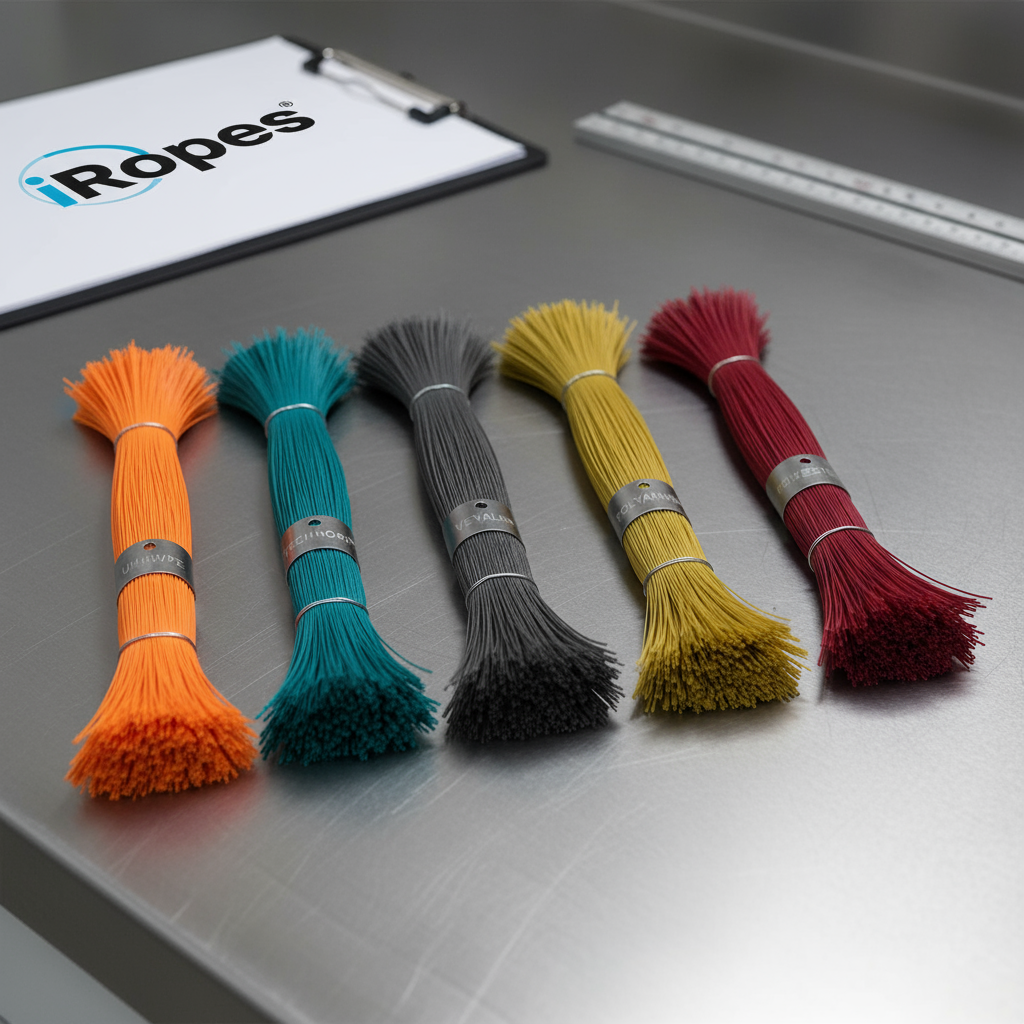
When you line up the most common synthetic fibres, the differences become clearer than a colour chart on a hardware shelf. All of them belong to the same rope material comparison exercise, yet each brings a unique balance of tensile power, creep behaviour and cost.
- UHMWPE (Dyneema®) – ultra‑high tensile strength, low stretch; best for heavy‑duty lifting, offshore mooring and rescue lines.
- Technora™ – high strength plus excellent heat resistance; favoured in industrial rigging and high‑temperature environments.
- Kevlar® – strong and impact‑resistant; ideal for ballistic tethers, aerospace and defence applications.
- Vectran® – very low creep and high fatigue endurance; used in sail‑cloth, aerospace composites and high‑speed winches.
- Polyamide (Nylon) – good elasticity and abrasion resistance; common in climbing ropes and general‑purpose utility lines.
- Polyester – UV‑stable, moisture‑resistant and cost‑effective; perfect for marine lines, outdoor tarps and long‑term exposure.
Performance trade‑offs often boil down to three questions you ask yourself during a rope material comparison:
- Strength‑to‑weight ratio – UHMWPE delivers the highest ratio, letting you run thinner lines without sacrificing safety.
- Creep and fatigue – Vectran® and Technora™ hold their shape longer under constant load, whereas nylon will elongate noticeably over time.
- Abrasion and UV durability – Polyester maintains ≥ 90 % of its original strength after years of sun; aramids need UV protection despite their high heat resistance.
Remember to apply a safety factor of at least 5:1 for static loads and 6:1–10:1 for dynamic loads when selecting a soft‑rope material.
If the question “Which rope material is strongest?” pops up, the answer is straightforward: UHMWPE (Dyneema®) tops the chart, followed closely by Technora™ and Kevlar®. Their high modulus means the rope resists stretching, which translates into tighter tolerances for precision lifts and reduced bounce on recovery lines.
Choosing the best‑use recommendation is a matter of matching the fibre’s personality to the job’s demands. For offshore rigging where salt and sun never quit, polyester‑coated lines give you longevity at a modest price. When you need a line that won’t creep under a constant load on a wind turbine, Technora’s heat‑stable profile shines. And if you are designing a lightweight rescue system that must survive repeated shock, UHMWPE’s superior strength‑to‑weight ratio delivers the needed performance without the bulk.
Now that the fibre landscape is clear, you can see how iRopes turns these raw characteristics into a custom engineered lifting solution that fits your exact project – from material selection to ISO 9001‑backed testing and protected intellectual property. The next step is to explore how that custom workflow adds value to every application.
iRopes Custom Solutions & OEM Benefits
After exploring the performance of each fibre family, the next question is how those numbers become a rope that fits your brand and budget. iRopes bridges the gap between raw data and a finished product through an end‑to‑end OEM/ODM workflow that treats every specification as a collaborative design brief.

The workflow begins with a material‑selection workshop where our specialists compare options—whether you need the ultra‑high tensile strength of UHMWPE, the heat resistance of Technora™, or the impact toughness of Kevlar®—and map those choices onto your load and environment requirements. Once a fibre is chosen, our design team creates a 3‑D model of the core‑sheath architecture, adds any required accessories such as loops or thimbles, and runs virtual stress simulations. A prototype is then produced for your sign‑off before the full production run commences.
Material Expertise
We guide you through synthetic fibre choices, from UHMWPE to Kevlar®, ensuring optimal strength‑to‑weight balance.
Design Flexibility
Our CAD team creates bespoke cross‑sections, core‑sheath combos and colour‑coded branding in a single iteration.
Quality Assurance
ISO 9001 audits verify tensile tests, elongation checks and UV‑stability before each batch leaves the floor.
Global Logistics
Palletised shipments reach ports worldwide, with optional non‑branded bags, colour boxes or custom cartons.
As a leading rope maker in China, iRopes focuses on strong synthetic fibres—UHMWPE, Technora™, Kevlar®, Vectran®, polyamide and polyester—with many coating options that showcase the high quality of “Made in China.” Recent results include: an off‑road expedition using a 12 mm UHMWPE recovery line achieved a 30 % weight reduction and doubled service life; a yacht client reported excellent UV performance from polyester‑coated soft ropes after multi‑year marine exposure; and a defence tether with a Kevlar® core met MIL‑STD‑810G with a 10 kN impact test, protected under our IP framework.
Packaging is another arena where iRopes tailors the solution. Wholesale partners can choose discreet white bags for cost‑effective bulk orders, vibrant colour‑boxed presentations carrying their logo, or rigid custom cartons to protect the rope during long‑haul container voyages. We also offer direct pallet shipping to customer locations worldwide.
Tailored to You
From fibre selection to branded packaging, iRopes turns specifications into a finished rope that bears your logo and meets your safety standards.
Whether you are sourcing a high‑stretch bungee material for a dynamic recovery system or a low‑crep soft rope material for precision lifting, the same disciplined process—material consultation, CAD design, ISO‑validated testing, protected IP and global delivery—ensures that the rope you receive is ready to perform from day one. This seamless pipeline sets the stage for the quick‑reference comparison table that follows.
Our rope material comparison has shown how tensile strength, elongation and environmental resistance dictate safety and cost‑per‑use. While bungee material delivers impressive stretch and shock absorption for dynamic recovery, soft rope material such as UHMWPE, Technora™ or Kevlar® provides far higher strength‑to‑weight ratios and minimal creep for precision lifts.
iRopes leverages its expertise in strong synthetic fibres (UHMWPE blue rope) and a full OEM/ODM workflow—backed by ISO 9001 and rigorous IP protection—to turn these data points into a rope that meets your exact performance, branding and shipping needs. Whether you need a high‑elastic bungee or a low‑crep soft rope, we can tailor the perfect solution.
Need a personalised rope design? Fill out the form below
For a customised recommendation based on the insights above, simply complete the inquiry form above and our specialists will contact you to discuss your specific requirements.
