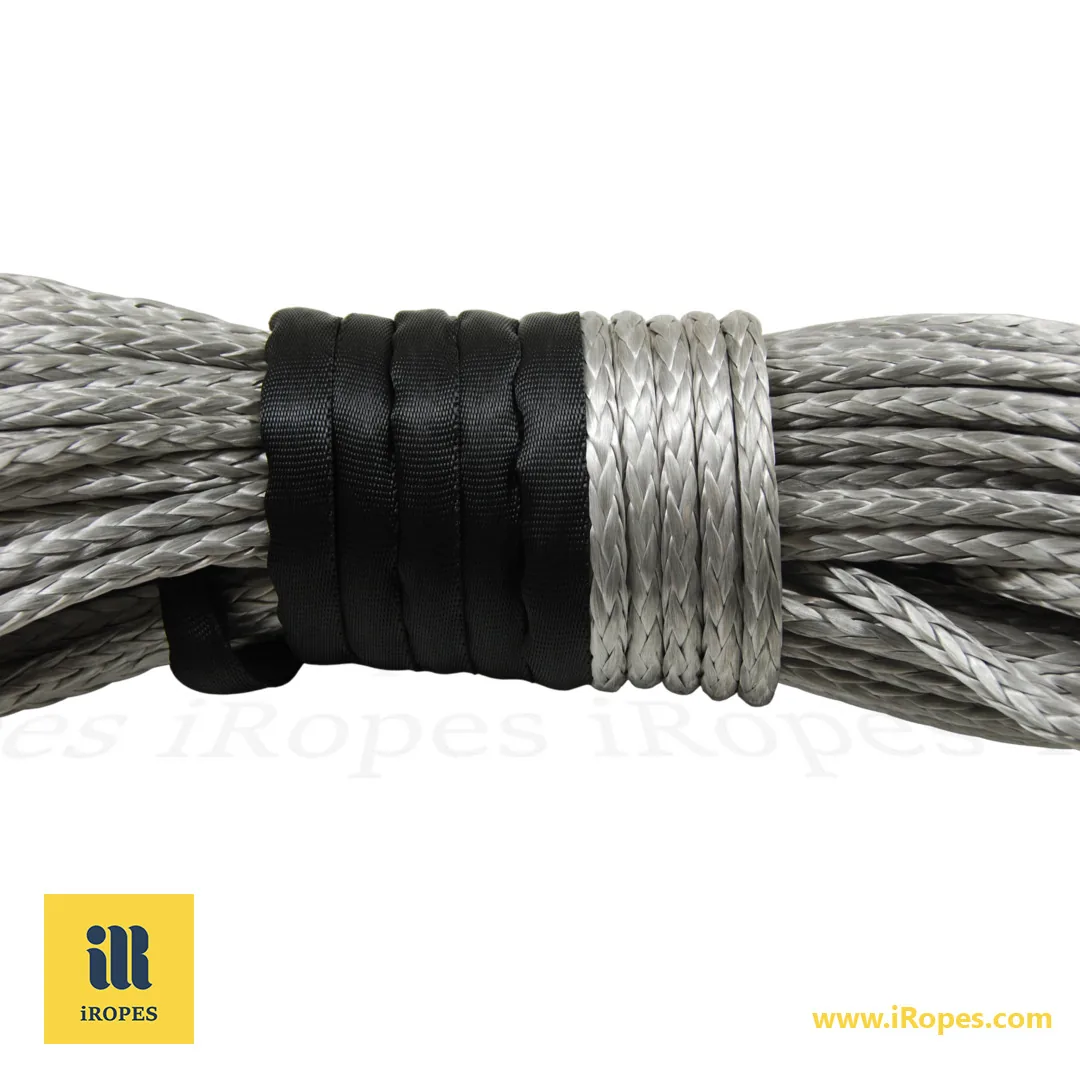
Most off‑road winch lines fall between 4 mm and 18 mm, while nylon rope commonly spans 6 mm to 28 mm. iRopes lets you pinpoint the exact diameter you require, from 0.4 mm up to 60 mm, within an ISO 9001 quality‑managed process, with tensile data available on request.
What you’ll master in 9 min
- ✓ Match any winch’s pull with a rope that exceeds its rated load by 1.5‑2×, reducing the risk of failure.
- ✓ Speed up ordering with iRopes’ ready‑made size‑to‑strength charts and custom‑size calculator.
- ✓ Reduce line length by about 15 ft per diameter step to maintain drum wraps and manage vehicle weight.
- ✓ Unlock custom colours, branding and IP‑protected designs across a 0.4‑60 mm spectrum to enhance brand visibility.
Many installers assume that a thicker rope automatically means more safety. In reality, oversizing can reduce drum capacity and efficiency. The right choice depends on nylon rope sizes, safety‑factor guidelines and the length‑reduction rule. In the next sections we’ll outline the calculations that help you avoid unnecessary bulk while maintaining a safe margin, and show how iRopes’ custom‑size service turns those numbers into a rope that fits your winch precisely.
Choosing the Right Nylon Rope Sizes
Now that you’ve seen how a mismatched rope can compromise safety, it’s time to decode the size system that most manufacturers, including iRopes, use for nylon ropes. Understanding the standard size numbers and their metric equivalents lets you pick a line that fits your winch, drum, or off‑road rig without guessing.
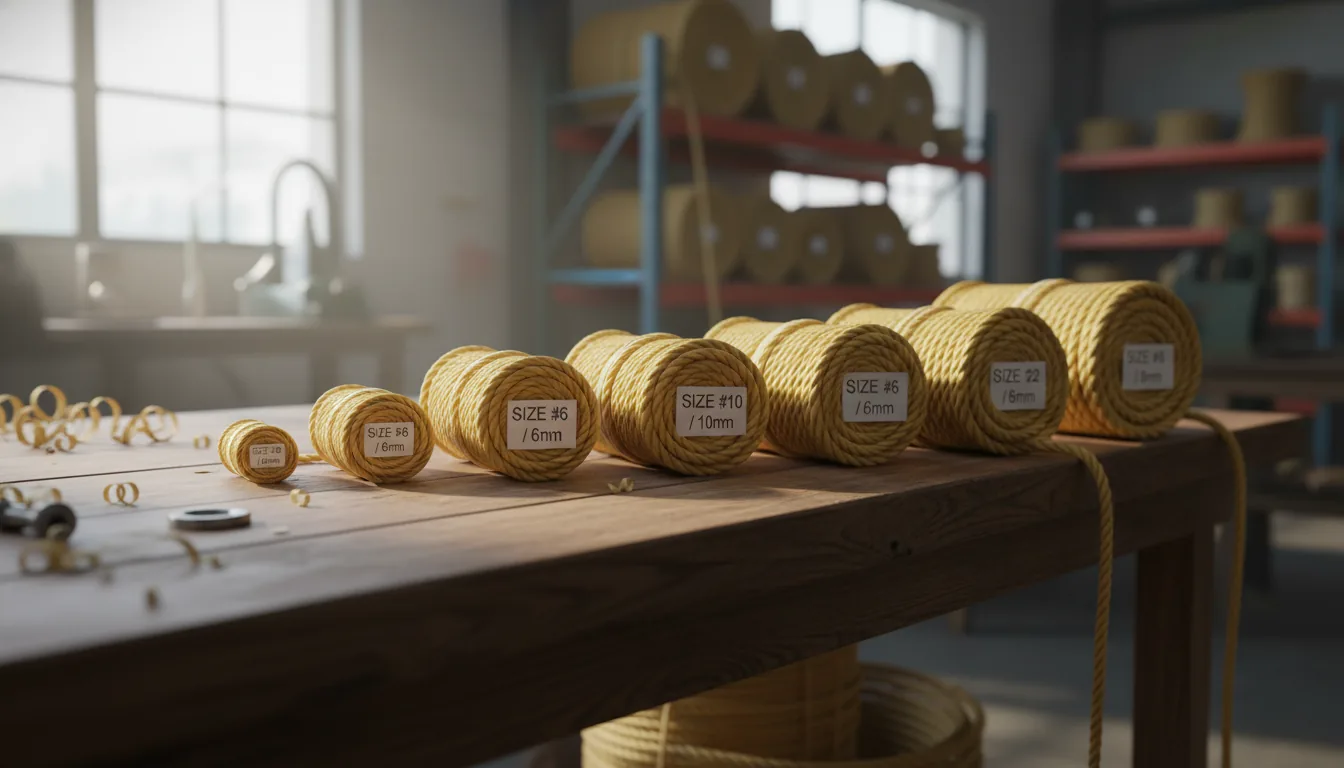
Here’s a quick reference that translates commonly used size shorthand into the metric diameters you’ll see on product sheets. The numbers act as ordering guides rather than formal standards.
- #6 – 6 mm (≈ 1⁄4 in)
- #10 – 10 mm (≈ 3⁄8 in)
- #14 – 14 mm (≈ 9⁄16 in)
- #20 – 20 mm (≈ 3⁄4 in)
- #28 – 28 mm (≈ 1 ¼ in)
The size number alone doesn’t tell the whole story; tensile strength varies with both diameter and the specific nylon formulation iRopes uses. Below is a concise table that answers the common People Also Ask query “What are the sizes of rope?” by pairing each diameter with its typical breaking load.
Nylon Rope Size & Strength Overview
| Size # | Diameter (mm) | Typical Breaking Load (k lb) |
|---|---|---|
| #6 | 6 | 8 |
| #8 | 8 | 12 |
| #10 | 10 | 20 |
| #12 | 12 | 28 |
| #14 | 14 | 36 |
| #18 | 18 | 55 |
| #20 | 20 | 68 |
| #24 | 24 | 95 |
| #28 | 28 | 130 |
With this chart at hand, you can instantly match a winch’s rated pull to a rope that exceeds the required breaking load by the recommended 1.5‑to‑2× safety factor. The next step is to look at how nylon twine differs in construction and where its smaller diameters shine.
Nylon Twine Sizes
Having clarified how rope dimensions map to winch performance, it’s time to turn to the smaller‑scale solution that often goes unnoticed: nylon twine. Although it shares the same polymer base, twine is engineered for very different tasks, and recognising those nuances can prevent mis‑selection.

Unlike rope, which is typically a braided or parallel‑core construction, twine consists of three to seven twisted strands that lie flat against each other. This geometry gives the material a supple, rope‑like feel while keeping the overall profile thin enough for delicate or space‑constrained jobs.
- Construction – Twine uses a twisted‑strand design; rope favours a braided core for maximum load distribution.
- Strength – Twine’s breaking load is lower, suited to light‑duty tasks; rope handles heavy‑load applications.
- Flexibility – Twine bends easily around irregular shapes, making it ideal for tight knots.
- Diameter range – Typical twine sizes span 1 mm – 6 mm, whereas rope starts around 6 mm.
- Common uses – Packaging, camping gear ties, bundle securing, and agricultural baling.
When you scan the market for nylon twine, you’ll usually see diameters listed in millimetres: 1 mm, 2 mm, 3 mm, 4 mm, 5 mm and 6 mm. The smallest gauges are favoured for lightweight parcel sealing, while the 5 mm–6 mm variants are popular among outdoor enthusiasts who need a durable yet easy‑to‑handle line for tarp rigging or fire‑starter bundles.
Twine’s twisted construction gives it a supple feel, making it ideal for tight knots and quick releases, while rope’s braided core provides the strength needed for heavy‑load applications.
Understanding these distinctions lets you match the correct nylon twine size to the task at hand, and sets the stage for the next step: applying the safety‑factor rule to choose the right winch‑rope diameter for your equipment.
Choosing the Right Winch Rope Sizes
Having distinguished nylon twine from heavier‑duty rope, the next logical step is to translate those dimensions into a winch‑rope specification that keeps both your equipment and your crew safe.
Rule of thumb: select a rope whose breaking load is 1.5 to 2 times the winch’s rated pull, then shorten the line by 15 ft for each diameter step above the stock size.
The safety‑factor rule ensures the line can absorb sudden shocks without snapping, while the length‑reduction rule preserves drum‑wrap efficiency as the diameter grows. For example, moving from a 4 mm line to a 6 mm line means you should reduce the usable length by roughly 15 ft to maintain the same number of wraps around the drum.
Winch‑Rope Size Conversion (mm)
| Winch‑Rope Diameter | Typical Nylon‑Rope Equivalent | Suggested Use |
|---|---|---|
| 4 mm | #6 (6 mm) | ATV/UTV light‑duty (≤ 4 k lb) |
| 6 mm | #6 (6 mm) | Small 4×4 and utility (≤ 5 k lb) |
| 8 mm | #8 (8 mm) | Mid‑range 4×4 (5–8 k lb) |
| 12 mm | #12 (12 mm) | Heavy 4×4 (9–12 k lb) |
| 18 mm | #18 (18 mm) | Industrial/recovery (≥ 20 k lb) |
When a winch is rated at 12 000 lb, the calculation proceeds as follows: first, multiply the rating by the lower safety factor (1.5), giving a required breaking load of 18 000 lb. Looking at the size‑to‑strength table, a 10 mm (≈ 3/8 in) nylon rope—equivalent to a #10 size—offers a typical breaking load around 20 k lb, meeting the 1.5× rule. If you’re stepping up from a stock 8 mm line to 10 mm, subtract about 15 ft from the advertised line length to retain the same number of drum wraps. The resulting recommendation: a 10 mm synthetic winch rope, trimmed about 15 ft shorter than the original 8 mm specification.

By following these two simple rules—multiply the winch rating by 1.5 to 2 and shave 15 ft for every diameter increase—you can confidently select the appropriate winch rope size without guessing. The next section will show how iRopes stretches those numbers even further, offering custom solutions from 0.4 mm up to 60 mm for any specialised application.
Choosing the Right Rope Size Summary
Having seen how iRopes stretches the conventional winch‑rope spectrum, it’s time to bring the whole sizing process back to a practical buying workflow. Whether you are ordering a tiny 0.4 mm cord for packaging or a massive 60 mm line for industrial recovery, the steps remain the same.

Full Spectrum
Diameters from 0.4 mm up to 60 mm let you match any load requirement, from delicate parcels to heavy‑duty recovery.
Brand‑Ready
Optional colour matching, logo imprinting and custom packaging keep your brand visible on every coil.
Fast Lead
Standard production runs are scheduled promptly, with expedited options for urgent projects. Lead times are confirmed at order.
ISO‑Certified
All batches follow an ISO 9001 quality‑management system, with test certificates available on request.
Quick‑Check
Diameter, length, breaking load, accessories and branding – confirm each before you order.
When you place an order with iRopes, the workflow is simple: request a quotation, approve a sample, sign the OEM/ODM agreement (which safeguards your intellectual property), and watch the production line run under ISO 9001 supervision. Lead times are confirmed at order and cover everything from colour‑matching to final packaging, whether you need a coil of 6 mm nylon rope sizes for a recovery rig or a spool of 2 mm nylon twine sizes for camping kits. The final checklist – correct diameter, required length, calculated safety factor, chosen accessories (loops, thimbles, or eye‑splices), and any branding details – ensures you receive exactly what your winch rope sizes demand without a second‑guess.
Ready for a custom rope solution?
With the charts and safety‑factor rules behind you, you can confidently match nylon rope sizes of 6‑28 mm to a winch’s rated pull, select the appropriate 1‑6 mm nylon twine sizes for light‑duty tasks, and choose the right 4‑18 mm winch rope sizes for heavy recovery, while remembering iRopes can produce anything from 0.4 mm to 60 mm to suit niche applications.
If you’d like a personalised recommendation—whether it’s colour‑matched branding, specialised accessories, or a custom diameter outside the standard range—simply fill out the contact form above and our rope specialists will get back to you.