Properly spliced double‑braid rope retains ≈ 95% of its original breaking strength – that’s about 4.75 kN on a 5 kN line, whereas many common knots can reduce strength significantly.
≈ 2 min read – What you’ll gain
- ✓ Retain around 95% tensile strength with a correctly executed splice.
- ✓ Create a low‑bulk, streamlined joint that glides through standard sheaves.
- ✓ Follow a clear, 10‑step Class I method most users can complete in minutes.
- ✓ Reduce rework with simple marking, tapering, and milking checks.
You’ve probably reached for a knot because it feels faster. Yet knots can sacrifice a significant share of a rope’s breaking strength and add unwanted bulk. A precise double braid end splice retains about 95% of the line’s capacity while running through hardware almost like the original rope. The guide below shows how to make that switch, step by step.
Understanding braided rope end splice
A braided rope end splice is the technique used to join the two ends of a double‑braid rope so the rope behaves as if it were a single, continuous piece. The construction of a double‑braid rope consists of a central core surrounded by an outer cover; the core and cover are twisted in opposite directions, which makes the rope torque‑free and ideal for strong, neat splices. This opposite‑twist design also means the rope does not rotate under load, a characteristic that many sailors and riggers rely on for precise handling.

Why bother with a splice at all? When you tie a knot, the fibres are compressed and friction concentrates stress, which can cut strength substantially. An end splice double braid rope preserves almost all of the original strength—often around 95%—while keeping the line’s diameter low and its appearance tidy. The result is a joint that looks professional, slides easily through hardware, and offers predictable performance under load.
When a knot is tied, the fibres are compressed and friction can steal a large share of the rope’s strength; a well‑executed splice lets the rope work as if it were whole.
The core components you’ll manipulate during a splice are straightforward, but each plays a crucial role in the final strength of the joint.
- Core - the central fibre bundle that carries the majority of load.
- Cover strands - outer yarns wrapped around the core, twisted opposite to cancel torque.
- Fid - a thin tapered rod used to pull the core through the cover during a splice.
Understanding how these elements interact gives you the confidence to select the right splice method for your project. Once you’re clear on the rope’s anatomy and the advantages of splicing, the next step is to compare the various splice options and decide which one matches your load, bulk, and usage requirements.
Choosing the right end splice double braid rope method
Now that you know why a splice can keep almost all of a rope’s strength, the next question is which splice shape will suit your project. Different splice styles trade a little bulk for convenience, or vice‑versa, so matching the method to the load, handling frequency and the environment will save you time and money.
The four basic splices are Eye splice, End‑for‑End splice, Back splice and Short splice. An eye splice creates a loop for attaching hardware, an end‑for‑end splice simply joins two rope ends, a back splice finishes a rope’s tail while adding a small bump, and a short splice shortens a rope without sacrificing strength. Knowing these options lets you decide whether you need a low‑profile joint or a robust loop for repeated loading.
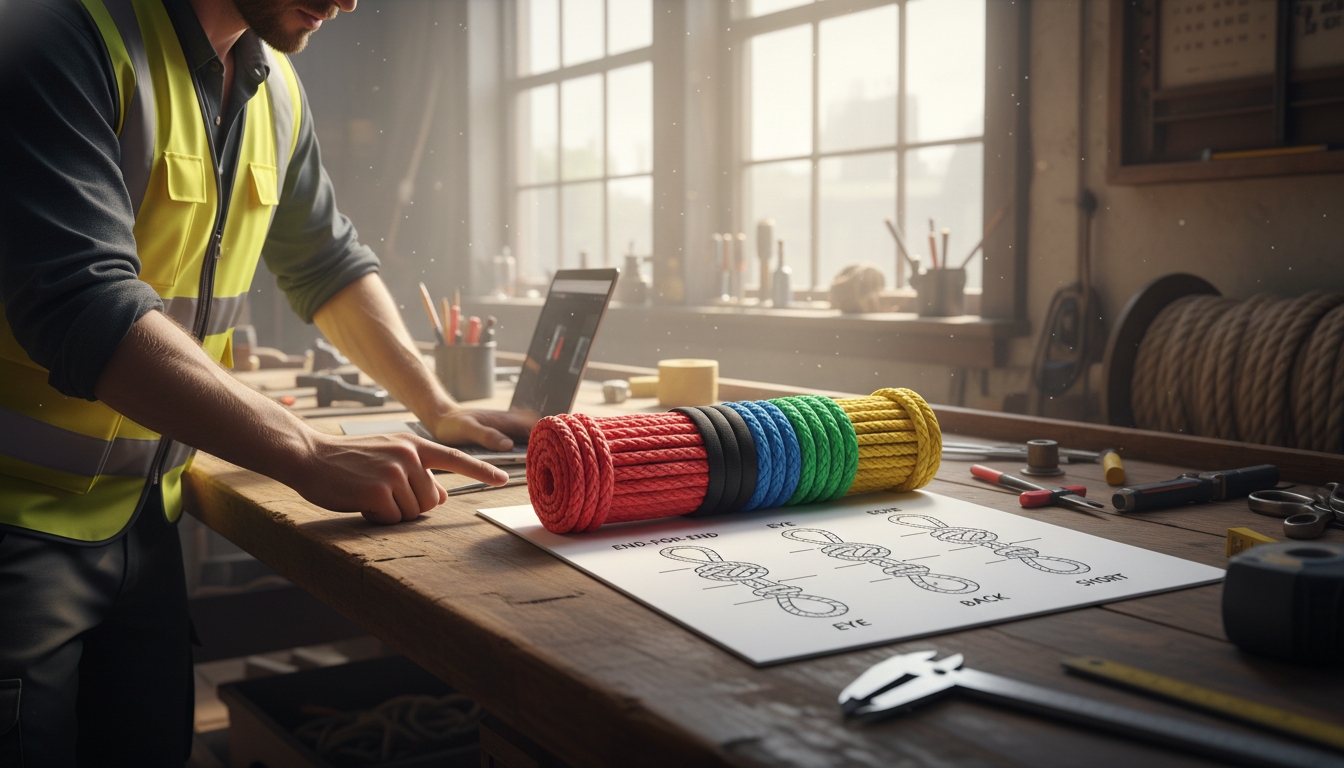
When you weigh up the options, ask yourself three practical questions:
- How much load will the splice see? End‑for‑end retains about 95% of breaking strength, while an eye splice holds roughly 90%.
- How much bulk can your hardware accommodate? Back and short splices add a noticeable bump; eye splices add the most bulk because of the loop.
- How often will the joint be handled? High‑frequency connections benefit from an end‑for‑end splice, which slides easily through sheaves and pulleys.
Material choice also nudges the decision. Nylon ropes stretch under sudden shock, which can be forgiving in dynamic loads, but they absorb more water and have lower UV stability than polyester. Polyester, on the other hand, holds its shape, resists UV and abrasion, and maintains colour in marine or outdoor rigs.
Material choice
If your application demands elasticity—such as a sailing line that must absorb gusts—nylon offers a little give. For fixed‑point installations, like a dock cleat eye splice, polyester’s low stretch and UV resistance keep performance steady over years.
Remember, a well‑chosen splice not only meets the mechanical demands but also fits the operational rhythm of your crew. If you’re still unsure which style aligns best with your load, bulk and material constraints, the next section walks you through a step‑by‑step Class I end‑for‑end splice, the go‑to method for most high‑performance applications.
Step-by-step double braid end splice procedure
Having identified the end‑for‑end splice as the workhorse for most applications, let’s walk through the exact motions that keep a braided rope end splice near 95% strength. Follow each move deliberately and the joint will behave as though the rope were never cut.

Before you start, gather the essential tools and check the fid‑length chart – the two‑column grid below saves you a trip to the workshop bench.
Essential Tools
What you need on the bench
For a complete solution, explore our Essential Rope Splice Kit designed for off‑road and industrial applications.
Fid
Tapered rod, length about twenty‑one times the rope diameter, used to feed the core through the cover.
Awl
Sharp tip opens the cover strands without damaging the core.
Tape
Secures the core ends before extraction and keeps strands aligned.
Fid‑Length Chart
Quick reference per rope size
¼‑in
1 fid ≈ 5.25 in (21× rope diameter).
½‑in
1 fid ≈ 10.5 in (21× rope diameter).
1‑in
1 fid ≈ 21 in (21× rope diameter).
Now, how do you splice a double‑braid rope? Follow these ten concise actions, keeping steady tension throughout.
Step 1 – Mark and tape the ends. Wrap tape around each rope end to prevent fray. Mark fid‑based measurements on the cover for the bury and crossover points.
Step 2 – Open the cover and extract the core. Use an awl to spread the cover without cutting fibres, then pull the core out at your first mark.
Step 3 – Mark the core and cover. On each rope, mark the core and cover for the required bury lengths so crossover points align later.
Step 4 – Prepare the opposing end. Repeat steps 1–3 on the second rope so both cores are free and clearly marked.
Step 5 – Insert core A into cover B. Load core A in the fid and pass it inside cover B at the entry mark. Bury at least one fid length past the crossover mark.
Step 6 – Insert core B into cover A. Mirror the previous step, feeding core B into cover A and burying past the opposing crossover mark.
Step 7 – Taper both core tails. Gradually remove a few yarns from each core tail to create a smooth taper and reduce bulk.
Step 8 – Milk the splice. Work the covers toward the splice so the cores disappear inside. Align crossover marks and smooth any bumps.
Step 9 – Trim and finish. Flush‑cut any protruding fibres. Add a few stitches or a light whipping if your specification calls for a lock.
Step 10 – Inspect and pre‑load. Apply a moderate, steady load to set the splice. The joint should feel solid and return close to the rope’s original diameter.
Always keep the splice under moderate tension while milking; a sudden release can cause the core to retract and mark the finish.
With the core steps mastered, you’ll notice the splice holds its shape and strength, making it ready for demanding loads. The next part of the guide will look at typical mistakes, safety checks, and how iRopes can supply pre‑spliced rope that meets your exact specifications.
Troubleshooting, safety, and iRopes custom solutions
Now that you’ve seen the core splice steps, it’s time to look at the little things that can turn a solid joint into a weak link. Even seasoned riggers find that a single oversight – like missing a piece of tape – can shave useful strength off the joint. Let’s walk through the most common slip‑ups, how to fix them, and what iRopes can do to keep the job off‑line for you.

Below is a quick checklist of pitfalls that regularly appear in workshop reports and forum threads. Spotting them early saves both time and material.
- Missing core tape – the core can fray when pulled through the cover; a short strip of high‑strength tape prevents this.
- Over‑cutting the cover – cutting too deep risks nicking the core, which reduces the splice’s load capacity.
- Insufficient milking – failing to draw the cover tight leaves voids that concentrate stress and create bulk.
- Incorrect fid sizing – an ill‑matched fid makes extraction and bury lengths inconsistent; size it to the rope.
- Excessive final snap‑tension – jerking the rope hard after the splice can damage freshly buried fibres; pre‑load steadily instead.
When the splice is executed correctly, strength loss is minimal. For a deeper dive into rope strength and splicing tools, see our guide on mastering double braid rope strength and splicing tools. For example, with a rope rated at 5 kN breaking load, a Class I end‑for‑end splice typically retains about 95% (≈ 4.75 kN). If you use an eye splice, plan for roughly 90% retention. Always verify the final rating against the manufacturer’s safety factor, often 5:1 for critical applications.
Beyond the hands‑on work, safety checks are non‑negotiable. Run a moderate load through the joint before any real‑world use; the splice should feel firm, without any audible “pop” or visible gaps. If the rope slides easily through the splice under load, you have likely over‑milked it – a gentle re‑tension will restore the proper fibre alignment.
iRopes OEM/ODM
We deliver pre‑spliced ropes built to your exact length, diameter, and colour code, all backed by ISO 9001 quality assurance and full IP protection.
Safety‑First Design
Our team validates load ratings and conducts sample testing so the finished product aligns with your specification and use‑case requirements.
Standard Supplier
Off‑the‑shelf rope typically arrives unspliced, leaving you to allocate time, tools, and expertise to finish the joint yourself.
Delivery Lag
Shipping unspliced bundles can add a delay while you arrange a workshop, test the splice, and re‑ship if adjustments are needed.
By keeping an eye on the checklist, confirming the load rating, and considering a factory‑spliced solution from iRopes, you turn a potentially error‑prone task into a reliable, repeatable part of your rigging workflow. With those safeguards in place, moving toward a finished, custom‑spliced rope becomes a straightforward next step.
By mastering the braided rope end splice you can retain up to 95% of the original breaking strength, avoid the bulk of knots and ensure a reliable joint for demanding applications. The step‑by‑step guide, tool checklist and troubleshooting tips give you the confidence to execute an end splice double braid rope or a double braid end splice on‑site, while iRopes’ customization services let you obtain factory‑spliced ropes that meet exact load, colour and branding requirements.
We have designed different fastening methods for different rope applications. We will recommend suitable fastening methods according to your needs, welcome to contact us to customise the rope.
Get your custom‑spliced solution
Need expert advice on the ideal splice or a bespoke rope configuration? Fill out the enquiry form above and our specialists will help you tailor the perfect solution.
