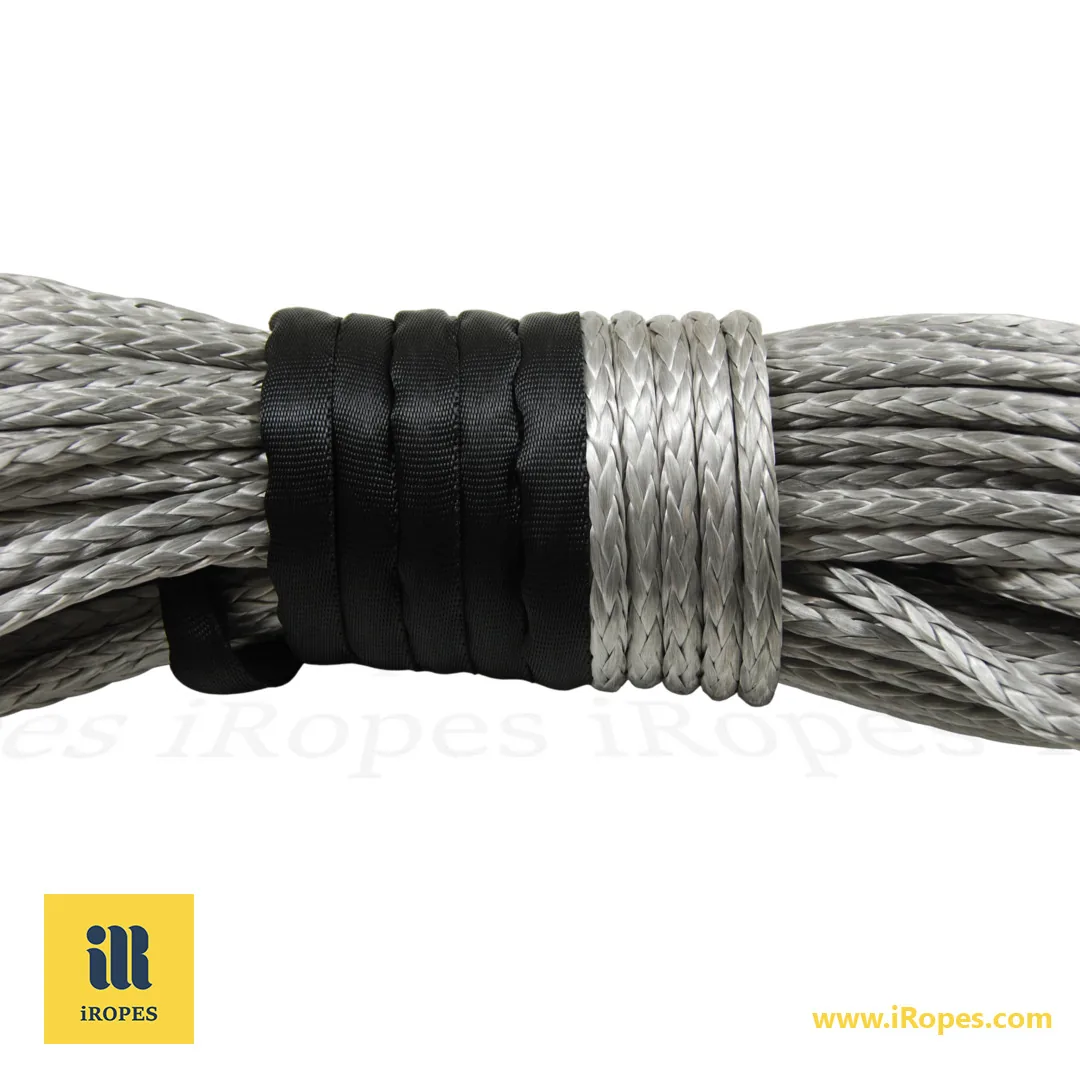
A proper eye splice on double‑braid rope typically preserves 90–95% of its breaking strength – far more than most common knots.
What you’ll gain (quick read)
- ✓ Retain roughly 90–95% of rope strength with a splice versus around 50% with common knots.
- ✓ Select the right fid and needle sizes for your rope diameter so splicing is faster and cleaner.
- ✓ Master a clear 5‑step eye splice that delivers consistent, reliable terminations.
- ✓ Leverage iRopes OEM/ODM services, including custom‑branded packaging, colours, and fittings, to align spliced ropes with your brand.
Many riggers reach for a knot because it seems quick, yet most knots can slash a line’s capacity by about half. A well‑made splice, by contrast, can maintain the majority of the original rating with a simple set of tools. iRopes double braid ropes consist of a braided core (inner core) surrounded by a braided sheath (outer cover). This construction offers high strength, good flexibility, and durability, making it ideal for dock lines and rigging applications. In the sections below, we’ll compare knots and splices, outline the exact double braided rope splicing tools you need, and walk through a practical eye splice that helps protect double braid rope strength.
Understanding Double Braided Rope Splicing Tools
After seeing how a well‑executed splice can keep 90–95% of the breaking strength, the next question is simple: what tools are needed for double braid rope splicing? The answer lies in a compact kit of double braided rope splicing tools that lets you work cleanly and confidently, whether you’re preparing a dock line or a custom rigging eye.
The core of any reliable kit includes four items that most rope specialists consider indispensable. Each piece plays a specific role in guiding the rope’s core and cover through the splice, preventing fraying and ensuring the finished eye holds firm under load.

- Fid – a tapered rod that opens the braid; choose a fid size matched to your rope diameter (typical kits cover 6–12 mm / 1/4″–1/2″).
- Splicing needle – often a Selma or D‑Splicer needle; the eye should carry the core neatly without over‑stretching the cover.
- Pusher – a smooth‑sided tool that drives the core and cover back into the braid without damaging the fibres.
- Cutting instrument – sharp scissors or a dedicated rope knife; essential for clean trimming, especially with low‑melting fibres like HMPE.
Match the fid or needle size to the rope diameter using the manufacturer’s sizing chart. A tool that’s too small can snag; one that’s too large can deform the braid. Use very sharp cutters for modern fibres, and work on a clean, flat surface for best results.
“A clean splice starts with the right tools; even the best technique falters if the fid is mismatched to the rope.” – iRopes rope specialist
With the right fid, needle, pusher and cutter in hand, the splice process flows smoothly, as described in our strong splice knot techniques guide, preserving double braid rope strength and giving you confidence for demanding marine or industrial applications. Next, we’ll explore how correct technique further protects the rope’s performance.
Maximizing Double Braid Rope Strength Through Proper Splicing
Now that you know which tools belong in your kit, the next step is to understand how the splice itself protects performance. When the core and cover are aligned correctly and bury lengths are respected, the splice can retain most of a double braid rope’s original capacity. By contrast, a poorly chosen knot can halve that capacity.
- Choose the appropriate rope material – nylon, polyester, and HMPE behave differently under load and during bury.
- Follow the maker’s recommended bury lengths (measured in fid lengths) to distribute load effectively.
- Apply even tension when burying and “milking” the cover so the core and cover share the load.
Key Takeaway
Match your splice method to the rope’s material: nylon offers elasticity, polyester holds low stretch, and HMPE provides ultra‑high strength. A correct eye splice will hold close to the rope’s original rating and far out‑perform a knot.

Answering a common question: How much strength is lost when using a knot instead of a splice? In practice, many knots reduce a rope’s effective strength by up to around half, whereas a correctly executed splice typically retains 90–95% of the original breaking strength.
Understanding these variables helps you preserve double braid rope strength in marine, industrial, off‑road, and rigging applications. With the fundamentals in place, you’re ready for a practical eye splice tutorial.
Why You Can't Splice Solid Braid Rope and What to Do Instead
In the previous section we saw how a proper splice can keep almost all of a double braid’s strength. Now let’s turn to a rope that simply won’t cooperate – solid braid rope. Try the same splicing kit and you’ll find the interlocking strands and filler prevent access to a separable core.

Because its construction uses tightly interwoven strands, often with filler yarns, solid braid rope has no loose elements to separate and re‑bury. That is why solid braid rope cannot be spliced – the very design that gives it a smooth, uniform surface also locks the fibres in place.
Solid braid rope cannot be spliced; its locked construction prevents opening the strands for a traditional splice.
Locked construction
A continuous, interwoven structure holds the rope together, leaving no separable elements to work with for a splice.
Filler strands
Dense filler yarns occupy the centre, further preventing access for any core‑through‑cover passes.
Clamping
Use a rated mechanical clamp or ferrule designed for the rope and follow the manufacturer’s load guidance for a secure, load‑bearing termination.
Whipping
Apply tight whipping with high‑tenacity twine to prevent fraying. Note: whipping stabilises the end; it is not a load‑bearing termination on its own.
When a solid braid must end in a load‑bearing point, the safest route is a suitable mechanical termination. If you need a custom‑shaped eye or loop, consider switching to a double‑braided rope – it can be spliced with the tools discussed earlier and will typically retain 90–95% of its original breaking strength. With that in mind, the next section walks you through the double braid eye splice used for strong, reliable terminations.
Step‑By‑Step Eye Splice for Double Braid Rope
Building on the idea that a solid braid needs a different termination, let’s dive into the eye splice that keeps a double braid rope’s performance intact. Done correctly, the eye behaves like an extension of the rope itself, preserving the original rating and delivering reliable load‑bearing capacity.

Start by measuring the eye size you need, then mark reference points with a water‑resistant pen. Make a clean cut at the termination point to eliminate frayed fibres that could compromise the splice.
- Core extraction – Mark the rope, open the cover with a fid, and carefully extract the core at the specified mark.
- Form the eye – Bend the rope to the desired eye size and mark the corresponding points on both core and cover.
- Passes and bury – Make the required passes (core into cover and cover into core) per the rope maker’s instructions, then bury smoothly for the recommended length (often several fid lengths).
- Tapering – Gradually trim selected strands of the core and/or cover to create a smooth taper from splice to standing part.
- Finishing – Lock‑stitch the throat with strong whipping twine and add an external whipping. Fit chafe protection if the eye will bear against hardware.
Even a perfectly executed eye splice contributes to overall double braid rope strength because it avoids the ~50% loss typical of a knot. Regular inspection keeps that advantage alive.
Inspection & Care
Keep the splice performing
Visual check
Look for fibre wear, fuzzing, or looseness at the throat. Inspect any thimbles or hardware for corrosion or sharp edges.
Lock‑stitch
Secure the splice with lock‑stitching using high‑tenacity twine and recheck the stitches periodically for movement or wear.
Eye alignment
Confirm the eye sits straight in line with the rope to avoid uneven loading during operation.
Protection & Storage
Extend splice life
Cover with sleeve
Slip a protective sleeve over the splice area to guard against abrasion and UV exposure.
Store dry
Keep spliced ropes in a dry, ventilated space. After saltwater use, rinse with fresh water and allow to dry fully.
Chemical care
Avoid harsh chemicals and solvents that can weaken fibres or finishes. Rinse off contaminants promptly.
With the eye splice completed, you have a custom‑shaped termination that behaves like the original rope—ready for the demanding marine, industrial, or off‑road tasks that brought you to the splice in the first place.
By selecting the right double braided rope splicing tools – a correctly sized fid, a sturdy needle, a smooth pusher and sharp cutters – you can typically retain 90–95% of the rope’s breaking load, far better than the ~50% loss of a knot. Because splicing solid braid rope is not feasible due to its locked construction, clamping is the viable load‑bearing alternative, while a correctly made eye splice on a double braid rope delivers the high strength, flexibility and durability prized for dock lines and rigging.
iRopes designs and manufactures customised double‑braid ropes to your exact specs, including diameter, length, colour, pattern, and branded packaging. Our ISO 9001‑certified facilities, OEM/ODM capability, punctual delivery, and strict IP protection make us a trusted partner for wholesale customers worldwide.
Need a custom rope solution or splicing guidance?
For personalised assistance with rope design, tool selection, or optimising double braid rope strength, simply complete the form above and our specialists will get back to you.