A 10 mm double‑braid polyester rope can hold 8,135 lb (≈ 36.2 kN) and a 6 mm version 3,064 lb (≈ 13.6 kN) – the exact figures you need to size safe halyards or lift lines. These numbers follow Cordage Institute test methods and are backed by ISO 9001 quality systems, so you can calculate SWL with confidence.
What you’ll gain – ~7‑minute read
- ✓ Choose the right diameter instantly – avoid over‑specifying and control cost with our size‑selection guide.
- ✓ Calculate safe working load in seconds – using the 1⁄10 or 1⁄4 factor removes guesswork.
- ✓ Cut through UV fade – polyester retains > 95 % strength after ≈ 500 h of sun exposure for dependable performance.
- ✓ Leverage iRopes’ OEM/ODM options – custom colours, eye splices and IP‑protected branding with on‑time global delivery.
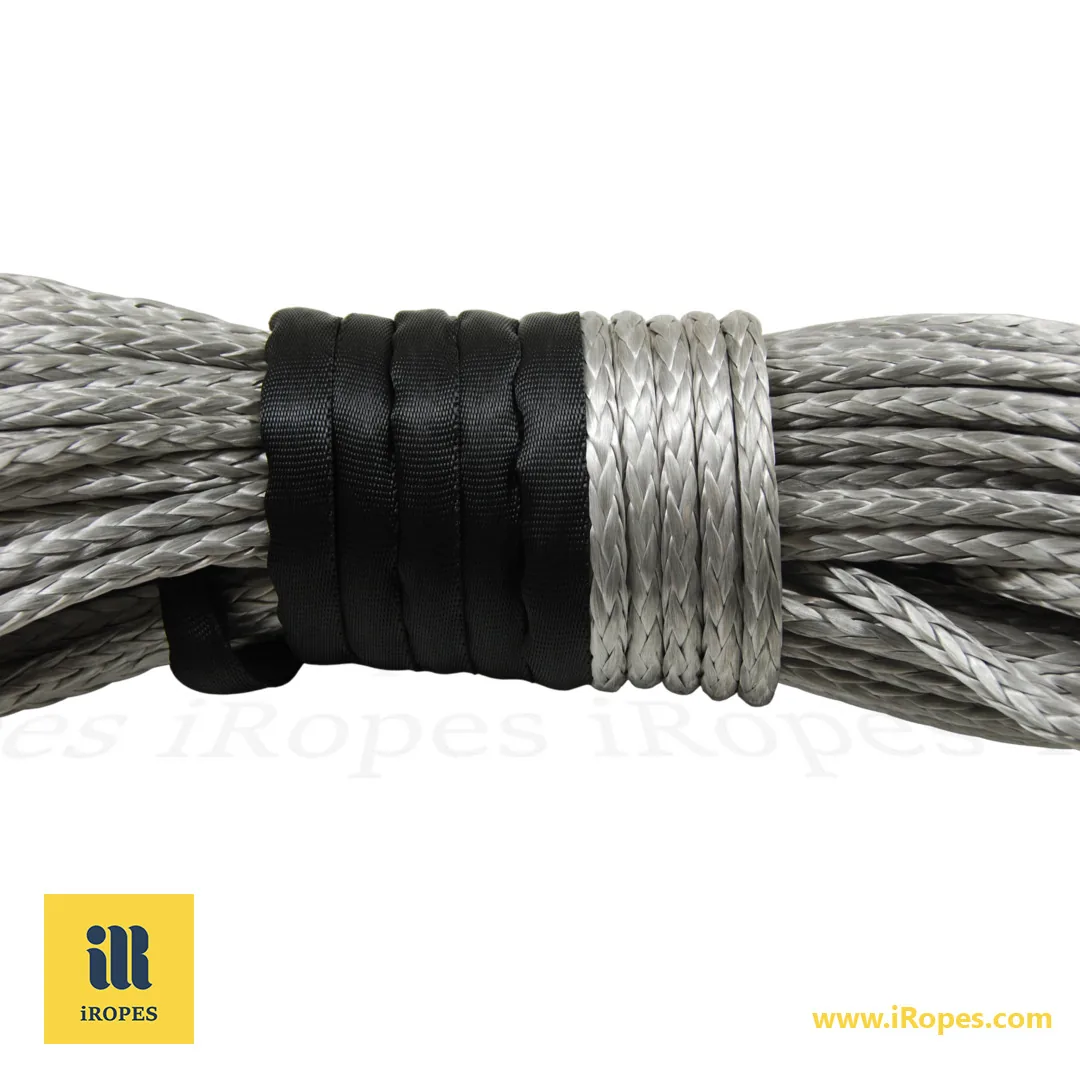
Double braid polyester rope offers the cruising or racing yachtsman a halyard range with outstanding performance. The rope is 100 % polyester with a braided core, and it’s exceptionally durable.
Many sailors and riggers pick a rope by diameter alone, assuming all 6 mm lines are created equal. In reality, the braided core and cover construction, plus strand configuration, can change the breaking strength between brands. Below, we reveal trusted numbers and a simple method to lock in the capacity you need while managing weight and cost.
Understanding double braid polyester rope breaking strength
Building on the performance overview, we now explore what gives double‑braid polyester rope its breaking‑strength credentials. The term “double braid polyester rope breaking strength” refers to the maximum load the rope can sustain before failure, a figure that underpins every safety calculation on board or on a worksite.
Definition and core‑sheath construction
A double‑braid polyester rope consists of a braided polyester core surrounded by a braided outer cover of polyester fibres. This core‑cover architecture distributes load evenly, enhances durability, and helps the rope retain shape under tension.

Key material properties
The polyester fibres used in both core and cover confer several advantages that directly influence the rope’s breaking strength.
- High tenacity - fibres resist elongation under load, delivering consistent performance.
- UV resistance - prolonged sun exposure does not significantly degrade strength, crucial for yacht rigging.
- Low stretch - minimal elongation improves sail trim accuracy and reduces fatigue on arborist lines.
- Chemical durability - resists oils and solvents common in industrial environments.
Measuring breaking strength and recognised standards
Breaking strength is obtained through destructive testing in accordance with Cordage Institute protocols and supported by ISO 9001‑certified quality systems. Test series typically sample at least ten specimens, record the peak load, and report the average as the official rating.
All break‑strength values are derived from destructive testing of at least ten specimens per size, ensuring reliable data for safety‑critical applications.
Why strength matters in real‑world applications
In sailing, a halyard must bear the load of a fully hoisted sail without excessive stretch; insufficient strength can cause gear failure and lost performance. Arborists rely on ropes that support dynamic motions safely, while industrial rigging demands predictable load‑holding to move machinery. Selecting a rope with verified breaking strength protects equipment, enhances efficiency, and safeguards people.
When you look at the 6 mm double braid polyester rope you’ll see a breaking strength of 3,064 lb, suitable for light‑duty halyards and auxiliary lines. The larger 10 mm double braid polyester rope climbs to 8,135 lb, making it a go‑to choice for dock‑lines and higher‑load rigging. With these fundamentals in mind, the next step is to see the exact numbers for the most common diameters.
Performance specs of 6mm double braid polyester rope
Let’s dive straight into the numbers that matter for the 6 mm size. When it comes to double braid polyester rope breaking strength, the 6 mm variant delivers roughly 3,064 lb (about 1,393 kg), a figure that makes it a reliable choice for light‑duty halyards and utility lines. For searchers asking “What is the breaking strength of a 6mm double braid polyester rope?”, the answer is just over three thousand pounds.

Translating that raw strength into a safe working load (SWL) is simple arithmetic, but using the correct safety factor is vital for both recreational and professional use.
- Divide the breaking strength by 10 for a general‑purpose SWL (≈ 306 lb or 139 kg).
- For critical applications, some teams use a 1⁄4 factor (≈ 766 lb or ≈ 348 kg). Always follow the standards that apply to your use case.
- If you plan to use multiple parallel lines and the load is evenly shared, multiply the single‑line SWL by the number of lines.
These calculations answer the common query: “What is the breaking strength of a 6 mm double‑braid polyester rope?” – it is just over three thousand pounds, and the corresponding SWL depends on the safety margin required for your application.
Typical Uses
• Small‑boat halyards – the low stretch keeps sail trim crisp.
• Light‑duty rigging – perfect for auxiliary lines on cruising yachts.
• General utility – control lines, lashing, and tie‑downs where predictable handling matters.
If you need a step up in capacity, the 10 mm double braid polyester rope pushes the breaking strength beyond eight thousand pounds, opening the door to dock‑lines and higher‑load industrial pulls. With the 6 mm figures now clear, you can decide whether the lighter, more agile rope meets your project’s demands or if you should size up for added margin.
Performance specs of 10mm double braid polyester rope
If you’ve decided that the 6 mm option is too modest, the 10 mm double‑braid polyester rope delivers the next level of capability. Its core‑cover construction provides high capacity with low stretch, making it a favourite for demanding marine and industrial tasks.
For a broader range of yacht‑specific sizes, see our 8 mm‑12 mm double‑braid polyester yacht rope guide, which includes detailed specifications and customization options.

Understanding the raw numbers helps you match the rope to the job. Below the two‑column showcase breaks the data into two quick references: the absolute breaking strength and the resulting safe‑working‑load (SWL) figures you’ll use on‑site.
Breaking Strength
8,135 lb (3,689 kg) – ample capacity for typical halyards on 30‑ft yachts and similar loads.
kN Conversion
≈ 36.2 kN, giving a clear metric reference for engineering calculations.
SWL @ 1⁄10
≈ 814 lb (369 kg) – suitable for general‑purpose rigging and dock‑lines.
SWL @ 1⁄4
≈ 2,034 lb (923 kg) – a higher permissible load used in some scenarios. Confirm compliance before any life‑safety use.
Answering a common People Also Ask query – “How do I calculate the safe working load of a rope?” – you simply divide the breaking strength by the chosen safety factor. Use 1⁄10 for routine loads and consult applicable standards if considering other factors. For multiple strands, only multiply the result if the load is evenly shared.
Safe Working Load = Breaking Strength ÷ Safety Factor. For a 10 mm double braid polyester rope, SWL ≈ 814 lb (1⁄10) or ≈ 2,034 lb (1⁄4). Adjust only if multiple lines share the load evenly.
Typical applications for this size include yacht halyards that must bear full mainsail loads, robust dock‑lines for larger vessels, and heavy‑duty industrial pulls such as moving machinery or tensioning fabric systems.
With the strength numbers now clear, you can compare the 6 mm and 10 mm options and decide which diameter aligns with your load‑capacity, handling, and budget requirements.
Choosing the right diameter and customization options for your project
Now that you understand the raw breaking‑strength figures, the next decision is whether the lighter 6 mm line or the beefier 10 mm version best matches your load‑capacity, handling feel and budget. As a rule of thumb, match the rope’s diameter to your maximum expected tension plus a comfortable safety margin – the larger the diameter, the higher the allowable load, the lower the stretch, and the higher the price.
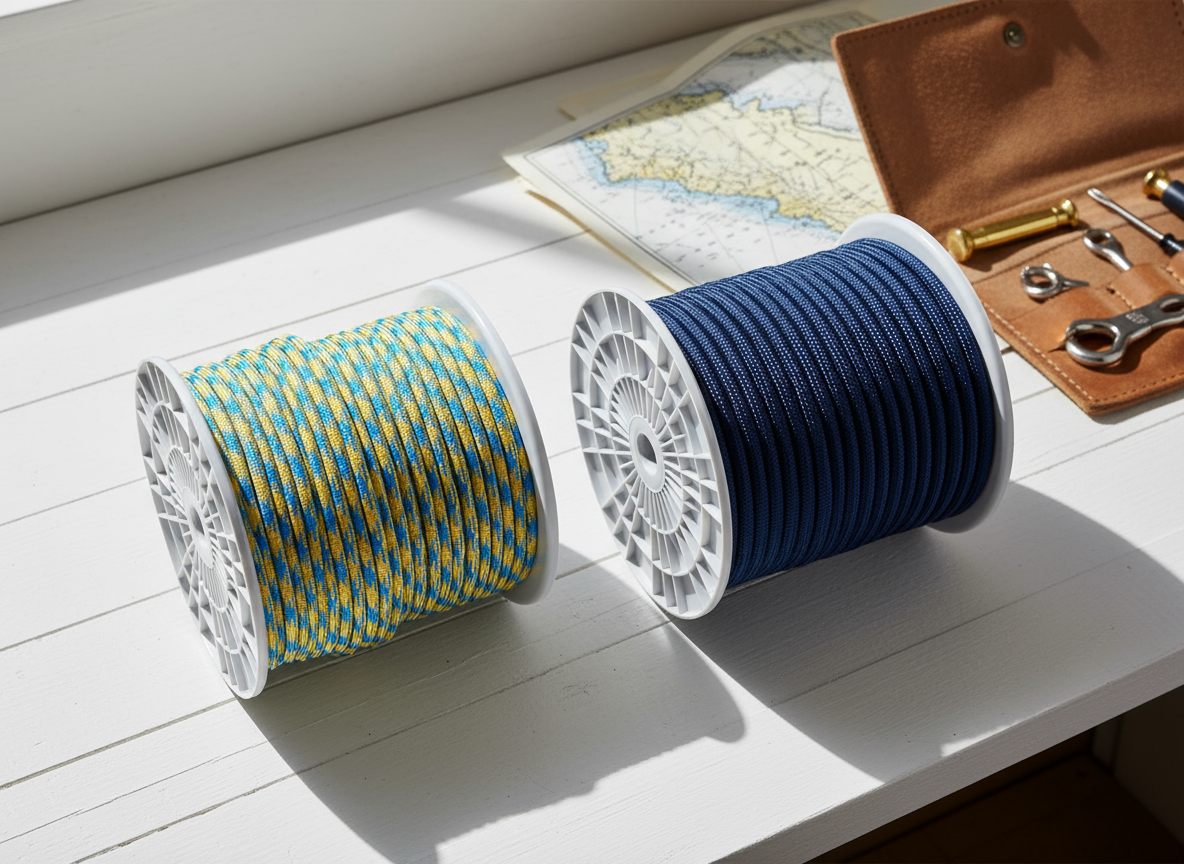
When you compare the two sizes, consider four practical factors. First, load capacity: the 10 mm line can sustain about 2.7× the force of the 6 mm, which matters for higher‑load rigging. Second, stretch: a thicker rope stretches less, giving you crisper sail trim. Third, handling: the slimmer 6 mm is easier to coil, splice and stow, while the 10 mm feels more substantial in the hand. Fourth, cost: larger diameters command a higher per‑metre price, though bulk orders often narrow the gap.
Diameter selection
Key considerations for the right size
Load capacity
Choose the diameter that comfortably exceeds your peak load when divided by the chosen safety factor.
Stretch & handling
Thinner ropes stretch slightly more but are easier to rig; thicker ropes give a firmer feel.
Cost efficiency
Balance budget constraints with performance – bulk pricing often narrows the price gap.
Customisation possibilities
Tailor the rope to your brand and job site
Length & colour
Order any length from a metre to several hundred metres and pick from standard hues or custom colours matched to your brand.
Eye splices & terminations
Factory‑finished eye splices, thimbles or custom‑cut loops can be added to match your rigging plan.
Reflective & glow‑in‑the‑dark
Safety‑enhancing elements can be woven into the cover for night‑time visibility on docks or work sites.
iRopes backs every custom order with ISO 9001 certification for consistent processes and quality assurance. Our published breaking‑strength values follow Cordage Institute methods. Dedicated IP protection safeguards your designs and branding, while our logistics team ships non‑branded or customer‑branded packaging (bags, colour boxes or cartons) and delivers pallets directly worldwide.
For an in‑depth look at marine‑grade polyester cordage, see our Expert Guide to Top Marine and Polyester Cordage, which covers performance criteria, standards, and customization options.
Polyester vs Nylon
Polyester offers excellent UV stability and lower stretch, whereas nylon provides greater elasticity but loses strength faster under sunlight and when wet.
Answering two common FAQs: polyester rope generally stretches less and holds up better in UV than nylon of the same diameter; ultimate tensile strength can be similar, so choose based on exposure and stretch needs. And yes, you can request custom colours – from high‑visibility options to corporate hues – without compromising the core‑cover integrity.
For a side‑by‑side comparison of the two materials, read our Polyester Combo Rope vs Nylon Rope Insights, which breaks down durability, stretch, and UV resistance.
With the diameter guidance, the full suite of customisation options, and the OEM/ODM assurances from iRopes, you now have the information needed to select a rope that meets both performance demands and brand requirements. The next step is to compare your project’s load calculations against the safe‑working‑load guidance above, ensuring the chosen rope will hold up under real‑world conditions.
Get a personalised rope solution
Having explored the core‑cover construction, material benefits and the double braid polyester rope breaking strength numbers, you now know that the 6 mm double braid polyester rope delivers 3,064 lb and the 10 mm double braid polyester rope reaches 8,135 lb, giving you clear SWL guidance for light‑duty lines through to heavier rigging. The 100 % polyester fibres provide exceptional durability, low stretch and UV resistance – ideal for cruising or racing yachtsmen seeking outstanding halyard performance.
If you’d like personalised assistance to match a rope to your project’s load calculations, branding or custom colour requirements, simply complete the enquiry form above and our iRopes specialists will be in touch.