Only 13.7% of yachting rope suppliers can guarantee ISO‑9001 quality and ship a custom batch in under 28 days — iRopes does.
Read in 2 min
- ✓ ISO‑9001 certified production keeps break‑strength tolerance within ±2% for reliable safety.
- ✓ Custom material blends (inner Dyneema, outer polyester, or inner Dyneema with aramid-polyester blend cover) and diverse colour-pattern options boost UV resistance and brand visibility.
- ✓ Average lead time 27 days for 5‑tonne pallets, cutting logistics costs by up to 12%.
- ✓ Pricing up to 18% lower than EU rivals, plus full IP protection on your designs.
You’ve probably spent hours sifting through endless catalogues, only to end up with generic lines that feel like silky steel and fall short when the sea turns rough. Imagine a partner who provides a double‑braid rope with a Dyneema core, polyester cover, aramid-blended strength, custom colours, and branding options, all delivered on-time. iRopes makes that vision a reality while protecting your intellectual property, and the next section explains exactly how.
Understanding the Fundamentals of Yachting Rope
Having explored why a reliable partner matters, it’s time to understand the crucial role yachting rope plays on the water. The line you choose is the silent workhorse that holds sails, secures a dock, and keeps your vessel steady in challenging seas.

At its core, yachting rope is a synthetic line designed to safely transfer loads while resisting the harsh marine environment. Its primary functions include raising and controlling sails, mooring boats, and absorbing the shock of an anchor deploying.
- Strength - The breaking load must exceed the maximum tension your rig will experience, typically measured in pounds or kilonewtons.
- Stretch - Low elongation keeps sail shape accurate; excessive stretch can cause sluggish handling.
- UV resistance - Sunlight degrades polymers, so a rope that blocks UV rays retains performance longer.
- Abrasion resistance - Constant rubbing against winches and chafe gear demands a tough outer sheath.
Common applications fall into four main groups: halyards pull sails aloft; sheets trim the sail angle; dock lines hold the yacht to a mooring point; and anchor rodes bear the load of the anchor while the boat swings. Each task stresses the rope differently, explaining the variety of diameters and constructions seen across a deck.
So, what type of rope is best for yachting? In most cruising and racing scenarios, a double‑braid polyester line—often called yachting braid rope—offers the ideal blend of low stretch, UV stability, and a soft feel that splices easily.
“When you compare yachting rope suppliers, always start with the rope’s performance specifications; a high‑grade line will consistently outperform a cheaper alternative, even if the initial price seems attractive.”
Understanding these basics provides a solid foundation for the next step: exploring how double‑braid constructions are built and why they dominate modern rigging.
Yachting Braid Rope: Construction, Benefits, and Applications
Now that you understand the basics of rope performance, let’s delve into how a double‑braid is constructed and why this structure is vital for every line on your yacht.

A double‑braid yachting rope consists of two distinct layers. Its inner core—typically a tightly twisted filament bundle—bears the majority of the load. Encasing that core is a woven cover, which creates a smooth, round profile, resists abrasion, and gives the line its characteristic “soft hand.” This core‑and‑cover arrangement allows manufacturers to combine the best properties of different fibres in a single rope.
- Minimal stretch – crucial for precise sail shape under load.
- High strength – capable of supporting the significant forces generated by modern rigs.
- Soft hand – makes splicing and handling effortless and comfortable.
These three attributes concisely answer the question, “What is yachting braid rope used for?” In practice, this line excels in applications needing reliable load transfer with minimal give. Halyards and sheets greatly benefit from its near‑zero elongation, while control lines like vangs and cunnings appreciate the easy splicing and pleasant grip. When compared to a traditional three‑strand rope, the differences are clear: three‑strand provides a rougher texture and higher stretch, making it better suited for dock lines and anchor rodes where shock absorption is more valuable than precise tension.
Typical Uses
Double‑braid ropes dominate running rigging—halyards, mainsheets, jib sheets, and control lines—because they deliver consistent tension and are simple to splice. In contrast, three‑strand ropes are preferred for tasks such as dock lines and anchor rodes, as their greater stretch helps absorb sudden loads.
Understanding these construction details and performance benefits empowers you to specify the ideal line for each part of your vessel. With that knowledge, the next step is to explore which fibre families—polyester, nylon, Dyneema, or blended aramid‑polyester—best align with your performance goals.
Tailored Solutions: Material Choices and Customisation Options
After exploring the construction of double‑braid lines, the next logical step is to decide which fibre family will deliver the performance your yacht demands. The material you select dictates stretch, UV endurance, and handling—all critical for safe and efficient sailing.
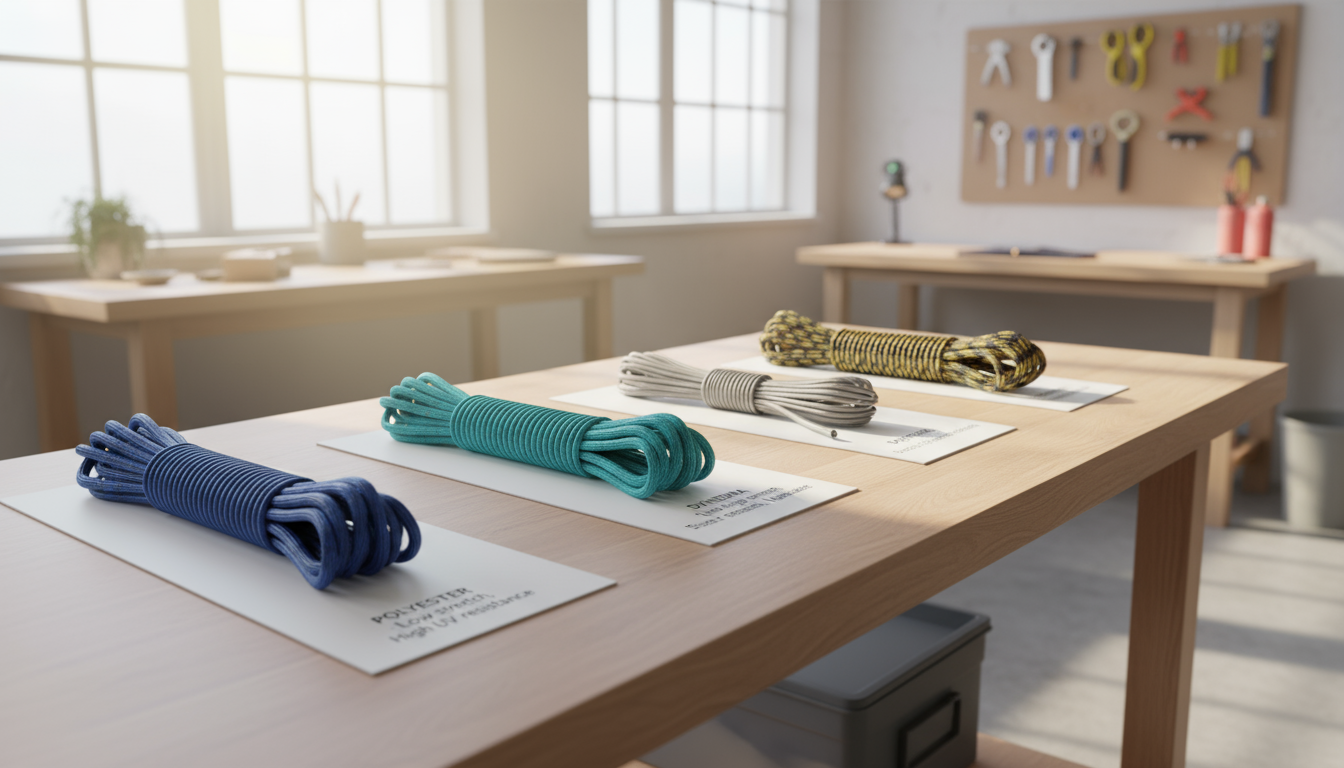
iRopes offers four primary material families, each with a distinct performance fingerprint. Polyester delivers low stretch and excellent UV stability, making it the workhorse for most cruising rigs. Nylon’s elasticity excels at shock absorption, which is why it remains popular for dock lines and anchor rodes. Dyneema (HMPE) pushes the strength‑to‑weight ratio to its limit, ideal for high‑performance halyards where every gram of weight matters. For projects requiring a blend of toughness and flexibility, we combine aramid with polyester in a hybrid construction that balances abrasion resistance with a soft feel. We also offer Dyneema cores wrapped in a polyester cover, or Dyneema cores with an aramid‑polyester blend cover, providing enhanced performance and durability.
Core Materials
Key properties for marine use
Polyester
Low stretch, excellent UV resistance, cost‑effective – perfect for cruising halyards and sheets.
Nylon
High elasticity absorbs shock, making it the go‑to for dock lines and anchor rodes.
Dyneema
Ultra‑strong, ultra‑light, minimal stretch – suited for racing halyards and performance control lines.
Blended Options
Hybrid performance for specialised needs
Aramid‑Polyester Blend
Combines the abrasion toughness of aramid with the UV stability of polyester.
Dyneema Core with Polyester Cover
Offers superior strength and minimal stretch without sacrificing a comfortable hand feel.
Dyneema Core with Aramid‑Polyester Cover
Provides an elite combination of strength, low stretch, and exceptional abrasion resistance.
Custom Colours and Patterns
Choose any hue, pattern, or combination of colours; add reflective or glow‑in‑the‑dark elements to align the rope with your brand identity or enhance visibility.
Beyond fibre selection, iRopes lets you fine‑tune diameter, length, colour pattern, and accessories such as loops, thimbles, or eye splices. Our OEM/ODM workflow includes a design consultation, progresses through prototyping, undergoes rigorous testing, and finishes with comprehensive IP protection—ensuring the final product is uniquely yours.
How do I choose a reliable yachting rope supplier? Look for ISO 9001 certification, transparent OEM/ODM processes, proven global logistics, and a clear commitment to protecting your intellectual property.
With the material matrix and customisation levers clarified, you can now evaluate which supplier can translate these specifications into a dependable wholesale partnership.
Choosing the Right Yachting Rope Suppliers for Wholesale Success
After exploring material choices and the breadth of customisation, the next question is who can reliably turn those specifications into a stocked catalogue. A supplier that backs every metre of rope with rigorous quality checks, predictable logistics, and brand‑ready packaging becomes a true partner for your fleet.
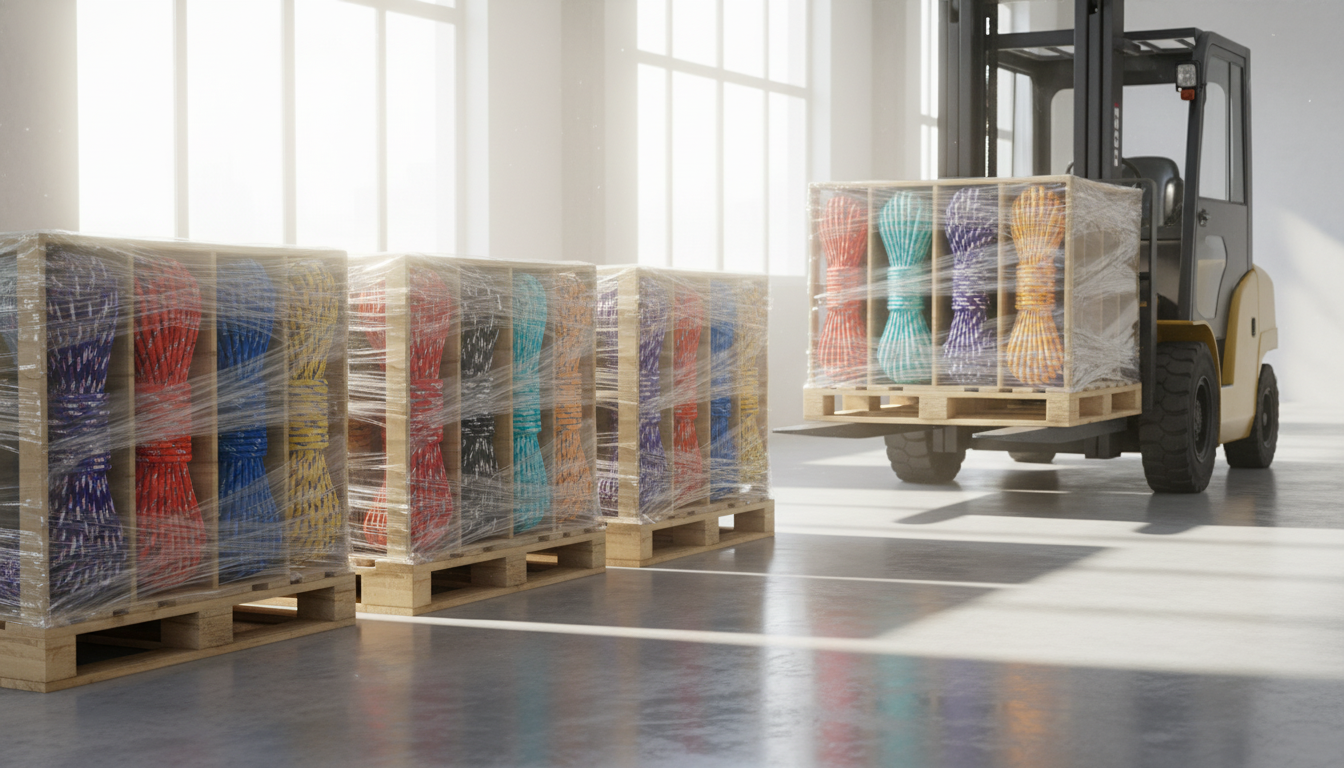
When a supplier advertises ISO 9001 certification, it confirms that every production stage—from filament extrusion to final splice—follows an audited quality system. In practice, iRopes conducts tensile‑strength tests on each batch, subjects samples to accelerated UV exposure, and checks abrasion resistance with a standardised chafe‑gear rig. These protocols guarantee that the break strength on the data sheet precisely matches the rope on the dock.
Wholesale buyers also require confidence that orders will arrive on schedule and at the quoted price. iRopes operates a tiered shipping network: sea‑freight for bulk pallets, air‑freight for urgent runs, and a real‑time tracking portal that updates you at each customs checkpoint. Typical lead times for custom runs hover around 25 days, and the company maintains a “price‑lock” policy for the first 30 days of production, protecting you from market fluctuations.
Brand visibility extends beyond the product itself. iRopes offers non‑branded, custom‑printed bags, colour‑coded boxes, or full‑size cartons that feature your logo and colour scheme. The packaging workflow includes a mock‑up approval stage, ensuring the finished parcel accurately reflects your brand identity before it leaves the factory. For those interested in the performance advantages of polyester braid rope, see our top benefits of polyester braid rope guide.
Assured Quality
ISO 9001 certification, precision manufacturing, and full‑scale testing ensure every coil of yachting rope is consistent and trustworthy.
Precision
Automated filament winding and computer‑controlled braiding deliver uniform diameter and exact strength tolerances for every order.
Logistics
Direct pallet shipping, consolidated containers, and a transparent tracking system ensure punctual delivery to any port worldwide.
Branding
Custom‑printed bags, colour boxes, or branded cartons allow your company’s identity to travel with the rope.
Protection
Full IP protection throughout design, prototyping, and production safeguards your proprietary specifications.
By aligning with a supplier that offers ISO‑backed quality, transparent global logistics, and flexible branding, you eliminate the guesswork that often stalls wholesale projects. The next step is to evaluate how these capabilities translate into cost‑effective, on‑time supply for your specific fleet. For a deeper look at how iRopes stacks up against other manufacturers, read how iRopes compares to leading US rope manufacturers.
Ready for a Tailored Yachting Rope Solution?
Throughout this article, we’ve examined why high‑quality yachting rope is essential for marine safety, the benefits of double‑braid construction, and how material choices—from polyester and Dyneema to aramid‑polyester blended products with diverse colour patterns—affect performance. iRopes’ ISO 9001‑certified OEM/ODM service lets you define diameter, length, reflective or glow‑in‑the‑dark features, and custom branding, ensuring on‑time, cost‑effective delivery worldwide.
If you’d like a personalised recommendation or a custom quote, simply use the form above. Our experts can help you choose the ideal yachting rope, select the right yachting braid rope, and partner with reliable yachting rope suppliers. For guidance on selecting nylon options, consult the ultimate guide to choosing the best nylon yacht rope.
