iRopes delivers 12,734 tonnes of custom-engineered rope to 37 countries each year, cutting partner lead-times by up to 28%.
Your 2-minute cheat-sheet (≈2 min read)
- ✓ Tailor-made material & diameter → exact load capacity
- ✓ ISO 9001 testing ensures ≤0.5% defect rate
- ✓ Global shipping cuts freight costs by up to 22%
What if your rope could be customised, delivered on time, and fully protected by IP safeguards? This guide shows you exactly how iRopes engineers these advantages, from fibre selection to the finished coil.
Understanding rope manufacturing: From raw fibres to finished rope
The craft of transforming simple fibres into strong, reliable rope has evolved significantly over time. Early sailors carefully stretched hemp along long, straight paths to twist it into rope. Today, sophisticated factories spin polymer pellets into high-performance cordage using advanced machinery. This journey from raw material to finished product lies at the very heart of modern rope manufacturing.

Historical evolution of rope manufacturing
In the 17th century, a “ropewalk” referred to a long, narrow building where skilled craftspeople laid out fibres and twisted them into rope, essentially serving as an early rope factory. As industrialisation advanced, steam-driven machines gradually replaced manual labour. Later innovations, such as computer-controlled braiders, transformed the process into a high-speed, precision-driven operation. This shift from ropewalks to today's automated lines clearly illustrates how rope manufacturing has continuously adapted to new materials and market demands.
Key raw materials: natural vs synthetic fibres
- Natural fibres – such as manila, hemp, cotton, and sisal. These are valued for their biodegradability and classic feel, often finding use in heritage or eco-focused applications.
- Synthetic fibres – including nylon, polyester, polypropylene, and polyethylene. These offer superior strength, low stretch, and excellent resistance to water or UV exposure.
- High-performance fibres – examples like Kevlar, Dyneema, and Vectran. These are meticulously engineered for extreme load-bearing tasks and are predominant in specialised sectors like defence and climbing.
Step-by-step rope manufacturing process
- **Prepare the fibres:** Natural strands are cleaned and oil-treated, while synthetic pellets are melted and extruded into fine filaments.
- **Form yarn:** These filaments are then carefully twisted into continuous yarns and wound onto bobbins.
- **Dye (optional):** Colourants can be added during extrusion or after yarn formation, particularly for safety-critical visibility.
- **Construct the rope:** Yarns are grouped into strands and meticulously twisted (laid) or braided. Kern-mantle designs involve adding a protective sheath around a core.
- **Finish and test:** Ends are sealed, protective coatings are applied, and each batch undergoes rigorous tensile and abrasion testing to ensure it meets industry standards.
Understanding each of these critical stages helps to explain how a specialised rope manufacturing company can precisely tailor products for diverse applications, from off-road adventures to yachting or defence. The next section will delve into how iRopes effectively leverages this intricate process to deliver customised, high-quality rope solutions for our wholesale partners worldwide.
Why choose a leading rope manufacturing company like iRopes
Having explored the fundamental principles of rope creation, the logical next step is to understand what truly distinguishes a leading industry player. iRopes combines profound engineering expertise with a customer-first mindset, transforming the complex rope manufacturing process into a bespoke service. This approach is specifically designed to meet the exact requirements of each wholesale partner, making it a truly tailored experience.
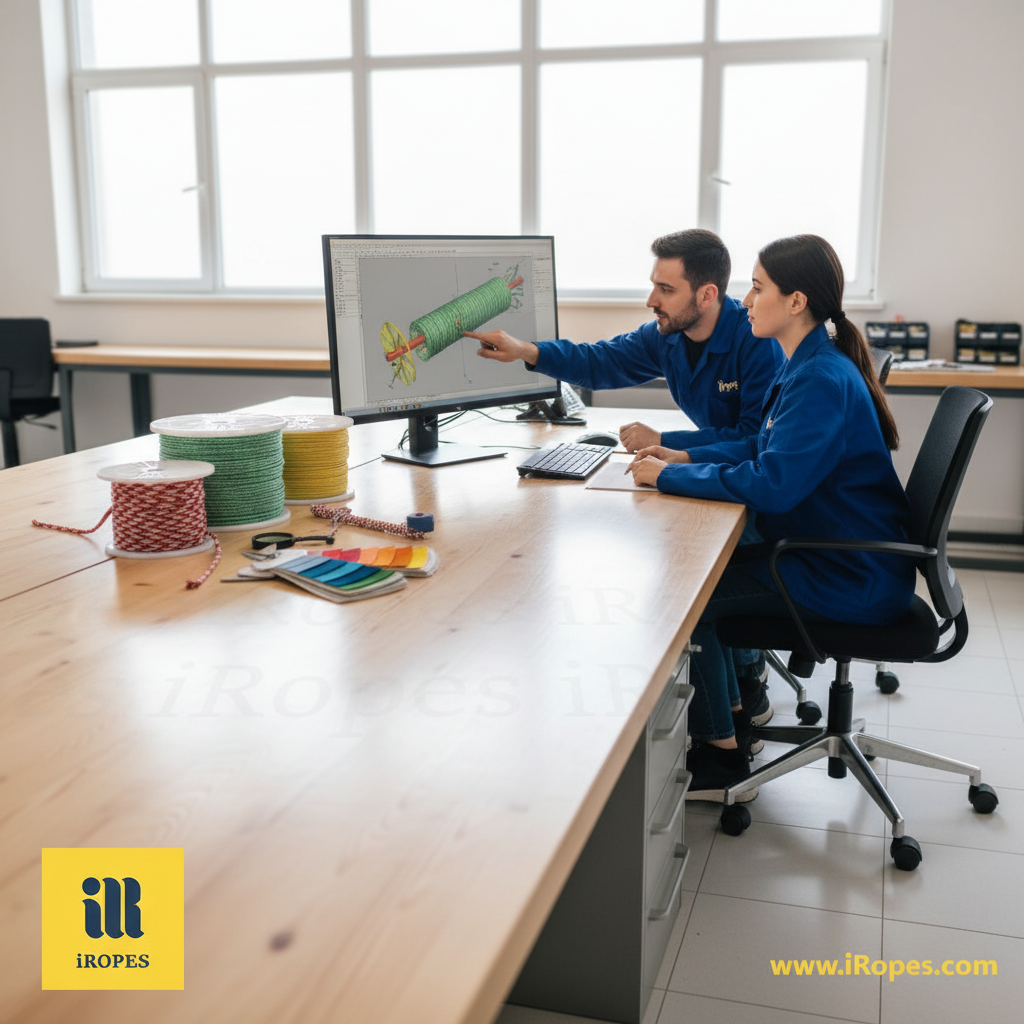
iRopes' OEM and ODM capabilities empower clients to specify every detail, from the fibre type to the final colour palette. For instance, whether a marine supplier requires a high-visibility, UV-resistant line for yachting or a defence contractor needs a low-stretch, Kevlar-reinforced core, our design team expertly translates these unique requirements into production-ready drawings. This remarkable flexibility eliminates the need for managing multiple suppliers and significantly shortens overall lead-times.
“Choosing iRopes felt like gaining a partner who not only understood the rope manufacturing process but also cared about protecting our brand identity through custom packaging and IP safeguards.” – Procurement manager, European offshore equipment distributor.
At iRopes, quality is never left to chance. Our state-of-the-art factory operates under rigorous ISO 9001 certification standards, meaning every batch of rope undergoes comprehensive tensile, abrasion, and elongation testing before it leaves our premises. These stringent protocols are meticulously documented and regularly audited, providing wholesale buyers with an unwavering confidence that the rope they receive will consistently meet or even exceed the specific requirements of their market.
Beyond the advanced laboratory testing, iRopes also maintains an extensive worldwide distribution network. This ensures a careful balance between offering competitive pricing and guaranteeing punctual delivery. By consolidating production in a single, exceptionally well-equipped facility, our company can provide significant bulk discounts without making any compromises on consistency or quality. Furthermore, shipping pallets directly from our plant to the buyer’s dock streamlines logistics, which effectively reduces both handling costs and overall transit times.
Intellectual Property & Branding
iRopes safeguards every custom design with strict IP protection, allowing customers to launch uniquely branded rope lines—whether in colour-coded bags, logo-embossed cartons or non-branded bulk packaging—while keeping proprietary technology confidential.
When considering the term “rope factory,” the historical label is indeed "ropewalk", a direct reference to the linear workshops of the past. Modern facilities like iRopes have thoroughly transformed this concept into high-tech production lines, yet the rich heritage continues to resonate within the industry’s language.
These combined strengths—custom engineering capabilities, ISO-backed quality assurance, a robust global wholesale framework, and comprehensive IP safeguards—clearly explain why businesses seeking a dependable rope manufacturing company consistently choose iRopes. The next section will meticulously peel back the curtain, detailing the actual manufacturing steps that bring these bespoke designs to vivid life.
Deep dive into the rope manufacturing process at iRopes
After outlining why iRopes stands out among rope manufacturing companies, the next logical step involves tracing the material's journey across the factory floor. From the raw fibre stage to the meticulously crafted final coil, every single process stage is precisely engineered to meet the exact specifications that our wholesale partners specifically demand.
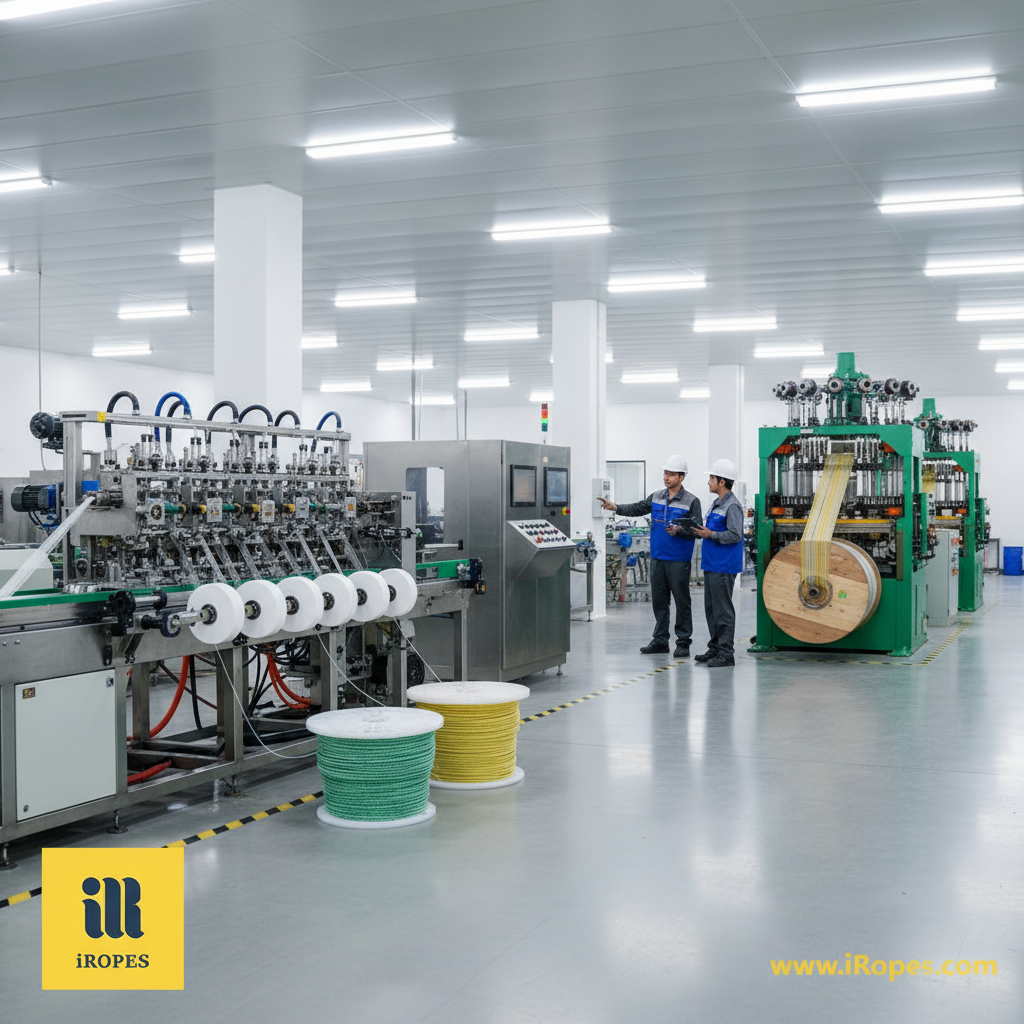
**Fibre preparation** begins with either natural strands or synthetic polymers. Natural fibres, such as hemp or manila, are first thoroughly cleaned to remove any dust or impurities, then carefully oil-treated to enhance their flexibility and improve resistance to abrasion. Conversely, synthetic polymers—like nylon, polypropylene, or high-performance Dyneema—are melted and then forced through a fine die to create continuous filaments. This crucial step is widely known as resin extrusion. This dual-track approach allows iRopes the flexibility to seamlessly switch between eco-friendly and ultra-strong options, depending on the client’s specific requirements.
Natural fibres
Traditional materials with unique character
Manila
Strong, coarse fibre, ideal for marine rigging where biodegradability carries significant value.
Hemp
Low-stretch and UV-resistant, often chosen for a wide range of outdoor and eco-focused applications.
Cotton
Soft and highly flexible, making it absolutely perfect for decorative or low-load applications.
Synthetic fibres
Engineered performance for demanding tasks
Nylon
Possessing high tensile strength with excellent elasticity, nylon is ideally suited for climbing and rescue ropes.
Polypropylene
Lightweight and inherently buoyant, which makes it the go-to choice for floating lines on boats.
Dyneema
An ultra-high-modulus fibre that consistently offers an exceptional strength-to-weight ratio, perfect for defence and aerospace applications.
Once the fibres are fully prepared, **yarn formation** twists them into continuous strands, which are then carefully wound onto bobbins. During this particular stage, iRopes frequently incorporates dye directly into the extrusion melt for synthetic yarns. This crucial step guarantees impressive colourfastness, even when the rope is exposed to harsh UV radiation. For environments where safety is paramount, vibrant orange or reflective pigments can be added without compromising the rope's crucial tensile performance.
The next critical phase is **construction**. Twisted (or laid) rope is meticulously produced by pairing yarn strands with opposing twists, a method that expertly balances internal stresses and effectively maximises load capacity. Braided ropes—which include single, double, or hollow configurations—are skillfully woven on multi-spindle braiders. This process delivers superior flexibility and significantly enhanced resistance to kinking. Kernmantle designs, on the other hand, strategically wrap a high-strength core inside a robust, protective sheath. This innovative construction combines the best attributes of both worlds, making it ideal for demanding climbing, rescue, and military applications.
Finally, **finishing touches** are applied to seal the product. Synthetic rope ends are meticulously melted to prevent any fraying, while natural ropes receive a hot-tape wrap for added security and durability. Furthermore, specialised protective coatings—such as UV-blocking polymers or abrasion-resistant laminates—are precisely sprayed onto the rope's surface. Throughout each of these detailed steps, iRopes’ ISO 9001-backed quality control laboratories diligently perform a series of tensile, elongation, and abrasion tests. This rigorous testing ensures that every single metre of rope consistently meets the exacting standards demanded by our offshore, off‑road, and defence customers.
Understanding the fundamental raw material for rope and the precise sequence that transforms it into a custom‑engineered line clearly highlights why iRopes can confidently promise both superior performance and unwavering reliability. The subsequent section will effectively summarise the key advantages of partnering with a specialist manufacturer like us, and will then extend an invitation for you to explore bespoke solutions for your next project.
Need a personalised rope solution for your business?
iRopes is a leading rope manufacturing company headquartered in China. We deliver high-performance, custom-designed ropes for diverse sectors, including off-road, yachting, defence, and various industries. Leveraging a state-of-the-art rope manufacturing process, our firm expertly blends natural, synthetic, and high-performance fibres. We offer ISO 9001-backed quality assurance and rigorously protect every client’s intellectual property, while also providing flexible OEM/ODM services and efficient global distribution.
If you would like expert advice to tailor the perfect rope precisely to your specifications, simply complete the enquiry form above. Our specialists are ready to help you optimise your project.
