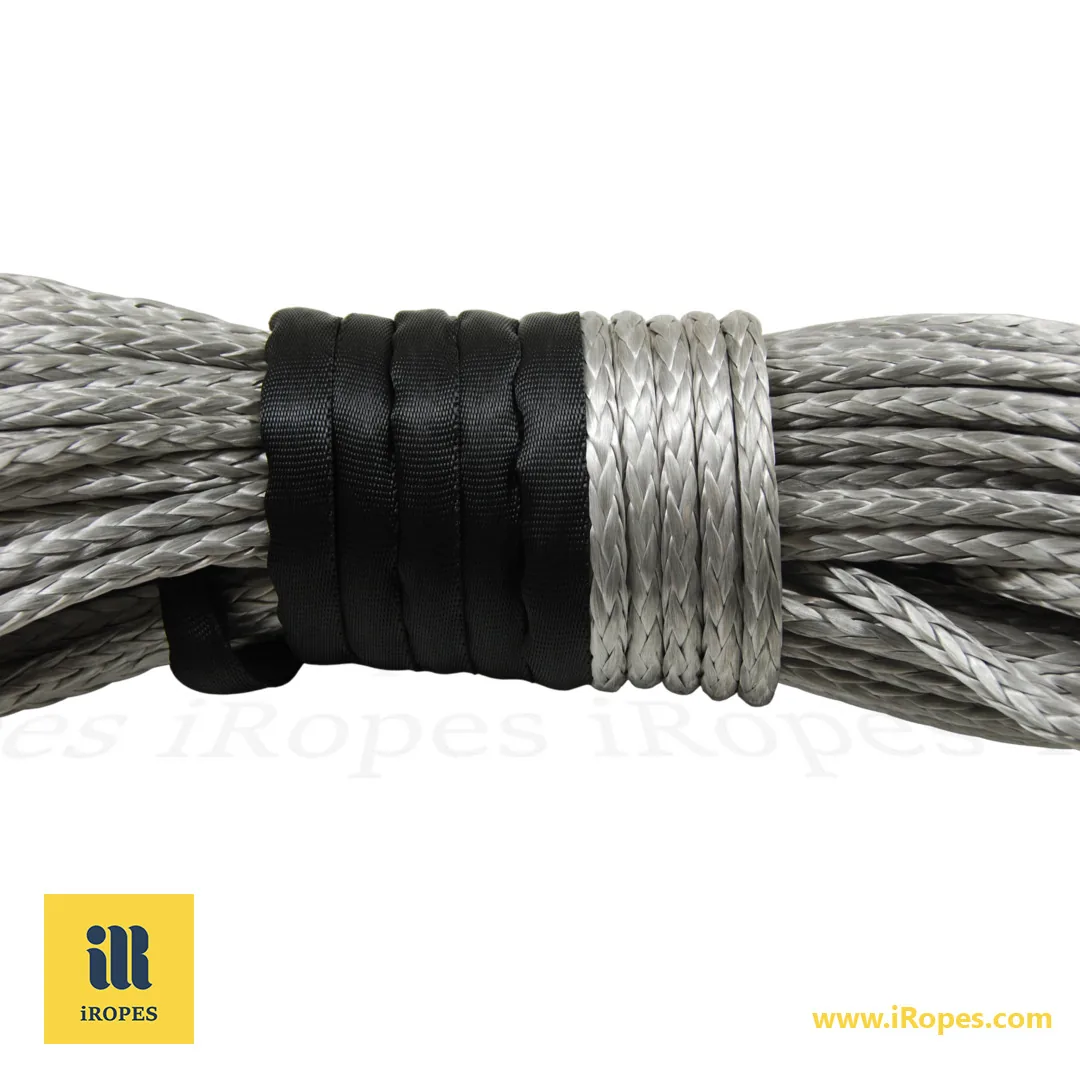
iRopes ships custom 100 ft anchor rope or 100 ft winch cable with breaking loads up to 14,400 lb and a 14–21 day lead‑time — fast turnaround without long delays.
What you’ll gain – ≈2 min read
- ✓ Choose the optimal fibre (polyamide/nylon, polyester, UHMWPE, Technora™, Kevlar™, Vectran™) to balance strength, stretch, and UV resistance.
- ✓ Cut weight by up to 50% with a synthetic 100 ft winch cable compared with steel, easing handling and reducing winch strain.
- ✓ Rely on ISO 9001 quality assurance and dedicated IP protection across OEM/ODM projects.
- ✓ Access branded packaging and OEM pricing that typically starts around US$150 per 100 ft, tailored to your specification.
Many skippers grab the cheapest 100 ft anchor rope or a generic 100 ft winch cable, assuming any line will do. In practice, the wrong material and scope can cause anchor dragging and premature wear. What if a smart fibre choice and a simple scope calculation could improve holding power and extend service life? Below, we unpack material options, key specs, practical setup, and how iRopes’ OEM solutions bring it all together.
Understanding the 100 ft anchor rope: Materials, Strength, and Pricing
After learning how a proper scope keeps your boat steady, the next step is picking the right 100 ft anchor rope. The material you choose influences how the line behaves under wave impact, how long it lasts under the sun, and how much you’ll spend.

The market offers several synthetic fibres, each with a distinct feel and performance profile. Below is a quick look at the most common options for a 100 anchor rope.
- UHMWPE – ultra‑light, very high tensile strength, minimal stretch; excellent where weight savings matter.
- Technora™ – heat‑resistant aramid fibre; retains strength in hot climates with good abrasion resistance.
- Kevlar™ – cut‑resistant aramid; strong under sudden loads, suited to rugged conditions with chafe control.
- Vectran™ – high strength and low creep; stable under sustained loads.
- Polyamide (Nylon) – anchor favourite; high strength with stretch for shock absorption and good UV performance.
- Polyester – strong with low stretch; ideal when you need precise control and reduced elongation.
- Coatings – PU or marine‑grade coatings improve UV stability, abrasion resistance, and water repellency.
Diameter and strength go hand‑in‑hand. A 3/8 in (≈ 9.5 mm) nylon line typically breaks around 5,000–7,500 lb, giving a Working Load Limit (WLL) of about 1,250–1,875 lb after applying the standard 4:1 safety factor. For larger vessels, a 1/2 in (≈ 12.7 mm) rope often reaches roughly 9,000–12,000 lb, translating to a WLL near 2,250–3,000 lb. WLL is the safe working load — do not exceed it during anchoring.
Pricing follows the material ladder. Standard nylon ropes sit between US$20–US$40 for a 100 ft length, making them the most budget‑friendly choice. Premium polyester options climb to US$40–US$70, offering lower stretch for precise pulling. Custom OEM runs — whether you need a specific colour, logo, or a UHMWPE/Technora™ blend — usually start around US$150 and rise with complexity.
Nylon is the strongest common anchor rope for most boats – it provides high tensile strength and excellent shock absorption, making it a reliable all‑round performer.
When you match the rope’s diameter and WLL to your boat’s displacement, you’ll notice the difference in how the line absorbs a wave’s sudden pull. A lighter UHMWPE line almost disappears in the hand, while a heavier polyester rope gives a firm, predictable response when you need to pull the anchor tight.
With the material, size, and price landscape now clear, you’re ready to pair the right 100 ft anchor rope with your vessel’s load‑capacity needs before we move on to the practical steps of fitting and maintaining the line.
Choosing the right 100 anchor rope for your vessel: Scope, Load, and Safety Tips
Now that you’ve decided which material matches your budget and performance needs, the next step is ensuring the line is long enough, attached correctly, and maintained well. A well‑chosen 100 ft anchor rope can be the difference between a calm night and a slow drift. Remember: a longer rode creates more catenary and a more horizontal pull, which improves holding.

One of the most common questions is how long should my anchor rope be? The answer hinges on the scope ratio — the length of rope divided by the vertical distance from the bow to the seabed. A safe range is 5:1 to 7:1, meaning a 20‑ft water depth normally calls for a 100‑ft line.
- Measure the water depth at the anchor point, then add the bow height above the waterline and expected tide.
- Multiply that total by 5 for a minimum scope, or by 7 for moderate‑rough conditions.
- Round up to the nearest standard length — a 100 ft anchor rope fits a 20‑ft depth at a 5:1 ratio.
With the length settled, focus on how you attach and store the line. A stainless‑steel thimble protects the eye from chafing, while a size‑matched shackle offers quick attachment without compromising strength. When coiling, lay the rope in a tight “S” shape on the deck; this prevents kinks and makes deployment smooth.
Installation & Maintenance Quick Guide
Attachment tips – Fit a stainless thimble sized for the rope eye, then secure a matching shackle. Tighten and seize the pin before heading out.
Coiling method – Start at the anchor locker, lay each turn parallel to the previous one, and finish with a neat figure‑eight loop to lock the coil.
Regular care – After each outing, rinse with fresh water, air‑dry in the shade, and inspect for chafe, UV fade, or broken fibres. Replace any section that looks frayed or where the coating has cracked.
By following the scope formula, using the right hardware, and keeping a tidy maintenance routine, your 100 anchor rope will serve reliably season after season. The next part of the guide looks at the alternative option of a 100 ft winch cable and when it makes sense to choose steel over synthetic rope.
Evaluating the 100 ft winch cable: Rope vs Steel and Application Considerations
Having covered how to size and care for your anchor line, it’s time to look at the other side of the recovery toolbox — the 100 ft winch cable. Whether you favour a synthetic rope or a steel strand will shape the way your winch behaves under load.

Synthetic ropes win on weight — a 100 ft UHMWPE line can be about half the mass of a comparable steel cable, so the winch motor works less hard and handling is easier. Steel, on the other hand, often holds a higher static breaking load, which some heavy‑duty users prefer. The trade‑off is that steel can kink, needs regular lubrication, and will rust if its coating is breached.
Lightweight
Synthetic rope sheds weight, reducing winch strain and improving handling on deck.
Corrosion‑resistant
UV‑stable coatings protect the fibre from sun and salt water damage.
High strength
Steel cable offers a higher static breaking load, ideal for heavy‑duty recovery.
Kink‑prone
Steel can develop sharp bends that weaken the core and require careful storage.
When you pick the material, think about the winch’s rated capacity. Consider upgrading to a durable replacement synthetic rope for improved performance. A typical 10,000 lb winch pairs well with a 100 ft synthetic rope that has a breaking load around 14,000 lb, giving a Working Load Limit of roughly 3,500 lb (BL ÷ 4). If you opt for steel, always match the cable to the winch’s drum size and ensure all hardware is rated for the higher static load.
A steel winch cable provides greater static strength but adds weight, can kink and corrodes; synthetic rope is lighter, UV‑protected, and easier to handle, making it the preferred choice for many marine winches.
Remember, the choice isn’t just about raw strength — it’s about how the cable fits your vessel’s recovery routine. If you value ease of handling and minimal maintenance, a synthetic 100 ft winch rope will likely feel more natural. Should you need the absolute highest load rating, a steel option can be engineered to meet that demand, though you’ll need to budget for extra care.
Now that you understand the rope‑versus‑steel debate, you can decide which 100 ft solution aligns with your recovery style, and then explore iRopes’ custom OEM services for a cable that carries your brand and exact performance specs. For a deeper dive into synthetic fiber options, see our comprehensive synthetic fibers guide.
Need a Custom Solution? Get Your Personal Quote Below
After exploring material choices, load calculations and upkeep tips, you now have the know‑how to select the right 100 ft anchor rope, match the proper scope for a 100 anchor rope, and compare a 100 ft winch cable with steel alternatives. As a leading rope maker in China, iRopes focuses on strong synthetic fibres like UHMWPE, Technora™, Kevlar™, Vectran™, polyamide, and polyester, with many coating options. Learn more about the advantages of synthetic ropes over traditional wire. We offer full OEM and ODM support, ISO 9001 quality assurance, strict IP protection, and custom branding and packaging to suit your market.
For personalised assistance, simply fill out the inquiry form above and our specialists will help you design the perfect solution — from fibre selection and diameter to colour, terminations, and delivery scheduling.