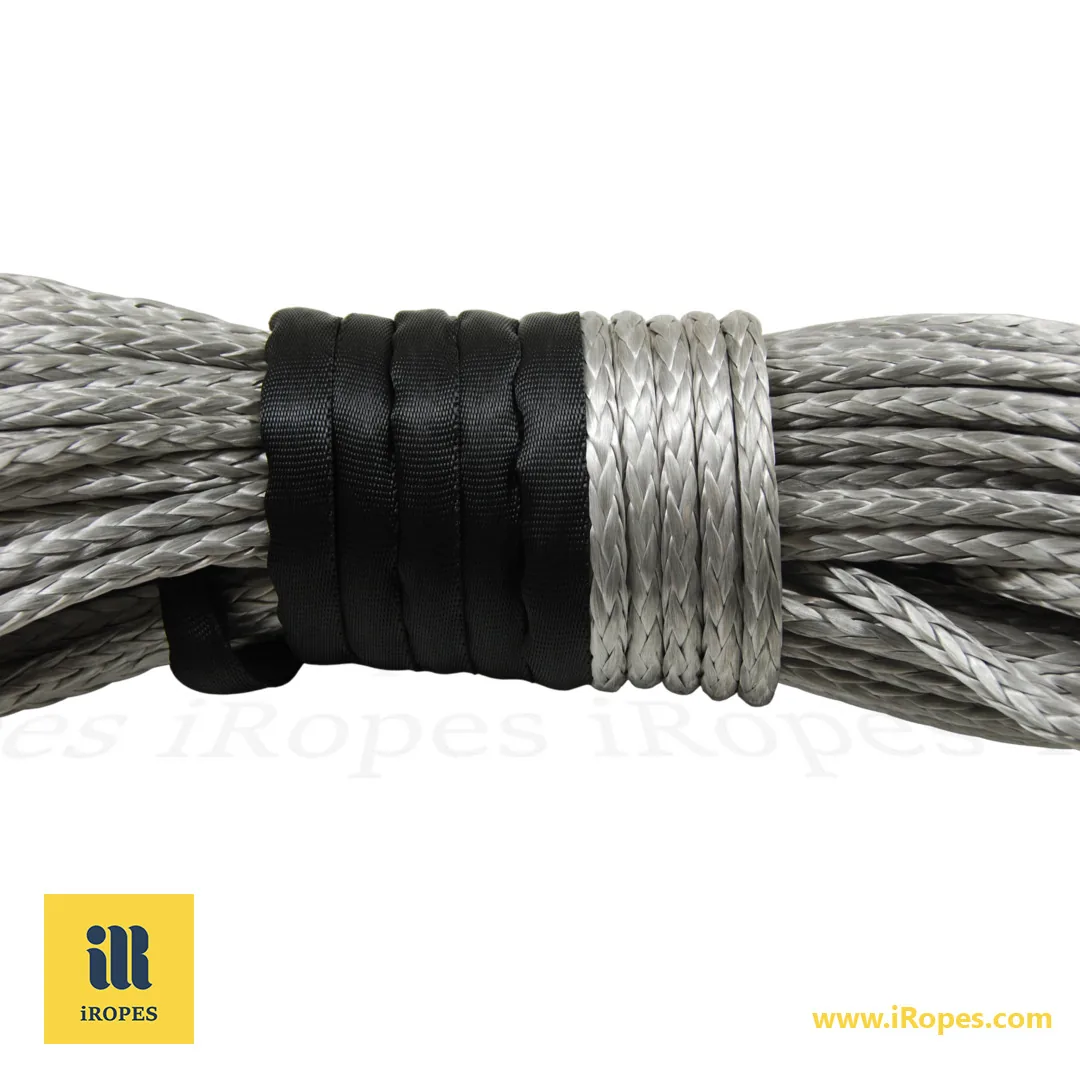
The strongest rope material in the world is ultra‑high‑molecular‑weight polyethylene (UHMWPE), known as Dyneema, delivering up to 15 times the strength of steel by weight.
What you gain – ~2 min read
- ✓ Cut equipment weight by up to 87% while maintaining or exceeding steel‑grade load capacity.
- ✓ Reduce load‑handling time by 30% thanks to *low‑stretch* performance.
- ✓ Extend service life by 2–3 years with UV, chemical & water resistance.
- ✓ Add custom colour, branding & specialised terminations via iRopes’ OEM/ODM service.
You’ve probably been told steel wire rope is the gold standard for raw strength, a common misconception that crumbles the moment you compare it to ultra‑high‑molecular‑weight polyethylene. Imagine a high-performance rope that lifts twice the load of steel while weighing a mere fraction of a kilogram—and can be branded and shipped directly to your site. In the sections ahead, we’ll unpack how these advanced fibres achieve such remarkable strength and discuss how iRopes can tailor them for your toughest jobs.
Strongest Rope in the World
Understanding why extreme strength is critical for demanding applications is the first step. Next, you'll want to discover precisely which rope consistently tops the performance charts. The answer is clear: the strongest rope in the world is manufactured from ultra‑high‑molecular‑weight polyethylene, more commonly recognised under the trade name Dyneema.

UHMWPE is a synthetic polymer composed of individual chains that can stretch for several kilometres before linking together. During the gel‑spinning process, these chains are precisely aligned into a highly ordered, parallel arrangement. This molecular alignment results in a fibre that strongly resists elongation and distributes load uniformly, which is why Dyneema consistently outperforms steel on a weight‑for‑weight basis.
- Exceptional strength‑to‑weight ratio – This material is up to 15 times stronger than steel by weight, enabling lighter handling and reduced equipment load.
- Minimal stretch – With elongation remaining below 3.5% at break, it provides precise load control for critical applications like marine rigging and industrial hoists.
- Buoyancy and chemical resistance – Its specific gravity of 0.97 allows the rope to float, while UV‑stable polymers ensure consistent performance in harsh environments.
Beyond these impressive statistics, the rope’s low‑creep behaviour means it retains its strength over years of static load. This quality makes it indispensable for demanding scenarios such as offshore mooring, high‑altitude rescue operations, and defence‑grade fast‑roping.
“Dyneema is the world’s strongest fibre, delivering up to 15 times the strength of steel for the same mass – a game‑changer for any application where weight and reliability matter.” – DSM, developer of the Dyneema technology.
While Dyneema rightly holds the title of the strongest rope in the world, certain scenarios may require alternatives that excel under specific conditions, such as extreme heat or shock loads. In the next section of this guide, we will explore other high‑performance fibres that complement UHMWPE, helping you match the ideal material to the exact conditions of your project.
Strongest Rope Material in the World
Having established how ultra‑high‑molecular‑weight polyethylene dominates the strength chart, it's time to examine the aramid family. Technora and Vectran are two high‑performance fibres that frequently come into play when exceptional heat‑resistance or ultra‑low creep are the decisive factors for particular applications.

Both Technora and Vectran belong to the aramid class; however, their distinct molecular architectures give them different performance envelopes. Technora’s poly‑para‑phenylene‑terephthalamide backbone allows it to retain over 70% of its tensile strength at temperatures approaching 350°C. In contrast, Vectran’s liquid‑crystal polymer structure offers exceptional creep resistance and stable strength up to about 200°C.
- Technora – Offers a tensile strength of approximately 3.5 GPa, maintaining heat stability up to 350°C.
- Vectran – Provides a tensile strength of approximately 3.0 GPa, offering minimal creep and heat stability up to 200°C.
- UHMWPE (Dyneema) – Boasts the highest absolute strength but begins to lose performance above 135°C, highlighting its thermal limitation.
When the question "What is the strongest material for ropes?" arises, the short answer for raw tensile power remains HMPE/Dyneema. However, if your application involves prolonged exposure to high temperatures or requires almost no elongation over extended periods, Technora or Vectran often become the preferred material choices.
Technora Applications
Heat‑resistant solutions
Aerospace
Technora is used in engine‑bay harnesses where temperatures can exceed 300°C.
Industrial Ovens
Rope slings made from Technora endure continuous high‑heat cycles without significant strength loss.
Automotive Racing
Fire‑resistant pull‑lines made of Technora protect pit‑crew personnel during high‑temperature race events.
Vectran Uses
Low‑creep performance
Spacecraft
Crew‑module tethers rely on Vectran’s exceptional dimensional stability in zero-gravity and vacuum conditions.
High‑Speed Sailing
Rigging benefits from Vectran’s negligible stretch, maintaining precise sail shape and performance.
Robotics
Cable drives made with Vectran maintain exact positioning through thousands of operational cycles.
Ultimately, choosing between these fibres depends significantly on the environment the rope will face. If flame‑proof, high‑temperature endurance is paramount, Technora often leads the pack. When long‑term, creep‑free performance under moderate heat is required—such as for satellite deployables or precision sailing—Vectran becomes the logical pick. Of course, iRopes can blend these materials with customised constructions, diameters, and terminations to deliver a rope that meets both strength and specific service‑condition criteria for your wholesale needs.
Now that we’ve thoroughly mapped the material landscape, the next crucial step is to efficiently match the right rope to your specific load and usage requirements.
The Strongest Rope
Having explored the intricate material landscape, the next logical step is to translate those properties into a rope that perfectly fits your exact load, environmental conditions, and handling preferences. Think of this decision as creating a bespoke recipe: you carefully choose the right ingredients—such as material, diameter, construction, and accessories—to craft a rope that consistently delivers optimal performance.

Begin by selecting the material. For the absolute highest tensile rating, HMPE (Dyneema) remains the unrivalled champion. For applications routinely exposed to temperatures above 150°C, Technora or Vectran may offer more forgiving performance and greater durability. Next, determine the optimal diameter. While a larger diameter increases breaking strength, it also adds weight and bulk; conversely, a smaller one keeps the line light but reduces the safety margin. The chosen construction—whether braided, twisted, or parallel‑core—significantly impacts flexibility, abrasion resistance, and how the rope behaves under dynamic loads. Finally, consider essential accessories such as thimbles, loops, or specialised terminations; these must be precisely matched to the rope’s core material to prevent weak points and ensure optimal performance.
Custom Solution
iRopes turns this comprehensive framework into a tangible product. Our OEM/ODM team can expertly blend HMPE with aramid fibres, select the exact strand count, and meticulously finish the rope with branded loops or flame‑resistant terminations—all while upholding stringent ISO 9001 quality standards, ensuring your wholesale needs are met with precision and reliability.
Even the toughest line has its limits. Heat is the most common adversary: UHMWPE begins to lose significant strength above approximately 135°C, and a sharp blade can compromise its integrity in mere seconds. To extend service life, regular visual inspections, cleaning off abrasive grit, and storing the rope away from direct sunlight are crucial maintenance practices. Moreover, avoid tying tight knots—as some knots can reduce a rope’s strength rating by up to 60%—and favour splices whenever technically feasible. iRopes protects your designs and innovations through robust intellectual property (IP) protection measures.
Maintenance Tip: After each use, wipe the rope with a mild detergent, allow it to air‑dry naturally, and log any visible wear. It is crucial to replace any section that shows fraying, discolouration, or melted fibres to ensure safety and performance.
When the internet asks, "What rope is unbreakable?", the honest answer is that no rope can defy the laws of physics indefinitely. However, a properly specified Dyneema line—correctly paired with the right diameter, construction, and accessories—offers such a high practical level of reliability and durability that it can indeed feel unbreakable in real‑world, demanding applications.
Get personalised high‑strength rope advice
If you require tailored assistance, simply fill out the form above, and our specialists will promptly help you design the ideal solution for your unique needs.
You now understand that ultra‑high‑molecular‑weight polyethylene (UHMWPE), commonly known as Dyneema, stands as the strongest rope in the world, delivering unmatched strength‑to‑weight ratios, minimal stretch, and inherent buoyancy. Furthermore, when heat resistance or creep‑free performance is paramount, the strongest rope material in the world shifts to Technora or Vectran, each excelling in specialised fields such as aerospace, high‑temperature industrial ovens, spacecraft tethers, and high‑speed sailing. By diligently applying our decision framework—considering material, diameter, construction, and accessories—you can confidently specify the rope that truly represents the strongest option for your project, with iRopes poised to customise it precisely to your exact requirements and ensure timely global delivery.