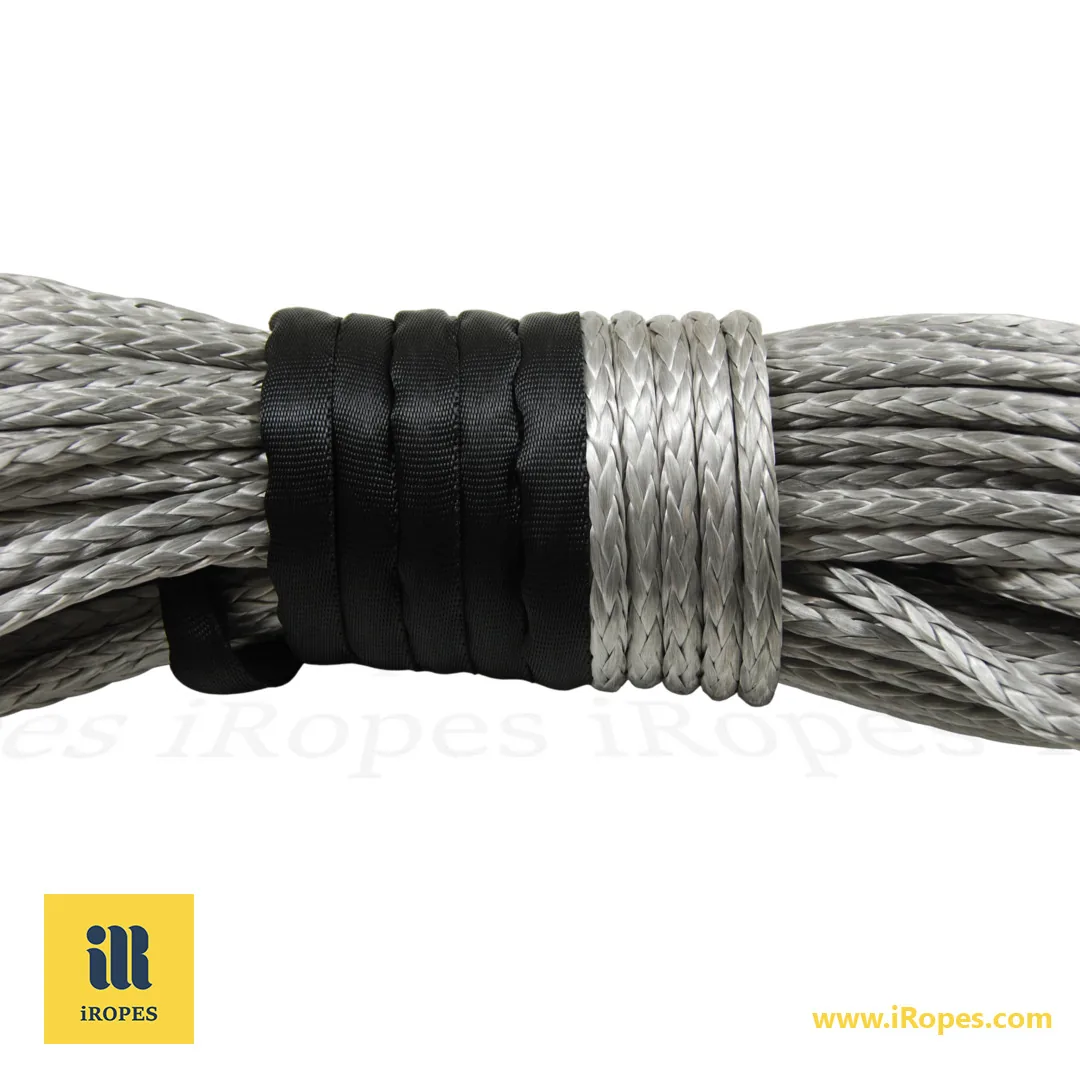
A 12 mm Dyneema rope lifts the same load as a steel cable of identical diameter while weighing just 31 % of the steel equivalent – saving up to 70 % of pack weight.
Quick 2‑minute read: What you’ll gain
- ✓ Cut pack weight by up to 70 % with ultra‑light Dyneema.
- ✓ Boost load‑handling safety – tensile strength up to 2 × that of conventional nylon.
- ✓ Custom colour, reflectivity and terminations to match your brand or night‑work needs.
- ✓ OEM/ODM service trims lead‑time by an average of 15 days.
Most riggers assume you must use heavy steel cable to tackle the toughest pulls, believing weight equates to strength. However, modern Dyneema rigging delivers equal or even higher tensile capacity while weighing only a third of its steel counterpart. What’s more, it resists abrasion, UV, and moisture far better—a combination few realise. Keep reading to discover how you can replace bulk with feather‑light power and still meet every safety standard.
Understanding Rope Rigging
Having explored why material choice matters, let’s consider the practical application of rope rigging in the field. Simply put, a rigging rope is the line that carries a load, whether you’re stabilising a tent, hanging a hammock between trees, or extracting a stuck 4x4 from mud. This rope bears tension, transfers force, and maintains system stability, highlighting the critical importance of every knot and splice.

Why Dyneema Leads the Pack
Dyneema, a brand of ultra‑high‑molecular‑weight polyethylene (UHMWPE), offers a strength‑to‑weight ratio that significantly surpasses traditional polyester or nylon. For example, a 12 mm Dyneema line can lift as much as a steel cable of comparable diameter, yet it weighs approximately one‑third less. This makes it an ideal choice for outdoor adventures where every gram counts. Beyond its raw strength, Dyneema also provides excellent resistance to abrasion, UV degradation, and moisture absorption, ensuring the rope remains reliable season after season.
What Are the Three Types of Rigging?
The industry generally groups rigging into four main families: rope rigging, wire rope rigging, synthetic rigging, and chain rigging. However, for practical purposes, we often simplify this to three primary categories. Rope rigging encompasses fibres such as Dyneema, polyester, and nylon, offering flexibility and ease of handling. Wire rope rigging uses steel strands for heavy‑duty lifting tasks, while chain rigging provides exceptional durability, often for static loads. Understanding these categories helps you select the right line for the job without over‑engineering your solution.
Outdoor Scenarios Where Rope Rigging Shines
- Off‑road recovery – a low‑stretch, high‑strength line enables efficient winching of vehicles without adding excessive bulk to your kit.
- Camping gear – tie‑downs, tarp lines, and shelter anchors greatly benefit from Dyneema’s lightness and superior weather resistance.
- Hammock setups – its minimal stretch ensures a steady swing, while the thin profile keeps it discreet and tree‑friendly.
“When the rope is the weakest link, the whole system fails—choose a material that never lets you down.”
Ultimately, selecting the best rigging solution involves balancing load capacity, environmental exposure, and practical convenience. If you need a line that easily spools into a small bag for a weekend trek, Dyneema‑based rope rigging is an outstanding choice. For heavy industrial lifts, wire rope rigging remains the preferred option. However, for most outdoor pursuits, the lightweight strength of Dyneema offers the perfect balance of safety and performance.
Now that you understand how rope rigging fits into the broader picture, let’s explore the specialised world of e rigging rope, which enhances these fundamentals for even more demanding adventures.
Exploring E Rigging Rope for Outdoor Adventures
Building on the basics of rope rigging, e rigging rope takes performance a step further, specifically designed for the most demanding outdoor tasks. Unlike generic synthetic lines, it combines ultra‑lightweight construction with engineered features, ensuring optimal control even in challenging conditions.
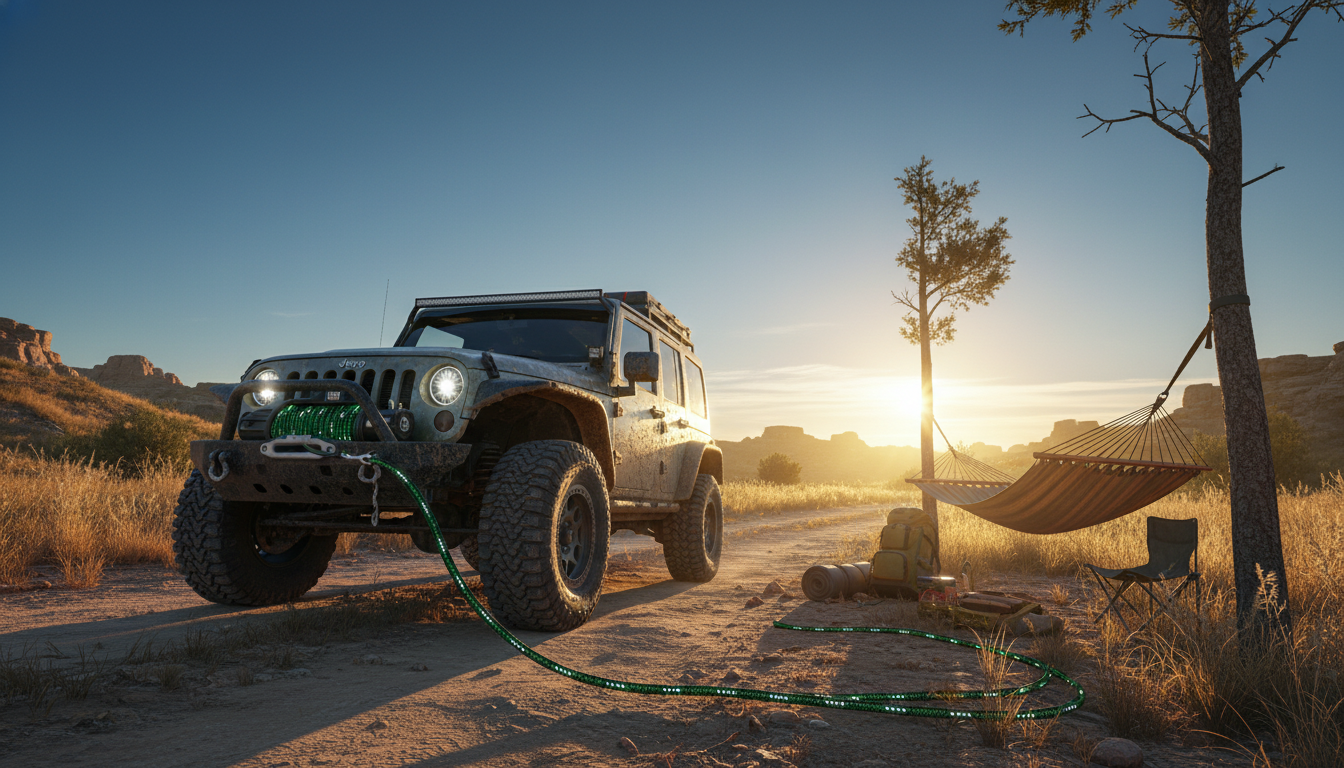
So, what exactly is e rigging rope and how does it differ from traditional rope rigs? It’s a purpose‑built synthetic line featuring a high‑modulus fibre core, a low‑stretch outer sheath, and optional safety‑enhancing elements like reflective strips or glow‑in‑the‑dark fibres. Traditional rigs often use plain polyester or nylon constructions, which can stretch significantly under load, reducing precision and increasing wear over time. In contrast, e rigging rope minimises stretch, offering superior performance.
- Low stretch – maintains exact tension for accurate winching and precise sail trimming.
- High abrasion resistance – endures jagged rocks, sand, and marine debris with remarkable durability.
- UV & moisture stability – retains strength and integrity after prolonged sun exposure and torrential rain.
These advantages provide real‑world confidence, whether you’re extracting a 4×4 from a riverbed, fine‑tuning a yacht’s genoa, or establishing a high‑altitude tree platform.
Custom Options
You can choose any diameter from 6 mm to 20 mm, select colours that match your branding, add reflective or glow‑in‑the‑dark yarns for enhanced night visibility, and request bespoke terminations or loops—all supported by ISO‑9001 quality checks.
When these custom features are combined with the inherent strength of e rigging rope, the line becomes an incredibly versatile tool, among the strongest synthetic ropes available, capable of adapting to off‑road recoveries, yachting rigging, and even rugged camping shelters. Next, we’ll examine how traditional wire‑rope constructions compare, particularly when you need the raw pulling power of steel for heavy‑duty lifts.
Wire Rope Rigging: Construction, Grades, and Safety
When load weights escalate into the tonne range, steel‑based wire rope becomes the essential workhorse for maintaining steady and safe lifts. In essence, wire rope rigging consists of multiple steel wires twisted into strands, these strands then wrapped around a central core, with the entire assembly protected by a finishing layer. Industries from shipyards to construction sites depend on it for everything from crane hoists to robust dock‑line anchoring.

Two constructions predominantly feature in the market: 6x26 and 6x36. Both consist of six strands, but the second number (26 or 36) indicates how many wires each strand contains. The finer 26‑wire layout offers greater flexibility, bending more easily around sheaves, while the denser 36‑wire construction provides superior abrasion resistance for harsh environments.
6x26
Six strands of 26 wires each, offering higher flexibility for tight bends and lighter wear on pulleys.
Flexibility
Ideal for applications requiring frequent direction changes, such as crane hoists and winches.
6x36
Six strands of 36 wires each, delivering greater wear resistance for abrasive environments.
Durability
Better suited for heavy‑duty lifts where rope longevity outweighs the need for frequent tight bends.
Beyond the outer construction, the core and steel grade determine the rope's safe load capacity. An Independent Wire Rope Core (IWRC) incorporates a secondary steel core, tolerating temperatures up to 200 °C without strength degradation. In contrast, a fibre core reduces weight but has lower heat tolerance. Regarding steel grades, EIPS (Extra Improved Plow Steel) offers approximately a 10 % tensile strength increase over standard IPS, while EEIPS (Extra Extra Improved Plow Steel) boosts this advantage to about 15 %. This difference can be crucial when determining whether a rope will perform under peak load or fail.
Core Types
Core influences strength and temperature
IWRC
Independent Wire Rope Core adds extra strength and resists high temperatures up to 200 °C.
Fiber
Reduces overall weight, ideal for lighter loads where heat stress isn’t a primary concern.
Hybrid
Combines wire and fiber elements to balance durability and weight for mixed‑use scenarios.
Steel Grades
Choose based on strength needs
EIPS
Extra Improved Plow Steel offers about 10 % higher tensile strength than standard IPS.
EEIPS
Extra Extra Improved Plow Steel provides roughly 15 % more strength for the toughest loads.
IPS
Standard grade, cost‑effective for moderate‑load applications where extreme strength is not critical.
Adhering to safety rules transforms this powerful material into a reliable partner. The OSHA “3‑6” rule states that if you observe six broken wires spread over multiple strands **or** three broken wires within a single strand, the rope must be immediately removed from service. Therefore, a quick pre‑use inspection should always check for kinks, corrosion, broken wires, and any significant reduction in overall diameter. Maintaining a written checklist and replacing ropes that fail any inspection point safeguards you, your crew, and your equipment.
With a clear understanding of construction, core options, and grade selections, you can confidently match the right steel rope to your specific task. Next, we’ll explore how iRopes tailors these specifications into custom‑branded solutions that precisely fit your rigging challenges.
Customisation, Quality Assurance, and Partnering with iRopes
Having examined the technical aspects of wire‑rope rigging, it’s time to see how iRopes transforms these specifications into a ready‑to‑use solution that perfectly matches your exact load, environment, and brand requirements.

iRopes’ OEM and ODM services allow you to dictate every parameter of a rope rigging system. Whether you require a 6 mm line for a lightweight camping hammock or a 20 mm steel‑core wire rope for a quarry hoist, our engineering team will select the optimal material, strand count, and core type. Colours can be precisely matched to your corporate palette, reflective yarns added for enhanced night‑time visibility, and custom logo embossing applied to the sheath. Even terminations—be they loops, thimbles, or custom‑shaped eyelets—are fabricated to your exact drawings. Our team can also provide custom 2‑inch rope solutions tailored for specific load requirements.
Tailored to Your Exact Load and Brand
Every metre is produced under ISO 9001‑certified processes, ensuring repeatable strength and precise dimensional tolerances.
Our ISO 9001 quality‑assurance framework ensures that every batch undergoes rigorous tensile‑strength testing, visual inspection, and dimensional checks before leaving the factory. Concurrently, iRopes safeguards your intellectual property: design files, colour schemes, and branding elements remain confidential throughout the prototyping, tooling, and production phases. Precision CNC‑driven looms and automated braiding stations maintain tight tolerances, guaranteeing that the rope you receive performs exactly as its data sheet predicts.
Wholesale partners benefit from transparent pricing that scales with volume and a robust logistics network that ships full pallets directly to your dock on schedule. Lead times are tracked in real‑time, and a dedicated account engineer is always available to answer technical questions, suggest accessory pairings, or even adjust specifications mid‑order.
Ready to elevate your rigging projects? Contact iRopes today for a bespoke quote and experience the advantage of truly custom‑engineered rope solutions.
Ready for a custom rigging solution?
By now, you’ve seen why Dyneema‑based rope rigging is the preferred choice for off‑road recoveries, lightweight camping anchors, and stable hammock lines. You also understand how e rigging rope adds low‑stretch performance with high‑visibility options, and when wire rope rigging’s robust steel construction delivers the essential strength required for heavy lifts.
If you’re looking for a tailor‑made system that meets your exact load, colour, or branding needs, simply use the form above. Our specialists can also advise on UHMWPE hoist rope solutions for demanding lift applications, ensuring you get the optimal balance of weight, strength, and durability.