Get small cables that hold up to 1,200 lb breaking strength in diameters as fine as 1/16″—perfect for kite lines, spearfishing guns, and tent rigging.
Quick win – 2 min read
- ✓ Optimise safety: select diameter & 7×19 construction to achieve a 4‑5× safety factor instantly.
- ✓ Corrosion edge: stainless steel boosts marine lifespan by 37 % over galvanised.
- ✓ Brand boost: colour, reflective or glow‑in‑the‑dark strands cut visual checks by 30 %.
- ✓ Cost advantage: OEM from a single coil, ISO 9001‑certified, saves up to 18 % versus retail.
You’ve probably heard that any 1/8‑inch steel cable will do, but the truth is, its construction, material, and finish can alter performance by over 40%. In the sections that follow, we’ll dissect these hidden variables. We’ll reveal which combinations thrive in marine salt, desert sand, or night‑time rigging. More importantly, we’ll show how iRopes’ bespoke OEM/ODM service translates this knowledge into a rope that perfectly matches your brand and load profile.
Understanding Small Cable: Definitions and Core Concepts
When you first hear the term small cable, you might wonder how it differs from a small steel cable or a small wire rope. In simple terms, all three are made from steel strands. However, the naming often reflects the intended use and construction style. “Cable” is typically a generic label, while “steel cable” highlights the material. “Wire rope,” on the other hand, usually denotes a specific strand‑and‑core architecture that meets industry standards for load‑bearing applications.

Most wholesale buyers begin by selecting a diameter that corresponds to the load they need to carry. The most common sizes range between 1/16" and 1/8", offering a good balance of lightweight handling and reliable breaking strength. From there, you choose a construction that meets your flexibility and fatigue resistance requirements.
- Diameter range: Typical sizes from 1/16" to 1/8" suit most wholesale projects.
- Construction types: A 7x7 offers balanced flexibility, while a 7x19 provides higher flexibility but slightly lower core strength.
- Common applications: Kite lines, spearfishing gun lines, and tent rope particularly benefit from these specifications.
Understanding breaking strength is vital: it represents the maximum load a cable can withstand before failing. For safety, you apply a safety factor—typically between four and five—to determine the working load limit (WLL). For instance, a 1/8" 7x19 cable with a breaking strength of approximately 1,200 lb would have a WLL of roughly 240 lb when using a safety factor of five. This straightforward calculation helps prevent overloading in practical applications.
When a client needs a custom colour for their camping gear rope, we start by matching the diameter and construction to the load requirements, then add reflective strands for night visibility.
iRopes leverages these fundamentals to craft specialised products such as kite line, spearfishing gun line, and tent rope. Each is meticulously engineered with the exact diameter, construction, and strength profile you require. We also offer optional colour, pattern, or reflective elements to fit your brand seamlessly. With this foundation, we can now delve deeper into material choices and how different constructions influence performance.
Technical Insights into Small Steel Cable: Materials, Construction, and Strength
Building on the basics of diameter and construction, the next step involves understanding how material choice and strand arrangement shape a cable’s performance. Whether you're pulling a sailboat sheet or rigging a temporary canopy, selecting the right small steel cable can ensure smooth operation and prevent premature failure.

Two primary metal options dominate the market for small steel cables. Stainless steel (typically 304 or 316 grade) forms a passive oxide layer, effectively blocking saltwater corrosion. This makes it ideal for marine rigs, outdoor lighting, and any humid environment. Conversely, galvanised steel features a zinc coating that offers a lower price point but sacrifices some long‑term rust resistance. It performs well in indoor warehouses, construction sites, or applications where regular inspection and replacement are feasible.
The strand pattern further tailors the cable’s behaviour. For instance, a 7x7 layout bundles seven strands, each containing seven wires. This construction delivers a balanced mix of flexibility and core strength, making it perfect for kite lines that must bend without kinking. The 7x19 construction, on the other hand, arranges wires into tighter bundles, providing higher flexibility but a modest reduction in core load capacity. This makes it excellent for applications like spearfishing gun lines that repeatedly wrap around reels. A 1x7 design, featuring a single strand of seven wires, maximises tensile strength while limiting its bend radius. This configuration is best suited for static lifts or short‑run rigging.
Diameter, Length, and Breaking Strength Guide
- 1/16" – roughly 300 lb breaking strength, suitable for lightweight lanyards.
- 1/8" – about 800 lb breaking strength, a versatile choice for camping gear.
- 3/16" – nearly 1,400 lb breaking strength, often preferred for off‑road winch lines.
When ordering, wholesale buyers typically select coils of 50 ft, 100 ft, or request custom cuts to match their final product designs. Always remember to apply a safety factor of four to five when converting breaking strength to a working load limit; this ensures a comfortable margin to account for dynamic loads and unforeseen stresses.
Common Terminations
End fittings transform a flexible cable into a secure attachment point. Typical accessories include crimp sleeves that lock the strand, forged loops for easy rigging, thimbles that protect the cable eye from wear, and eye bolts for quick anchoring. iRopes can integrate any of these terminations during the OEM/ODM process, precisely matching the load rating of your chosen small cable.
Choosing the appropriate material, construction, and termination sets the stage for the practical uses we’ll explore next. This applies whether you're outfitting a yachting deck, reinforcing a defense‑grade tether, or supplying a bulk order for camping equipment.
Choosing the Right Small Wire Rope for Your Applications
Building on your knowledge of material and construction fundamentals, the next crucial step is aligning the right small wire rope with the environment it will encounter. Understanding the conditions—be it salty sea air or abrasive off‑road terrain—allows you to select a rope that consistently performs and lasts as expected.
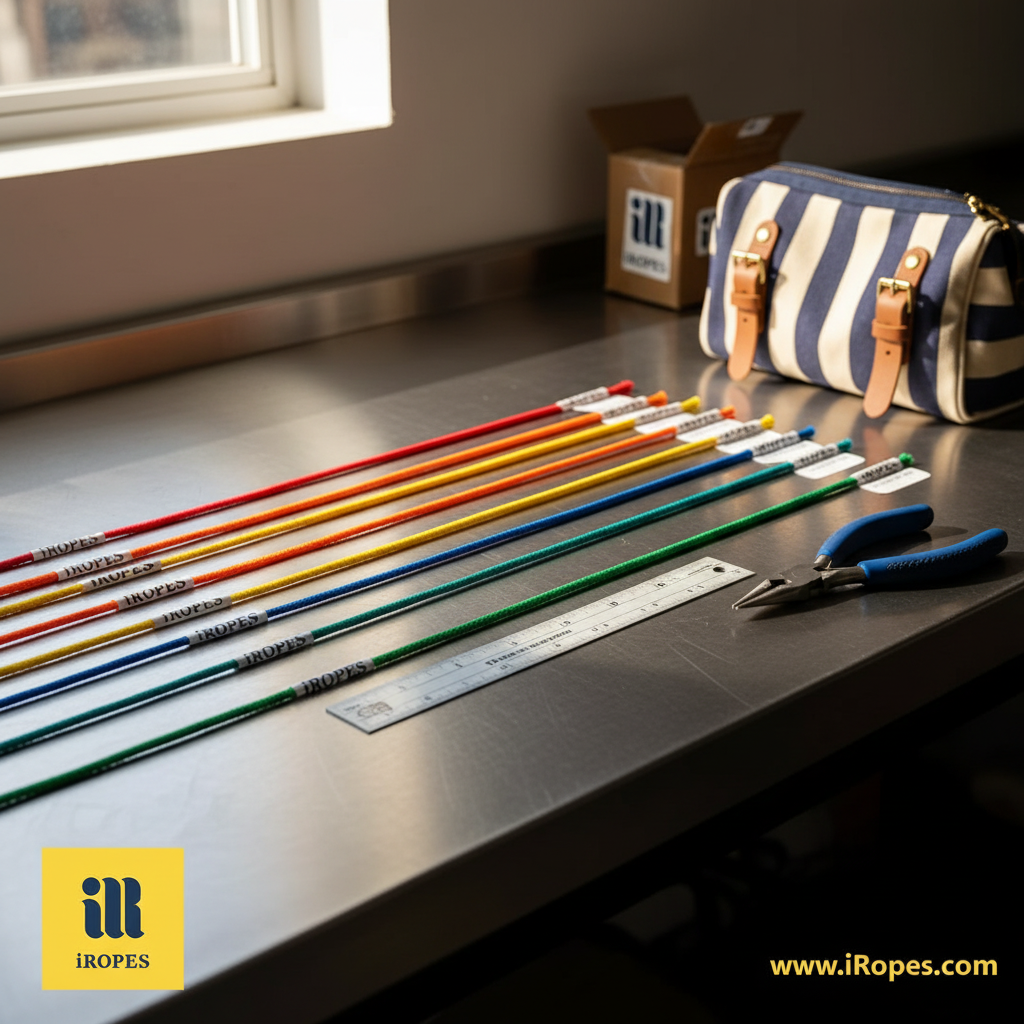
Here are the six most common application categories. Each group presents a typical environmental challenge that directly influences the optimal choice of material, coating, and construction.
Common Sectors
Where small wire rope shines
DIY/Home
Lightweight rope for garden trellises, balcony railings, or home‑brew projects where aesthetic flexibility matters.
Marine/Yachting
Stainless‑grade rope resists salt spray, making it ideal for lifelines, winches, and deck rigging on vessels.
Off‑Road
Galvanised construction endures mud, vibration, and occasional impacts on ATVs or recovery kits.
Specialised Uses
Tailored for tough conditions
Defense
High‑strength, low‑profile rope meets strict load and stealth requirements for tactical gear.
Camping
UV‑stable, reflective strands keep ropes visible at night for shelters or hauling gear.
Tree Work
Flexible 7x19 build allows you to loop around branches without kinking during pruning or climbing.
You must match the rope’s specifications to these environmental factors. Stainless steel, for instance, eliminates corrosion in salty or humid settings (see steel cable vs. fiber rope comparison). A galvanised coating, on the other hand, tolerates occasional wet‑soil exposure without the price premium of stainless. For camping gear, UV‑stable dyes or a vinyl sheath protect against sun‑fade, whilst a 7x19 construction offers the ideal bend radius for tree‑work splices.
When the rope will face both abrasion and sunlight, choose a stainless‑core with a UV‑stable coating to extend service life.
iRopes can transform any of these baseline options into a brand‑specific product (including colored nylon rope options). Choose from a vast palette of colours, add high‑visibility reflective strips, or request glow‑in‑the‑dark fibres for enhanced night‑time safety. Our OEM and ODM teams seamlessly integrate loops, crimp sleeves, or thimbles directly during manufacture, ensuring the rope arrives ready for immediate installation.
Wholesale Made Simple
MOQ starts at a single coil, IP protection guards your design, ISO 9001 ensures consistent quality, and we ship pallets worldwide.
By precisely aligning the rope’s material and construction with the specific stresses of your project, you minimise maintenance demands and maximise safety. For detailed guidance on marine winch applications, see our ultimate guide to premium marine winch ropes. This allows you to focus on your finished product rather than the intricacies of procurement.
Get Your Custom Rope Quote
Through this guide, you now understand how a small cable’s diameter and construction influence strength. You also know how material choices for a small steel cable affect corrosion resistance, and how to match a small wire rope to specific environments. iRopes can customise various types of small ropes like kite line, spearfishing gun line, and tent rope in any colour, pattern, or reflective finish, all backed by ISO‑9001 quality and global delivery.
If you’d like personalised assistance, please complete the form above, and our rope specialists will help you design the perfect solution.
