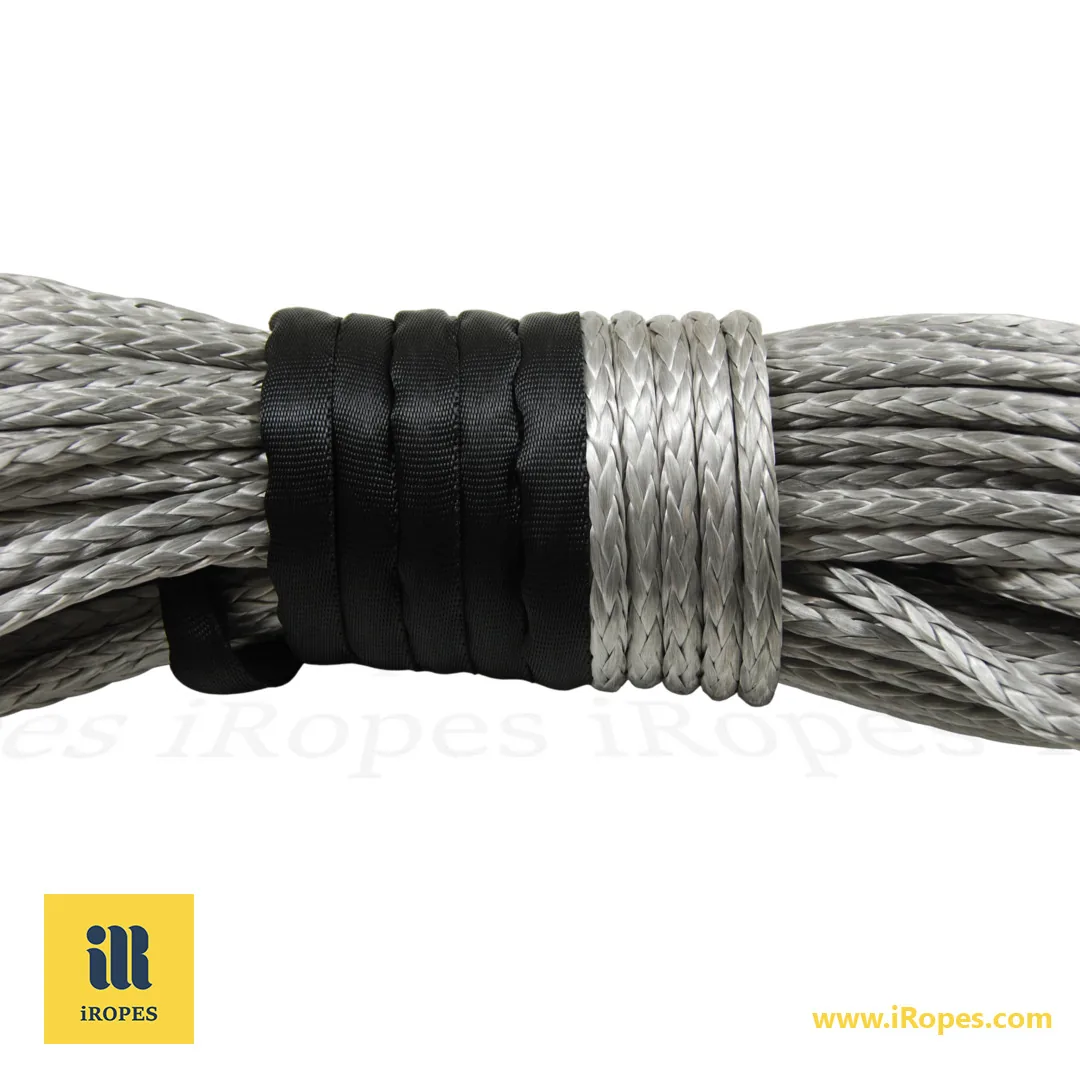
Most rope buyers think braided rope is only nylon, yet iRopes offers seven high‑performance fibres—nylon, polyester, Kevlar, UHMWPE, Technora, Vectran and PP—delivering up to 247% more tensile strength for the same diameter.
What you’ll gain – 5 min read
- ✓ Choose the optimal fibre for your load, cutting material cost by up to 18%.
- ✓ Reduce rope weight by as much as 30% with UHMWPE for portable rigs.
- ✓ Boost UV and chemical resistance by 41% using Technora or Vectran, extending service life.
- ✓ Leverage iRopes’ OEM/ODM to receive custom‑branded ropes in 2‑4 weeks turnaround.
Imagine you’re loading a desert‑track trailer with a rope that suddenly sags, or a yacht sheet that snaps under a gust—what if the culprit isn’t the load but the fibre you never considered? In the next sections, we’ll unravel how each of those seven fibres behaves under stress, which hidden trade‑offs matter for off‑road, marine and industrial jobs, and exactly how iRopes can tailor a braid that outperforms every generic spec you’ve relied on.
Understanding the Different Types of Braided Rope
When you encounter a rope that runs smoothly through a winch or glides effortlessly over a pulley’s groove, you’re likely holding a type of braided rope. Unlike twisted ropes, braids keep the fibres parallel, delivering a torque‑free feel and superior flexibility. These qualities are crucial whether you’re pulling a trailer up a desert track or trimming a sail on a yacht.
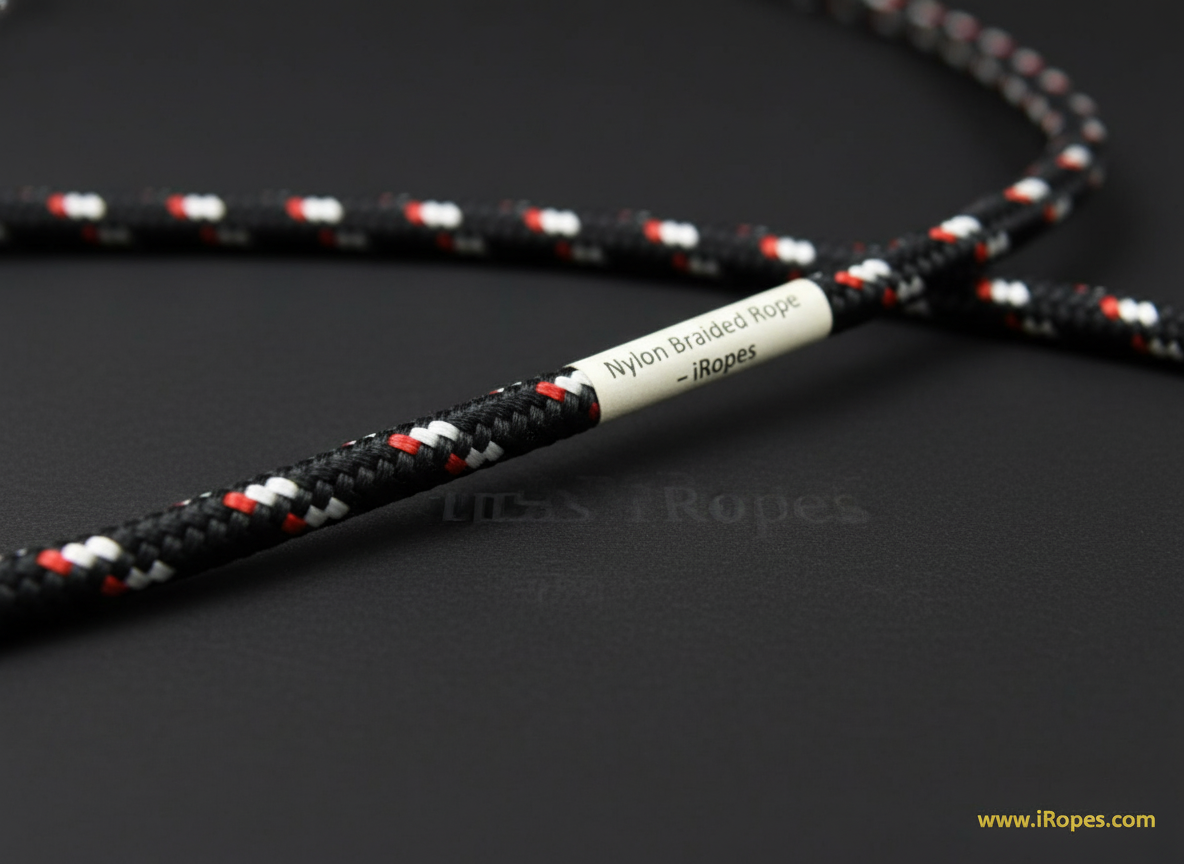
The material you select for a braid significantly influences its performance under load. iRopes utilises high‑performance fibres such as nylon, polyester, Kevlar, UHMWPE, Technora, Vectran, and polypropylene (PP). For instance, nylon provides excellent shock absorption, while polyester excels in wet environments. Kevlar offers extreme tensile strength, and UHMWPE delivers a feather‑light yet ultra‑strong profile. Technora resists heat, Vectran provides fatigue resistance, and PP contributes buoyancy for marine applications.
“A well‑chosen braid and fibre combo turns a simple rope into a specialised tool that can survive the harshest off‑road terrain while remaining easy to handle.” – Senior Rope Engineer, iRopes
Each braid construction is suited to particular tasks. A single braid, for example, is lightweight and easy to splice, making it ideal for yacht sheets and camping lines. Double braid, conversely, features a protective sheath around a high‑strength core, which is perfect for heavy‑duty off‑road tie‑downs. Hollow braid completely omits a core, providing the lightest option for portable utility rigs. A diamond braid offers a low‑stretch profile, well‑suited for industrial winches. Plaited braid uses a torque‑free, six‑strand weave, making it effective for climbing ropes and high‑flexibility industrial loops. Finally, kernmantle braid encases a strong core within a smooth sheath, designed for critical climbing and rescue scenarios.
- Single braid – lightweight, easy to splice; commonly used for sailing sheets and lightweight off‑road straps.
- Double braid – core‑and‑sheath design; favoured in heavy‑load industrial lifting and marine mooring.
- Hollow braid – no core, ultra‑light; perfect for portable utility lines and rescue kits.
- Diamond braid – low‑stretch, high‑precision; often found in winch drums and equipment‑handling loops.
- Plaited braid – six‑strand torque‑free weave; chosen for climbing ropes and high‑flexibility industrial loops.
- Kernmantle braid – protective sheath around a high‑strength core; standard for climbing, rescue and high‑performance military rigs.
Now that you can visualise the six main rope constructions and how they pair with various fibres, let’s explore cotton rope. This material offers a soft hand‑feel and eco‑friendly advantages for decorative and pet‑friendly projects.
Exploring Various Types of Cotton Rope
Having understood how the six braid constructions influence performance, you might wonder why many artisans and pet owners still prefer cotton. The answer lies in its natural softness, complete biodegradability, very low stretch, and its ability to readily accept dye. These qualities impart a tactile charm to cotton rope that synthetic fibres simply cannot replicate.
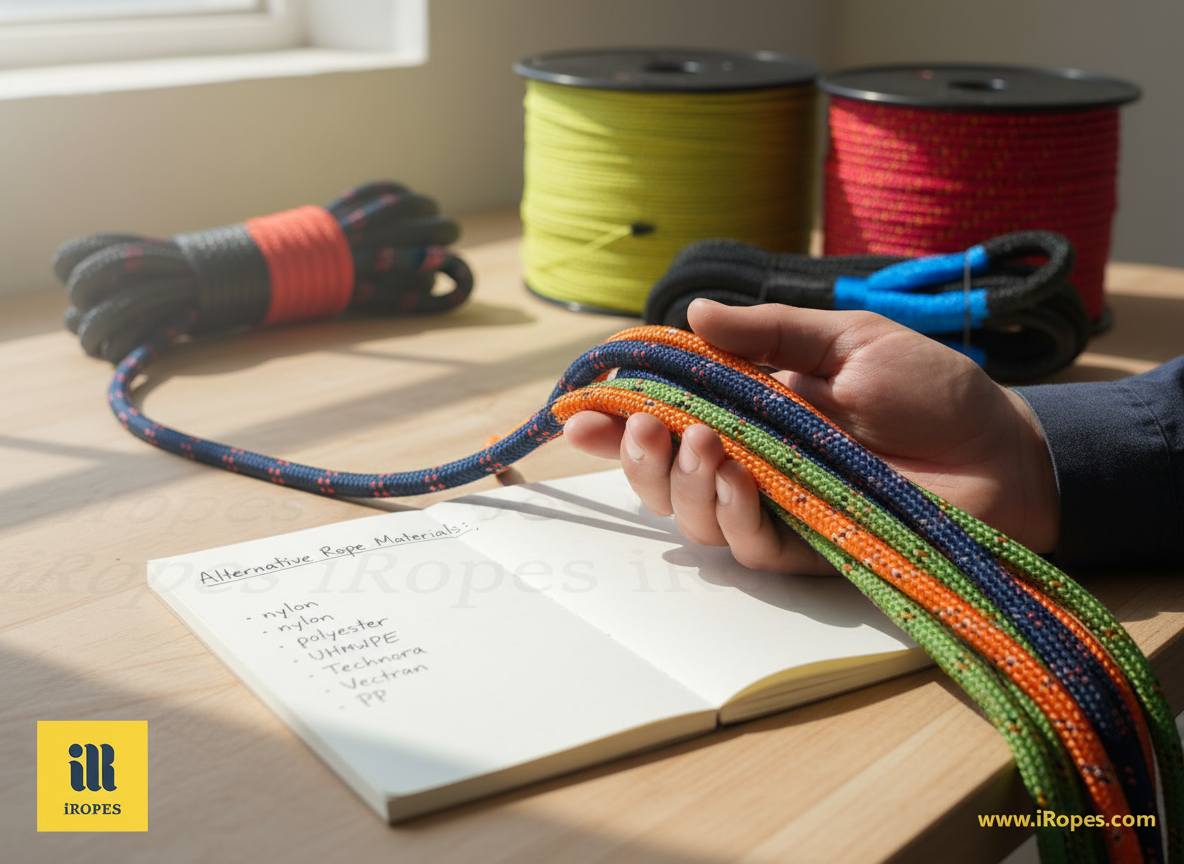
These unique properties lead to three popular constructions, defining the main types of cotton rope. Each construction offers slightly different tactile and handling characteristics, allowing you to choose the one that aligns best with your project’s aesthetic and load requirements.
- Braided cotton
- Triple‑strand twisted
- Flat‑braided tape
In braided cotton rope, the fibres are interwoven, creating a round profile that glides smoothly through pulleys while remaining gentle to the touch. A triple‑strand twisted rope groups three yarns together in a classic twist, providing more bulk for decorative knots. Flat‑braided tape spreads the fibres into a wide, flat ribbon—an ideal choice when a subtle visual line is needed that won’t roll.
When comparing strength, nylon significantly outperforms cotton. Nylon’s synthetic polymer structure provides a much higher tensile capacity than natural fibre, making it the preferred choice for heavy‑duty lifting or marine mooring. Cotton, however, excels where a soft hand‑feel, easy colour matching, and environmental friendliness are more critical than raw breaking strength.
Typical Uses
Macramé artisans favour braided cotton for its supple knots, interior designers choose flat‑braided tape for decorative lines, and pet‑product makers rely on triple‑strand twisted rope for chew‑safe toys and leash accessories.
Understanding these distinctions prepares you for the next step: examining nylon cord, a prevalent synthetic alternative, and discovering how its high tensile strength and elasticity suit demanding industrial and marine scenarios.
Identifying the Types of Nylon Cord
Nylon cord is distinguished by its high tensile strength, notable elasticity, and excellent resistance to abrasion and UV exposure. These core attributes enable nylon rope to absorb shock loads while maintaining dimensional stability, which is why numerous demanding industries depend on it for critical tasks.
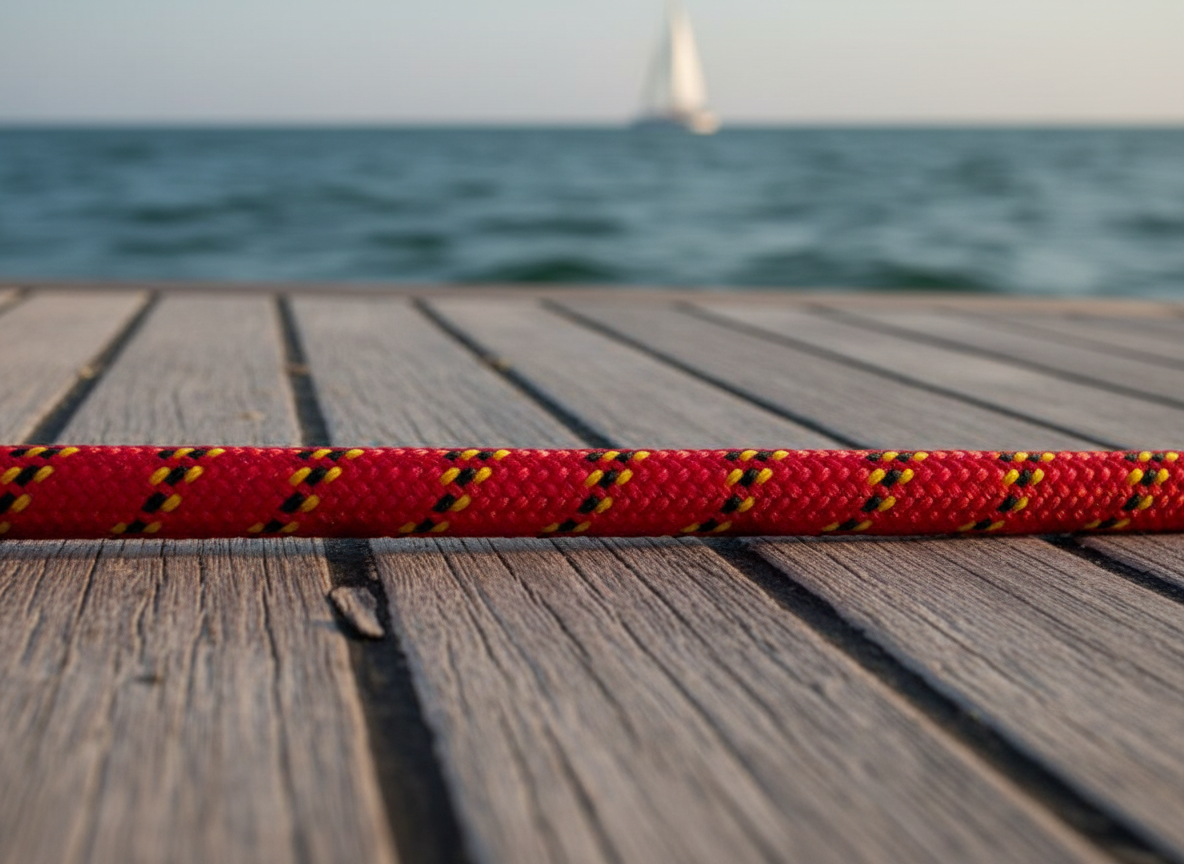
Manufacturers generally offer four common constructions for nylon cord, each optimised for a specific performance need.
Solid Braid
A single, tightly woven strand that provides consistent strength and is easy to splice for custom lengths.
Diamond Braid
Features a low‑stretch core surrounded by a protective sheath, making it ideal for winch drums where precision is essential.
Double Braid
Combines a high‑strength core with an outer protective layer, offering enhanced durability for heavy‑load marine mooring.
Specifically formulated to resist saltwater corrosion and prolonged UV exposure, perfect for offshore anchoring and sailing applications.
Because of its balanced properties, nylon cord is the preferred choice for marine mooring lines, industrial lifting rigs, climbing safety systems, and rescue‑operation tethers. Its ability to stretch slightly under load helps absorb sudden forces, while the protective sheath safeguards against abrasion from pulleys and rough surfaces.
The most common type of rope you’ll encounter on the market is nylon, thanks to its versatile strength‑to‑flexibility ratio and reliable performance across marine, industrial, and rescue scenarios.
By now, you’ve explored how the six main constructions of braided rope combine with high‑performance fibres—nylon, polyester, Kevlar, UHMWPE, Technora, Vectran, and PP—to meet the rigours of off‑road, yachting, and industrial work. This article has also clarified the three common forms of cotton rope and the four prevalent constructions of nylon cord, providing a clear picture of the strengths, stretch, and durability each offers.
Armed with this knowledge, you can quickly decide which types of braided rope, types of cotton rope, or types of nylon cord best suit your project. From there, iRopes can fine‑tune the material, colour, diameter, and accessories to match your exact specifications.
Ready for a customised rope solution?
If you’d like personalised guidance on selecting or designing the perfect rope for your application, please use the enquiry form above – our specialists are happy to help.