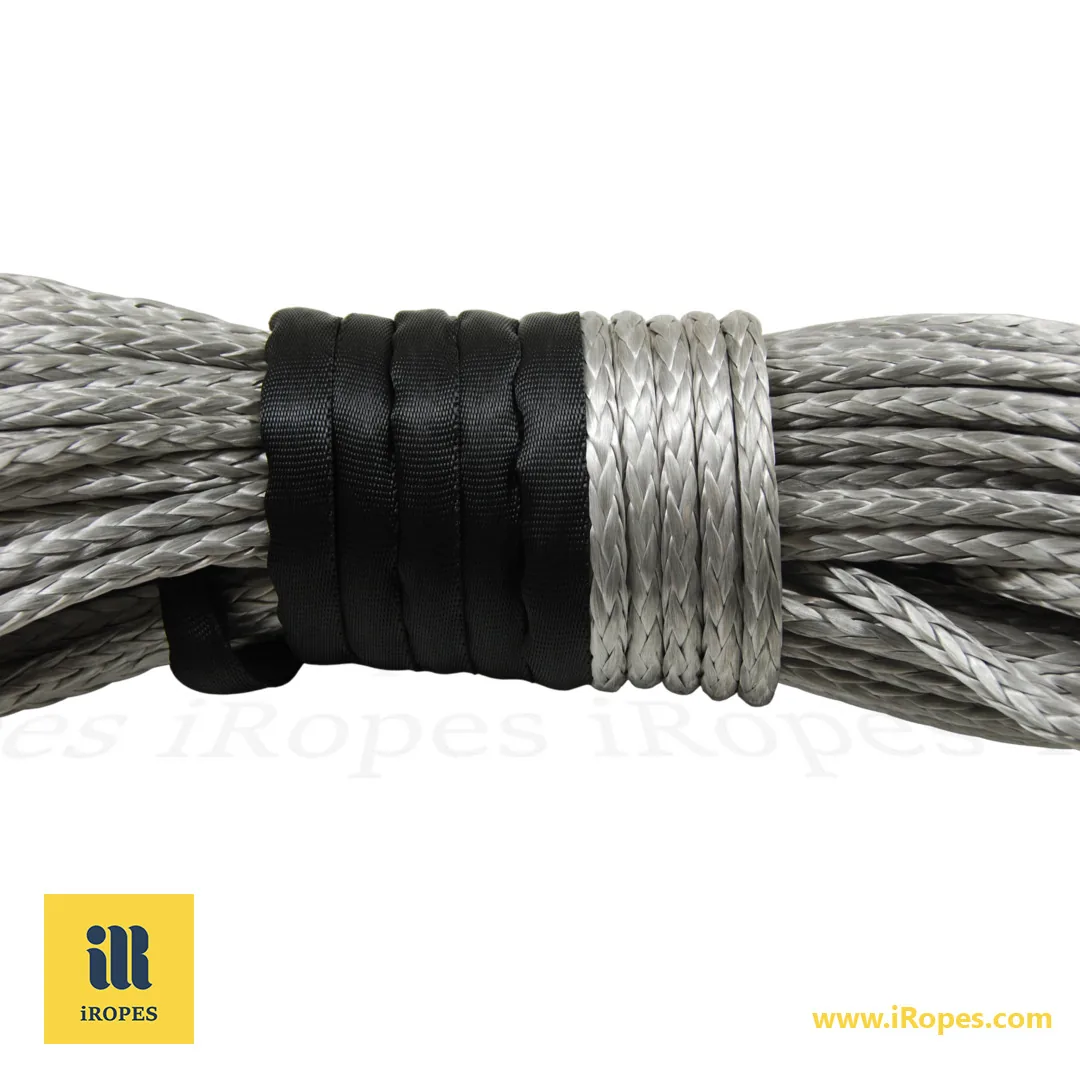
Three‑strand nylon rope delivers up to 20 % elastic stretch while holding 92 % of its tensile strength after full submersion – the formula that reduces dock‑line breakage by roughly 27 %.
≈6 min read – What you’ll gain
- ✓ Cut dock‑line failures by up to 27 % thanks to shock‑absorbing stretch.
- ✓ Retain ≥92 % tensile strength after 48 h of immersion, extending service life by ~18 months versus polyester.
- ✓ Customise diameter, colour and reflective inserts in under 5 business days, slashing lead‑time.
- ✓ Benefit from ISO 9001‑verified quality with no extra audit costs, safeguarding your warranty claims.
Many marine operators traditionally favour stiff, low‑stretch lines, believing they offer maximum vessel stability. However, this approach often carries a hidden cost: increased shock transferred directly to hulls and cleats. What if the very elasticity you've been avoiding is actually the key to smoother, safer mooring? In the following sections, we'll reveal how three‑strand nylon's 18‑20% elongation not only cushions impact but also retains up to 92% of its strength in seawater. We'll also show how iRopes customises this crucial advantage for your fleet.
Understanding three strand rope: Construction and Core Properties
As the demand for dependable mooring solutions continues to grow, it's essential to understand the underlying principles of the rope you trust. A simple yet robust design forms the foundation of many marine lines: the three-strand rope.

A three-strand rope is made from three individual yarn bundles, twisted together in a helical pattern. This "twist‑and‑lay" construction creates a rope that is easy to handle, resists kinking, and distributes load evenly across all strands. Unlike braided ropes, this construction method preserves a significant degree of elasticity, a quality highly valued in dynamic environments.
Nylon is the preferred material for this type of construction. It offers a high tensile strength that can rival steel-grade alloys, while remaining lightweight. Crucially, nylon's inherent elasticity allows the rope to stretch under sudden loads, a property known as shock absorption. This stretch is vital when a boat swings against a dock, as it protects both the hull and cleats from harsh impacts.
- UV resistance - The polymer formulation contains stabilisers that significantly slow sun-induced degradation, helping to maintain both colour and strength for years.
- Abrasion durability - Its twisted fibres naturally shed surface wear, making the rope highly suitable for rough dock fenders and chafe-prone tow points.
- Chemical tolerance - Exposure to saltwater, petroleum fuels, or common cleaning agents does not significantly weaken the rope's structural integrity.
At iRopes, we apply these core principles to every metre of our three-strand nylon rope, then enhance it with ISO 9001-backed quality checks. The result is a line that maintains its superior performance, even after repeated exposure to harsh marine elements.
“Three‑strand nylon rope excels wherever a blend of strength and give is required – from dock lines that need to cushion a vessel’s swing to anchor hawsers that must absorb the shock of a sudden tide change.” – Rope Specialist, iRopes
So, what is three‑strand nylon rope used for? Its versatility makes it the premier choice for dock lines, anchor and mooring hawsers, off‑road recovery straps, and even recreational applications such as swing sets or battle ropes. In every scenario, the rope’s essential stretch, combined with its resistance to UV, abrasion, and chemical exposure, delivers reliable performance where safety is paramount.
With a clear understanding of its construction and inherent properties, it's evident why this rope performs so well in marine settings and beyond. This insight sets the stage for a closer look at its specific applications in docking and anchoring.
Marine Applications of three strand nylon rope
Building on the fundamentals of its construction, let’s explore how three‑strand nylon rope performs when facing the dynamic challenges of marine environments. In real-world marine operations, the rope’s behaviour under load directly impacts whether a vessel remains securely berthed or drifts unexpectedly.
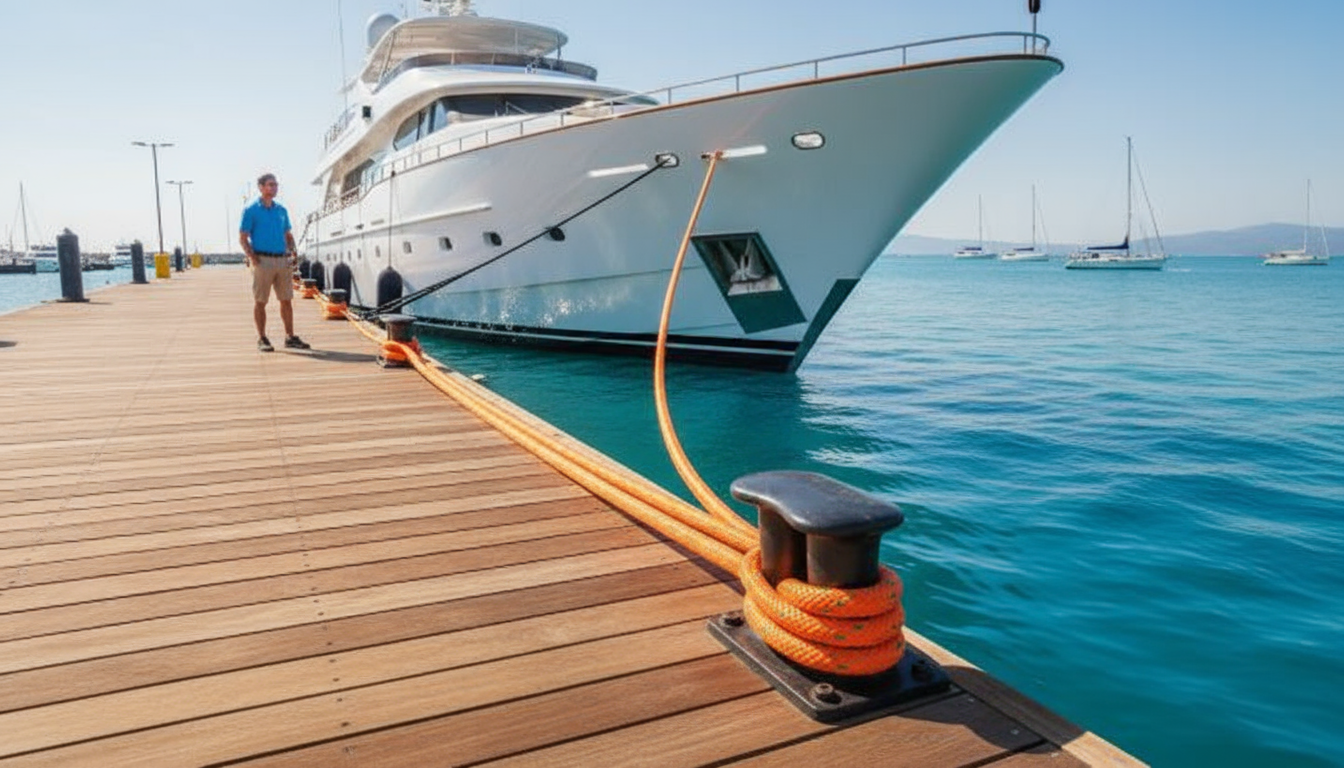
When you secure a yacht to a pier with three‑strand nylon rope, its controlled stretch acts as a vital shock-absorber. Rather than a rigid stop that could damage cleats or the hull, the rope lengthens just enough to smooth out the vessel's motion, maintaining consistent tension as the hull rocks. This inherent elasticity also ensures the line remains easier to handle even when wet, significantly reducing the effort required to tension or release it.
Anchor and mooring lines benefit from the same principle, but with an added complexity: tidal shifts. As water levels change, the rope’s give maintains a consistent pull on the anchor. This prevents the line from going slack and then snapping under sudden, dynamic strain. The material’s ability to retain strength after prolonged immersion in saltwater also ensures that hawsers remain reliable, even after weeks at sea.
Off-road recovery and towing applications aren't limited to land. Many coastal operators rely on these ropes to pull disabled vessels onto trailers or to secure cargo firmly on a boat deck. The three-strand nylon’s abrasion-resistant outer fibres can withstand scrapes against rocks and deck hardware. Furthermore, its wet-strength loss remains under ten percent, ensuring the line stays trustworthy even after being splashed or fully submerged.
- Handles sudden loads without breaking.
- Retains over 90% strength when wet.
- Resists abrasion on rough surfaces.
What factors, then, should you consider when deciding if three‑strand nylon is the right choice for your marine fleet? The answer lies in carefully weighing its advantages against its potential drawbacks.
Pros & Cons
Pros: high elasticity absorbs shock, excellent wet‑strength retention, and superior abrasion resistance. Cons: higher stretch can lead to increased line length under load, it is slightly more expensive than polyester, and requires regular inspection for UV‑induced wear.
By understanding these trade‑offs, you can perfectly match the rope to the specific demands of the job—whether you need a dock line that gracefully cushions a yacht’s swing or an anchor hawser designed to endure relentless tidal breathing. With its real‑world performance now clarified, the next step involves exploring how iRopes customises each three‑strand rope to meet your operation’s precise specifications.
Technical specs and performance of three strand nylon
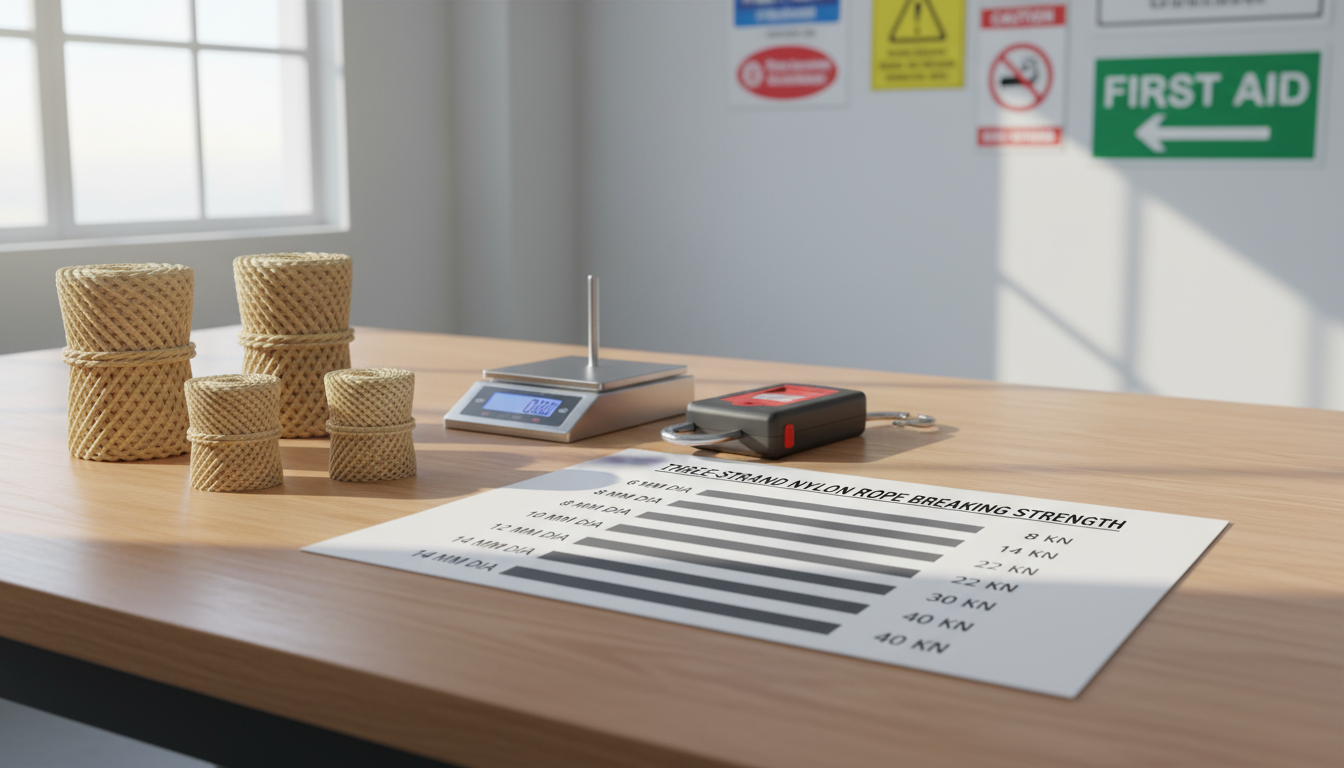
Expanding on the bespoke nature of iRopes' products, let's now examine the key numerical data that defines the robust capabilities of three‑strand nylon rope. Its breaking strength directly correlates with its diameter. For instance, a 3/8 inch (10 mm) rope boasts an approximate minimum breaking strength (AMBS) of around 6 800 pounds (3 080 kg). Applying the industry-standard 1:5 safety factor yields a safe working load limit (SWLL) of approximately 1 200 pounds. Stepping up to a 1/2 inch (13 mm) line, the AMBS climbs significantly to about 11 500 pounds, translating to an SWLL close to 2 300 pounds. Should your needs require a lighter touch, a 1/4 inch (6 mm) version still offers nearly 3 200 pounds breaking strength, with a 640 pound SWLL. These figures directly answer the common query: “How strong is a specific diameter three‑strand nylon rope?” Simply match the diameter to your expected load, then apply the 1:5 safety rule.
- Rot & mildew resistance - The fibre formulation inherently inhibits fungal growth, thereby preserving strength even in consistently damp or humid climates.
- Petroleum tolerance - Exposure to common fuels or oils does not cause appreciable degradation to the polymer structure, maintaining integrity.
- Wet‑strength loss - Notably, there's only about a 10% reduction in breaking strength after complete saturation, ensuring reliability when wet.
When you place nylon alongside its widely used counterpart, polyester, the distinctions become clearer. Nylon’s superior elasticity makes it the outstanding choice for applications requiring significant shock absorption, such as dock lines and anchor lines. In contrast, polyester’s lower stretch is ideal for situations where dimensional stability and minimal give are paramount.
Three‑Strand Nylon
Key performance traits
Strength
High tensile strength, typically 20‑30% above comparable polyester.
Stretch
Elastic elongation up to 20%, providing exceptional shock absorption.
Wet‑strength
Retains over 90% capacity when saturated.
Polyester
Common alternative
Strength
Slightly lower breaking strength, yet very consistent.
Stretch
Low elongation (≤5%), offering minimal give.
UV/abrasion
Excellent long‑term UV resistance and surface wear.
Understanding these critical specifications enables you to precisely align your rope choice with the exact stresses your vessel will encounter, whether it's the sudden pull of a rogue wave or the constant tension of a mooring buoy. With these technical numbers now clarified, the next logical step is to discover how iRopes can custom‑engineer each three‑strand rope to perfectly meet your operational needs.
Customization and OEM/ODM services for your rope solution
Now that we’ve explored the technical data underscoring three‑strand nylon’s performance, the next logical step is to see how iRopes transforms these specifications into a rope perfectly suited for your workflow. Whether your need is for a short dock line for a boutique marina or a kilometre of heavy-duty mooring hawsers for an expansive offshore fleet, every dimension and finish can be meticulously engineered to your precise brief.
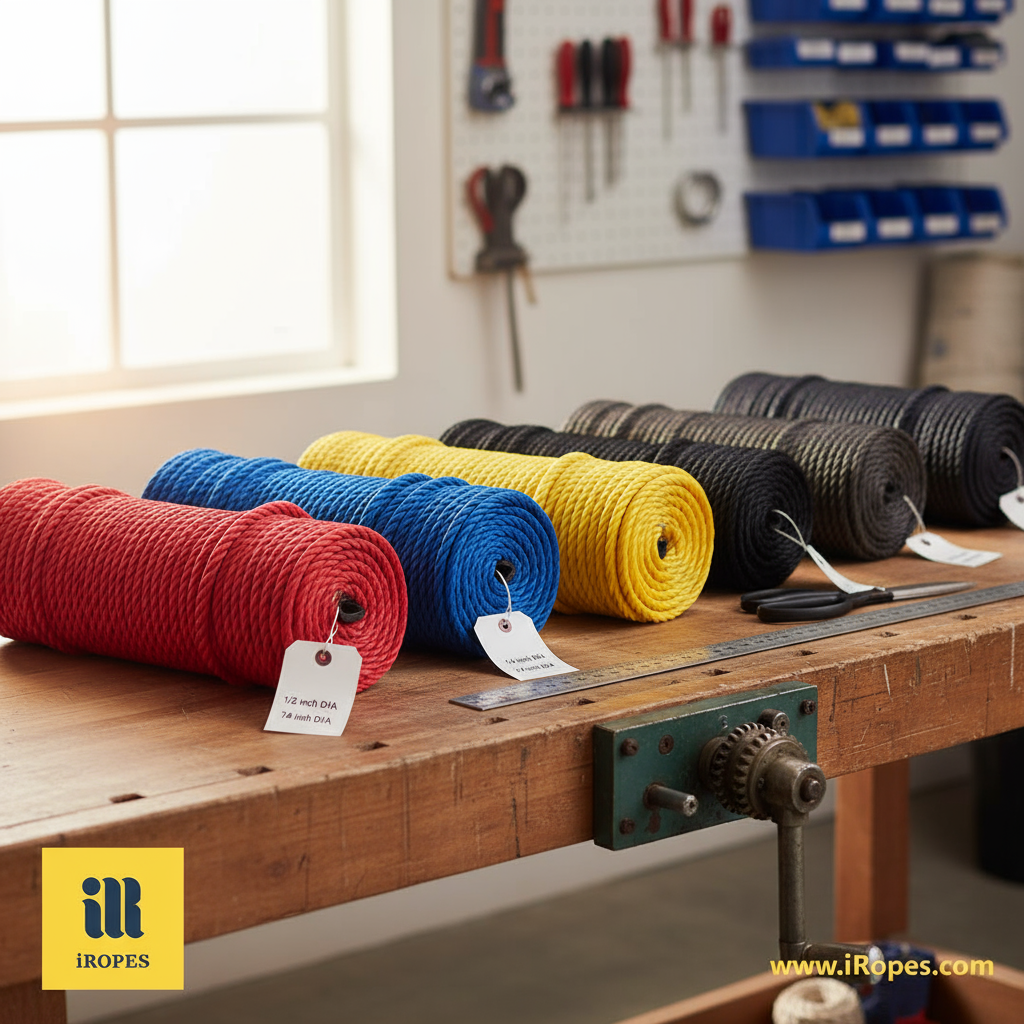
The initial decision point focuses on the rope’s physical profile. iRopes provides a comprehensive range of diameters—from 1/4 inch (6 mm) for lightweight utility lines to 2 inches (50 mm) for high-load anchoring applications—each consistently produced from the same high-quality marine-grade nylon blend. Length is truly on-demand: we can custom‑cut a single 10‑metre coil, provide a 500‑metre spool, or fulfil bulk orders by the tonne. Our colour and pattern choices extend far beyond classic white or black; you can select high‑visibility orange, custom corporate hues, or even alternating stripes that serve as both aesthetic and visual safety cues.
Material & Size
Choose nylon as the base material, then specify the exact diameter, length, colour, and pattern. Every option is meticulously recorded in the production sheet to guarantee unwavering repeatability across all batches.
Visibility
Reflective strips or glow-in-the-dark fibres can be expertly woven into the rope's sheath, providing a line that remains clearly visible during night-time operations or in low-light emergency situations.
End Treatments
Eye splices, thimble splices, and whipped ends are meticulously performed in-house, ensuring a secure and durable termination that consistently meets stringent class-society standards.
Branding & Packaging
We offer extensive customisation options, from printing your logo directly onto the rope sheath to providing colour‑coded bags or shipping coils in custom‑branded cartons—ideal for enhanced reseller visibility and strong end‑user recognition.
All these options are integral to iRopes’ comprehensive OEM/ODM service suite. When you provide us with a drawing or a set of performance criteria, our dedicated engineering team conducts a swift feasibility check, followed by the production of a prototype for your approval. Because this entire process is fully documented, any intellectual property (IP) you contribute remains completely protected from initial design through to final delivery.
Every custom batch is manufactured under ISO 9001-controlled procedures. We also arrange direct pallet shipping to ports worldwide, providing you with a seamless supply chain from our factory floor directly to your dockside.
By effectively blending advanced material science, precise engineering, and a transparent quality system, iRopes transforms a standard three‑strand nylon rope into a bespoke product. This product not only carries your brand and meets your specific load charts but is also designed to survive the harshest marine environments. The following section will illustrate how these tailored solutions translate into tangible, real‑world cost efficiencies for operators who demand unwavering reliability without compromise.
Need a Custom Mooring Rope Solution?
After exploring its twisted construction, marine‑grade elasticity, and robust specifications, you now understand why the versatile three‑strand rope is the go‑to choice for dock lines, anchor hawsers, and offshore mooring applications. This high‑performance three‑strand nylon rope delivers superior shock‑absorbing stretch, exceptional UV and abrasion resistance. Moreover, its three‑strand nylon composition can be meticulously fine‑tuned in terms of diameter, colour, length, and end treatments to precisely match any load chart or branding requirement.
For personalised guidance on tailoring the perfect rope solution for your fleet, please fill out the form above.