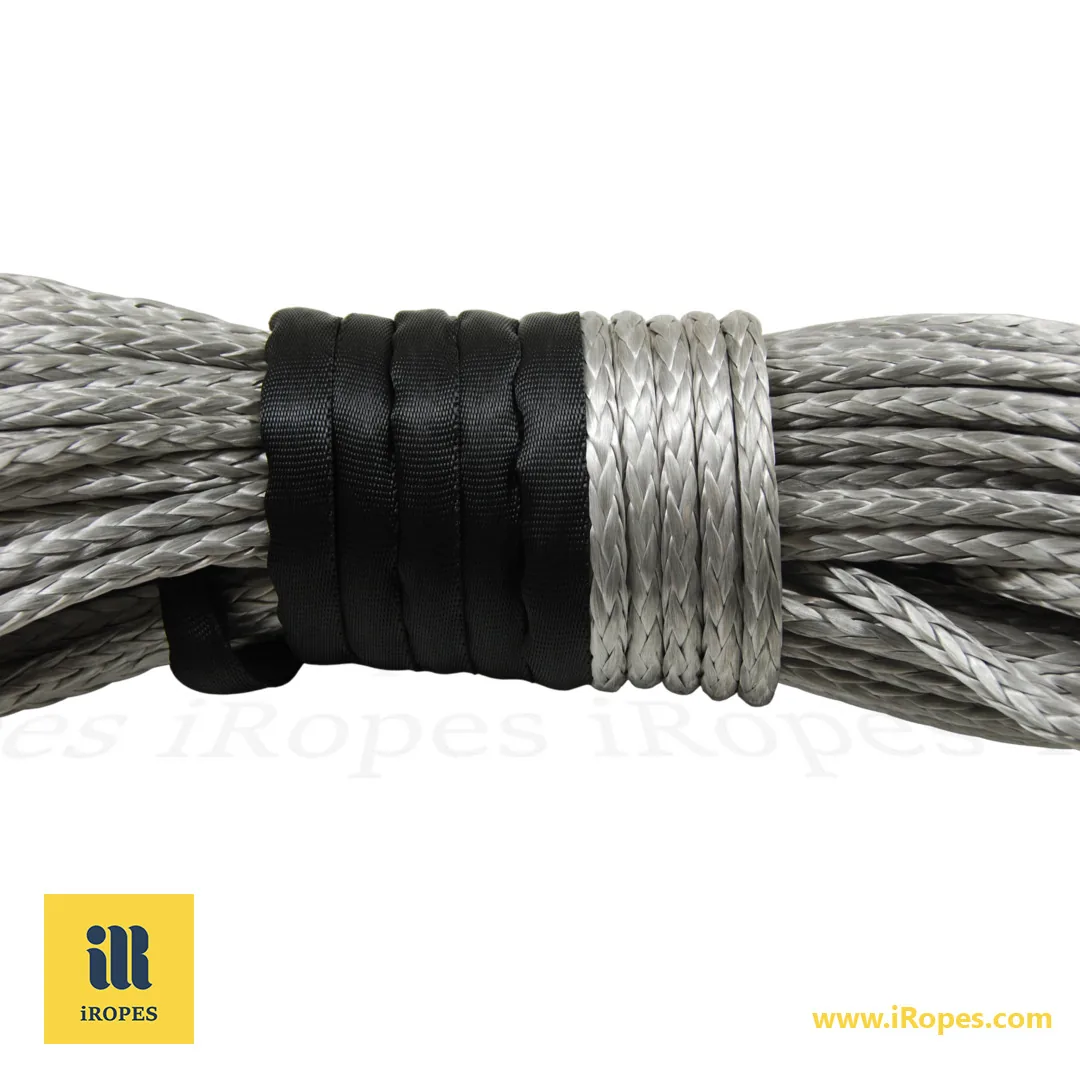
UHMWPE typically delivers ≈ 5 800 psi tensile strength (ASTM D 638). A 9.5 mm rope built from it is ~85 % lighter than steel for the same duty.
≈ 7 min read – what you’ll unlock
- ✓ Extend liner wear life by up to 4× versus steel in mining use.
- ✓ Reduce rope weight by ~85 % versus steel cable to cut handling effort and fuel use.
- ✓ Accelerate design cycles with iRopes’ ready‑made UHMWPE data sheets and selection tips.
- ✓ Specify food‑grade UHMWPE that meets FDA 21 CFR 177.1520 requirements.
Most engineers still spec steel or generic HDPE for high‑load liners, assuming heavier is stronger. What they miss is that UHMWPE exhibits roughly 5 800 psi tensile strength (ASTM D 638), and a 9.5 mm UHMWPE rope sheds about 85 % of the weight of steel, slashing installation effort and fuel use. In the next sections we explain exactly how that advantage translates into lower wear, higher payload efficiency, and a turnkey UHMWPE data sheet you can download now.
UHMWPE Applications
If you’re wondering why UHMWPE keeps popping up in engineering specs, it starts with its molecular heft – the polymer chains weigh between 3 × 10⁶ and 6 × 10⁶ g mol⁻¹, giving the material a remarkable combination of strength and flexibility. Consequently, UHMWPE resists abrasion, offers a low coefficient of friction, and performs from cryogenic conditions down to ‑269 °C up to elevated service temperatures.

So, what is UHMWPE used for? The answer reads like a checklist for any industry that demands durability without added weight. Below are the most common uhmwpe applications:
- Liners for hoppers and chutes – protect steel surfaces from abrasive wear and reduce maintenance cycles.
- High‑strength ropes – deliver tensile strengths around 5 800 psi while remaining lightweight.
- Food‑processing equipment – meet FDA 21 CFR 177.1520 standards for safe, clean‑in‑place operation.
- Mining and bulk‑handling components – resist impact from rocks and ore, extending service life.
- Marine applications – survive saltwater exposure and provide low friction for winches and davits.
- Medical devices – used in prosthetics and surgical tools where biocompatibility matters.
- Cryogenic systems – maintain performance at temperatures down to ‑269 °C.
Because of its ultra‑high molecular weight, UHMWPE finds its sweet spot in applications where low friction and extreme wear resistance are non‑negotiable – from hopper liners to offshore ropes.
Understanding these uhmwpe applications helps you match the material’s strengths to the challenges you face on the shop floor or in the field. Next, we’ll dive into liner design considerations, showing how material properties translate into practical UHMWPE liner solutions.
UHMWPE Liners
Building on the broad‑scope applications we just explored, the next step is to translate those material strengths into a practical liner solution. When specifying UHMWPE liners, engineers focus on three core design pillars: the forces the liner must bear, the temperature environment, and the wear profile of the conveyed material.

Design criteria can be distilled into a concise checklist that guides the selection process from the earliest concept stage.
- Load capacity – calculate both static weight and dynamic impact forces the liner will encounter.
- Service temperature – ensure the operating range stays below the polymer’s maximum continuous temperature (≈ 180 °C).
- Abrasion resistance – match the liner’s hardness to the abrasiveness of the bulk material.
Answering the common query “How thick should a UHMWPE liner be?” depends on those three pillars. For low‑abrasion, moderate‑load applications such as food‑processing chutes, a thickness of 6 mm to 8 mm usually offers sufficient protection while keeping material costs modest. Heavy‑impact environments—mining hoppers, dump‑truck beds, or high‑temperature steel silos—benefit from 10 mm to 12 mm, sometimes up to 15 mm when shock loads are extreme. Installation method also matters: weld‑washers or steel retainers can support thinner gauges, whereas mechanically fastened panels often require the upper end of the range.
Always verify that the chosen thickness complies with the project’s safety factor and that the fastening technique matches the liner’s intended service life.
With the thickness and design criteria clarified, the next logical step is to dive into the technical data sheet that quantifies tensile strength, elongation and other key properties of UHMWPE. That information will help you fine‑tune the liner’s performance for any demanding application.
UHMWPE Data Sheet
Engineers rely on the data sheet to translate the polymer’s reputation for wear resistance into measurable specifications. The table below captures the core properties that underpin every liner and rope design decision.
| Property | Typical Value |
|---|---|
| Density | 0.93 g cm⁻³ |
| Tensile strength (72 °F) | ≈ 5 800 psi |
| Elongation at break | ≈ 300 % |
| Melt temperature (range) | 138 – 142 °C |
Material testing to ASTM D 638 typically shows ≈ 5 800 psi tensile strength and ≈ 300 % elongation for UHMWPE. Our 9.5 mm UHMWPE braided rope testing confirms high break strength with low stretch for offshore winches and rigging; request the iRopes test report for the full methodology and results.
9.5 mm Rope Test
A dedicated rope test verified high break strength for a compact 9.5 mm diameter with minimal elongation under load. The results support high‑load, low‑stretch scenarios such as offshore rigging and marine winches.
For engineers who need the complete specification set, the full UHMWPE data sheet is available for download from iRopes’ technical resources page. You may also read our top benefits of UHMWPE for crane cable replacement to see how the material performs in other high‑load scenarios. Access the PDF to obtain detailed charts, certification references, and recommended design guidelines.

Looking for a personalised UHMWPE solution?
By now you’ll appreciate how UHMWPE's ultra‑high molecular weight delivers the tensile performance seen in material tests – roughly 5 800 psi with excellent toughness – making it ideal for demanding liner and rope projects. Whether you need advice on specific uhmwpe applications, the right thickness for uhmwpe liners, or a complete uhmwpe data sheet to fine‑tune your design, our specialists can translate these specs into a solution that matches your exact requirements.
As a China‑based manufacturer serving wholesale buyers worldwide, iRopes provides OEM and ODM custom rope and liner solutions with ISO 9001‑backed quality assurance, dedicated IP protection, custom branding, and non‑branded packaging. We also offer direct pallet shipping for on‑time delivery. If you’d like a customised recommendation or a deeper dive into the technical data, simply fill out the enquiry form above and we’ll respond with a tailored plan.