⚠️ Hidden halyard flaws like excessive stretch or poor lead angles can cost your sailboat up to 15% speed efficiency during hoists. Discover how the right halyard—such as a low-stretch Dyneema or Vectran—restores crisp control, shaves seconds off your tacks, and ensures safer, faster sails every time.
Unlock Peak Performance: Seven-Minute Read to Optimise Your Halyard
- ✓ Master material choices: Compare polyester's 8–12% stretch to Dyneema's under 1%, selecting the ideal rope for racing or cruising to eliminate speed-draining sag.
- ✓ Gain installation expertise: Follow step-by-step guides to replace your halyard in under an hour, potentially reducing friction by 20% for smoother, effort-free hoists.
- ✓ Solve common pitfalls: Identify wrap and chafe issues early with consistent maintenance schedules, extending rope life by two to three years and preventing unexpected failures at sea.
- ✓ Access custom upgrades: Explore iRopes' OEM solutions for reflective, low-weight halyards tailored to your yacht, boosting visibility and winch compatibility for 10% faster sail adjustments.
You have likely felt it—that frustrating hesitation when your mainsail luffs just off the wind, costing precious knots without you knowing why. What if the culprit is not the breeze, but a subtle flaw in your halyard on a sailboat setup, such as a mismatched diameter or unoptimised leads, silently sabotaging your speed? Dive deeper to uncover these overlooked inefficiencies and learn how to transform your rigging with proven tweaks that deliver measurable gains—all before your next race or cruise leaves you trailing.
Understanding the Halyard on a Sailboat: Basics and Components
Picture this: you are out on the water, the wind picking up, and you need to get that mainsail up quickly and smoothly. That is where the halyard on a sailboat comes into play—it's the unsung hero that keeps everything running correctly. If you have ever wondered what exactly powers that hoist, let us break it down together.
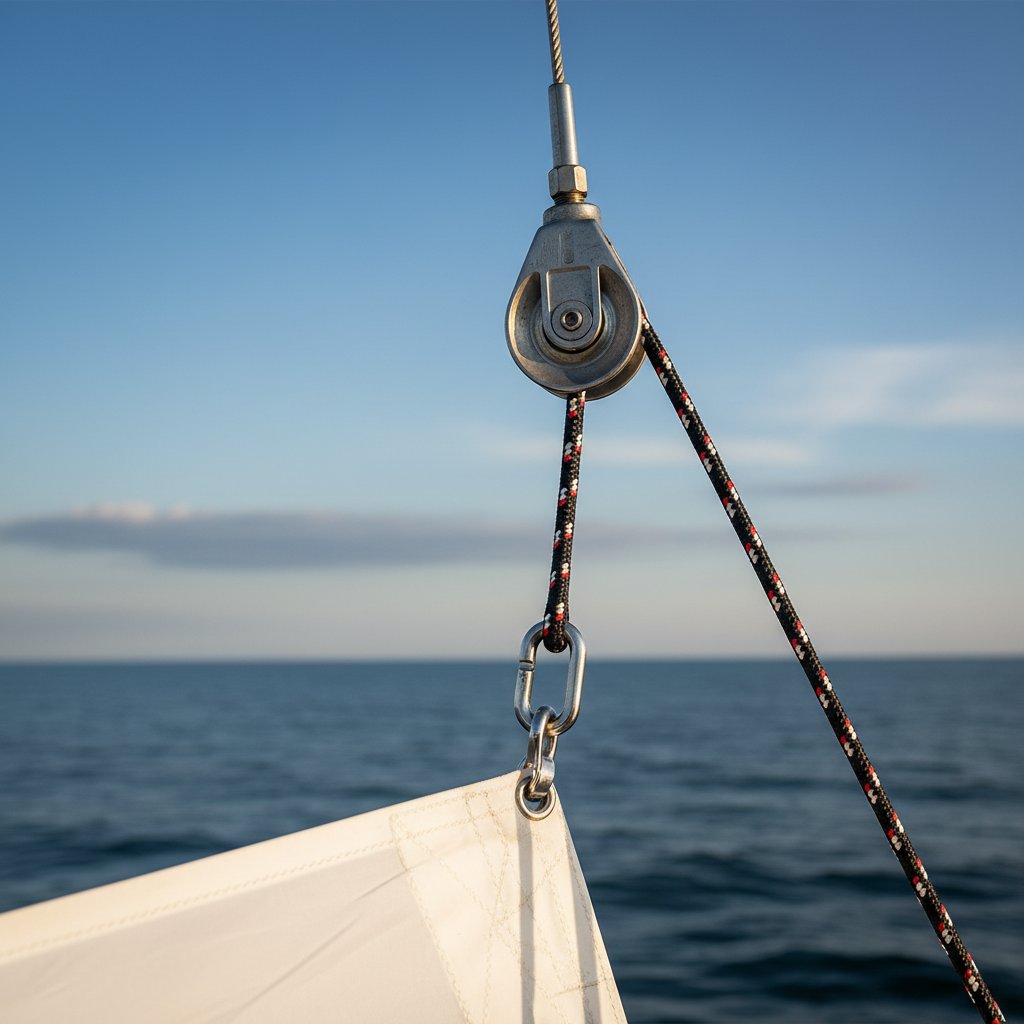
The main halyard on sailboat is essentially a strong line designed to raise and lower your sails. Running from the cockpit or deck, it travels up through the mast to attach at the head of the sail—think of it like the elevator cable for your canvas wings. Its primary job is hoisting the sail into position so you can catch the wind effectively. Without a reliable halyard, you would be stuck fiddling around, losing precious time and momentum. On a halyard boat setup, this line handles the heavy lifting, quite literally, supporting loads that can reach thousands of pounds under full sail.
Now, what makes this system function? The halyard is not just one piece—it is a clever assembly of components working in harmony. At its core is the rope itself, usually a synthetic line chosen for its balance of strength and flexibility. Then there is the shackle, a metal connector that links the halyard to the sail's headboard securely—imagine it as the sturdy hook at the end of a fishing line. Sheaves, those smooth, wheel-like pulleys at the masthead, guide the line without snagging, reducing friction as you pull. Down below, clutches or cleats lock the halyard in place once the sail is up, letting you fine-tune tension without constant gripping. And do not forget the masthead fitting, which houses the sheave and ensures everything aligns properly inside the mast.
- Rope - The flexible backbone, engineered for low stretch to maintain sail shape.
- Shackle - Secure attachment point, often stainless steel to resist corrosion.
- Sheaves - Pulleys that minimise wear and ease hoisting effort.
- Clutches - Quick-release mechanisms for safe, one-handed control.
- Masthead - Top assembly directing the line's path for smooth operation.
Have you ever noticed how a sluggish hoist can throw off your entire sail? A well-functioning halyard is crucial for speed and control because it keeps your sails at the perfect angle without sagging or flapping. If the line stretches under load, your sail luffs and loses power, stealing knots from your speed. Proper setup prevents that hidden drag, ensuring crisp response to wind shifts. Have you checked your own rigging recently? It is worth it—smooth halyard action can mean the difference between a frustrating tack and a seamless glide across the bay.
Getting these basics right establishes a solid foundation, but to truly unlock your boat's potential, you will want to delve into the right types and materials that match your sailing style.
Types and Materials for Halyard Boat Performance
Now that we have covered the basics of how a halyard on a sailboat works, let us get into the specifics that can make or break your time on the water. Choosing the right type and material is not just about picking something strong—it is about matching it to your sails and how you sail to keep things efficient and responsive.
Your halyard needs vary depending on which sail it is handling. The main halyard lifts the mainsail, the powerhouse that drives most of your speed, so it sees constant heavy use. Jib halyards, on the other hand, manage the forward sails like your genoa, requiring quick adjustments for tacking. Then there are spinnaker halyards, designed for those light-wind runs where you want downwind power without too much weight aloft. Each one demands a line that can handle its unique stresses, from steady tension to rapid pulls.
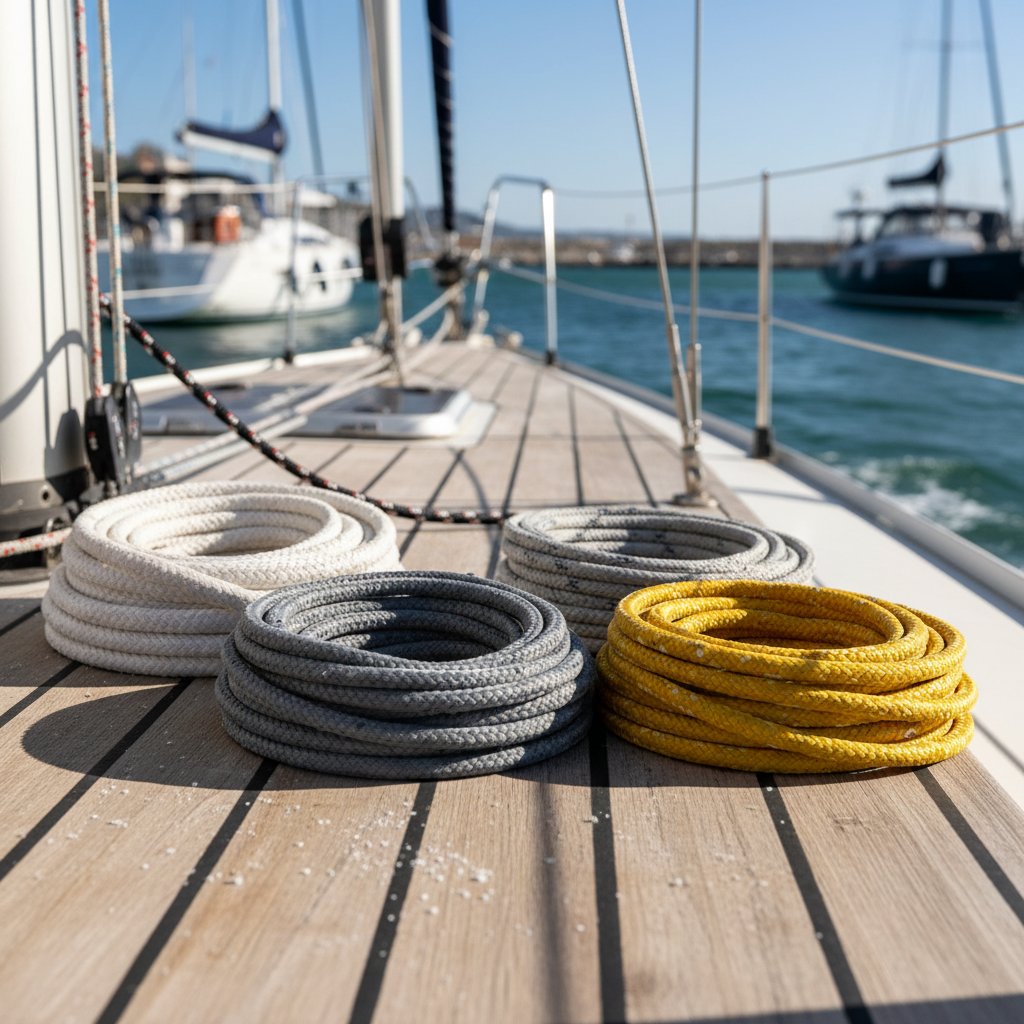
When it comes to materials, the debate often boils down to what offers the best balance for your setup. Polyester ropes are a go-to for everyday sailing—they are tough against UV rays, hold up to abrasion, and are cost-effective, though they do stretch a bit under load, which can lead to a softer sail shape. Dyneema, an ultra-high-molecular-weight polyethylene, shines with its incredible strength-to-weight ratio and almost no stretch, making it ideal if you are chasing every knot. Vectran, derived from liquid crystal polymer, sits in the middle with excellent low-stretch properties and better chafe resistance than Dyneema, but it can be pricier. So, what is the best rope for yacht halyards? It depends on your goals: for casual outings, polyester keeps things simple and durable; for performance, Dyneema or Vectran minimises that hidden flaw of elongation that robs your speed.
Cruising Focus
Durable and Affordable
Polyester
Offers solid UV resistance and easy handling for long trips, with moderate stretch that forgives rough conditions.
Vectran Blend
Boosts chafe protection for coastal cruising, maintaining shape without excessive cost.
Double Braid Core
Provides grip for winches and cleats, essential for relaxed, hands-on sailing.
Racing Edge
Low Stretch and Light
Dyneema
Delivers minimal elongation under load, keeping sails powered for competitive gains.
Single Braid
Reduces weight aloft, improving responsiveness but needing careful splicing for security.
Custom Cover
iRopes tailors polyurethane coatings for slick winch performance in high-stakes races.
Construction also matters—double braid ropes, with a strong core wrapped in a protective cover, offer the best all-around handling, gripping winches without slipping and resisting daily wear. Single braid options are sleeker and lighter, perfect for internal mast runs, but they demand precise splicing skills. At iRopes, we specialise in customising these builds, blending materials like a Dyneema core with a polyester jacket to fit your exact needs, whether for yacht racing or weekend cruises.
For racing, lean towards low-stretch setups to avoid that performance dip from saggy sails—think Dyneema double braids that hold tension like a second skin. Cruisers might prefer the forgiving stretch of polyester to ease the strain on gear during longer hauls. Have you ever felt your boat hesitate in a puff because the line gave just a little too much? That is the flaw to watch. Getting the size and setup correct next will ensure your choice performs flawlessly.
Choosing and Optimising Your Halyard on Sailboat for Maximum Speed
With the right material in hand, like that low-stretch Dyneema we discussed, the next step is dialling in the specifics to make sure your halyard on a sailboat fits your boat like a glove. It is not just about grabbing any length of line—getting the size and setup spot-on eliminates those sneaky inefficiencies that slow you down before you even leave the dock.
Start with sizing, which boils down to matching your boat's demands. For diameter, aim for something that slides smoothly through your sheaves and clutches—typically 8–12mm for boats under 40 feet, but check your winch specifications first to avoid slippage. Length-wise, measure from the cockpit cleat up to the masthead, around the sail head, and back down, adding two to three metres extra for safety tails. Factor in mast height (often your boat's P measurement from deck to truck) and expected loads; a 35-foot sloop might need 20–25 metres total to handle gusts without excess weight aloft. Optimising the lead—how the line runs from cockpit to mast—keeps tension even and friction low, so your pulls translate directly to sail power. Have you ever traced your current halyard's path? A slight reroute via a fairlead can shave seconds off your hoist time.
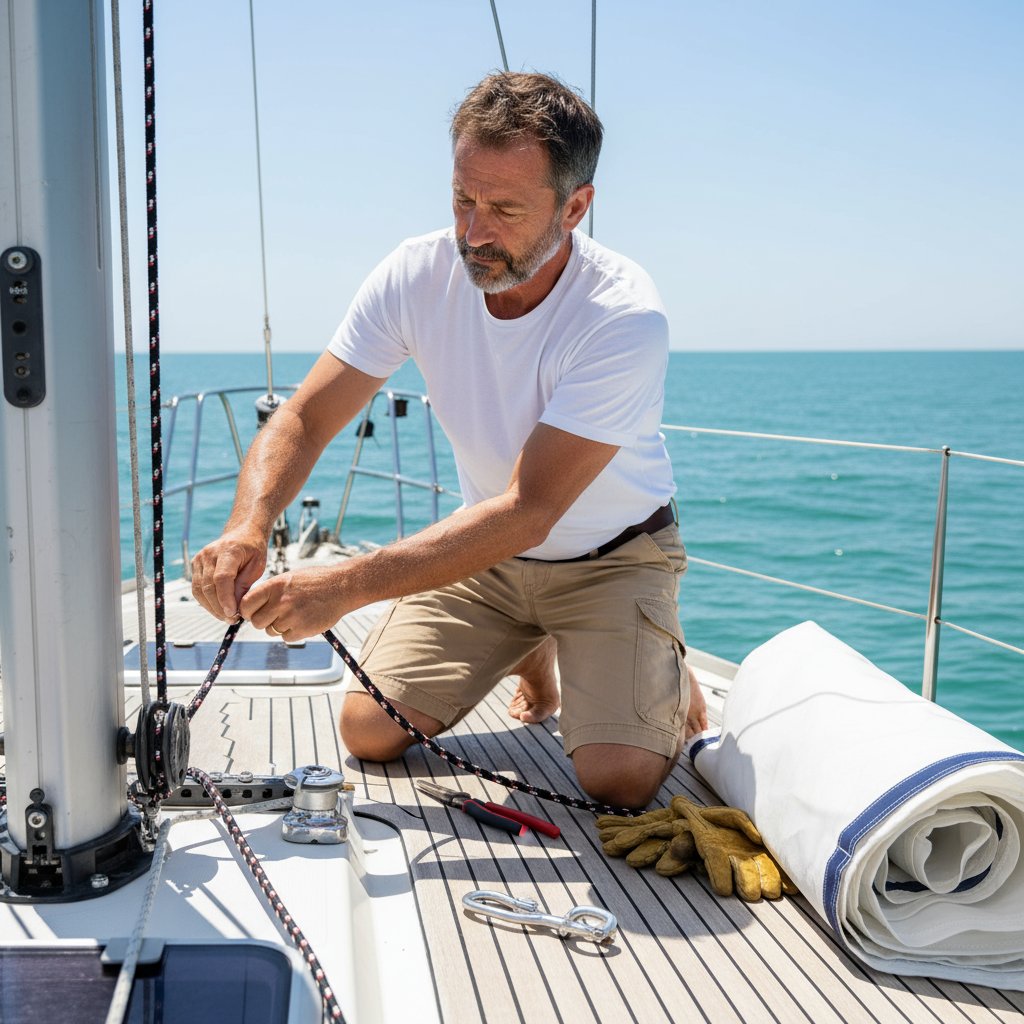
Once sized, installation is straightforward but demands care to avoid snags. Replacing a halyard starts with dropping the old one: loosen the clutch, lower the sail, and use a messenger line (like thin paracord) tied to the end to pull the new one through. Attaching it to the sail? Most sailors opt for a stainless steel shackle pinned through the headboard—it is quick and secure, distributing load evenly without weakening the line. If you prefer a knot, a halyard hitch works well for synthetic ropes; wrap the end around the shackle pin twice, then tuck the tail through for a non-slip hold. Just ensure the rope diameter is not too bulky for the shackle, or it could bind. Thread the new line up the mast, reattach, and test with light pulls. I remember swapping one on a friend's J/22—it took under an hour, and the difference in smoothness was significant.
- Tie messenger to old halyard end and lower fully.
- Attach new halyard to messenger with a secure knot.
- Pull through mast, avoiding twists by feeding slowly.
- Secure to sail head with shackle or hitch; trim excess.
- Test hoist and cleat under light load before full sail.
To maximise speed, focus on performance tweaks. Winch compatibility is key—choose a line with the right grip, as detailed in our guide to the best winch lines, so it does not spin out during grinds. Reducing friction means inspecting sheaves for burrs and using low-friction rings if needed; a single rough spot can add 20% more effort to your hoist. And watch those hidden flaws: poor lead angles, where the line does not run straight, create drag that makes your sail luff and costs you knots. Align everything parallel to the mast to keep power pure. What if your setup still feels off? A quick angle adjustment often reveals the culprit.
That is where iRopes steps in with custom solutions tailored just for you. We can blend a Dyneema core for zero stretch with a polyester cover for winch bite, or add reflective strands for night visibility without bulking up the line. Core types like parallel strand offer ultra-light strength, while strand counts fine-tune flexibility—say, 12 for a snappy racing feel. These tweaks not only boost efficiency but also ensure your rigging stays safe and visible in low light. Imagine a halyard that glows faintly at dusk, letting you spot issues early.
Even with these optimisations, wear will creep in over time, so staying ahead with checks keeps everything running sharply.
Maintenance, Troubleshooting, and Upgrades for Halyard Systems
Even with spot-on optimisation, like those custom tweaks from iRopes, your halyard on a sailboat will not last forever without some tender loving care (TLC). Wear from sun, salt, and constant tension adds up, turning a smooth hoist into a headache if you ignore it. Let us walk through keeping things shipshape, spotting trouble early, and boosting performance when it is time for an upgrade—simple steps that save you from mid-race surprises.
Start with routine care to fend off the big threats: UV damage that weakens fibres over time and chafe from rubbing against sharp edges. Inspect your line every three months or after every 50 hours of sailing—run your hands along its length, feeling for fuzzy spots or flat areas where the cover might be thinning. For cleaning, rinse with fresh water after each outing to wash away salt crystals, then soak in mild soap annually; avoid harsh chemicals that strip protective coatings. Store it coiled loosely in a dry spot below deck, away from direct sunlight, to prevent kinks or heat build-up. These habits extend life by years—I have seen sailors double their rope's usability just by making rinsing a post-sail ritual. What does your storage look like right now?
Common halyard problems crop up more often than you would think, but most have straightforward fixes. Wraps happen when the line twists around the sheave, often from poor tension or a failing swivel—untangle by easing off and re-leading straight. Noise, that annoying slap or whistle, usually signals loose fittings or wind vibration; tighten everything and add chafe guards like leather wraps at contact points. Stretch beyond normal is the sneaky one, caused by fatigue in older synthetics, leading to sagging sails—monitor by measuring tension drop under load. Protective accessories, such as thimbles in turns or heat-shrink tubing over splices, prevent these issues from escalating. Addressing them keeps your setup reliable without major downtime.
- Wraps - Check lead angles and add swivels for prevention.
- Noise - Secure loose parts and use silencers if needed.
- Stretch - Replace if elongation exceeds 5% under working load.
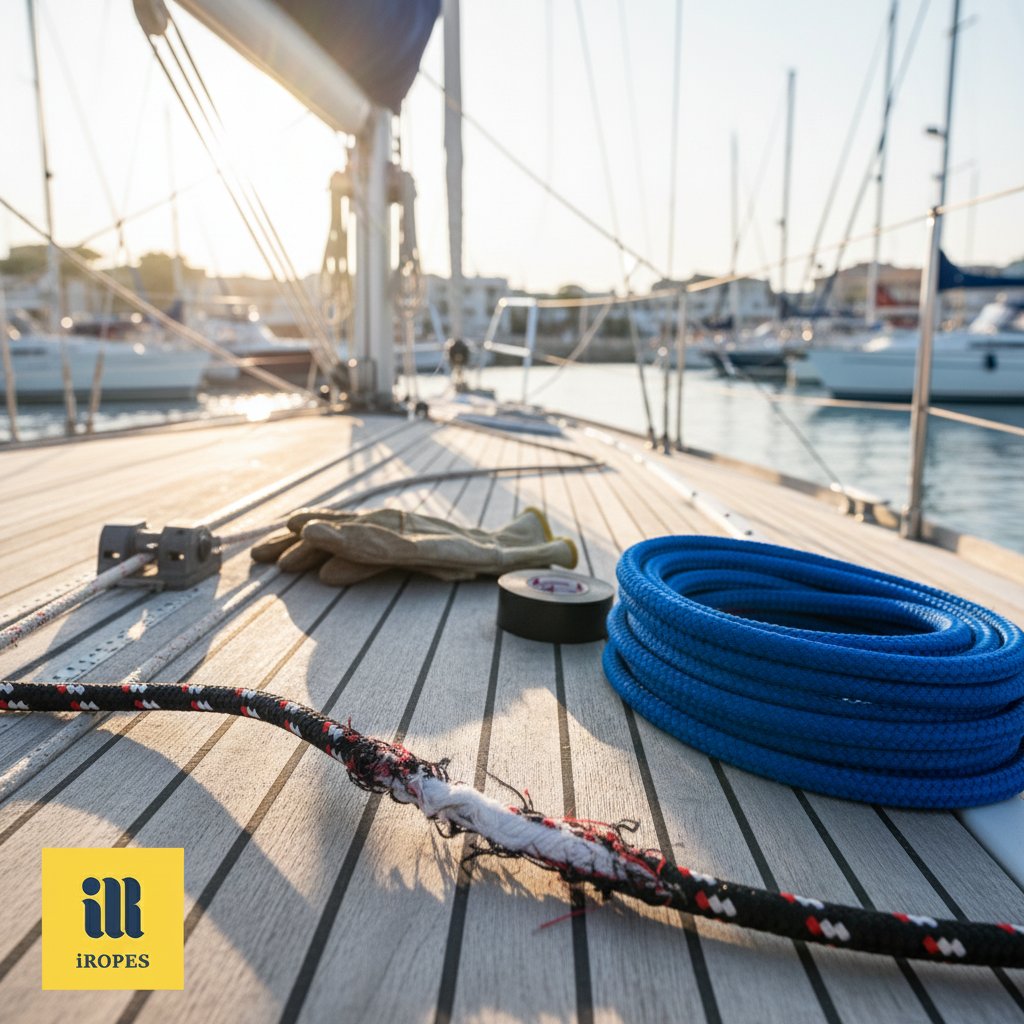
Knowing when to replace is crucial—look for signs such as visible core peeking through the cover, discolouration from UV, or stiffness that hints at internal breakdown. For a do-it-yourself (DIY) approach, follow the messenger method we touched on earlier, but if your mast is tall or access tricky, call a professional rigger to avoid risks. Safe swaps involve double-checking knots and testing pulls onshore first.
For upgrades, think about your sailing style. Racing enthusiasts benefit from iRopes' OEM low-stretch Dyneema upgrades, slashing weight and elongation for sharper response in gusts. Cruisers might opt for chafe-resistant Vectran blends via our ODM services, built for endurance on long passages. These enhancements, with options like glow elements for dusk checks, turn potential flaws into strengths. Have you ever upgraded and felt the difference in a strong blow?
Putting these practices into play means your halyard supports not just speed, but the whole joy of being out there, ready for whatever the wind throws next.
Discovering the hidden flaws in your halyard on a sailboat can transform your sailing experience, from selecting low-stretch materials like Dyneema for minimal elongation to optimising lead angles and ensuring winch compatibility for smoother hoists. Whether you are racing or cruising, proper sizing, installation, and routine maintenance—such as quarterly inspections for chafe and UV damage—prevent speed loss and enhance safety. With iRopes' custom solutions, including reflective elements and OEM upgrades, your halyard boat setup reaches peak performance, keeping sails crisp and responsive against the wind.
Building on these insights, imagine a halyard on sailboat tailored precisely to your vessel's needs, blending durability with efficiency for every adventure.
Optimise Your Halyard with Expert Customisation
If you are ready for personalised guidance on material selection, upgrades, or maintenance plans to suit your sailing style, complete the inquiry form above. Our iRopes specialists are here to help craft the ideal solution for your wholesale rope needs.
