iRopes’ double‑braid nylon rope gives up to 10 % higher tensile strength and up to 30 % stretch, delivering a 1 560 lb safe‑working load on a ½‑in line—ideal for harsh offshore mooring.
≈ 4‑minute read: What this rope does for you
- ✓ Boost load capacity by up to 10 % versus polyester, letting you use a smaller‑diameter line.
- ✓ Reduce wave‑induced shock by up to 30 % thanks to nylon’s stretch, improving control during berthing.
- ✓ UV‑stabilised finish typically retains about 70 % strength after five years of sun exposure, helping to control replacement costs.
- ✓ Custom OEM/ODM options (length, colour, terminations) with typical dispatch in 5–7 days for standard cuts.
Many operators still rely on single‑braid or polyester lines, assuming they’re enough for rough berths—until a sudden gust snaps a line and costly downtime follows. A torque‑free, double‑braid nylon rope engineered for shock‑absorption, UV stability and salt‑water corrosion resistance helps reduce that risk. Keep reading to discover the construction details and how iRopes tailors the perfect line for your vessel.
Understanding double braided mooring rope
After highlighting why a strong line is vital for a vessel’s safety, it’s time to examine the rope that makes reliable mooring possible. The double braided mooring rope combines a tightly woven core with an outer sheath, delivering the resilience needed when waves and wind test a berth.

So, what exactly is a double‑braid rope? It features a braided core that carries the majority of the load, encased by a braided outer sheath that protects the core from abrasion and moisture. Because the strands are interwoven rather than twisted, the line remains torque‑free and hockle‑free, meaning it won’t twist on itself or develop hard knots under tension.
This construction translates into two practical advantages for offshore work. First, the rope’s breaking strength is markedly higher than that of a comparable single‑braid. Second, the safe working load (SWL) can be calculated by dividing the breaking strength by five, giving a quick rule of thumb for safe sizing.
- Dock lines – secure a vessel to a pier while absorbing wave‑induced shock.
- Anchor lines – provide an energy‑absorbing rode that cushions loads and improves holding.
- Fender lines – act as flexible buffers that protect hulls from berthing impacts.
When you compare a 1/2‑inch double braided marine rope to a similar‑diameter polyester line, the nylon version offers roughly 10 % more tensile strength and a stretch capacity of up to 30 % under load, which helps dampen sudden forces. The breaking strength of that 1/2‑inch size is about 7 800 lb, giving an SWL range of 650 – 1 560 lb, well within the limits required for most commercial and recreational vessels.
“A torque‑free double‑braid design eliminates the kinking that can compromise a mooring line under dynamic load. When paired with nylon’s high elasticity, it provides the safest, most reliable docking solution.” – Dr. Lena Kwon, Senior Rope Engineer, Cordage Institute
Understanding the core‑and‑sheath build, the typical marine uses, and the key performance figures equips you to choose the right line for any mooring scenario. With that foundation, we can now look at the specific benefits that make double‑braid nylon the preferred choice for offshore applications.
Benefits of double braided marine rope for offshore applications
With the construction of a double‑braid now clear, the next step is to see why this design excels when the sea turns rough. The combination of a strong nylon core and a protective sheath translates into measurable advantages that go beyond simple tensile figures.
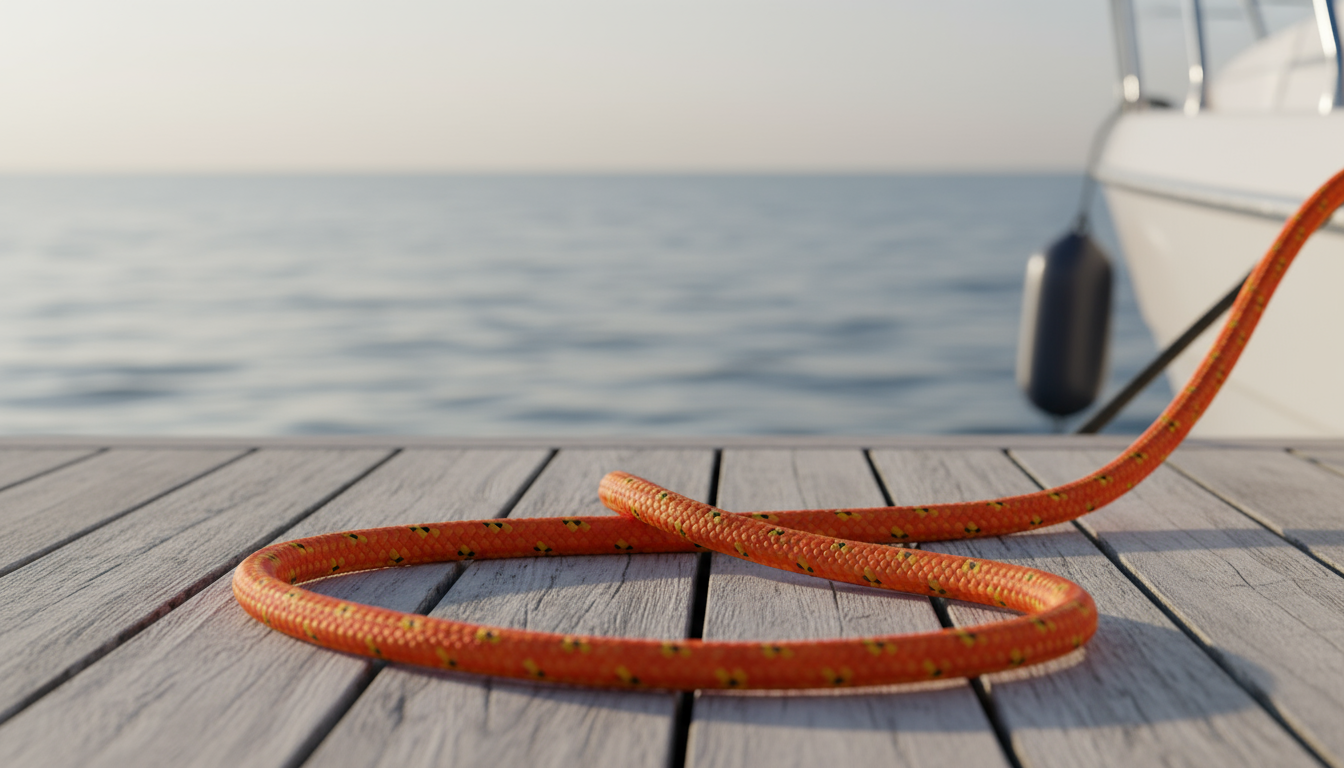
When you compare nylon to polyester in a double‑braid format, three practical differences emerge. First, nylon typically delivers about 10 % higher tensile strength, meaning a smaller‑diameter line can carry the same load. Second, nylon’s stretch can reach 30 % under peak tension, providing a natural shock‑absorber; polyester stretches less than 5 %, which feels stiffer but can transmit jolts to the vessel. Third, polyester’s UV stabilisers retain roughly 90 % of original strength after five years of sunlight, whereas nylon holds about 70 %—still acceptable for most offshore cycles when the line is stored in shade between deployments. This directly answers the question “How does double‑braid nylon differ from polyester?” by highlighting strength, elasticity and UV performance.
Double‑braid nylon
Higher tensile strength, up to 30 % elongation for shock absorption, suitable for dynamic mooring where wave impact is frequent.
Double‑braid polyester
Excellent UV stability, lower stretch for applications that demand minimal give, ideal for permanent moorings with low dynamic load.
Why it matters
Choosing the right polymer tailors the rope’s behaviour to the specific offshore environment, whether you need elasticity or long‑term colour retention.
Result for operators
Optimised performance reduces wear, lowers replacement cycles, and improves safety during heavy‑weather berthing.
To turn those material facts into a correctly sized line, follow a simple three‑step calculation. The goal is to pick a rope whose safe working load comfortably exceeds the maximum expected tension.
- Identify the peak load your vessel will encounter (e.g., 600 lb during a storm).
- Consult the specification table and find a diameter whose breaking strength is at least five times that load.
- Select the rope and add a safety margin of 20 % to cover dynamic spikes.
For instance, a 3/8‑inch double‑braid line has a breaking strength of roughly 4 400 lb. Dividing by five yields a safe working load of 880 lb, which comfortably covers a 600‑lb design load plus the recommended safety margin. Using a slightly larger 1/2‑inch line would raise the SWL to around 1 560 lb, offering extra headroom for unexpected gusts.
Beyond strength, UV and abrasion resistance determine how long a rope lasts in a salty, sun‑baked environment. Nylon’s elasticity reduces shock at contact points and works well with chafe guards, while modern UV additives keep colour fade to a minimum. Polyester, on the other hand, resists UV breakdown more effectively, making it a better choice for permanent moorings that remain exposed for years. In either case, pairing the rope with a protective sheath or a chafe guard extends service life and maintains performance.
Armed with the material‑choice guide and a clear sizing method, you can now decide which double‑braid specification fits your offshore rig, learning about the top benefits of double‑braid nylon rope, before moving on to customisation options such as colour, terminations or reflective strips.
Choosing the right double braid nylon for your mooring needs
After you’ve seen how a double‑braid design outperforms other ropes, the next step is turning those performance numbers into a rope that fits your vessel perfectly. The right diameter, length and accessories can mean the difference between a smooth berth and a stressful recovery.
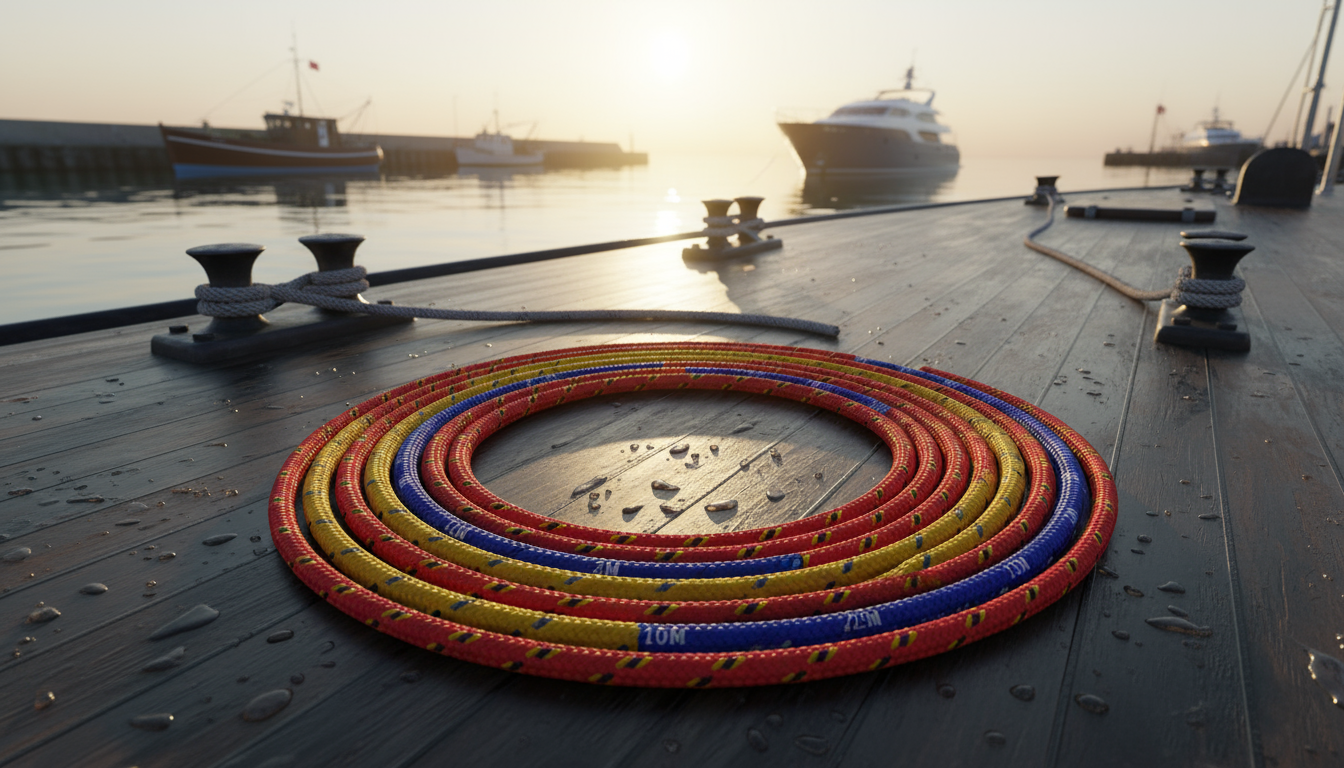
Start with the load you expect to see in the toughest conditions—say a 600 lb peak tension during a gale. Multiply that figure by five to set a minimum breaking strength of 3 000 lb. Consult the strength table: a 3/8‑inch double braided marine rope delivers a breaking strength of about 4 400 lb, giving an SWL of roughly 880 lb—comfortably above the design load. If you want additional margin, step up to a 1/2‑inch line, which offers a breaking strength of 7 800 lb and an SWL near 1 560 lb.
Customization Options
Tailor‑made for your vessel
Length & Diameter
Specify the exact length and diameter you need; we cut to order so you can match the SWL you calculated.
Colour & Reflectivity
Standard marine hues plus optional reflective strips improve visibility in low‑light berthing.
Terminations & Chafe Guards
Factory‑fitted eye splices, thimbles or custom terminations, plus abrasion‑resistant chafe guards where the line meets hardware.
Certifications & Quality
Built to global standards
ISO 9001
All production runs follow a certified quality‑management system, guaranteeing consistency batch after batch.
Cordage Institute
Products can be manufactured and tested in line with Cordage Institute guidelines when specified for your project.
IP Protection
Design files and proprietary formulations are protected throughout the order, safeguarding your competitive edge.
Even the best‑speced rope, when chosen with the best mooring rope material, can fail if it’s not looked after. A common question we hear is: “How often should I inspect my mooring line?” The answer is simple—check it before every departure. Run your fingers along the sheath for cuts, look for colour fade that signals UV degradation, and examine any splices for frayed strands. If wear exceeds roughly 10 % of the rope’s diameter, replace it.
Regular inspection protects both crew and equipment; a well‑maintained double braided mooring rope can serve reliably for years.
With the sizing formula, the custom‑option menu and the quality guarantees now clear, you’re ready to specify the exact rope that will keep your vessel securely fastened—no matter how the sea behaves. The next logical step is to request a tailored quote from iRopes and put your new line into service.
Ready for a personalised rope solution?
The article has shown how iRopes’ high‑elasticity, high‑strength nylon rope delivers the torque‑free, corrosion‑resistant performance required for marine and ship‑to‑dock applications. By pairing a robust core with a protective sheath, the double braided marine rope provides superior breaking strength, predictable safe‑working loads and excellent abrasion resistance. With ISO 9001 certification and full OEM/ODM customisation—including diameter, length, colour, reflective strips and terminations—iRopes can tailor a double braid nylon to match any vessel’s mooring profile, whether you need a double braided mooring rope for heavy berthing or a lighter line for routine use. We manufacture in China and ship pallets directly to customer locations worldwide for dependable, on‑time delivery.
If you’d like a custom quote, or consult our ultimate guide to nylon mooring rope for detailed advice, simply use the inquiry form above and our specialists will help you design the perfect solution.
