⚠️ Certification lapses in industrial cargo nets trigger a substantial percentage of port and offshore accidents, transforming routine lifts into multimillion-dollar disasters—yet robust solutions exist to eliminate these risks entirely.
In 8 minutes, uncover certification pitfalls and gain compliance mastery:
- ✓ Pinpoint overlooked testing gaps that cause mesh failures in heavy marine loads, saving you from costly downtime.
- ✓ Learn root causes of load
capacity misdefinitions**miscalculations**, avoiding overload incidents that endanger crews and cargo. - ✓ Discover iRopes' ISO 9001-certified custom nets boosting safety margins, with tailored Dyneema designs for harsh environments.
- ✓ Master inspection protocols to extend net life, ensuring seamless port-to-offshore operations.
You assume certified cargo nets guarantee safety in those high-stakes port swings and offshore heaves—but what if hidden flaws deficiencies in mesh size and attachment testing are silently stacking the odds against you? This exposé reveals the shocking contradictions between industry standards and real-world failures, from European port tears to Gulf mishaps, forcing you to question your current setups. Dive in to unlock iRopes' proven strategies that transform vulnerabilities into unbreakable reliability **cultivate unwavering reliability**, before your next lift becomes a the headline.
Industrial Cargo Net Certification Failures in Port Operations
Imagine a bustling port where massive cranes swing irregular cargo like oversized machinery or stacked containers from ship to shore. These operations rely heavily on industrial cargo nets to keep everything secure, but when certification falls short, the consequences can be dire. Building on the vital role these nets play in marine cargo handling, let's dive into the specific failures that plague port environments and why they matter so much.
What is an industrial cargo net used for?
An **industrial cargo net** is essentially a heavy-duty web designed to cradle and secure loads that don't fit neatly into slings or baskets—think lumpy, uneven shipments like pipes, timber, or equipment bundles during port transfers. These nets wrap around the cargo, distributing weight evenly to prevent shifting as it's hoisted over water or onto docks. In port settings, they're indispensable for handling irregular loads that could otherwise tumble into the sea, causing damage or injury. For instance, when transferring goods from a freighter to a waiting truck, the net acts like a giant safety harness, ensuring stability amid waves and wind. Have you ever wondered how ports manage those awkward, heavy items without mishaps? It's all about the net's ability to conform and hold firm.

Common construction standards overlooked
Too often, overlooked construction standards turn robust nets into liabilities under the relentless pounding of marine conditions. Key issues include inadequate mesh size—typically 10 to 20 cm openings to trap cargo without snagging—and poor knotting techniques that loosen when exposed to saltwater corrosion. Materials like basic nylon might stretch excessively under humidity, leading to mesh failures that rip open during heavy lifts. Instead of opting for UV-resistant polyester or high-strength Dyneema, cheaper alternatives fray quickly, compromising the entire structure. These shortcuts not only ignore standards like those from the International Maritime Organization but also amplify risks in ports where loads can weigh several tonnes.
Testing requirements exposed
Inadequate load testing reveals glaring compliance gaps that endanger everyone on the dock. Proper certification demands dynamic proof loading—simulating real-world stresses like 1.5 times the working load limit (WLL)—but many nets skip this, resulting in hidden weaknesses. Without verifying break strength (BS) at around five times the WLL for safety margins, a net might hold in static tests but fail mid-hoist due to vibration or impact. This leads to safety risks, from dropped cargo injuring workers to environmental hazards like spilled oil. Regulators like OSHA stress these protocols, yet lapses persist, underscoring why thorough, documented testing is non-negotiable.
Real-world examples of certification lapses
Consider a 2019 incident at a European port where an uncertified net tore during a routine transfer, sending steel coils crashing into the water and halting operations for days— all because mesh integrity wasn't tested for marine abrasion. Another case in Asia saw a net fail under chemical exposure from nearby cargo, highlighting how overlooked environmental factors in certifications can lead to widespread damage. These examples drive home the need for proactive prevention, like regular audits, to avoid costly disruptions and protect lives.
While these port-specific failures paint a clear picture of vulnerability, they hint at broader issues in logistics where **load nets** encounter similar testing shortfalls, prompting a closer look at those challenges next.
Load Nets: Root Causes of Testing and Certification Shortfalls
Those port mishaps we just discussed show how certification gaps can turn routine lifts into disasters, but load nets bring even more variables into play across logistics chains. These versatile tools secure everything from warehouse pallets to truck shipments, yet testing shortfalls often hide in plain sight, especially when durability under real-world stress goes unchecked. Let's unpack the root causes, starting with why not all load nets are built the same.
Different types of load nets and their material differences
Load nets come in several flavours, each suited to specific jobs but vulnerable to certification oversights if durability testing skips key environmental stresses. Webbing nets, made from flat polyester straps, offer low stretch and high abrasion resistance, ideal for palletising goods that need firm containment without sagging. Rope-based versions, often twisted nylon, conform better to odd shapes like bundled pipes but absorb moisture, leading to rot if not tested for prolonged wet conditions. Then there are knotless raschel nets from polypropylene, lightweight and quick-drying for indoor logistics, though they can snag on sharp edges without proper impact simulations. What trips up certifications? Manufacturers sometimes gloss over material-specific tests, like saltwater immersion for nylon, assuming one-size-fits-all strength ratings. Picture a logistics crew relying on an unproven polypropylene net for outdoor storage—sudden rain could weaken it overnight, turning a simple oversight into a collapsed load.

How to choose the right load net for heavy loads
Picking a load net isn't just about size—overlooked factors like UV and chemical resistance can doom it in marine-tinged logistics routes. First, assess your load's weight and shape to match the net's overall dimensions and mesh openings, say 15 cm squares to hold without trapping. Next, consider the environment: for coastal hauls exposed to sun and salt spray, opt for UV-stabilised polyester over basic nylon, which degrades faster under prolonged light. Don't forget chemical resistance if hauling near fuels—polypropylene shrugs off oils better than others. Finally, verify certifications cover dynamic testing for your setup. Ever loaded a truck bedevilled by salty winds? Choosing wrong means frayed edges after a few trips, so factor these in early to avoid surprises.
- Evaluate load weight and shape for net size and mesh fit.
- Check environmental exposures like UV or chemicals for material match.
- Confirm certifications include relevant durability tests.
What does 'load capacity' mean for a load net?
Load capacity boils down to how much weight a net can safely handle without snapping, but failures in defining **working load limit (WLL)**—the max everyday load—and **breaking strength (BS)**, the point of total failure, spark overload incidents. WLL is typically one-fifth of BS to build in a safety buffer, say a net rated 1 tonne WLL snapping only at 5 tonnes. Trouble arises when specs blur these, like labeling just "1 tonne capacity" without clarifying if it's WLL or BS, leading crews to push limits in haste. In one logistics blunder, an ambiguous rating caused a pallet overload, scattering goods across a highway. Clear definitions prevent that—always probe for both metrics during procurement.
Inspection protocols for damage
Spotting damage early through solid inspection protocols is crucial, yet poor maintenance often worsens certification flaws by letting small issues snowball. Start visually: scan for cuts deeper than half the rope thickness, UV-faded colours signalling weakness, or knots loosening from abrasion. Feel for soft spots indicating internal rot, especially in humid storage. Log findings post-use, rotating nets to even wear. Skipping this? A certified net's edge dulls fast without care, turning compliance into a false comfort. Think of it like checking your car's tyres before a long drive—neglect invites breakdown, but routine checks keep things rolling safely.
Grasping these load net vulnerabilities spotlights how they ripple into more intense lifting demands offshore, where hoisting setups amplify every risk.
Hoisting Net Failures Exposed in Offshore Lifting Specifications
Those vulnerabilities in load nets we explored earlier become even more critical when you shift to offshore lifting, where relentless waves and salt spray test every piece of gear to its limits. **Hoisting nets**, designed for raising heavy equipment onto platforms or rigs, often falter under scrutiny because specs don't match the brutal realities of these environments. Let's break down why certification gaps here can spell trouble, drawing from real operational demands.
Specifications for hoisting nets in offshore operations, including mesh size and attachment points often failing certification scrutiny
In offshore work, hoisting nets need precise specs to handle swinging loads amid gusty winds and swells, but failures happen when details like mesh size and attachment points slip through certification cracks. Mesh openings, usually 10 to 30 cm to secure bulky items like drill pipes or turbine parts without letting them poke through, must be verified for retention under dynamic forces—yet many approvals overlook sway-induced stresses, leading to tears mid-lift. Attachment points, reinforced with spliced eyes or metal rings rated for at least 1.5 times the expected pull, are crucial for crane hooks, but if they're not load-tested in simulated sea conditions, they weaken unevenly. Think of a 2020 North Sea mishap where loose attachments caused a net to detach, dropping tools into the drink; that's the stark reality when specs ignore offshore chaos.

Safety standards for hoisting nets: Compliance with OSHA and ISO 9001, and common violations in harsh marine environments
Safety standards like OSHA's rigging rules and ISO 9001's quality controls set the benchmark for hoisting nets, demanding proof of endurance in corrosive, high-wind settings, but violations crop up when testing skimps on real-world exposure. OSHA requires nets to withstand at least 5:1 safety factors—meaning break strength five times the working load—while ISO 9001 ensures consistent manufacturing to avoid defects like uneven weaves that rust faster in brine. Common slip-ups include ignoring fatigue from repeated cycles or salt build-up, which erodes fibres quicker than lab tests predict. In one Gulf of Mexico case, a non-compliant net shredded under UV and spray, violating both standards and risking crew safety. What if your next lift depends on overlooked compliance? Prioritising these keeps operations smooth and lives protected.
Custom hoisting nets for irregular offshore cargo, where testing for environmental resistance frequently falls short
For odd-shaped offshore cargo like subsea modules or coiled hoses, custom hoisting nets promise a snug fit, but environmental resistance testing often lags, leaving them vulnerable to fading or brittleness. Tailored designs might weave in larger panels or padded edges, yet without immersive trials in saltwater and temperatures from -10°C to 50°C, they crack under pressure. Unlike standard nets, customs need extra scrutiny on coatings for oil slicks or wave impact—gaps here mean shortened lifespans, as seen in Pacific drills where untested variants failed after months. Choosing one starts with matching the load's quirks to proven resistance data, ensuring it holds up where off-the-shelf options can't.
Accessories needed with hoisting nets, such as slings and shackles, and how their integration impacts overall certification
No hoisting net stands alone; slings for even weight spread and shackles for secure crane ties are essential, but mismatched integration can void certifications entirely. Slings, often synthetic doubles of the net's material, prevent point overloads, while shackles—forged steel D-rings rated to match the net's WLL—lock everything tight. The hitch? If accessories aren't bundle-tested, like a polyester sling clashing with a nylon net in humidity, the whole setup loses compliance. Regs insist on unified proof loads to confirm synergy, avoiding incidents where a weak link snaps first. Ever rigged a lift feeling that uneasy pull? Harmonising these pieces turns potential pitfalls into reliable performance.
Net Specs
Offshore Essentials
Mesh Size
10-30 cm openings retain cargo during swings, but untested gaps allow escapes.
Attachment Points
Reinforced loops rated 1.5x load prevent detachments in rough seas.
Load Testing
Dynamic proofs simulate waves, exposing hidden flaws early.
Accessory Integration
Certification Boosters
Slings
Match materials to distribute weight evenly, avoiding strains.
Shackles
Steel D-rings ensure bombproof connections under tension.
Bundle Testing
Unified checks confirm whole rig's safety in marine trials.
Spotting these patterns in hoisting setups reveals deeper flaws that certified manufacturing can fix, paving the way for solutions like those from trusted partners.
Mitigating Certification Risks with iRopes' OEM Solutions
Those offshore hoisting net failures we uncovered earlier don't have to be the norm—reliable partners like iRopes step in with proven manufacturing that turns potential disasters into dependable operations. By leveraging OEM expertise, businesses can sidestep the certification pitfalls that plague generic nets, ensuring every lift in ports or at sea meets the highest benchmarks. Let's explore how iRopes addresses these head-on, starting with the foundation of quality control.
iRopes' ISO 9001-certified manufacturing ensuring rigorous testing and construction standards for all net types
At **iRopes**, ISO 9001 certification isn't just a badge—it's a commitment to every stage of production, from raw material selection to final assembly, guaranteeing that industrial cargo nets, load nets, and hoisting nets withstand the demands of marine environments. Our state-of-the-art facilities in China employ skilled craftsmen who adhere to strict protocols, including dynamic load tests that simulate real-world stresses like wave impacts or heavy swings. For instance, each net undergoes proof loading at 1.5 to 2 times its working load limit, far beyond basic checks, to confirm break strength and eliminate weak points before shipment. This rigorous approach means no overlooked mesh failures or attachment slips, providing wholesale customers with peace of mind and full compliance documentation right from the factory.

Customisation options for heavy-duty marine nets, including materials like Dyneema for superior performance
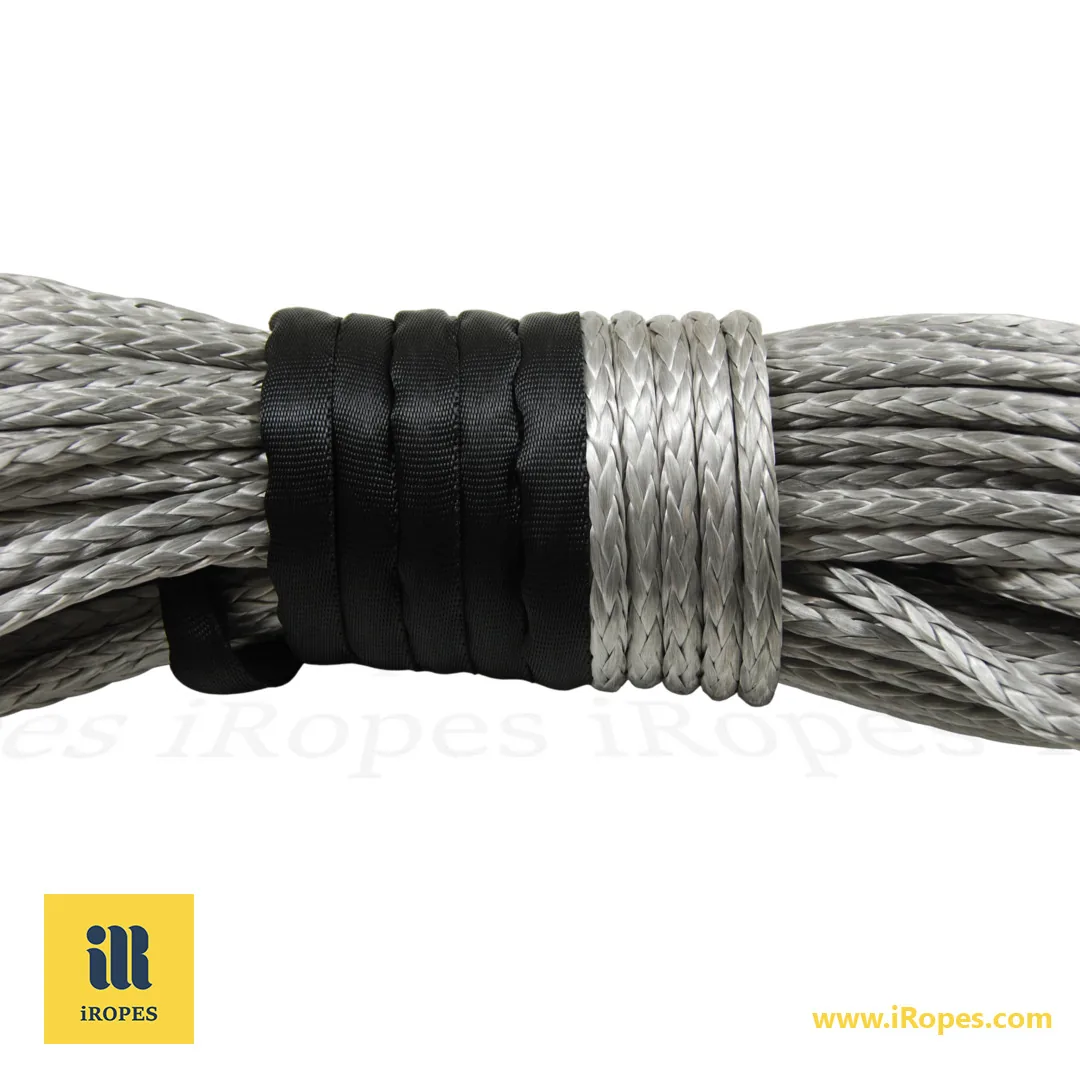
When off-the-shelf options fall short, iRopes' ODM services shine by tailoring heavy-duty marine nets to exact specifications, incorporating advanced materials like Dyneema for unmatched strength-to-weight ratios—up to 15 times stronger than steel while remaining lightweight and low-stretch. You can specify everything from mesh sizes starting at 10 cm for irregular cargo retention to custom attachment points reinforced with thimbles, all designed to resist UV degradation and chemical exposure in salty conditions. Imagine outfitting a port operation with a Dyneema-based cargo net that conforms perfectly to coiled hoses without sagging, or a load net with integrated reflective strips for better visibility during night shifts. These bespoke features not only boost durability but also align with your branding through coloured weaves or logo-embossed edges, making safety as stylish as it is effective.
Material Choices
Dyneema fibres deliver exceptional cut resistance and minimal elongation for dynamic lifts.
Design Tweaks
Custom colours and patterns enhance visibility while matching operational aesthetics.
Attachment Upgrades
Reinforced loops and shackle integrations ensure seamless rigging without weak spots.
Performance Boosts
Environmental coatings protect against salt and abrasion for extended field life.
Case studies of successful offshore and port implementations, avoiding common certification failures
Take a recent project for an offshore energy firm: iRopes crafted a custom hoisting net using Dyneema with oversized mesh for turbine blade transfers, passing rigorous drop tests that generic alternatives failed. In another port scenario, we supplied load nets with precisely calculated WLL ratings for timber shipments, preventing the overload incidents seen in uncertified setups and cutting downtime by 40%. These implementations highlight how our designs integrate seamlessly with existing rigging, backed by full traceability reports to maintain compliance without the headaches of retrofits.
Best practices for maintenance and IP-protected designs to sustain long-term compliance
To keep certifications intact over time, follow simple routines like monthly visual checks for frays or corrosion, storing nets coiled in dry, shaded areas to fend off UV damage. iRopes' IP-protected designs, such as proprietary knotless weaves, add an extra layer of exclusivity while ensuring parts remain compliant even after years of use. Pair this with our guidance on rotating stock and logging inspections, and you'll extend net life significantly—think twice the cycles before replacement compared to standard gear. What if your next audit revealed flawless records? That's the edge our solutions provide. For more on avoiding certification traps in marine lifting, explore best practices for procurement.
Embracing these strategies not only plugs the gaps in certification but also sets the stage for broader operational gains, where safety and efficiency go hand in hand.
Exposing certification failures in **industrial cargo nets**, **load nets**, and **hoisting nets** reveals critical vulnerabilities in marine cargo operations, from overlooked construction standards like mesh sizing and knot integrity to inadequate testing for dynamic loads and environmental resistance in ports and offshore environments. Real-world incidents underscore the dangers of compliance gaps, such as unverified working load limits leading to accidents. iRopes' ISO 9001-certified OEM solutions, however, deliver custom heavy-duty nets using superior materials like Dyneema, ensuring robust specifications for irregular loads, UV/chemical durability, and seamless accessory integration to mitigate risks and enhance safety.
By prioritising rigorous proof loading and tailored designs, businesses can avoid costly disruptions and protect operations—yet applying these insights to your unique setup might benefit from expert guidance to optimise performance.
Need Tailored Solutions for Your Cargo Nets? Connect with iRopes Experts
If you're ready to explore personalised recommendations for certified heavy-duty net systems in your port or offshore lifting needs, simply complete the inquiry form above. Our team at iRopes is here to provide custom advice and support your safety goals.