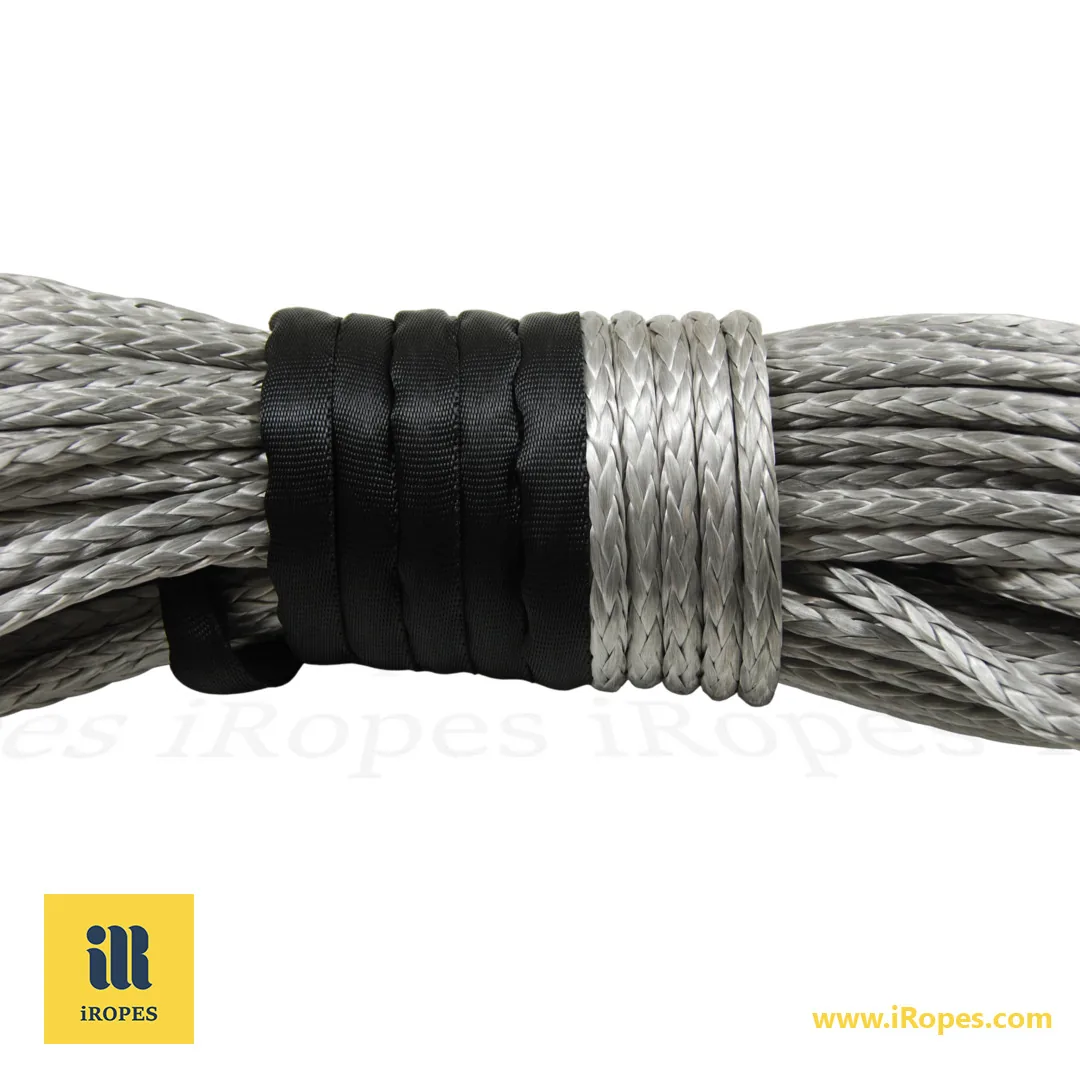
You can fit a 4500 lb winch with a 1/4‑inch (6 mm) Dyneema rope that breaks at 9 000 lb — a full 2× safety margin — and standard stock can ship worldwide in 7‑10 days.
What you’ll gain – ≈ 4 min read
- ✓ Cut vehicle load by up to 70 % versus steel cable, improving efficiency.
- ✓ Follow a 7‑step install that helps prevent spooling errors.
- ✓ Extend rope life with a 3‑6 month inspection schedule to avoid premature failure.
- ✓ Get custom colour or branding with ISO 9001 quality; standard stock ships in 7‑10 days, custom OEM/ODM in 4‑6 weeks.
Many crews still haul steel cables, believing heavier is tougher, yet that extra mass adds up and increases vehicle load. By switching to iRopes’ lightweight 4500 synthetic winch rope and applying the proven 10 % pre‑tension spooling method, you’ll streamline recoveries while preserving the rope’s breaking strength. You’ll feel the difference on the very next pull.
4500 synthetic winch rope – Sizing, Specs, and Choosing the Right Fit
After exploring why synthetic lines are taking over the market, the next question is simple but crucial: which rope actually fits your 4 500 lb winch? Picking the correct diameter and breaking strength not only respects the winch’s rating, it also builds a safety margin that keeps you and your vehicle out of danger.

So, what size synthetic winch rope should you pair with a 4 500 lb winch? Most manufacturers recommend a 1/4 inch (6 mm) rope that offers roughly 9 000 lb breaking strength. That gives you the required 2× safety factor while staying light enough to handle comfortably. A standard length of 50 ft (≈ 15 m) covers most off‑road and marine rigs, but longer runs are available if your recovery needs demand it.
- 1/4‑inch (6 mm) – ≈ 9 000 lb break, ideal for 4 500 lb winches, 50 ft standard length.
- 5/16‑inch (8 mm) – ≈ 12 000 lb break, useful when you want extra margin or plan to upgrade the winch.
- 3/8‑inch (10 mm) – ≈ 20 000 lb break, the common choice for 12k lb winches and heavy‑duty setups.
The material you choose determines how much that rope will weigh in your toolbox and how it behaves under load. Dyneema SK‑75 fibres deliver a high strength‑to‑weight ratio, keeping the rope about 70 % lighter than steel while resisting abrasion. Spectra offers similar tensile performance but with a slightly softer feel, which can make spooling easier for beginners. Both options can be coated for UV resistance, extending service life in sunny Australian or Middle‑Eastern conditions.
“Switching to a 1/4‑inch Dyneema line on a 4 500 lb winch makes recoveries smoother and reduces vehicle weight — feedback we see repeatedly in the field.” – iRopes field testing
With the right diameter, material, and length in hand, you’re set to move on to the actual installation. The next section walks you through a step‑by‑step process that ensures the rope sits perfectly on the drum and performs reliably every time you pull.
Install synthetic winch rope – Step‑by‑Step Guide for Safe Setup
Now that you have the correct 4500 lb synthetic winch rope in hand, it’s time to install synthetic winch rope correctly. A tidy installation protects the fibres, keeps the winch efficient, and gives you confidence when you pull.
Before you start, gather a soft‑bristle brush, a torque wrench, and a heat‑guard sleeve. A clean drum reduces friction and lets the synthetic winch rope glide smoothly.

Follow these seven steps to ensure a safe, repeatable setup.
- Clean the winch drum with a lint‑free rag, remove old cable debris, then inspect the fairlead for wear or damage.
- Secure the rope to the drum: bolt‑on the anchor plate or create a loop‑splice, tightening the fastener to the manufacturer’s torque (≈ 12 Nm). This method answers “How do you secure a synthetic rope to a winch?” with a firm, repeatable connection.
- Lay the rope straight from the drum, checking that the free end passes smoothly through the fairlead and any rollers.
- Spool the line while maintaining about 10 % of the winch’s rated load as tension; slide a heat‑guard sleeve over the rope as it winds to protect against friction heat.
- Use a line‑damper near the fairlead during test pulls to absorb shock and keep the rope settled.
- Inspect the completed lay for an even, tight coil without gaps; a uniform wind prevents uneven wear.
- Perform a short test pull at low speed, then re‑tighten any bolts and verify that the rope tracks cleanly across the drum.
Never exceed the 10 % tension guideline while spooling; excessive force can stretch the fibres and reduce the rope’s breaking strength.
After the rope is seated, mark the first coil with a small piece of tape. That reference point lets you spot any drift during future pulls and keeps the safety margin intact.
12k synthetic winch rope – Performance, Power Draw, and Maintenance
Now that the rope is securely installed, the next priority is keeping it in top shape and understanding how it interacts with your winch’s electrical system.

When you crank a 12 k lb winch to its limit, the motor typically draws between 220 A and 300 A. Switching to a synthetic line does not noticeably raise that current; the rope’s lower mass simply eases the vehicle’s overall load, which can translate into a modest efficiency benefit during long recoveries.
Power Draw
A 12 k lb winch normally consumes 220‑300 A at full load. The synthetic rope itself adds negligible electrical resistance, so the amp draw remains essentially the same as with steel cable.
For those wondering about smaller units, a 4 500 lb winch typically pulls roughly 220‑300 A as well, so the electrical demand scales more with motor size than with the choice of rope.
Regular upkeep is the secret to a rope that lasts years without losing its breaking strength. Follow a simple schedule and you’ll keep recovery performance consistent.
- Every 3‑6 months – Perform a visual inspection for fraying, UV‑induced wear, glazing, or damaged strands.
- Clean after each use – Rinse with mild soap and water, then dry thoroughly before storage.
- Replace proactively – If the rope is older than five years or shows core damage or flat spots, swap it out.
Maintenance
Inspect, clean, and replace your synthetic winch rope on schedule to keep performance optimal.
With power draw understood and a clear maintenance routine in place, you’re ready to explore how iRopes can tailor a rope to your exact colour, length, and accessory requirements.
Customisation, OEM/ODM Services and Global Shipping
Now that you understand the power draw and maintenance routine, let’s look at how iRopes transforms a standard line into a product that reflects your brand, meets strict quality standards, and arrives quickly at your doorstep.

Every wholesale buyer can specify exactly what they need – from the hue that stands out on a recovery site to the precise length that fits a confined rig. The options are deliberately broad so you never have to compromise on performance or appearance.
Colour
Choose from high‑visibility shades or match your corporate palette, all UV‑stable.
Length
Standard 50 ft, 80 ft, 100 ft or longer lengths on request for specialised rigs.
IP Protection
Full intellectual‑property safeguards from design through delivery.
ISO 9001
Quality management ensures every batch meets strict tolerances.
Beyond colour and length, you can add loops, thimbles, or specialised terminations that dovetail with your winch’s drum. Packaging is equally flexible – choose sealed bags, colour‑coded boxes, or bulk cartons that align with your logistics chain.
Lead Times & Shipping
Standard stock ships in 7‑10 days; custom OEM/ODM orders typically require 4‑6 weeks. We dispatch pallets directly to Australia, Europe, and the Middle East, backed by dedicated support.
Whether you are outfitting a fleet of 4500 synthetic winch rope units for off‑road trucks in Australia or specifying 12k synthetic winch rope for heavy‑duty marine rigs in the Gulf, iRopes’ OEM/ODM capabilities ensure the final product arrives on time, conforms to ISO 9001 standards, and is protected by robust IP safeguards.
For comprehensive advice on selecting the ideal winch line, refer to our Ultimate Guide to Choosing the Best Winch Line.
Get a personalised winch‑rope solution
Selecting the correct 4500 synthetic winch rope, following the install synthetic winch rope checklist, and maintaining the 12k synthetic winch rope are the three pillars of safe, efficient recovery. iRopes’ expertise in lightweight Dyneema and Spectra lines, backed by ISO 9001 quality, ensures the rope meets the 2× safety factor and performs reliably in Australian, European and Middle‑Eastern environments. With customisable diameters, colours, lengths and accessories, wholesale buyers can tailor every detail to their brand, supported by IP protection and fast worldwide pallet shipping.
If you’d like personalised guidance to specify the ideal rope for your winch, simply complete the enquiry form above and our technical team will craft a free, custom quote that aligns with your exact requirements.