Master two-leg sling angles to maximise working load limits by up to 300%—shifting from a risky 25% capacity at a shallow 30° included angle to near-full strength at 90° for secure marine lifts. Prevent tipping and load failures in demanding yachting or spearfishing scenarios with iRopes' customised configurations.
Unlock Safer Lifts in 8 Minutes →
- ✓ Grasp multi-leg sling setups to evenly distribute loads, potentially slashing marine tipping risks by up to 75% through balanced two-, three-, or four-leg options.
- ✓ Explore two-leg bridle anatomy with durable synthetics like Dyneema, boosting saltwater lifespan by 3x while cutting handling weight by 40%.
- ✓ Calculate precise angles and adjustments for optimal WLL, ensuring OSHA/ASME compliance and avoiding overload penalties up to $14,000 per incident.
- ✓ Tailor via iRopes' OEM services: custom diameters, lengths, and fittings for your yachting gear, enhancing operational efficiency significantly in real-world applications.
You might rig two-leg slings assuming equal legs mean equal safety, but that overlooks how a tight 30° angle can secretly slash capacity to just a quarter—inviting snaps amid waves that could wreck yacht decks or spearfishing operations. What hidden calculation turns this vulnerability into unshakeable control? Dive into iRopes' proven techniques for angle mastery, load balance, and custom builds that fortify your lifts against the sea's unpredictability, all backed by ISO 9001 precision.
Understanding Sling Multiple Leg Configurations for Balanced Marine Lifting
Imagine you're out on the water, handling heavy yacht gear or securing spearfishing equipment. One wrong lift could send everything overboard. That's precisely where sling multiple leg setups become critical. They're designed to make these moments safer and more reliable by effectively spreading the weight. These configurations use several ropes or cables, known as legs, which attach to a central point. This ensures your load remains level and controlled throughout the lift.
A sling multiple leg setup involves multiple strands branching out from a master link to support a load at different points. Think of it like the arms of a crane: each leg shares the burden so no single part becomes overwhelmed. This method of load distribution is crucial because it prevents twisting or tipping, especially in unpredictable marine conditions where waves might shift things unexpectedly. Have you ever seen a load swing wildly mid-air? Proper distribution dramatically cuts that risk, keeping both equipment and crew out of harm's way.
What is a Sling Multiple Leg Setup and Its Importance in Load Distribution?
At its core, a sling multiple leg setup connects to the load via end fittings and converges at the hoist hook. The key lies in how it balances forces—each leg takes a portion of the total weight, determined by its angle and length. In marine lifting, where corrosive saltwater and constant motion add challenges, even distribution means less stress on materials and greater predictability. For instance, a small boat hoist rigged without balanced legs could tilt dramatically, risking equipment damage or injury. This highlights the real-world advantage of effective load distribution.

Differentiating Between Two-Leg, Three-Leg, and Four-Leg Options
When choosing sling configurations, the decision often depends on your load's attachment points and its shape. A two leg bridle works perfectly for simpler setups with two lift spots, such as engine hoists. For oddly shaped items needing extra support, a three-leg option adds versatility by distributing weight across more angles. Four legs, conversely, handle complex, multi-point loads like large marine platforms, offering maximum stability. A bridle sling can typically have up to four legs; configurations beyond this tend to become unwieldy, but the optimal number always hinges on the load's specific design and safety requirements. Notably, two-leg versions offer a practical balance of simplicity and strength for many everyday marine tasks.
- Two-leg bridle - Ideal for balanced lifts with two attachment points, providing straightforward control.
- Three-leg - Adds versatility for uneven loads, distributing weight across more angles.
- Four-leg - Maximises stability for heavy, multi-sided objects in demanding scenarios.
Benefits of Multi-Leg Slings for Stability in Marine Environments
In the salty, often swaying world of marine work, these slings truly shine by minimising sway and enhancing grip on potentially slippery decks. Effective load balance keeps things steady, while the inherent control allows you to position loads precisely—a vital aspect for intricate yachting repairs or loading spearfishing gear without mishaps. Multi-leg slings are often lighter than single, heavy ropes, making handling easier for your crew. Moreover, with options like synthetic materials from experts such as iRopes, they offer superior corrosion resistance, contributing to a longer lifespan in harsh marine conditions.
Ultimately, opting for a multi-leg design isn't just about lifting; it's about building confidence in every operation. This understanding paves the way to exploring the more specific details of a reliable two leg bridle setup.
The Anatomy and Components of a Two Leg Bridle Sling
Having covered the broader strokes of sling multiple leg configurations and their importance in keeping loads steady on the water, let's now zoom in on the two leg bridle—a true workhorse for many marine jobs. This setup is both straightforward and powerful, making it a preferred choice for teams handling yacht gear or rigging spearfishing setups without unnecessary complexity.
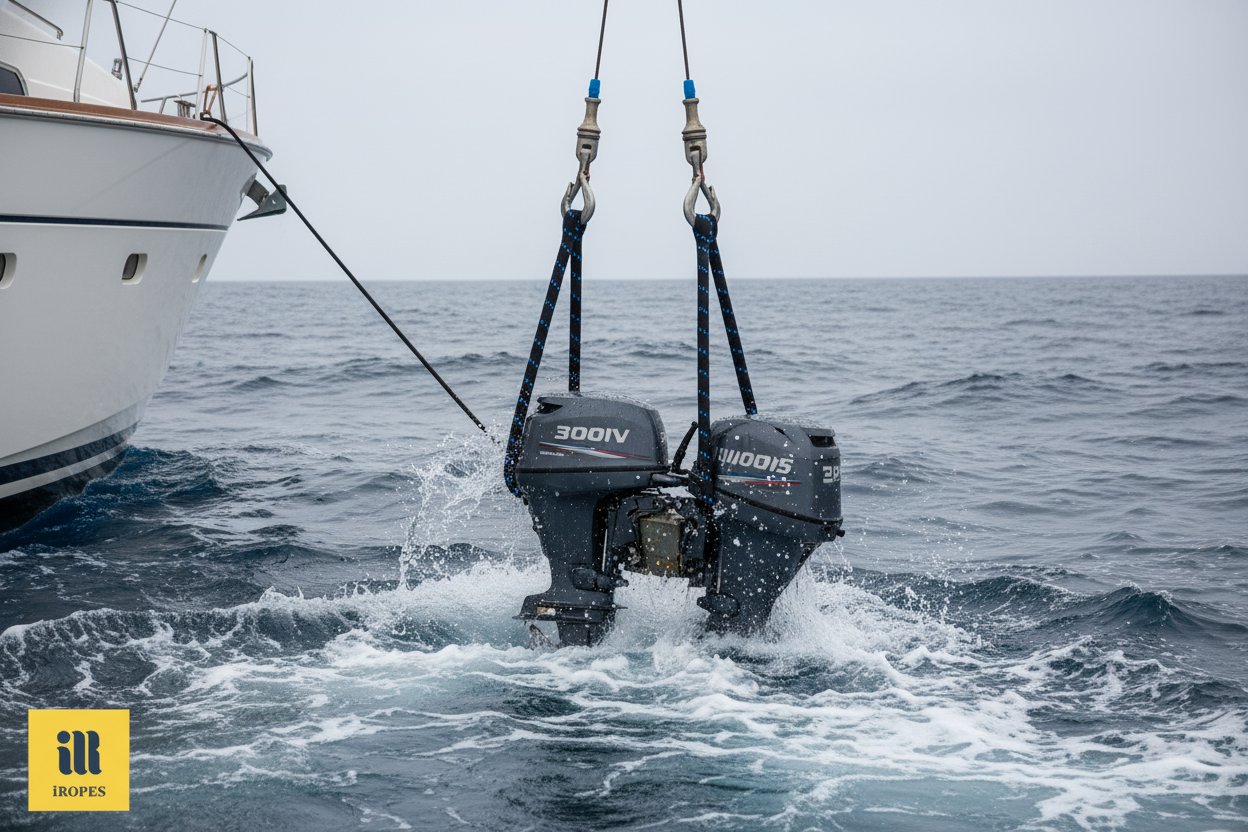
At its heart, a two leg bridle is a lifting sling with two equal-length legs that branch from a central master link. This design effectively cradles the load evenly. Picture it as a V-shaped harness: the top of the V hooks to your hoist, while the ends attach directly to the load's lift points. This configuration ensures balanced support, which is why it proves so effective for tasks with two clear attachment spots, such as hoisting an outboard motor from a dockside crane. Witnessing a crew switch from an unbalanced single-leg rig to a two leg bridle can transform a chaotic scene into a smooth operation, with the load hanging perfectly level.
Key Elements: Master Links, Sling Legs, and End Fittings
Every two leg bridle begins with the master link, a sturdy oblong ring that connects the legs to the hoist hook and bears the total weight. From this central point, the two sling legs—typically identical in length—extend outwards. These legs are made from rope or cable designed to flex under load without snapping. At the bottom, end fittings secure everything: hooks for quick grabs on rings or lugs, soft eyes (loops) for wrapping around awkward shapes, or thimbles to reinforce loops against wear from sharp edges. These components are far more than mere additions; they fundamentally dictate how safely and precisely you can position heavy items amid salty spray.

Material Options for Marine Durability
Choosing the right material transforms a basic two leg sling into a resilient saltwater survivor. Wire rope, with its twisted steel strands, offers impressive strength for rough handling but requires galvanising to combat corrosion effectively. Synthetic alternatives like UHMWPE (e.g., Dyneema) or nylon provide lightness and flexibility—Dyneema, for instance, resists abrasion and UV better than steel and even floats if dropped overboard, a huge advantage during spearfishing dives. Nylon can absorb some shock from waves but may weaken with prolonged wet conditions. Each material excels in marine work: synthetics reduce weight for easier deck manoeuvres, while wire rope withstands constant tugging from yacht moorings.
Wire Rope
Heavy-Duty Strength
High Tensile
Supports massive loads without deforming, ideal for demanding industrial pulls.
Corrosion-Resistant
Galvanised versions endure saltwater exposure significantly longer than untreated alternatives.
Durable Grip
Twisted construction helps prevent slippage on uneven marine hardware.
Synthetic (UHMWPE/Nylon)
Lightweight Flexibility
Low Weight
Easier to handle on boats, reducing crew fatigue during prolonged tasks.
UV and Chemical Proof
Dyneema shrugs off sun and solvents, making it perfect for open-water exposure.
Buoyant Design
Floats in water, simplifying recovery should it go over the side.
Construction Details Tailored by iRopes
At iRopes, we fine-tune every two leg sling through our comprehensive OEM and ODM services. This begins with selecting the optimal diameter—thicker for heavier pulls, slimmer for greater agility—and the precise length to match your exact span between lift points. Additional accessories like protective sleeves or swivel hooks enhance safety and functionality. All our products are built with precision in our ISO 9001-certified facilities. Whether you require a specific weave for extra flexibility or custom terminations, these meticulous details ensure your sling fits perfectly for demanding marine applications, ultimately influencing how it performs in the field.
Practical Applications of Two Leg Sling in Marine and Industrial Settings
Building on the solid foundation of a two leg bridle's construction, from its robust materials to tailored fittings, we can now see how these setups translate into everyday reliability. Whether you're rigging on a heaving deck or managing gear in a workshop, the true testament to their value comes in how they perform during actual jobs. Let's explore where two leg slings consistently prove their worth, beginning with their broader utility in various lifting tasks.
General Uses in Lifting Scenarios
Multi-leg bridle hitches, including two-leg versions, are primarily used for lifting and manoeuvring loads that feature fixed attachment points, such as lugs or rings on machinery. They excel at providing the even load distribution we discussed earlier, which prevents items from twisting or dropping unexpectedly. In balanced lifting, each leg shares the tension, allowing you to hoist engines, pallets, or structural beams with confidence. Consider construction sites where uneven ground renders single-point lifts risky—these hitches stabilise the load, reducing sway and enabling operators to focus on precision rather than battling momentum.
I've assisted with numerous warehouse transfers where a two leg sling transformed a precarious pallet lift into a smooth operation. The hitch wrapped securely around the corners, and everything ascended levelly without incident. This setup isn't confined to heavy industry; it's versatile enough for maintenance crews handling compressors or even event setups with intricate lighting rigs. The primary advantage lies in its ability to minimise stress on the rigging hardware, thereby extending the lifespan of your equipment while maintaining seamless operations.
Specialised Marine Applications
In marine settings, two leg slings truly come into their own for yachting equipment lifts and spearfishing gear handling, where wet conditions and constant motion demand enhanced grip and durability. For yachting, imagine hoisting an anchor or a davit system aboard a sleek vessel. The two legs attach to designated bow and stern points, creating a stable cradle that effectively counters the boat's roll. This prevents the load from impacting against the hull, which could cause dents to fibreglass or snag lines.
Spearfishing outfits often involve lifting weighted spearguns or tank racks from dive boats. Here, the sling's legs loop beneath the gear, distributing weight to avoid crushing delicate regulators. Typical rigging diagrams for common two-leg marine applications often depict the master link overhead, with legs angling down at approximately 60 degrees to the horizontal for optimal balance—picture a simple V formation, with end hooks securing the load firmly, even on algae-covered surfaces. These specialised applications highlight why synthetic materials like Dyneema are so popular: they don't rust and can withstand constant immersion in saltwater.
Examples in Off-Road and Industrial Contexts
Beyond marine use, iRopes' wholesale customers frequently utilise two leg slings for off-road recovery. For instance, when pulling a stuck vehicle from mud, the legs hook to tow points, balancing the pull to prevent frame twists. In industrial environments, such as factories, these slings are ideal for elevating conveyor parts or assembly frames, where the hitch's precise control prevents collisions with overhead beams or costly damage.
One off-road team I'm familiar with relies heavily on them for trail maintenance. The slings' adjustability allows them to fine-tune angles on sloped terrain, making extractions quicker and significantly safer. For iRopes' clients, this versatility means a single, customisable product can serve multiple sectors, from rugged trails to efficient factory floors, always adapting without compromising on secure hold. These off-road benefits align closely with advantages of double braided nylon rope for offroad and marine use, enhancing durability and performance across environments.
Marine Recovery
Lifts anchors or gear with wave-resistant hold, ensuring steady operations on deck.
Off-Road Pulls
Balances vehicle tows over rough ground, preventing dangerous tip-overs.
Factory Lifts
Handles machine parts precisely, minimising downtime in production lines.
Industrial Rigging
Supports beam installations safely, adapting effectively to site constraints.
Seeing these slings in action across such varied demands truly underscores their adaptability. However, getting the angles right is what transforms potential pitfalls into predictable successes.
Mastering Sling Angles, Load Capacity, and Safety for Two-Leg Configurations
Those real-world examples, spanning from yacht decks to factory floors, vividly demonstrate just how adaptable a two leg sling can be. Yet, as we've seen, the true game-changer lies in perfecting the angles to avoid close calls. Nailing this aspect ensures your lifts are not merely possible, but rock-solid—especially when unexpected waves or uneven terrain present challenges. Let's delve into how the angle between those legs impacts everything from capacity to control, starting with the fundamental principles of what you're working with.
Impact of Included Angles on Working Load Limit (WLL)
The included angle—that is, the space between your two sling legs—directly dictates how much weight each leg can handle without risking failure. A wider angle, ideally between 60° and 90°, typically distributes the load more evenly and maximises the Working Load Limit (WLL). However, as the angle tightens below 60°, the tension on the rigging skyrockets, drastically slashing the WLL, sometimes by half or even more. For a two leg bridle, you calculate WLL by taking the sling's vertical WLL and multiplying it by an angle factor (e.g., for a 60° included angle, the factor is 1.732, and for 90°, it's 1.414). For instance, if the vertical capacity of a single leg is 1,000 kg, at a 60° included angle, the two-leg WLL is 1,732 kg, but at 30°, it drops to only 518 kg. Leg length also plays a role; longer legs allow for gentler angles and better balance, while shorter ones demand more precise positioning to maintain stability.
To provide context, slings fall into three main categories: chain slings, ideal for extreme heat and heavy abuse; wire rope slings, suitable for tough, general pulling; and textile or synthetic slings, preferred for lighter, flexible jobs like marine work. Each type's WLL is affected by angles, but synthetics, like those from iRopes, maintain their strength well in wet conditions. For example, a previous experience on a dive boat highlighted the critical importance of angles: adjusting leg lengths corrected a potentially overloaded setup, successfully averting a dangerous situation.

Adjustment Procedures and Load Balance Techniques
Adjusting for bulletproof marine lifts begins with accurately measuring your load's lift points and matching leg lengths to create symmetrical angles—aiming for 60 to 90 degrees to maximise WLL without undue strain. Use a spirit level or inclinometer to check the balance before hoisting. If one side dips, you'll need to shorten that leg or reposition the attachments. In choppy waters, adding taglines to the load provides extra control, preventing swings that could damage the sling. For spearfishing gear, loop the ends loosely at first, then gradually tighten as you lift to distribute the weight evenly across the rack.
Here’s a straightforward, numbered process to achieve this consistently:
- Measure the distance between attachment points and set the leg lengths accordingly to achieve desired included angles.
- Attach the two leg sling to the master link and hoist the load slowly, meticulously monitoring for an even rise.
- Recheck angles mid-lift and make minor adjustments with shackles or alternate attachment points if necessary, ensuring optimal load balance.
Safety Best Practices, Inspection Checklists, and Standards
Safety is not negotiable in marine operations—it's paramount for safeguarding your crew. Before every use, conduct a quick visual inspection: look for frays, kinks, or corrosion on the sling legs, and confirm that fittings like hooks are not bent or excessively worn. Always adhere to ASME B30.9 for sling design limits and OSHA 1910.184 for operational regulations, which specifically mandate angle-aware WLL ratings and prohibit lifts exceeding 85% capacity. iRopes reinforces this commitment with strategies to address the hidden flaws in lifting sling safety for marine operations, ensuring your custom two leg sling is tested and compliant. If any damage is detected, tag out the sling immediately and consult a professional—it’s far better to be cautious than to risk an incident on a wet deck.
For consistent inspections, implement a simple routine: daily checks for cuts or stretches, weekly checks for fitting integrity, and annual professional audits. Store slings coiled and protected from direct sunlight and harsh chemicals to maximise their lifespan. These steps, coupled with diligent angle awareness, transform routine lifts into reliably safe operations, positioning you to select the perfect customised setup for your exacting requirements.
Mastering the angles in a sling multiple leg configuration ensures balanced marine lifts that prioritise safety and efficiency, particularly with a two leg bridle setup tailored for yachting and spearfishing gear. By accurately calculating leg lengths and understanding the effects of the included angle—where wider angles like 60-90 degrees optimise working load limits—you can effectively prevent overloads and maintain crucial stability amid unpredictable waves. Implementing precise adjustment procedures, supported by clear rigging diagrams for common two-leg sling applications, coupled with regular inspections adhering to ASME and OSHA standards, transforms potential hazards into reliably safe operations. iRopes' custom OEM solutions consistently deliver durable, ISO-certified slings that significantly enhance control in demanding marine environments.
Equipped with these comprehensive insights, you can elevate your lifting practices with precision-engineered ropes designed to meet your specific operational needs.
Need Tailored Advice for Your Marine Lifting Setup?
If you'd like personalised guidance from iRopes' specialists to optimise your sling configurations or explore custom options, simply complete the inquiry form above—we're here to support your safe and efficient operations with expert advice and tailored solutions.
Related reading: 1T Sling Secrets That Save Marine Lifts from Disaster