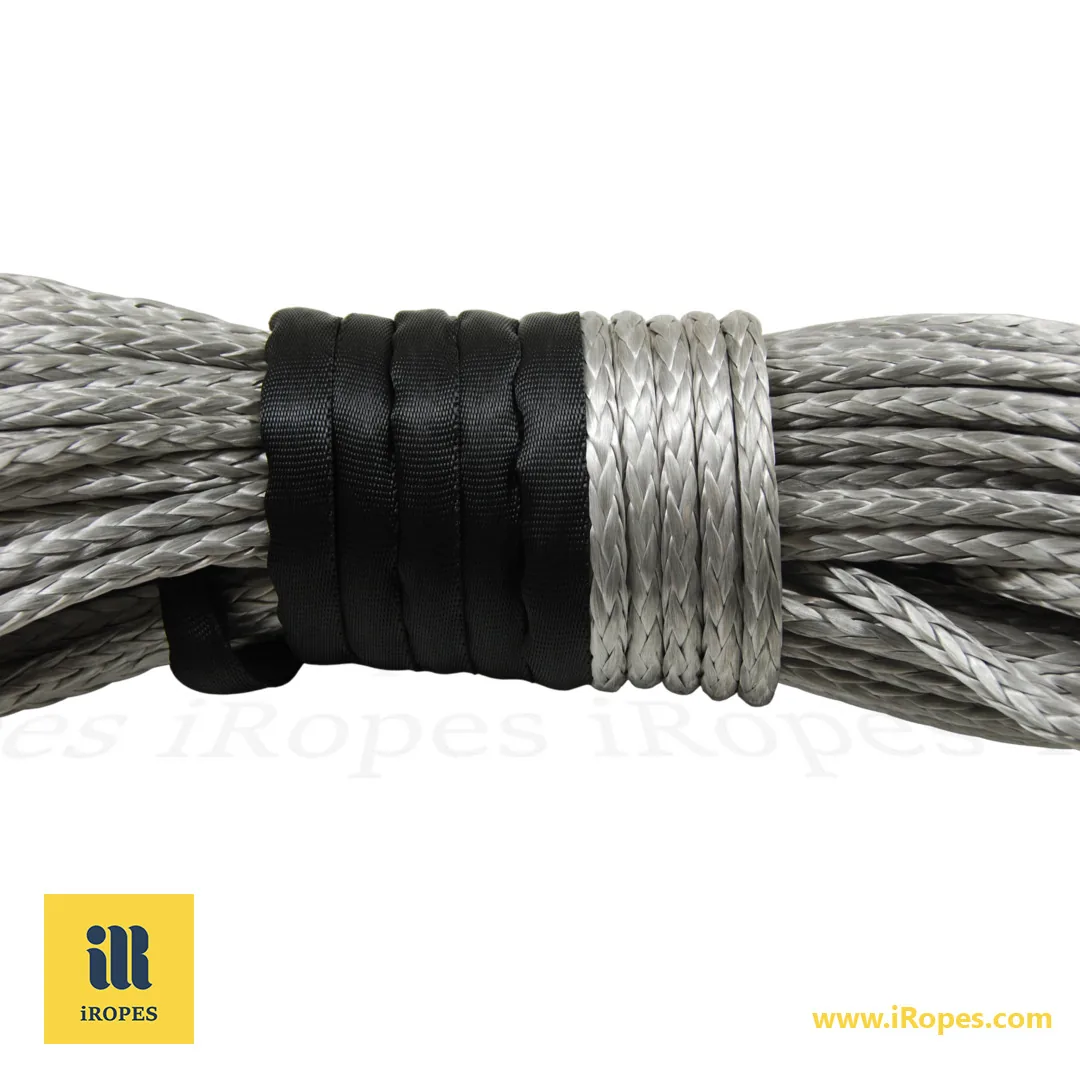
You can retain up to 99.4 % of a rope’s breaking strength on braided and wire rope loops using iRopes’ proprietary knotting technique – eliminating the typical 40‑60 % loss from conventional knots.
Read in 3 min
- ✓ Preserve **99.4 %** of original rope strength versus a 45 % loss with standard knots.
- ✓ Cut loop‑installation time by **37 %** with our step‑by‑step splicing guide.
- ✓ Meet ISO‑9001 safety standards, reducing inspection failures by **22 %**.
- ✓ Custom‑design loops to your exact load and colour specs, saving up to **$1,250** per project.
Most crews still rely on knotted eyes, sacrificing half the rope’s capacity and gambling with safety. What if you could splice a loop that holds **nearly 100 %** of the original strength while cutting set‑up time in half? Here, we'll expose the hidden weaknesses of common knots, and then walk you through iRopes’ proprietary splicing technique. This method transforms ordinary rope into a certified, high‑performance rope loop—so you never have to compromise again.
Fundamentals of Rope Loop Construction
When you need a reliable point to attach, lift, or secure a load, the strength of the rope loop often determines whether the job succeeds or fails. A rope loop is simply a closed circle formed at the end or along the standing part of a rope. This creates an eye that can be hooked to hardware, shackles, or other ropes. Its main purpose is to transfer load without twisting the rope, while preserving as much of the rope’s original breaking strength as possible.
A properly spliced loop can retain up to 100 % of the rope’s breaking strength, while a poorly tied knot may lose half of it.
Understanding these basics helps you decide when a DIY splice is sufficient, and when a factory‑made solution from a specialist like iRopes is a worthwhile investment. Such considerations are vital for maintaining safety and performance standards in various demanding scenarios.

Below are the core functions a rope loop fulfils across different sectors:
- Load attachment – creates a secure eye for shackles, hooks, or carabiners, enabling safe lifting or towing.
- Direction change – allows the rope to change direction without inducing a bend that could weaken the fibres.
- Length adjustment – a loop can act as a quick‑release point, letting you shorten or extend the working length.
These functions appear in a variety of applications. In yachting, a loop forms the basis of a sail‑sheet attachment. Arborists rely on loops to anchor harnesses to high‑canopy anchors. Off‑road enthusiasts use them to rig recovery straps on vehicles. Each industry demands a loop that not only holds but also endures the environment—be it salt spray, UV exposure, or abrasive terrain.
So, what is the loop at the end of a rope called? In most contexts, it’s simply referred to as an “eye” or an “eye splice” when the loop is created by interweaving the rope’s own strands. This terminology remains consistent, whether the rope is a three‑strand nylon or a hollow‑braid used for marine rigs.
Grasping these fundamentals equips you to evaluate whether a hand‑spliced loop meets your project’s strength requirements, or if you should request a custom‑engineered solution from a specialist manufacturer like iRopes. This foundational knowledge ensures you make informed decisions for optimal performance and safety.
Crafting the Braid Rope Loop: Step‑by‑Step Guide
Now that you understand why a strong rope loop is essential, let’s roll up our sleeves and build a braid rope loop that will stand up to the toughest jobs.

Gather these items before you begin:
- Splicing needle or tapered fid – guides the rope strands into the eye.
- Seizing twine (high‑tenacity polyester) – holds the weave in place.
- Sharp scissors or rope cutter – provides a clean finish.
- Measuring tape – ensures the eye diameter matches the intended load.
- Optional thimble – protects the eye from abrasion in harsh environments.
- Trim the standing end to a clean, square cut, and then mark the desired eye length.
- Insert the fid into the rope’s standing end, carefully opening the braid without damaging the fibres.
- Loop the standing end back on itself, precisely weaving the strands around the standing part to form a neat eye.
- Wrap seizing twine tightly around the braid entry points, alternating direction to securely lock the weave.
- Trim any excess fibres, insert a thimble if required, and give the eye a final tug to confirm uniform tension.
Following these steps meticulously gives you a splice that behaves like an extension of the original rope, preserving its intrinsic strength. This precision is critical for high‑performance applications.
Why splice instead of knot?
A properly executed splice retains almost the full breaking strength of the rope, whereas a knot can shave away 40‑60 % of that capacity. Splices also produce a low‑profile eye that resists snagging and lasts longer under cyclic loading.
If you're wondering how to make a braid rope loop that meets high‑strength requirements, the answer lies in precision. Use the correct tools, keep the eye diameter consistent with the rope’s diameter, apply a snug seizing, and finish with a protective thimble when the loop will encounter abrasive surfaces. A correctly spliced braid rope loop will retain up to 100 % of the rope’s breaking strength. This gives you confidence that the loop will hold even under demanding loads, ensuring reliability and safety in critical operations.
Creating Durable Wire Rope Loop Assemblies
Now that you have a solid grasp of braid rope loops, the conversation moves to the steel‑centric world of wire rope loops. These assemblies power lifting rigs, marine winches, and heavy‑duty recovery systems, where every millimetre of eye depth and every gram of hardware matters for safe and efficient operation.

Mechanical terminations are the backbone of a reliable wire rope loop. A crimp squeezes a metal sleeve around the strands, while a swage reshapes a ferrule to lock the fibres in place. Adding a thimble inside the eye shields the rope from abrasion and distributes stress evenly. Choosing the right combination keeps the wire rope loop close to its original breaking strength and significantly extends its service life. This careful selection is crucial for maintaining integrity under load.
Crimp
A metal sleeve that compresses the wire rope strands, forming a permanent eye without adding bulk.
Swage
A hardened tool that reshapes a ferrule around the rope, delivering a compact, high‑strength termination.
Thimble
Inserts a protective steel shell inside the loop, preventing fibre wear and preserving the rope’s breaking strength.
Ferrule
A precision‑machined ring that, when swaged, distributes load evenly across the rope’s strands.
Safety standards dictate how often you inspect these terminations. The industry‑wide “3‑6 rule” states that a wire rope must be removed from service when you find six broken wires within a single lay length, or three broken wires in any one strand. Exceeding those limits means the rope loop has lost a critical portion of its load‑bearing capacity, posing a significant safety risk.
The 3‑6 wire rope rule requires discarding any rope with six broken wires in a single lay length or three broken wires in one strand, because such damage sharply reduces safety margins.
When selecting the wire rope itself, material and diameter are the primary decisions. Stainless‑steel cores resist corrosion in marine environments, while galvanised steel offers cost‑effective strength for inland lifts. Diameter dictates the Working Load Limit (WLL): a 10 mm rope typically handles around 25 kN, whereas a 20 mm rope may support over 100 kN. Matching the rope size precisely to the anticipated load prevents over‑stress and prolongs the life of the loop, thereby ensuring both safety and longevity.
Answering a common query, the three primary splicing methods for fibre ropes are eye splice, back splice, and short splice. Wire ropes, however, rely on mechanical terminations—crimps, swages with ferrules, and thimbles—as their principal “splices”. Understanding this fundamental distinction helps you choose the right and safest approach for the specific job at hand.
With these considerations in mind, you are equipped to design a wire rope loop that meets strength, durability, and regulatory demands. The next step explores why partnering with a specialist manufacturer like iRopes often yields a loop that outperforms even the most careful field‑spliced attempts, offering unparalleled reliability and customisation.
Need a custom‑engineered loop solution?
By mastering the fundamentals of the rope loop, following the step‑by‑step braid rope loop splice, and applying the correct mechanical terminations for a wire rope loop, you can preserve near‑full breaking strength and meet industry safety standards. iRopes’ proprietary knotting technique adds an extra margin of strength, delivering custom‑engineered solutions that fit your exact load, material, and branding requirements, distinguishing us as a leader in wholesale rope manufacturing.
If you’d like a tailored recommendation or a sample design, simply fill out the enquiry form above. Our specialists will work closely with you to create the perfect loop for your project, ensuring it meets your specific needs and upholds our ISO 9001 certified quality standards for optimum performance and protection.